
Why Annotation Matters (More Than You Think)
When you open a nonfiction passage on an AP exam—whether it’s a dense essay, a historical speech, or a scientific article—you’re not just reading words. You’re decoding purpose, spotting evidence, weighing tone, and collecting ammunition for whatever prompt appears later. Annotation is the bridge between raw reading and exam-ready thinking. Done well, it turns a scary block of text into an organized toolbox you can use to write faster, argue cleaner, and score higher.
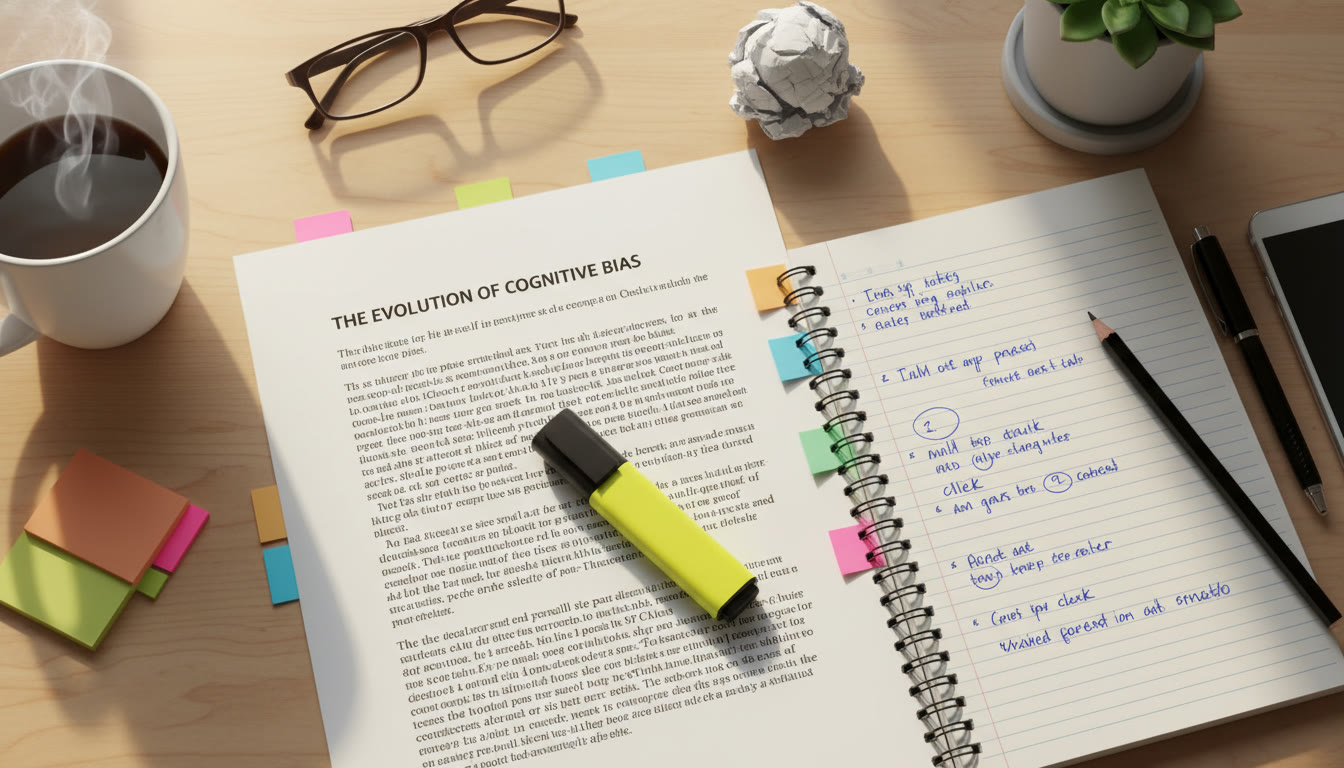
Core Principles of Effective Annotation
Some students underline wildly, others write essays in the margins, and a few never touch the text. The best annotators do three things consistently: prioritize, summarize, and map. Those verbs—prioritize, summarize, map—will be your north star as we break down specific techniques.
Prioritize: What deserves your ink?
- Central claim or thesis: Circle or bracket the main assertion the author is making.
- Evidence that supports the claim: Mark data, anecdotes, or quotations that the author uses as proof.
- Signal words and structure: Note transitions like however, therefore, indeed, although—these are clues to logic.
- Author stance and tone shifts: Flag where the tone moves from neutral to ironic to urgent—this often matters for rhetorical analysis.
Summarize: Capture meaning in one breath
Next to each paragraph or logical chunk, write a one-line summary—two to six words. These micro-summaries let you find ideas fast during essay planning. Think of them as the text’s GPS: precise, short, and in your own language.
Map: Visualize relationships
Create arrows, brackets, or quick diagrams that show cause-effect, contrast, or progression. Mapping is especially useful in synthesis tasks where you’ll need to link multiple texts or trace how evidence builds an argument.
Annotation Tools and a Simple System
Tools matter less than habits, but having a consistent system reduces decision fatigue and keeps your page tidy under time pressure. Here’s a compact, exam-friendly system that you can practice and make automatic.
Color Code (But Keep It Minimal)
- Yellow: Thesis and main claims.
- Blue: Key evidence (facts, stats, quotes).
- Green: Rhetorical devices and tone shifts.
- Pink or orange (optional): Counterarguments or limitations.
Limit yourself to three colors if you’re working on paper. On digital exams or screens, use virtual highlighting and brief margin notes.
Abbreviations and Symbols
- Th = Thesis
- E = Evidence
- Ex = Example or anecdote
- Q = Quote
- ? = Confusing or questionable claim
- ! = Strong rhetorical move or surprising insight
Make these symbols your habit; they save time and give you a consistent shorthand during the anxiety of a timed section.
Step-by-Step Annotation Workflow for an AP Nonfiction Passage
Follow this sequence in practice until it becomes muscle memory. The order matters because the AP clock is real—and so is the cognitive load.
1. First 20–30 seconds: Survey
- Read the title and any byline or source notes. Ask: Who wrote this and why might that matter?
- Glance at paragraph lengths to sense structure—long paragraphs often carry development; short ones may be rhetorical punches.
2. Next 1–2 minutes: Read for thesis and structure
Read actively but steadily. Your goal is to find the thesis or controlling idea. When you spot it, mark it heavily (Th). Then, write one-line summaries beside each paragraph.
3. Middle 2–3 minutes: Tag evidence and devices
Highlight or bracket specific evidence you can quote or paraphrase later. Circle rhetorical devices—parallelism, diction choices, analogies—that you might analyze. Don’t annotate everything; focus on pieces that directly support the main claim or reveal the author’s method.
4. Final 30–60 seconds: Synthesize and plan
Flip through your margin summaries to rehearse the passage’s arc. If you’re answering a multiple-choice set, this is your moment to match question options with your notes. If a free-response is coming, jot a quick plan of which evidence you’ll use and where.
Table: Quick Annotation Checklist for Exam Conditions
| Task | Time to Spend | What to Mark |
|---|---|---|
| Survey | 20–30 sec | Title, author, paragraph lengths |
| Locate Thesis | 1–2 min | Thesis (Th), topic sentences |
| Annotate Evidence | 2–3 min | Data, quotes, examples (E, Q) |
| Note Rhetorical Moves | 1–2 min | Tone shifts, figurative language, appeals |
| Synthesize | 30–60 sec | Plan for MC or essay use |
Examples: How to Annotate Different Kinds of Nonfiction
Not all nonfiction is the same. Annotation should adapt to genre. Below are short, practical examples you can model in your practice sessions.
Academic Article (Science or Social Science)
Focus on the claim, methods, and limitations. Underline the hypothesis, circle key statistics, and put ? next to assumptions. In your margin, note whether the evidence is empirical, anecdotal, or theoretical—this helps you evaluate strength during an argument question.
Op-Ed or Essay
Track appeals to ethos, logos, and pathos. Mark where the author addresses counterarguments; those moments are gold for synthesis and rebuttal. Short one-line summaries after each paragraph often capture a sequence of rhetorical moves: claim, evidence, emotional anecdote, refutation.
Historical Document or Speech
Context matters. If the passage gives a date or references an event, note it. Identify the audience and purpose explicitly in the margin—these two items often determine word choice and persuasive strategy.
How to Use Annotations When Writing Essays
Good annotations should make essay-writing mechanical: pick evidence, explain, connect. Here’s how to turn your margin work into paragraphs that graders love.
Step 1 — Choose 2–3 Pieces of Strong Evidence
Use the evidence you highlighted (E, Q). Pick items that align tightly with the prompt. Don’t force weak quotes; concise, well-explained evidence beats long, clumsy quotations every time.
Step 2 — Use Your Marginal Summaries as Topic Sentence Seeds
Those one-line summaries beside paragraphs become the skeleton for body paragraphs. Expand the summary into a clear topic sentence and follow with the evidence and analysis you already tagged.
Step 3 — Connect to the Prompt Explicitly
Don’t assume a grader will make the leap—spell it out. Use phrases like “This example supports the claim that…” or “Here the author challenges X by…”. Your annotation should have already written half of this sentence.
Timed Practice: Building Speed Without Losing Depth
Speed comes from repetition and discipline. Use this practice ladder over several weeks to turn careful annotation into an efficient exam habit.
- Week 1: Read one passage daily. Take as long as you need. Focus on accuracy of your summaries and labeling.
- Week 2: Time yourself—3:00 for a passage (survey + annotation + quick plan). Concentrate on recognizing the thesis quickly.
- Week 3: Simulate exam conditions—use single-color highlighting, no dictionary, and answer 2–3 related MCQs using only your notes.
- Week 4: Combine with essay practice: annotate, then write a 20-minute timed rhetorical analysis paragraph using only your annotations for evidence.
Common Annotation Mistakes and How to Fix Them
Even dedicated students fall into traps. Here are the usual suspects and simple fixes that get you back on track.
Mistake: Over-annotating
If your page looks like a highlighter explosion, you’re probably marking everything. Fix it: set a rule—only three marks per paragraph unless something is crucial.
Mistake: Parroting the Text
Marginal notes that repeat a sentence verbatim don’t help. Fix it: rephrase. Put the idea into your own words—this cements understanding and yields clearer essay phrasing.
Mistake: Ignoring Structure
Students mark quotes but miss how paragraphs relate. Fix it: use arrows and connective words in the margin to show relationships—cause, contrast, sequence.
Digital Annotation Strategies for the Bluebook and PDFs
AP exams are increasingly digital. Many of the same principles apply, but you’ll use tools like highlight palettes, comment boxes, and copy-paste. Practice digitally so you don’t fumble on exam day.
- Use short comments—one-line summaries—so you can scan quickly.
- Bookmark or flag key paragraphs if the platform allows quick jumps.
- Copy the exact phrasing of a quote you might need into a comment box, then add a one-line note about how you’ll use it.
How Sparkl’s Personalized Tutoring Can Help Your Annotation Practice
Annotations are a skill that improves dramatically with targeted feedback. Sparkl’s personalized tutoring offers 1-on-1 guidance, tailored study plans, and expert tutors who can model efficient annotation live and review your practice in detail. Their approach pairs human insight with AI-driven insights to track which annotation habits are helping you most, so every practice session pushes your score forward.
Putting It All Together: A Sample Annotated Passage Walkthrough
Below is a condensed walkthrough showing how annotations turn into essay-ready evidence. Imagine a short persuasive essay arguing that urban green spaces improve mental health.
Step A — Identify Thesis
Annotation: Circle the thesis sentence—”Urban green spaces significantly improve mental well-being for city residents.” Mark it as Th.
Step B — Tag Evidence
Annotation: Highlight a statistic, underline an anecdote of a city program, and note a counterpoint where the author admits maintenance costs.
Step C — Note Rhetorical Moves
Annotation: Flag an emotional appeal about parents and children, and note a shift from formal to conversational tone in the conclusion (Green arrow for tone change).
Step D — Build Paragraphs
Use two strong evidence marks: the statistic and the anecdote. Your paragraph structure becomes immediate: topic sentence, statistic + explanation, anecdote + analysis, connection to thesis.
Assessment: How to Evaluate Your Annotation Skill
Once a week, grade your own annotations by asking a few objective questions:
- Can I locate the thesis in under 30 seconds using my marks?
- Do my marginal summaries allow me to outline the passage in 60 seconds?
- When I use annotated evidence to write a paragraph, does it take me less than 8 minutes to produce a coherent body paragraph?
If you answer ‘no’ to any of these, target that skill area deliberately for the next practice session.
Advanced Moves: Annotating for Synthesis and Comparative Prompts
Synthesis questions are a special breed. You’ll need to annotate multiple texts and then combine them into a single argument. Coordinate your annotations across passages to make cross-text connections obvious.
- Use a consistent symbol across all texts for similar claims (e.g., ☆ for claims about policy).
- Create a quick comparison box in your notes where you list overlapping evidence and opposing evidence.
- Mark which author is strongest on what point—this helps you choose the lead source in your essay.
Weekly Practice Plan (4 Weeks to Sharper Annotations)
Devote 20–40 minutes, four times a week, to targeted annotation practice. Alternate between timed and untimed sessions, and incorporate feedback from peers or a tutor.
- Week 1: Untimed accuracy—focus on finding thesis and summarizing paragraphs in your own words.
- Week 2: Speed drills—time your full workflow and aim to reduce your time by 20% each session.
- Week 3: Essay conversion—annotate, then write an essay using only your notes. Compare to an unannotated essay you’d have written.
- Week 4: Synthesis and review—annotate multiple passages and practice combining them in an argument outline.
Final Tips: Habits That Create Exam Confidence
- Be consistent: Use the same symbols and color rules during practice and exams.
- Keep margins readable: Your future self (and your timed brain) needs to scan quickly.
- Practice digitally and on paper: AP platforms vary—be comfortable with both.
- Get feedback: A tutor or teacher can point out recurring blind spots; a service like Sparkl’s personalized tutoring can accelerate this by giving tailored plans and expert review sessions.
- Stay calm: Good annotation reduces panic. It’s a map you can trust when the clock is working against you.
Closing Thoughts
Annotation is equal parts strategy, craft, and habit. It’s not about scribbling more—it’s about writing smarter. When you prioritize the right things, summarize with clarity, and map relationships visually, the passage stops being an obstacle and becomes an ally. Make annotation a ritual in your AP prep: practice deliberately, get targeted feedback, and refine your system until it fits your brain. The next time you sit down for an AP English or other nonfiction-heavy exam, you’ll have a quiet confidence that comes from preparation—not luck.

If you’d like, I can create a printable annotation template you can use during practice or a timed worksheet that pairs passages with step-by-step annotation prompts. Mention your preferred AP subject and timing, and I’ll tailor it for you.

























No Comments
Leave a comment Cancel