
Why a Spring Break Tune-Up Can Change Your AP Year
Spring break isn’t just a pause in the semester—when used intentionally, it can become the turning point of your AP season. By the time March and April roll around, you’ve covered most course content, probably done a handful of practice exams or unit quizzes, and have a clearer idea of your strengths and blind spots. That knowledge makes a focused break the perfect chance for a midyear reset: clear out lingering confusion, build exam stamina, practice with purpose, and leave the week back in class confident and energized.
Think of this tune-up as a short, high-impact bootcamp tailored to what matters now—content gaps, testing skill, and mental readiness. It’s not about cramming every page of your textbook. It’s smarter: targeted practice, strategic review, and building routines that carry you into exam season. If you’re working with a tutoring program like Sparkl’s personalized tutoring, this week is also an ideal time to sync with your tutor—get a tailored study plan, a few focused 1-on-1 sessions, and AI-driven insights into which topics will give you the biggest score boost.
Below you’ll find a practical, flexible plan you can adapt whether you’re taking one AP or five, plus tools, sample schedules, and study hacks tested by students and teachers.
Who this tune-up is for
- Students who have finished most of the course content and want to convert understanding into exam-ready skills.
- Students with one or more AP exams in May who want to use their break strategically rather than panic-cram.
- Busy students who need a compact, high-return study plan that doesn’t wreck their rest time.
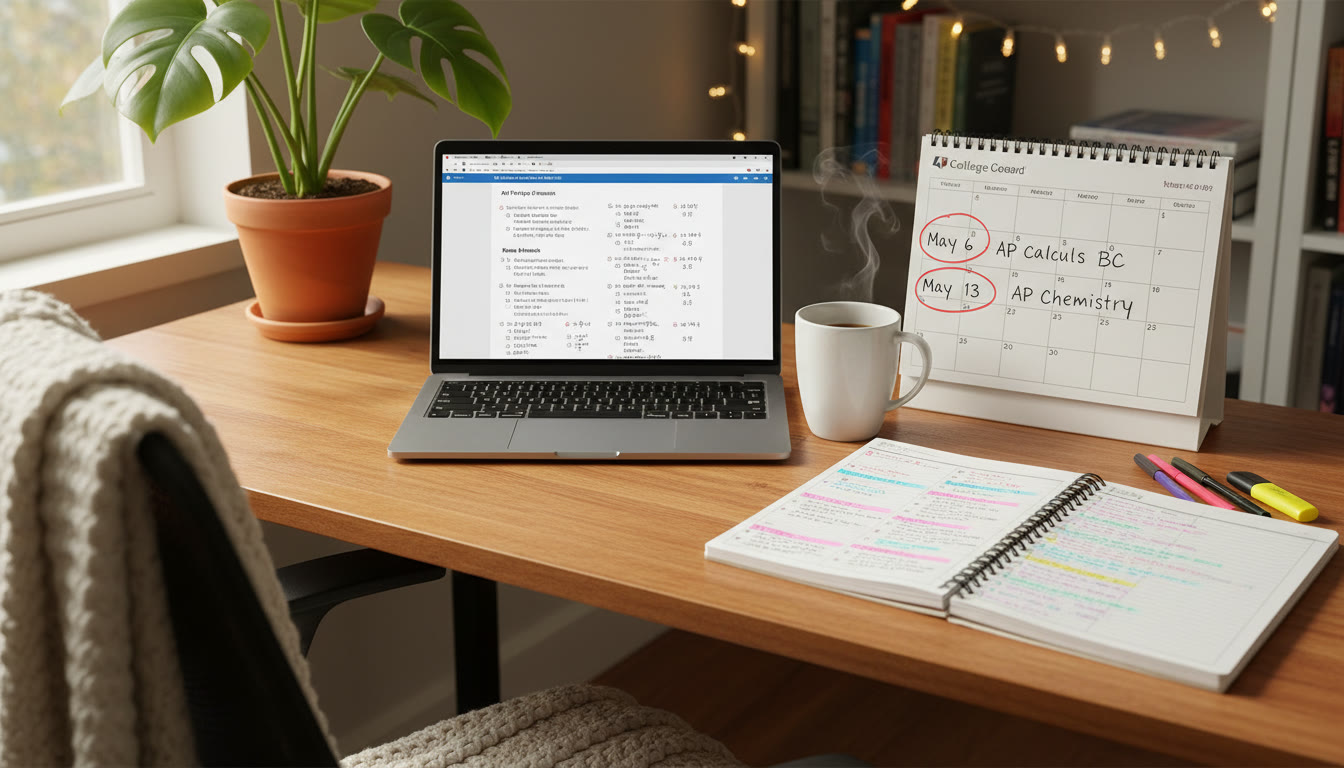
Before You Start: Quick Diagnostic (1–2 hours)
Begin your tune-up by creating a snapshot of where you stand. Don’t spend the whole break on diagnostics—this is a sharp, honest check-in that guides the rest of the week.
- Pick a single, timed practice section (or a past free-response question) from your course that mirrors the exam format.
- Score it approximately: use rubrics, teacher feedback, or a trusted online scoring guide to identify immediate weaknesses.
- List 5–7 topics that cost you the most time or points (for example: AP Biology—cell respiration and data analysis; AP US History—document-based question framing and chronology).
This diagnostic will tell you whether your break should emphasize content review, exam strategy, or practice tests.
Designing Your Spring Break Tune-Up: Principles That Work
1. Focus on weaknesses, not everything
Most students waste energy reviewing material they already know. Use your diagnostic to build a targeted list. If you get 90% of multiple-choice questions right on early units but miss synthesis on FRQs, prioritize practicing FRQ planning over rereading basics.
2. Short, intense sessions beat marathon reading
Micro-sessions (50–90 minutes) with clear goals—learn a tricky concept, complete a timed section, revise an essay—are far more effective than all-day passive study. Breaks matter: the brain solidifies learning during rest.
3. Mix active practice with spaced review
Alternate between teaching yourself (notes, short video lessons), active practice (problems, MCQs, FRQs), and spaced review (flashcards, quick quizzes). This cycle turns knowledge into usable skill.
4. Simulate testing conditions
At least once during the week, do a timed section or a shortened full test under realistic conditions—no phone, accurate timing, and a quiet space. This builds exam-day confidence and reveals pacing issues.
Sample 7-Day Spring Break Schedule (Flexible)
This template assumes moderate commitments (2–5 APs). Adjust durations and focus days according to the number of exams and your diagnostic results.
| Day | Morning | Afternoon | Evening |
|---|---|---|---|
| Day 1 (Diagnostic) | Timed diagnostic section (60–90 min) | Review diagnostic; list 5 target topics | Plan the week; light review |
| Day 2 (Target 1) | Deep dive topic A (notes + 2 practice sets) | Timed practice section | Flashcard review |
| Day 3 (Target 2) | Deep dive topic B (teach-back and summary) | Work on FRQs/Short answers | Relaxed light reading or AP Daily video |
| Day 4 (Mixed Practice) | Mixed MCQ set (timed) + review mistakes | Mini full practice (3–4 sections) | Self-reflection and strategy notes |
| Day 5 (Skills Day) | Essay/FRQ practice and rubric alignment | Data-interpretation or problem solving | Short rest and recovery |
| Day 6 (Simulate) | Take a timed section or practice test | Score and review; create micro-goal set | Active recall practice (flashcards) |
| Day 7 (Plan & Rest) | Plan next 6 weeks: calendar pacing | Quick review of troublesome points | Rest, sleep, and light preview of class material |
How to pace multiple APs in one week
If you’re taking several APs, rotate: dedicate a morning block to AP A, afternoon to AP B, and an evening quick review to AP C. Keep one day focused on mixed practice to reinforce switching between different question types and thinking modes.
Study Techniques That Beat Cramming
Active Recall and Retrieval Practice
Instead of re-reading notes, close the book and write what you remember. Quiz yourself or use flashcards. Retrieval practice strengthens memory and reveals gaps quickly.
Interleaving
Mix different kinds of problems or topics in a single study session. For example, rotate between kinetics problems and equilibrium questions in AP Chemistry, or rotate between rhetorical analysis and argument essays in AP English. Interleaving improves transfer and adaptability.
Explain Like I’m Five (ELI5) or Teach-Back
Try to explain a tough concept aloud in simple terms. If you struggle, you’ve found what to review. Teaching someone else (or even a mirror) is one of the fastest ways to consolidate complex ideas.
Targeted Error Logs
Keep a small notebook where you record each mistake from practice tests: what the error was, why you made it (conceptual gap, careless error, timing), and the fix. Review this daily—your error log is a concentrated map of what to fix.

Making Simulated Practice Count
Doing full practice tests is crucial—but only if you treat them like real tests and extract lessons afterward. Here’s a simple post-test routine that takes 45–90 minutes and returns huge gains.
- Score the test quickly and honestly (use official rubrics when available).
- Log mistakes in your error notebook with why and how to fix them.
- Identify at least two recurring problem types and plan 2–3 focused practice sessions to correct them.
- Adjust pacing strategies (e.g., skip and return to hard MCQs, allocate time per FRQ part).
If you’re working with Sparkl’s personalized tutoring, consider scheduling a review session immediately after a simulated test. A 1-on-1 tutor can point out subtle patterns—like consistent misreading of stems or small rubric misalignments—and give tailored practice to eliminate them quickly.
Real-World Examples: Small Tweaks, Big Differences
Here are two short stories adapted from common student experiences that show how focused spring-break work pays off.
- AP Calculus Student: After a diagnostic, Maya realized she was solid on derivatives but weak on applications (related rates and optimization). She used two mornings to do targeted problem sets, then simulated two exam problems under time. The next month she moved from 3/9 to 7/9 on application problems in class exams because she practiced setup patterns and units every day during the week.
- AP US History Student: Jordan struggled with DBQ structure and evidence selection. During break he practiced three DBQs, each time cutting his planning time in half and using a simple evidence template. By the end of the week he had a repeatable plan that helped him write clearer, evidence-driven essays in class.
Practical Tools and Resources to Use During Your Tune-Up
- Official past free-response questions and scoring rubrics for your course (practice with real prompts).
- AP Daily videos and topic review resources for targeted concept refreshers.
- Timed question sets (sections of past exams) to practice pacing and stamina.
- Spaced-repetition flashcard apps for vocabulary, formulas, and key dates.
- 1-on-1 tutoring sessions (in person or online) for fast, personalized fixes—tutors can provide tailored study plans and AI-driven insights into topic mastery.
A 6-Week Plan After Spring Break: Keep the Momentum
Spring break should set you up for a strong final stretch. Here’s a compact six-week blueprint you can follow after the break to maintain gains and prepare for test day.
| Weeks | Goals | Weekly Focus |
|---|---|---|
| Weeks 1–2 | Close major content gaps | 2 deep-topic nights, 1 mixed practice set, 1 timed section |
| Weeks 3–4 | Exam skills and timing | Full timed sections under test conditions; FRQ practice and review |
| Week 5 | Targeted polish | Tutor check-in, error-log fixes, light practice |
| Week 6 | Rest and confidence | Low-intensity review, sleep focus, test-day logistics |
Test-Day Prep Checklist (Two Weeks Out and Day Before)
- Confirm exam date, time, and location on your AP account and with your AP coordinator.
- Know what to bring: approved calculator (if allowed), pens/pencils, photo ID if required, and your College Board account info.
- Practice the test morning routine: wake time, breakfast, transit time, arrival window.
- Two nights before the exam, avoid late-night cramming—prioritize 8–9 hours of sleep.
- Day before: light review only (flashcards, review of error log), lay out materials, and unwind.
Managing Stress and Energy
Mental readiness often decides the margin between a good performance and a great one. Use the break to build rituals that keep stress low and energy high.
- Physical activity: 20–40 minutes daily of movement—walk, run, or yoga—to clear your head and improve focus.
- Nutrition and hydration: prioritize balanced meals and regular water intake. Avoid sugary spikes that crash study stamina.
- Sleep hygiene: keep consistent sleep-wake times, even during break. The brain consolidates learning as you sleep.
- Micro-breaks and rewards: schedule short breaks and small treats when you complete focused sessions—this builds positive study momentum.
How to Use Tutoring Effectively During Your Break
If you have access to tutoring—especially personalized programs that offer 1-on-1 guidance—it can magnify your tune-up impact. Here’s how to maximize a few targeted sessions:
- Before the week, send your diagnostic results and error log to your tutor so sessions are highly focused.
- Book a mix of content and strategy sessions: one to shore up a stubborn concept, another to run through timed FRQs or pacing strategies.
- Ask for a tailored, written follow-up plan with 3–4 targeted practice items to complete independently during the break.
- Use AI-driven insights (if offered by the service) to pinpoint specific subtopics where practice yields the highest score gains.
Programs like Sparkl’s personalized tutoring provide that mix—expert tutors, targeted study plans, and AI-driven feedback—so you can practice with precision rather than guesswork.
Common Pitfalls and How to Avoid Them
Pitfall: Trying to Review Everything
Fix: Use the diagnostic and error log to prioritize. You’ll get more return by fixing the top three recurring mistakes.
Pitfall: Passive Re-Reading
Fix: Swap in practice questions, teach-back, and retrieval exercises. Active methods stick.
Pitfall: Ignoring Test Logistics
Fix: Confirm exam time and location, test-day materials, and any accommodations—remove surprises so your nervous energy can focus on the exam itself.
Putting It All Together: A Realistic Day from the Tune-Up Week
Here’s what a balanced day looks like when you want high-return work without burnout.
- 8:00–9:00 AM — Short workout and breakfast (energy and mood boost).
- 9:30–11:00 AM — Focused study block: tackle a high-priority topic with active practice.
- 11:15–12:00 PM — Quick mixed set of timed MCQs; update error log.
- 1:30–3:00 PM — Tutor session or video lesson + teach-back practice.
- 3:30–5:00 PM — FRQ practice or problem set under timed conditions.
- Evening — Light review, flashcards, and relaxation—no screens 60 minutes before bed.
Final Thought: Make the Break Yours
Spring break is a short window—but used well, it changes the rest of your AP year. The trick isn’t radical sacrifice; it’s smart choices: focus where you need the most growth, simulate test conditions, practice with purpose, and use mentors or tutors for surgical fixes. Whether that means booking a few sessions with a personalized tutor, using AP Daily videos to clarify a tricky topic, or committing to one timed simulation in the week, these small investments compound.
Remember: learning isn’t a race to the finish line where you sprint at the end. Think of your AP preparation as a relay—this spring break tune-up hands you a batoned rhythm, steadier and faster, into the final miles. Do the diagnostic, fix the top mistakes, practice under realistic conditions, sleep, and eat well. You’ll return to school sharper, calmer, and more confident. And if you want to make the week extra efficient, consider scheduling a couple of 1-on-1 Sparkl tutoring sessions—targeted guidance can turn a week of good work into measurable score gains.
Ready to start?
Take ten minutes now: pick a timed diagnostic, create your error log, and decide the top three targets for your spring-break week. That small step will shape every productive hour that follows.



























No Comments
Leave a comment Cancel