
Why Combine AP Theatre / AP Art with Conservatory-Style Programs?
If you love theatre or visual art, you might be standing at a fork in the road: pursue Advanced Placement (AP) courses in high school, or jump straight into conservatory-style training? The good news is — you don’t have to choose one over the other. AP Theatre and AP Studio Art can strengthen your academic profile while conservatory-style programs sharpen creative craft through intensive, practice-based training. Together they tell admissions committees a cohesive story: you are serious, disciplined, and academically prepared, and you also have the artistic grit required to thrive.
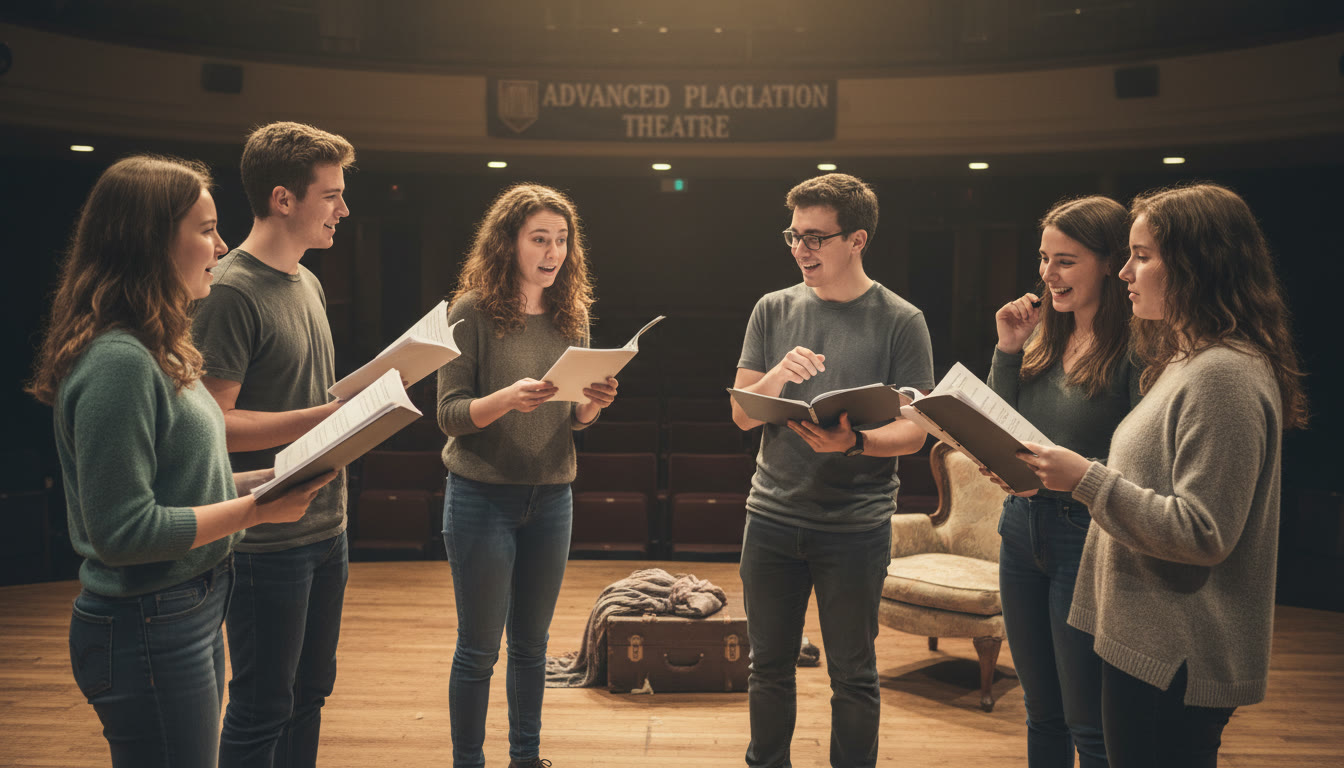
How They Complement Each Other
- AP demonstrates academic rigor: AP courses show you can handle college-level thinking, research, and critique in addition to studio work.
- Conservatory emphasis strengthens craft: Intensives, scene study, portfolio development, or studio practice communicate your artistic seriousness beyond grades.
- Admissions love evidence across contexts: Academic results, a polished portfolio or audition, teacher recommendations, and a clear artistic statement create a multidimensional application.
Understanding AP Theatre and AP Studio Art (Quick Primer)
First, a quick orientation so parents and students share the same language. AP Theatre (or related courses that emphasize theatre studies) may explore dramatic literature, history, theory, and elements of production. AP Studio Art — often offered as AP Drawing, AP 2-D Design, or AP 3-D Design — focuses on portfolio development and sustained investigation of artistic practice.
What Each Course Can Showcase to Conservatory Programs
- AP Theatre: Textual analysis, directing or production understanding, dramaturgy, and the ability to write about performance with clarity.
- AP Studio Art: Technical skill, conceptual development, evidence of a sustained body of work, and an ability to reflect critically on process.
Creating a Unified Application Story
Admissions reviewers at conservatory-style programs are not just looking for talented artists — they’re looking for students who can articulate their artistic journey, who respond thoughtfully to critique, and who will benefit from (and contribute to) a rigorous training environment. Think of your application as a well-directed one-act play in three scenes: Coursework & Academics, Artistic Work (portfolio/audition), and Personal Narrative.
Scene 1 — Coursework & Academics
Take AP courses that make sense for your profile. AP Studio Art is a direct signal that you’ve engaged in portfolio-level work; AP Literature or AP English Language can strengthen your writing voice and analysis—handy for artist statements and essays. Conservatory programs often expect competence in communication and contextual knowledge as much as raw talent.
Scene 2 — Artistic Work
For actors/musical theatre: auditions should feature varied material showing range and technique. For visual artists: a sustained and well-curated portfolio is essential. Use AP Studio Art time to experiment, refine, and document your best pieces. A portfolio that includes sketches, process shots, and final pieces tells a richer story than finished works alone.
Scene 3 — Personal Narrative
Use essays and interviews to connect your AP experience with your art practice. Did an AP project inspire a portfolio theme? Did a research paper in AP history inform your approach to a period play? These linking details make your application feel intentional, not accidental.
Practical Timeline: When to Do What (High School Roadmap)
Below is a suggested timeline many students find useful. Customize it to fit your school calendar, festival seasons, and personal pace.
| Year | Focus | Key Actions |
|---|---|---|
| Freshman | Explore and Build Foundations | – Try theatre and art classes; join clubs. – Begin a sketchbook or performance journal. – Attend local performances and exhibitions. |
| Sophomore | Expand Skills and Start AP Planning | – Consider AP Studio Art or AP English for critical writing. – Take lead small roles or undertake short-term art projects. – Start compiling work digitally. |
| Junior | Intensity and Evidence | – Enroll in AP Studio Art (or AP Theatre where available). – Prepare a preliminary portfolio or audition pieces. – Begin visiting conservatories, virtual or in-person. – Take AP exams in May. |
| Senior | Polish and Apply | – Finalize portfolio and audition selections. – Write artist statements and essays. – Schedule mock auditions/interviews (Sparkl’s 1-on-1 tutoring can be valuable here). – Submit applications early where possible. |
Constructing a Standout Portfolio or Audition
Portfolios and auditions are your moment to speak without grades. Make them clear, cohesive, and conversational — let your personality and practice breathe.
Portfolio Essentials (Visual Artists)
- Show a range of media but maintain a unified voice or recurring themes.
- Include process work: thumbnails, studies, and reflections — conservatories want to see thinking as well as skill.
- Label pieces with medium, size, date, and short context (why you made it or what problem you were solving).
- Curate ruthlessly: quality over quantity. A focused set of 10–20 strong works is better than 50 inconsistent pieces.
Audition Essentials (Actors and Performers)
- Pick contrasting pieces: a modern monologue and a classical excerpt, or a song and a dance. Show range.
- Know the scoring rubric: tone, diction, emotional truth, physicality, and preparedness often count heavily.
- Use warm-ups and short pre-audition routines; nerves are normal, but preparation is the best antidote.
- Record high-quality videos if required; treat self-taped auditions like professional submissions.
Nailing the Artist Statement and Supplemental Essays
Your statement is where AP coursework and conservatory aspirations intersect in words. Use it to narrate growth: how AP Studio Art taught you to reflect on process; how an AP literature seminar helped you place a character’s arc into context. Make it specific — admissions officers remember details.
Quick Writing Checklist
- Start with a vivid anecdote or a clear thematic sentence.
- Connect classroom learning (AP analysis, critiques) to hands-on practice.
- Mention concrete goals: what you hope to study and why the conservatory environment fits you.
- End with forward-looking clarity: what will you contribute to the conservatory community?
How AP Results Matter — Realistic Expectations
AP scores are one piece of the admissions puzzle. A high AP score shows academic readiness; but in arts conservatory admissions, portfolios, auditions, letters of recommendation, and demonstrated artistic progress are often weighted more heavily. Use AP classes to strengthen written components and critical thinking, not as the only proof of seriousness.
Simple Comparison Table: Application Components by Weight (Typical)
| Component | Typical Conservatory Weighting | How AP Helps |
|---|---|---|
| Portfolio / Audition | High | Directly demonstrates craft; AP Studio Art time can supply portfolio material. |
| Academic Transcript & AP Scores | Medium | Signals preparedness for rigorous liberal arts requirements; AP essays sharpen critical writing. |
| Letters of Recommendation | High | AP teachers can speak to your work ethic, critical thinking, and growth. |
| Interview / Personal Statement | High | AP experiences supply concrete examples and analytical language for essays and interviews. |
Practical Prep Tips: Time Management, Practice, and Feedback
Balancing AP demands with intensive artistic training is a time-management challenge. Here are tactical habits that help:
- Block small, consistent practice windows (30–60 minutes daily) rather than occasional marathon sessions.
- Integrate AP work into artistic practice: use research assignments to inform creative projects.
- Seek structured feedback cycles: critiques from teachers, peer reviews, and occasional expert sessions — targeted 1-on-1 tutoring (for example, Sparkl’s tailored study plans and expert tutors) can speed improvement by turning vague feedback into concrete next steps.
- Document progress — photos, rehearsal notes, and reflective journal entries become content for portfolios and essays.
Common Pitfalls and How to Avoid Them
Being aware of common mistakes saves time and prevents avoidable stress.
- Pitfall: Spreading too thin across many activities.
Solution: Prioritize depth in a few meaningful projects. - Pitfall: Waiting until senior year to pull a portfolio together.
Solution: Start early and iterate — AP Studio Art is a great place to begin sustained work. - Pitfall: Underestimating the value of written reflection.
Solution: Regularly write short artist statements and reflections; they make essays and interviews easier later.
How Parents Can Support — Without Taking Over
Parents play a crucial role as mentors, project managers, and emotional anchors. Support that helps looks like funding lessons or portfolio materials, offering transportation to auditions, and simply providing a listening ear. Resist the urge to micromanage; empower independence through structure and encouragement.
Concrete Ways to Help
- Create a realistic schedule with your child and revisit it weekly.
- Provide a calm space for practice and study.
- Practice interview questions or read drafts of statements aloud with them.
- Help research conservatory requirements — but let the student own the creative choices.
When to Get Expert Help (And What to Look For)
Many families wonder if tutoring or coaching is worth it. If you’re aiming for top conservatory-style programs, targeted help can be a force multiplier. Look for tutors or coaches who understand both the AP curriculum and conservatory expectations. A good coach will provide:
- Customized technical feedback (voice, movement, composition, portfolio critique).
- Mock auditions and constructive simulation environments.
- Help to craft artist statements and edit essays with an eye for clarity and authenticity.
Sparkl’s personalized tutoring, for example, blends 1-on-1 guidance, tailored study plans, and AI-driven insights to focus practice and improve outcomes. When used thoughtfully, these resources reduce wasted effort and keep momentum steady.
Putting It All Together: A Sample Portfolio/Audition Checklist
- 10–20 curated art pieces (with process work and captions) or 2–3 varied audition pieces.
- Artist statement (1 page) and short explanations for each portfolio piece.
- AP scores and relevant course list included in the academic portion of the application.
- At least two strong letters of recommendation from teachers who know your artistic work.
- High-quality photos or video recordings, labelled and formatted per program instructions.
- Practice interviews and an oral summary of your artistic goals.
Examples: How Students Combine AP and Conservatory Paths
Here are two short, illustrative examples to show how AP and conservatory preparation can fit together in real life.
Example 1 — The Actor Who Reads Deep
Jamie took AP English Language and AP Literature to sharpen analytical reading, and AP Psychology to study character motivation. In theatre rehearsals and school productions, Jamie focused on character work and filmed self-taped monologues to refine camera technique. Jamie used an AP research project to analyze a playwright’s historical context, which became a compelling hook for the conservatory application. Mock auditions with a coach and intermittent 1-on-1 sessions helped polish technique without losing authenticity.
Example 2 — The Visual Artist with a Focused Voice
Riley took AP Studio Art and AP European History. Riley used AP Studio Art time to develop a cohesive body of work about urban memory, documented process in a sketchbook, and tied research from AP history into the conceptual framework. Portfolio reviews with a mentor and Sparkl-style targeted tutoring refined presentation and artist statement clarity, resulting in a persuasive portfolio with depth and scholarly awareness.
Final Thoughts: Balance, Authenticity, and Persistence
Preparing for AP Theatre or AP Studio Art while aiming for conservatory-style programs isn’t just about checking boxes. It’s about building a truthful narrative of study, experiment, failure, revision, and growth. Colleges want to see a student who can both think and do — someone who can analyze a text or image and then make work that answers that analysis.
Stay curious. Be disciplined. Seek feedback, and when you need it, get targeted help that respects your voice and pushes your craft forward. With thoughtful planning — and a few well-chosen resources like 1-on-1 tutoring and tailored study plans — you can create an application that feels honest, cohesive, and compelling.
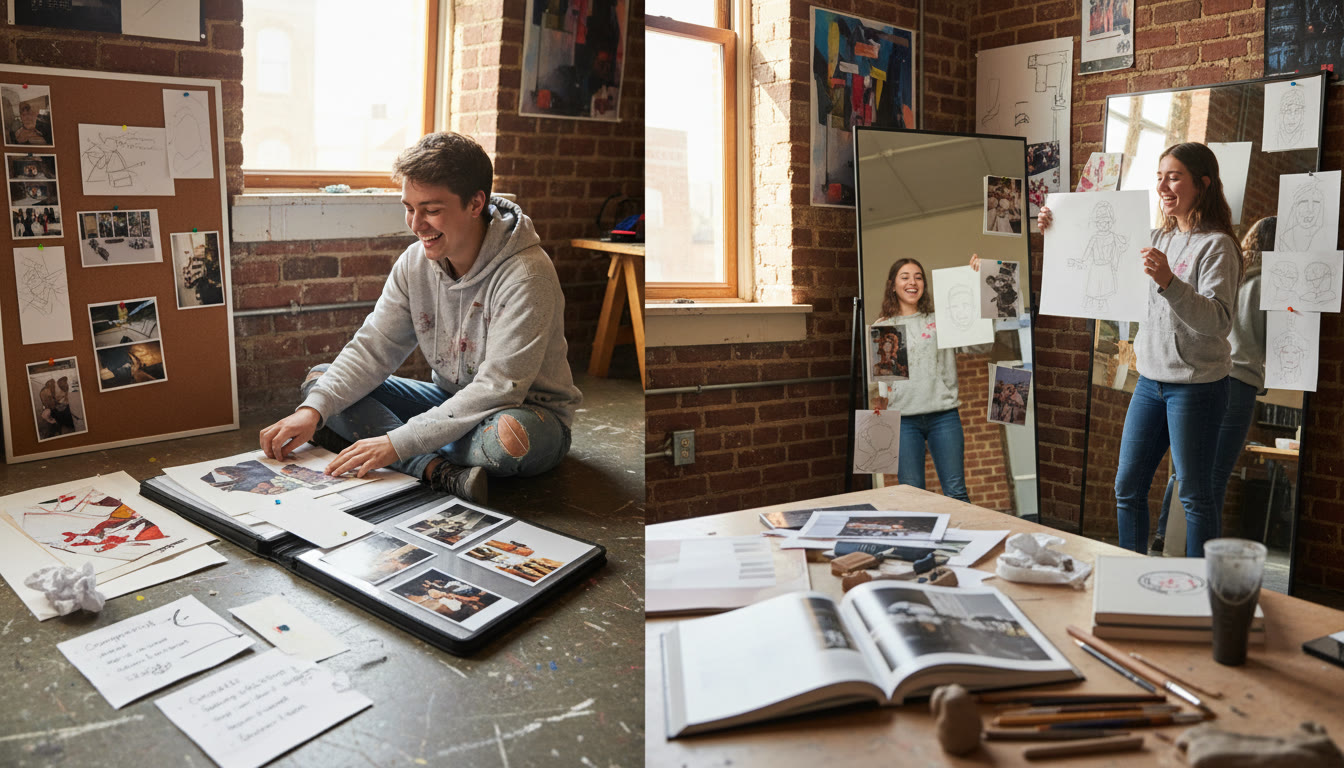
Parting Advice for Students and Parents
Remember: conservatory programs look for promise and preparedness more than perfection. Use AP courses to sharpen your critical voice and fuel your artistic statements. Curate your best work, practice consistently, and tell your story with clarity. And if you need focused support — whether for AP exam prep, portfolio polishing, or audition coaching — lean on expert, personalized help that keeps your goals and identity at the center.
Good luck — and enjoy the process. The most memorable art and the most convincing auditions come from students who are curious, disciplined, and absolutely themselves.

























No Comments
Leave a comment Cancel