
Welcome — Why Unit 1 Matters
Think of Biology Unit 1 as the secret language behind every living thing. Before you can talk about cells, tissues, or ecosystems, you have to understand the vocabulary: atoms, bonds, and the macromolecules that create life’s architecture. For AP Biology, Unit 1 lays the foundation that every later unit builds upon. Get this part right and everything else becomes clearer — from enzyme activity in Unit 2 to cellular energetics and genetics later on.
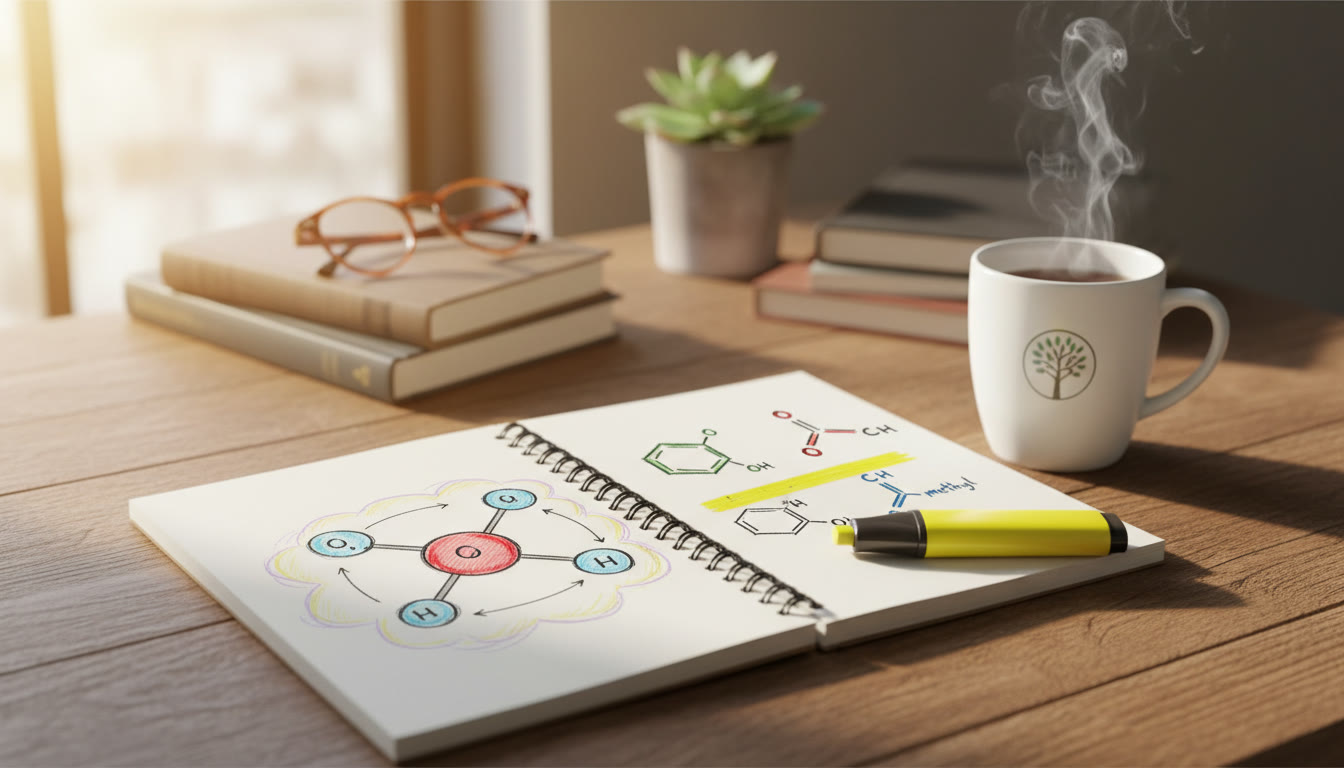
Big Picture: Structure and Function — The Central Theme
AP exam questions love to ask not just “what” but “why”. In Unit 1 you’ll learn to explain how the structure of molecules and their chemical interactions create biological function. For example:
- Why water’s polarity makes it an exceptional solvent and regulates temperature.
- How the directionality of nucleic acids supports information flow.
- Why the structure of a phospholipid creates membranes that are selectively permeable.
Understanding these cause-and-effect relationships will let you move from memorization to reasoning — exactly what AP graders reward.
Core Concepts and How They Fit Together
1. Atoms, Elements, and Chemical Bonds
Start small. Everything biological is built from a handful of elements — carbon (C), hydrogen (H), oxygen (O), nitrogen (N), phosphorus (P), and sulfur (S) dominate. Atoms interact to form molecules through three main types of bonds:
- Ionic bonds — electron transfer creates charged ions that attract each other. Think salts; they dissolve in water.
- Covalent bonds — atoms share electrons. These create the stable backbones of organic molecules (single, double, or even triple bonds).
- Hydrogen bonds — weak, transient attractions between partially charged regions. Individually weak, collectively powerful (e.g., DNA base-pairing, water’s cohesion).
Practice tip: draw Lewis structures and highlight where electrons are shared or transferred. Visualizing electron clouds helps you predict polarity and reactivity.
2. Water — Life’s Versatile Medium
Water’s properties are central to biology. A few essential features:
- Polarity — oxygen pulls electrons toward itself, creating partial charges.
- Cohesion and adhesion — water sticks to itself (cohesion) and to other surfaces (adhesion), enabling capillary action in plants.
- High specific heat — water absorbs/release heat slowly, stabilizing environments and cellular temperatures.
- Excellent solvent — polar and ionic substances dissolve, while nonpolar molecules (like oils) do not.
Exam-style connection: When asked how organisms maintain homeostasis, tie in water’s heat-stabilizing role and solvent capabilities.
3. pH and Buffers
Biological systems are sensitive to hydrogen ion concentration [H+]. The pH scale (0–14) reflects [H+], and small shifts can disrupt protein structure and enzyme activity. Buffers — weak acid/base pairs — resist pH changes by absorbing or releasing H+. In cells, common buffer systems (like bicarbonate in blood) are essential for maintaining function.
4. Carbon: The Backbone of Life
Carbon’s four valence electrons let it form diverse structures: chains, rings, and branches. This versatility underlies the complexity of organic molecules. Recognize functional groups (hydroxyl, carbonyl, carboxyl, amino, sulfhydryl, phosphate) — they determine chemical behavior and reactivity.
5. Macromolecules — Building Blocks and Functions
AP focus: you don’t need to memorize every detail, but you must explain how structure relates to function for the four major macromolecule classes:
| Macromolecule | Monomer | Primary Function | Structural Feature That Matters |
|---|---|---|---|
| Carbohydrates | Monosaccharides (e.g., glucose) | Short-term energy, structural (cellulose in plants) | Ring structures and glycosidic linkages — branching affects digestibility |
| Lipids | Glycerol + Fatty Acids (or isoprenoids) | Long-term energy, membrane structure, signaling | Hydrophobic tails and hydrophilic heads (in phospholipids) create bilayers |
| Proteins | Amino acids | Enzymes, structure, transport, signaling | Primary → secondary → tertiary → quaternary structure; shape determines function |
| Nucleic Acids | Nucleotides (sugar + phosphate + base) | Information storage and transfer (DNA/RNA), energy carriers (ATP) | Directionality (5′ → 3′), base pairing for replication/transcription |
Study strategy: create flashcards that pair a structure sketch with a short explanation of how that structure enables its function. For proteins, practice describing how a mutation might change folding and thus alter activity.
Enzymes: The Workhorses of Cellular Chemistry
Enzymes accelerate reactions by lowering activation energy. Key ideas to master:
- Active site — where substrates bind; complementary shape and chemical environment are crucial.
- Induced fit — enzyme changes shape slightly to better accommodate substrate, enhancing catalysis.
- Factors that affect enzyme activity — temperature, pH, substrate concentration, and inhibitors (competitive vs. noncompetitive).
Example to practice: Explain how a competitive inhibitor affects the Michaelis constant (Km) and maximum velocity (Vmax) compared to a noncompetitive inhibitor. You don’t need complex math for AP, but being able to reason about relative changes is valuable.
Membranes and Transport — Where Chemistry Meets Cell Biology
Membranes are dynamic mosaics of phospholipids, proteins, and carbohydrates. Their chemistry creates selective permeability:
- Small nonpolar molecules cross freely; ions and large polar molecules require transport proteins.
- Osmosis and tonicity describe water movement relative to solute concentrations — hypotonic, isotonic, and hypertonic solutions have predictable effects on cells.
- Active transport uses energy (ATP) to move molecules against their gradients; facilitated diffusion uses proteins but no direct energy input.
Exam vignette possibilities: You might be given relative concentrations and asked whether a cell will swell, shrink, or remain the same. Practice drawing water arrows and labeling solute movement to solidify intuition.
Putting Concepts Together — Practice Scenarios
Scenario 1: A Mutated Enzyme
Imagine a point mutation replaces a hydrophobic amino acid in the enzyme’s active site with a charged amino acid. Predict the consequences:
- Active site shape and chemistry likely change, reducing affinity for the original substrate.
- Enzyme rate drops; substrate may bind less efficiently, raising Km (if you frame it in enzyme kinetics terms).
- Downstream pathways that depend on the reaction may slow, showing how a single molecular change cascades to system-level effects.
Scenario 2: Cell in Different Solutions
If a red blood cell is placed in distilled water (very hypotonic), water will enter, and the cell could lyse. In a salt solution that is hypertonic, water leaves and the cell crenates. Use this logic to explain how marine organisms manage osmotic stress differently from freshwater organisms.
Effective Study Habits for Unit 1 (and How Sparkl Helps)
Smart studying beats cramming. Here’s a routine that respects how chemistry and biology integrate:
- Daily micro-sessions: 25–45 minutes focused on one concept (e.g., hydrogen bonding, carbohydrate structure) with 5–10 minute active recall at the end.
- Sketch and explain: Draw molecules, label parts, and verbally explain why a bond or structure matters. Teaching someone else — or an online tutor — is gold.
- Practice with purpose: Tackle passage-based questions, not just isolated facts. AP loves scenarios that require applied reasoning.
- Use spaced repetition: Return to topics at increasing intervals to move knowledge from short-term to long-term memory.
If you need tailored pacing, Sparkl’s personalized tutoring can be a powerful complement — 1-on-1 guidance, targeted study plans, and expert tutors can help you identify weak points and build a study rhythm that fits your life. For students who want diagnostics, interactive feedback, and AI-driven insights, Sparkl can help prioritize topics so every study minute counts.
Common Misconceptions and How to Avoid Them
- Misconception: “All lipids are fats.” Reality: Lipids include phospholipids, steroids, and waxes. Context matters — membranes are built from amphipathic lipids, not triglycerides.
- Misconception: “Stronger bonds always mean faster reactions.” Reality: Stable bonds usually mean slower reactions unless an enzyme catalyzes the process.
- Misconception: “Water just hydrates.” Reality: Water’s polarity, hydrogen bonding, and thermal properties influence everything from protein folding to nutrient transport.
AP-Style Practice Prompts and How to Answer Them
Here’s how to approach common question types you’ll see on Unit 1 material.
Prompt Type: Explain a molecular property.
Strategy: Define the property, link it to molecular structure, and describe a biological consequence. Example: “Explain how water’s polarity supports nutrient transport in plants.” Answer: water’s polarity enables hydrogen bonding and cohesion, which supports capillary action in xylem vessels, facilitating vertical transport of water and dissolved minerals.
Prompt Type: Predict outcomes after a change.
Strategy: Identify the immediate chemical effect, follow to the cellular consequence, then to the organismal effect if relevant. Use cause → effect chaining, and be explicit about the mechanism (e.g., changes in membrane fluidity alter transport rates).
Prompt Type: Compare and contrast
Strategy: Use a short table or parallel sentences. For example, when comparing saturated vs. unsaturated fatty acids, mention carbon-carbon single vs. double bonds, packing differences, and consequences for membrane fluidity and melting point.
Quick Reference Table: Key Molecules and Their Functions
| Molecule | Example | Functional Role |
|---|---|---|
| Monosaccharide | Glucose | Primary fuel for cellular respiration; immediate energy source |
| Disaccharide | Sucrose | Transport form of carbohydrates in plants |
| Polysaccharide | Cellulose, Glycogen | Structural support in plants (cellulose); energy storage in animals (glycogen) |
| Phospholipid | Phosphatidylcholine | Main component of cell membranes; forms bilayers |
| Amino Acid | Serine, Alanine | Building blocks of proteins; side chains determine polarity and reactivity |
| Nucleotide | ATP, dATP | Energy carriers (ATP), building blocks of DNA/RNA |
Exam-Day Tips Focused on Unit 1
- Read the prompt fully: AP questions often embed data; your first step is to extract chemical details (concentrations, temperatures, pH).
- Label diagrams: If a graph or molecular structure is provided, quickly annotate it — this prevents misreading later.
- Answer with cause-effect language: Use “because,” “therefore,” and “as a result” to show chain-of-reasoning clarity.
- Budget time: Unit 1 questions can be deceptively simple but require careful explanation. Spend 1–2 minutes planning FRQ answers to avoid sloppy logic.
How to Turn Weakness into Strength — A 4-Week Plan
This compact plan is aimed at students who want focused review for Unit 1.
- Week 1 — Foundations: Atoms, bonds, water, pH. Daily 30–40 minute sessions with practice problems and diagrams.
- Week 2 — Macromolecules: Carbohydrates, lipids, proteins, nucleic acids. Build concept maps and practice short-answer explanations.
- Week 3 — Enzymes and Membranes: Dive into enzyme kinetics conceptually, membrane transport, and osmosis problems. Time yourself on AP-style questions.
- Week 4 — Synthesis and Practice: Mixed practice sets, full FRQ walkthroughs, and a timed mini-exam. Identify lingering weak spots and review them with targeted flashcards.
If you want a scaffolded approach, Sparkl’s personalized tutoring offers tailored study plans and one-on-one sessions that can be slotted into this timeline. Their tutors can help you convert review into targeted practice and use AI-driven insights to pinpoint topics that will most raise your score.
Final Words — Be Curious and Connect the Dots
Unit 1 may seem abstract at first, but it’s the key to understanding living systems. Try to connect every chemical detail to a biological consequence: why does membrane fluidity matter for cold-adapted animals? How does the hydrogen bonding network in water support blood transport? When you can answer those “why” questions, you’ll have moved from memorization to true understanding.
Before you close your notebook today, write one sentence that connects a Unit 1 concept to something in your own life — it could be how salt makes ice melt, how pasta expands when boiled, or how lotion absorbs differently in dry versus humid weather. Those small bridges between textbook chemistry and lived experience will make the material stick.

Quick Checklist Before Moving On to Unit 2
- I can explain how covalent, ionic, and hydrogen bonds differ and why that matters biologically.
- I can describe the four macromolecules and give at least one example of structure-function for each.
- I can predict the effect of pH or temperature on enzyme activity and explain why.
- I can work through simple membrane transport and osmosis problems without guesswork.
Resources and Next Steps
Now that you’ve built a conceptual scaffold, the next step is deliberate practice: passage-based questions, FRQs, and targeted review on the concepts you find hardest. If you want tailored scheduling, detailed feedback on practice FRQs, or a study roadmap that adapts to your strengths, consider booking a session with a Sparkl tutor. Personalized support can convert uncertainty into confident mastery.
Good luck — and remember: chemistry in biology is not a hurdle, it’s a toolkit. With clear reasoning, steady practice, and the right questions, Unit 1 will become one of your strongest assets for the rest of the AP course.




























No Comments
Leave a comment Cancel