
Why Topic Banks Change the Game for AP Students
Imagine walking into your AP exam with a mental toolbox — not a pile of disconnected facts, but organized themes, reliable examples, and quick-memory hooks that let you answer confidently under pressure. That’s what a topic bank does. Instead of passively re-reading chapters, you actively build a personalized library of ideas that you can retrieve and recombine during essays, short responses, and multiple-choice sections.
For AP students preparing across subjects, topic banks are especially powerful. Whether you’re tackling AP English Language with persuasive evidence, AP Environmental Science with case studies, AP Biology with health scenarios, or AP Computer Science with technology ethics, a cross-disciplinary topic bank lets you pull the right example fast.
What a topic bank actually is
A topic bank is a curated, organized collection of concise notes — each entry contains a topic title, a short definition, key facts, a high-quality example, and possible links to other topics. Over time, you grow layers: quick flashcard entries for fast recall, deeper pages for essays, and a catalog of real-world case studies for application.
Building topic banks trains you to think like an examiner. Exams reward clarity, relevance, and synthesis — and topic banks help you deliver all three.

Four Thematic Pillars: Education, Health, Tech, Environment
To keep your bank usable, organize by theme. For AP exams, four pillars give broad coverage and frequent cross-application: Education, Health, Tech, and Environment. Each pillar houses topics that are commonly asked across humanities and sciences — and they provide excellent, versatile examples for essays and free-response questions.
Why these four?
- Education fuels arguments about inequality, policy, and development — relevant to AP US History, AP English, and AP Comparative Government.
- Health provides case studies and data for AP Biology, AP Psychology, and AP Human Geography.
- Tech contains ethics, innovation, and privacy debates that show up in AP Computer Science, AP Government, and AP Research.
- Environment offers data, processes, and policy debates for AP Environmental Science and AP Human Geography.
How to divide each pillar
Break each pillar into 6–10 staple topics. For each topic, capture four elements: definition (1–2 sentences), a compact fact or data point, a real-world example (case study), and 2–3 quick links to related topics. Keep each entry short — aim for 60–120 words — to make retrieval fast under timed conditions.
Step-by-Step: Building and Using Your Topic Bank
Step 1 — Choose your format
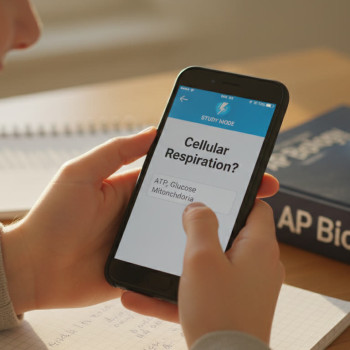
Pick what actually works for you: physical index cards, a structured Google Doc, a Notion database, or an app. Digital formats allow search, tagging, and multimedia (images, short videos). Physical cards are tactile and great for quick shuffle practice. Many students blend both: digital master copy + printed flashcards for review.
Step 2 — Create a template
Consistency matters. Use a template for each entry so your brain learns where to look. Template fields might include:
- Topic Name
- Definition (1 sentence)
- Key Fact or Statistic
- Example / Case Study
- Exam Hooks (how to use it in an AP prompt)
- Cross-References
Step 3 — Seed the bank with 3–5 strong entries per pillar
Begin with high-utility topics. For example:
- Education — Inequality in access, standardized testing effects, online learning trends.
- Health — Vaccination policy, mental health among teens, public health infrastructure.
- Tech — Data privacy, AI decision-making, digital divide.
- Environment — Climate attribution, urban heat islands, sustainable agriculture.
These initial entries will cover a surprising number of prompts across AP subjects.
Step 4 — Practice retrieval, not re-reading
Schedule active retrieval practice: shuffle cards, self-test with closed-book timed essays, and use the bank during mock free-response questions. The goal is fast access: within 10–30 seconds you should be able to name a topic, its core fact, and an example.
Step 5 — Evolve your bank with feedback
After each practice exam, add new entries and refine examples. If you got points for a case study, keep it; if an example felt weak under time pressure, replace it with a tighter one. Over weeks, the bank becomes a high-quality, tailored resource.
Examples and Ready-to-Use Entries
Here are sample entries to copy into your own bank. Each is short, exam-ready, and cross-applicable.
Education: Digital Divide
Definition: Unequal access to reliable internet, devices, and digital literacy across socioeconomic groups. Key Fact: Students without home internet are at higher risk for learning gaps during remote instruction. Example: During COVID-19 closures, districts with one-to-one device programs recovered learning faster. Exam Hook: Use when discussing inequalities, technology policy, or education reform.
Health: Vaccination Policy
Definition: Public strategies to increase immunization covering mandates, education, and access. Key Fact: Community-level vaccination thresholds create herd immunity benefits beyond individual protection. Example: School-entry vaccination requirements that dramatically reduced outbreaks. Exam Hook: Perfect for public health, ethics, or policy prompts.
Tech: Data Privacy
Definition: The rights and mechanisms that govern personal data collection, storage, and use. Key Fact: Data breaches can erode trust and have real economic and health consequences. Example: A local government’s open-data initiative that balanced transparency with anonymization protocols. Exam Hook: Useful in essays about regulation, civil liberties, or tech governance.
Environment: Urban Heat Island
Definition: Cities experiencing higher temperatures than surrounding areas due to human modification of land surfaces. Key Fact: Impervious surfaces and low tree cover can raise city temperatures several degrees, increasing health risks. Example: A municipal tree-planting program that reduced local cooling costs and heat-related illnesses. Exam Hook: Use for AP Environmental Science or human geography prompts on adaptation/mitigation.
How to Turn Topic Banks into Exam-Winning Tools
1. Build essay skeletons around topics
For each topic in your bank, draft a 3–4 sentence paragraph you could drop into an essay: claim, evidence, explanation, and a tie-back to thesis. Practice inserting these paragraphs into different essay prompts so you can adapt quickly.
2. Cross-pollinate examples
A health case study might support an environmental point about policy. A tech ethics example can illuminate education debates. Tag entries with relevant subjects so you can find versatile examples during tests.
3. Use compact statistics and names
One crisp data point (with year where possible) is often worth more than pages of vague detail. Memorize short figures and proper nouns that make your argument specific and credible.
4. Practice timed assembly
Give yourself 10 minutes to combine three topic-bank entries into a coherent essay outline. This trains you to move from isolated knowledge to integrated argument under time pressure.
Sample Topic Bank Table (Starter Template)
| Topic | Definition | Key Fact | Example | Exam Hooks |
|---|---|---|---|---|
| Digital Divide | Unequal access to digital resources. | Students without home internet fall behind academically. | District device programs improved remote learning outcomes. | Equity, policy, educational outcomes. |
| Vaccination Policy | Strategies to increase immunization coverage. | Herd immunity reduces community spread. | School-entry mandates reduced outbreaks. | Public health, ethics, policy. |
| Data Privacy | Controls on personal data collection and use. | Breaches cause economic and social harm. | Municipal anonymization in open-data policy. | Regulation, civil liberties, technology ethics. |
| Urban Heat Island | City temperatures elevated by human surfaces. | Increased heat-related mortality in affected neighborhoods. | Tree-planting reduced cooling costs and illness rates. | Adaptation, mitigation, urban planning. |
Study Routines That Keep Topic Banks Alive
Consistency beats intensity. The trick is tiny daily additions and weekly synthesis. Here’s a practical routine you can tailor to your schedule:
- Daily (15–30 minutes): Add or refine 1 topic entry. Do a 10-minute retrieval drill on three existing entries.
- Weekly (60–90 minutes): Combine 4–6 entries into practice essays, timed responses, or a concept map.
- Biweekly (2–3 hours): Take a past free-response section and answer it using only your topic bank and a blank sheet; then compare to model scoring guides and refine entries.
These small, consistent actions turn a static list into an adaptable thinking system.
Using Technology to Scale Your Bank
Apps like note managers or spaced-repetition flashcard tools let you schedule retrieval and see weak spots. You can tag topics by subject, exam section, or difficulty. If you prefer human-guided refinement, consider personalized tutoring: Sparkl’s 1-on-1 guidance and tailored study plans can help shape which topics you seed first and how to use them effectively. Expert tutors can give feedback on your essay paragraph templates and suggest stronger, exam-specific examples. AI-driven insights from tutoring platforms can also highlight which bank entries are most frequently useful for your target APs.
Common Pitfalls and How to Avoid Them
Pitfall 1: Overstuffing entries
Long, dense entries are hard to retrieve under time pressure. Keep each entry short and test whether you can recite it in 20–30 seconds.
Pitfall 2: Examples that are too local
Examples should be recognizable or easily explained in one sentence. Avoid obscure local programs unless you can state its impact succinctly.
Pitfall 3: No connection to exam tasks
Every entry should have at least one explicit “Exam Hook” — how you would use it in a thesis, evidence paragraph, or short-answer response.
Putting It Together: A Week-By-Week Mini Plan (6 Weeks)
This condensed plan helps compress improvement before test day. Adjust pacing if you have more time.
- Week 1 — Seed: Create 3 topics per pillar (12 total). Practice retrieval daily.
- Week 2 — Expand: Add 2 more topics per pillar and draft essay skeletons for 6 bank entries.
- Week 3 — Practice: Timed short-response practice using only topic bank entries; refine weak entries.
- Week 4 — Cross-apply: Combine topics across pillars in 3 extended essays; focus on synthesis.
- Week 5 — Mock Exam: Take a practice exam and use the bank actively. Post-mortem and update entries.
- Week 6 — Polish: Final review, flashcard blitz, and 2 simulated timed sections (with review).
Measuring Progress: Simple Metrics That Work
Track these to know your bank is helping:
- Recall Speed — Time to produce a topic name and example (target: under 20 seconds).
- Usage Rate — Number of bank entries used effectively in practice essays.
- Score Improvement — Points gained on free-response practice after implementing topic-bank strategies.
You don’t need perfection — incremental gains add up fast.

Final Notes: Making the Bank Yours
Topic banks are not one-size-fits-all. Your interests, course emphasis, and local context should shape the examples and hooks. The most effective banks are those you trust: concise, well-organized, and practiced until they become second nature.
If you want help kickstarting a bank, consider a short series of targeted sessions — a tutor can help you pick the highest-impact topics, craft sharp examples, and optimize entries for the specific AP exams you’re taking. Sparkl’s personalized tutoring emphasizes tailored study plans and expert feedback that can accelerate this process, helping you move from raw knowledge to exam-ready synthesis more quickly.
Closing thought
Studying for AP exams isn’t about memorizing everything; it’s about building a flexible repository of high-quality ideas and learning how to deploy them. A topic bank gives you that repository — a calm, confident source of examples and facts you can draw on under pressure. Start small, stay consistent, and watch how your clarity and scores improve.
Now grab a notebook or open a fresh document, create your template, and build your first dozen entries. You’ll be amazed how fast those small cards turn into exam-winning muscles.






















No Comments
Leave a comment Cancel