
Why This Matters: AP Exams and Board Practicals Often Collide
If you’re a student juggling AP classes and board practicals, welcome to a very real, very familiar balancing act. AP exams are typically scheduled in the first two full weeks of May each year, with a late-testing window after that. Board practicals—whether for science labs, music, art, or vocational subjects—often fall in the spring as well, and some schools place them in April or May. That overlap can feel overwhelming: practicals demand focused hands-on time while AP exams demand concentrated study and calm headspace. The good news is that with the right plan, you can protect your performance on both.
Big-picture Goals When Scheduling
- Preserve your health and sleep—no all-nighters the week before tests.
- Keep practicals and exams from competing for your strongest mental hours.
- Minimize schedule conflicts that force you to sacrifice one important assessment for another.
- Build a flexible study strategy that adapts to date changes, makeups, and rescheduling.
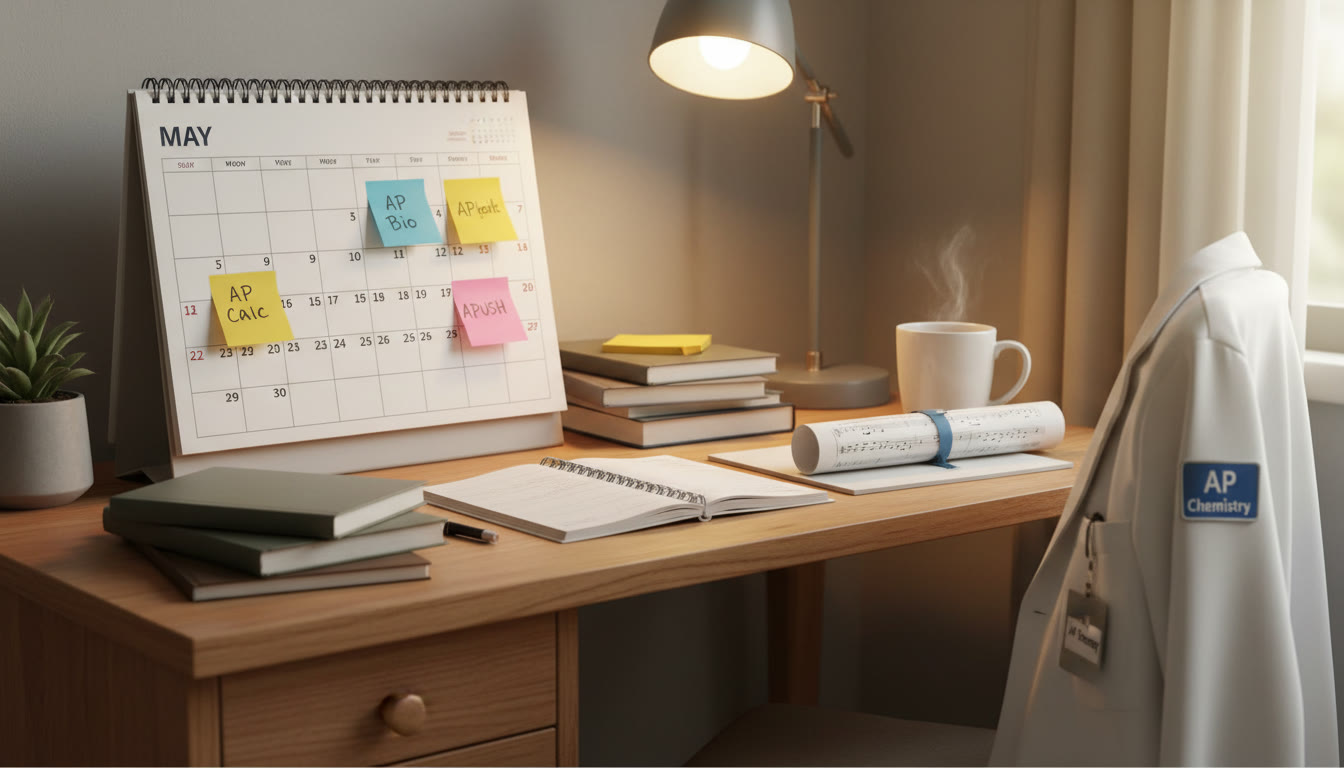
Step 1 — Map the Dates: Create Your Master Calendar
Your first action is simple and decisive: put the non-negotiable dates on a single, visible calendar. This includes:
- AP exam dates for each AP subject you’re taking.
- Board practical dates and their exact time windows.
- School deadlines like final project submissions, lab sign-ups, rehearsals, and exam-day logistics.
- Other immovable commitments—college interviews, major sports events, family obligations.
Having everything visible prevents last-minute surprises and gives you the power to spot conflicts early.
How to Get Accurate AP Dates (Quick Tip)
AP exams are scheduled by the College Board and generally fall in the early weeks of May, with a separate late-testing week. Your school’s AP coordinator will confirm exact times and locations. For practical planning, treat those May weeks as fixed and plan board practicals around them where possible.
Step 2 — Talk Early: Communicate with Teachers and Coordinators
Once your master calendar is in place, schedule short, proactive conversations with the people who can actually move things: your AP coordinator, practicals teacher, or department head. Keep these conversations focused and respectful.
Script for Negotiation (Short and Effective)
- Start with gratitude: “Thanks for taking a minute—I want to be sure I can do my best on both the practical and the AP exam.”
- State the conflict: “My AP exam for X is on May Y at Z time, and we have a practical on April/May W.”
- Ask about options: “Is there flexibility for a different practical slot or makeup? What documentation would you need?”
- Offer solutions: “I can make up the exam/practical before class, or I can submit an extra pre-practical assignment.”
Teachers want students to succeed. When you start early and present thoughtful options, they’re more likely to work with you.
Step 3 — Prioritize by Impact: Which Tests Need Your Peak Energy?
Not every assessment is created equal. Prioritize based on how much each one affects your future goals.
- AP exams often carry college credit and strong weight on your transcripts—give them high priority if college credit or placement matters for you.
- Board practicals can be essential for passing a course or for portfolio-building (art, music, trades); their importance depends on graduation requirements and future plans.
- If both are critical, plan to stagger preparation so you’re not trying to peak for two different performance types on the same day.
Practical Example
Imagine you have an AP Biology exam on May 7 and a board chemistry practical on May 6. Both are important. One smart approach: request that the chemistry department allow you to complete an alternate practical slot on May 2 or submit a pre-practical lab notebook early, while you save the week before May 7 primarily for AP review and rest. If no alternate is available, prioritize sleep and mental clarity around May 6–7: short, efficient prep for the practical, then a focused review block for AP Biology the evening after the practical.
Step 4 — Make a Study Plan That Respects the Practical
Design your study weeks to align with both types of assessment. Here’s a flexible template you can tailor:
- 8–6 weeks before exams: build foundational review—concept maps, lightweight practice problems, weekly lab rehearsals or practical skill drills.
- 5–3 weeks before exams: ramp up with timed practice AP sections, full-length practice exams, and final practical run-throughs scheduled in weekends or free days.
- 2 weeks before exams: taper—reduce new learning, sharpen test strategies, and do short, high-yield practice sessions. Run through any practical checklist items early so the final days are low-stress.
- Exam week: protect morning routines, maintain sleep, and do light, confidence-building review rather than last-minute cramming.
Daily Micro-Schedule Example
- Morning (60–90 minutes): targeted AP practice (questions, short passages).
- Afternoon (30–60 minutes): practical skills rehearsal or lab prep where applicable.
- Evening (30 minutes): concept review and organization for the next day.
Step 5 — Use Smart Study Methods (Not Just More Hours)
Quality trumps quantity. Here are evidence-based strategies that work well when time is tight:
- Active recall: practice retrieving facts and procedures rather than re-reading notes.
- Spaced repetition: revisit key ideas at increasing intervals so you retain them long-term.
- Interleaving: mix different topics or skills during study to build flexible thinking (great for both AP free response and practical problem solving).
- Simulate conditions: do practice AP sections on a timed schedule and run practicals under realistic conditions.
- Reflection: after practice, ask what went well and what you’ll change next time—short refinements add up quickly.
Step 6 — Table: Quick Decision Guide for Common Conflicts
| Scenario | Fast Action | Study Adjustment |
|---|---|---|
| Practical scheduled the day before an AP exam | Request an earlier practical slot or a makeup; if not possible, limit practical prep to essentials and prioritize sleep. | Short, high-yield AP review the morning after practical; avoid heavy new learning the night before the exam. |
| Practical on the same day as an AP exam (different times) | Confirm exact times; if overlap risk exists, notify both coordinators immediately and arrange alternative practical slot or late testing for the AP (if eligible). | Focus practical run-throughs earlier in the week. On exam day, prioritize rest, hydration, and a calm routine between events. |
| Multiple practicals and multiple APs clustered in one week | Map everything and escalate to department heads if conflicts can’t be resolved locally. | Stagger intense review blocks and schedule short, targeted sessions for each subject; consider professional help for time management. |
Step 7 — Use Support—Tutors, Teachers, and Tech
Don’t go it alone. Teachers, lab supervisors, and tutors are allies. If you feel stretched thin, a targeted tutor can help you build a concise, high-impact plan.
For example, Sparkl’s personalized tutoring can be a helpful resource: one-on-one guidance, tailored study plans, and expert tutors who can focus on the exact AP skills or practical preparations you need. When you’re juggling precise timing and distinct assessment types, that kind of targeted support can save time and reduce stress.
How to Use a Tutor Efficiently
- Set clear goals for each session—end with a short checklist of what you’ll practice independently.
- Ask the tutor to simulate exam conditions or evaluate a practical run-through.
- Request a weekly plan that dovetails with your school’s practical schedule so sessions augment rather than duplicate class time.
Step 8 — Practical Logistics: What to Bring, Submit, and Prepare
For many practicals, small details trip students up: missing materials, incomplete safety paperwork, or a misunderstood rubric. Here’s a short checklist to keep things smooth:
- Confirm the required materials and pack them the night before (lab kit, art supplies, instruments, safety gear).
- Double-check submission formats for any pre-practical documents or portfolio items.
- Know the exact rubric or checklist the assessor will use—practicals often use narrow criteria.
- Practice the logistics—arrive early, set up, and execute a timed run-through at least once.
Step 9 — Mental Preparation: Manage Stress and Build Confidence
Practical exams reward calm motor skills and clear thinking; AP exams reward memory, reasoning, and endurance. Both benefit from mental strategies:
- Breathing techniques: a 60-second breathing routine can steady nerves before a practical or an AP section.
- Visualization: mentally rehearse the practical steps or the exam timeline to reduce surprises.
- Micro-breaks: short walks or light movement between sessions reduce cognitive fatigue.
- Sleep hygiene: protect consistent, restorative sleep in the two weeks before major assessments.
Step 10 — Contingency Planning: What If Something Shifts?
Dates change. Equipment fails. Illness happens. A simple contingency plan will keep you from panicking:
- Know your school’s policies for makeups and late testing—who to contact and how to document the issue.
- Keep electronic backups: photos of your lab notebook, scans of portfolio work, and saved versions of digital submissions.
- Identify one person (teacher, counselor, AP coordinator) who can officially confirm scheduling needs if you must request an exception.
Final Week Checklist
- Finalize logistics for each assessment and pack materials early.
- Do one full AP practice test under timed conditions, but limit to one—over-testing increases fatigue.
- Complete one full practical run-through in realistic conditions.
- Prepare a calm, simple routine for exam mornings: hydration, light breakfast, and 10–15 minutes of focused review (not new material).
- Confirm transportation and test-site arrival times.

Parting Thoughts: You Can Do This—Strategically and Compassionately
Balancing AP exams and board practicals is less about heroic cramming and more about smart choices. Map dates early, speak up proactively, prioritize by impact, and build a study plan that respects both your brain and your deadlines. When things feel tight, draw on available support: teachers, counselors, and targeted tutoring. Personalized help—like the one-on-one guidance, tailored study plans, and expert tutors offered by Sparkl—can streamline your prep and keep you focused on what truly moves the needle.
A Quick Pep Talk
You’re not expected to be perfect; you’re expected to prepare smartly and ask for help when you need it. With a thoughtful calendar, clear communication, and steady habits, you can navigate both practicals and AP exams without burning out. Take the planning steps now, and the finish line will feel much more manageable.
Action Steps Right Now (10 Minutes to Better Outcomes)
- Open a calendar and mark AP exam dates and board practical dates.
- Send one short email or ask one teacher if alternatives are possible for any direct conflicts.
- Book one focused tutor session (or a teacher conference) to create a two-week pre-exam plan.
When you pair calm planning with targeted practice, both your practicals and AP exams become opportunities to show what you can do—not crises to survive. Breathe, map, communicate, and act. You’ve got this.






























No Comments
Leave a comment Cancel