
Why Energy Mapping Matters for AP Students
If you’ve spent a week grinding through a review guide at midnight only to forget half of it two days later, you’re not alone. Studying isn’t just about hours logged; it’s about when those hours happen. Energy mapping is the practice of understanding your daily concentration peaks and aligning demanding tasks—like solving FRQs, writing laboratory reports, or tackling AP Calculus practice sets—with those peaks. For AP students, who balance rigorous coursework, extracurriculars, and life, this small change can transform efficiency, decrease stress, and raise scores.

What Is Energy Mapping?
Energy mapping means tracking your physical and mental energy across the day to identify windows when your ability to concentrate, think critically, or memorize is highest. Rather than force yourself into a one-size-fits-all schedule, you work with your biology. Think of it as scheduling the hardest tasks during your brain’s strongest hours and saving routine or low-focus work for your troughs.
Why It Works: Biology Meets Strategy
Two big reasons this method helps AP students:
- Biological rhythms: Hormones, sleep cycles, and nutrition influence attention and memory. Some students are morning sharp, others come alive at night.
- Quality over quantity: Focused, high-quality effort during a two-hour peak can beat scattered, low-focus work across five hours.
Step-by-Step: Build Your Personal Energy Map
Creating your map takes only a week of observation. Use the small experiment below to find the patterns that are already sitting inside your day.
Step 1 — Track Your Day for Seven Days
Record simple data: what time you wake up, how you feel every 90 minutes on a 1–5 focus scale, and what you ate or did that might affect energy (exercise, naps, caffeine). Keep it light—use your phone notes or a sheet of paper.
- Morning entries: How easily did you get out of bed? How alert were you during your first class?
- Afternoon entries: Do you experience a slump after lunch? How long does it last?
- Evening entries: Are you more creative late at night? Do you pay for it the next morning?
Step 2 — Identify 2–3 Peak Windows
Look for consistent 60–120 minute blocks where your focus score is highest. Label these Prime 1 and Prime 2. Prime 1 might be 7–9 a.m., Prime 2 could be 6–8 p.m. The exact timing is personal—your map might even show a short peak right after a workout or coffee.
Step 3 — Categorize Tasks by Cognitive Load
Divide tasks into three buckets:
- High Load: FRQs, timed practice sections, lab analysis, essay planning.
- Medium Load: Concept review, worked examples, flashcard drills.
- Low Load: Organizing notes, copying formulas, passive reading, emails.
Designing a Peak-Aligned AP Study Week
Now translate your map into a weekly schedule that’s realistic and flexible. The goal is not perfection—it’s strategic use of your best energy.
Sample Two-Peak Template
Most students have two manageable peaks (morning and late afternoon/evening). Here’s how to allocate those windows across a busy school week.
| Time Slot | Suggested Focus | Example AP Tasks |
|---|---|---|
| Prime 1 (60–120 min) | High Load | Timed practice problems, FRQ writing, core concept problem sets |
| Midday (45–90 min) | Medium Load | Review notes, watch AP Daily videos, do worked examples |
| Prime 2 (60–90 min) | High or Medium Load | Essay drafting, lab data analysis, targeted practice where weaker |
| Evening (30–60 min) | Low Load | Organize materials, light review, flashcards |
Weekly Example: How to Rotate Subjects
AP students often take multiple exams; rotate heavy subjects to avoid burnout. For example, if you’re taking AP Biology, APUSH, and AP Calculus, assign two Prime sessions to the subject you struggle with most that week, and one to the strongest subject.
- Monday: Prime 1 — Calculus practice; Prime 2 — Biology lab write-up
- Tuesday: Prime 1 — APUSH DBQ planning; Prime 2 — Calculus problem set
- Wednesday: Prime 1 — Biology concept review; Prime 2 — APUSH timeline work
- Thursday: Prime 1 — Timed FRQs (rotating subjects); Prime 2 — Targeted weak-point practice
- Friday: Prime 1 — Mixed practice; evening — light review or break
Practical Habits to Protect Your Peaks
Identifying peaks is only useful if you protect them. Small rituals amplify focus and make your high-energy windows count.
Pre-Peak Rituals
- Hydrate and have a balanced snack 30–60 minutes before a prime window.
- Quick 5-minute warm-up: skim a few flashcards or do a light problem to get momentum.
- Set a single, clear objective for the session: “Complete three calculus FRQs” rather than “study calculus.”
During Peak: Deep Work Techniques
- Use short focused blocks (e.g., 50 minutes work, 10 minutes break) or experiment with Pomodoro variants that match your attention span.
- Turn off non-essential notifications and use a simple timer app to mark the session.
- Keep a notepad for interruptions—jot down questions to handle after the session so your flow remains undisturbed.
Post-Peak Recovery
After a heavy session, don’t immediately dive into social media or a different high-focus task. Give your brain 20–40 minutes to recover: light movement, a snack, or short conversation can help consolidate learning.
Examples: Peak-Sensitive Exercises for Different APs
Matching study activities to peaks looks different across subjects. Here are examples tailored to common AP exams.
AP Calculus
- Prime: Tackle multi-step FRQs and timed problem sets.
- Midday: Work on technique and derivation flashcards.
- Evening: Review mistakes and rewrite solutions cleanly.
AP U.S. History (APUSH)
- Prime: Draft DBQs or practice thesis statements under time pressure.
- Midday: Build timelines or connect primary sources to themes.
- Evening: Light reading and flashcard review for key terms.
AP Biology / Chemistry
- Prime: Analyze experimental data, write conclusions, or solve complex reaction problems.
- Midday: Watch short explanatory videos or work through guided examples.
- Evening: Sketch diagrams and review key vocab.
How to Use Practice Tests Strategically with Your Map
Full-length practice tests are gold, but they’re also energy-draining. Schedule them for your top peak day of the week when you can give 3–4 focused hours plus recovery time. After a practice test, spend the next prime session on targeted review of your most missed items rather than taking another full test.
| Item | Best Time | Why |
|---|---|---|
| Full practice exam | Top weekly prime day | Requires sustained focus and realistic pacing |
| Timed section (e.g., multiple-choice) | Prime window | Simulates test conditions in shorter blocks |
| Review missed items | Following prime session | Consolidates learning while errors are fresh |
Common Roadblocks and Real Solutions
Students often hit the same obstacles when shifting to an energy-mapped routine. Here are practical fixes that actually work.
Roadblock: School Schedule Conflicts
If your school demands heavy attention during your natural peak (e.g., you’re a night owl stuck in early morning AP classes), use micro-peaks—short 20–30 minute windows right after school or right before bed—to handle heavy tasks. Also, reclaim weekends: make Saturday mornings or Sunday afternoons your extended prime.
Roadblock: Inconsistent Sleep
Irregular sleep wrecks your map. Aim for a consistent sleep window even if it’s later than the typical early-riser schedule. Small changes—dim lights an hour before bed, stop screens 30 minutes before sleep, or use a short wind-down routine—can stabilize your rhythm surprisingly fast.
Roadblock: Procrastination on High-Load Tasks
Apply a commitment device. Schedule a prime session on your calendar and tell a friend or tutor you’ll be online and working. Having external accountability—like a short 1-on-1 check-in—dramatically increases follow-through. Personalized tutoring, such as Sparkl’s 1-on-1 guidance, can pair perfectly with energy mapping: book a session during your prime and make those hours count with targeted feedback.
Tools and Shortcuts to Make Mapping Easy
You don’t need fancy tech. A small set of tools will speed up the process and keep your system practical.
- Focus tracker app or simple spreadsheet to log energy scores for a week.
- Timer app (Pomodoro-style) configured to your preferred intervals.
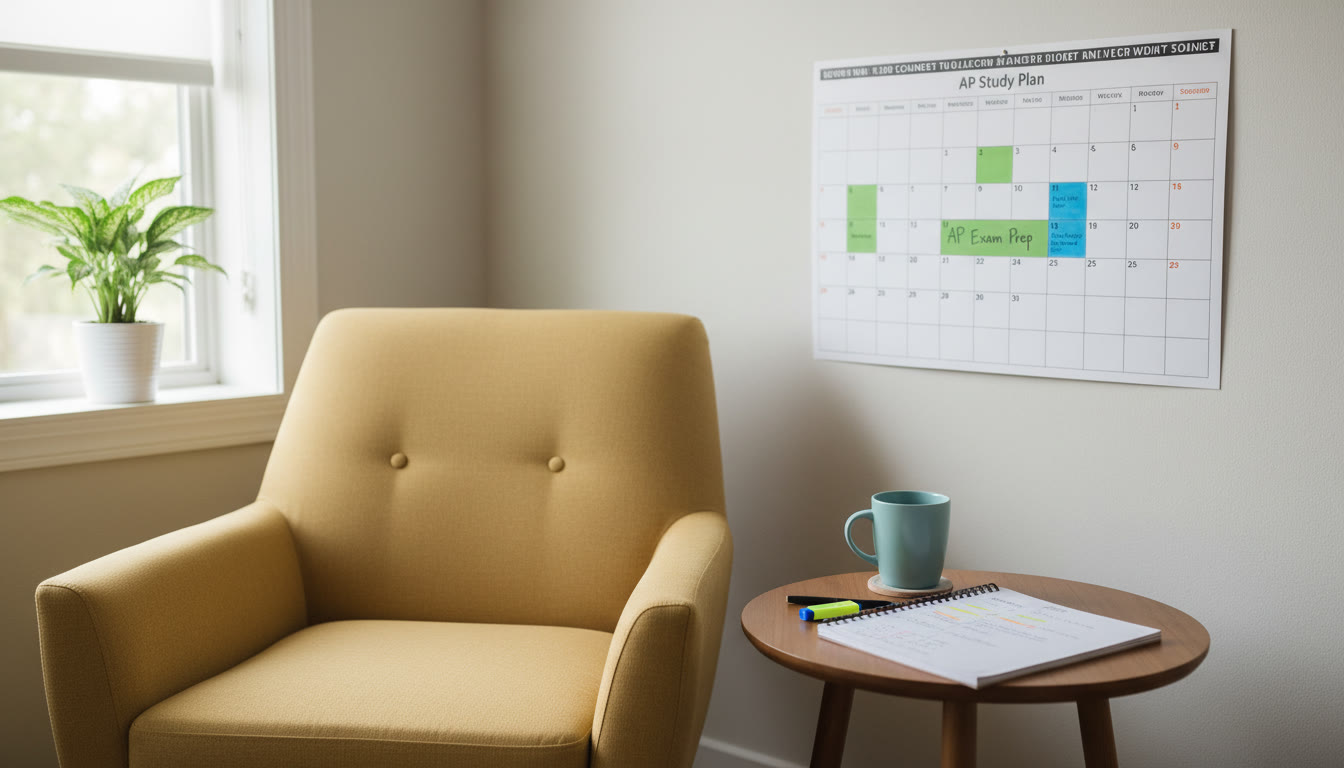
- Planner or calendar with color-coded blocks labeled Prime 1, Prime 2, Review, and Recovery.
- Study partners or tutors scheduled in your prime windows to preserve accountability.
Measuring Progress: Metrics That Actually Tell You Something
Track meaningful metrics for 3–4 weeks to see if your energy mapping is paying off. Don’t obsess over every hour—look for trends.
Key Metrics
- Practice test score trends (overall and by question type).
- Average number of correctly solved high-load problems per prime session.
- Retention after 48 hours (use quick quizzes to test recall).
- Subjective focus rating during primes (1–5 scale averaged weekly).
Real-World Tips from Successful Students
Here are short habits that students who improved their AP scores by mapping energy commonly share:
- They treat prime sessions like appointments—non-negotiable and on their calendar.
- They use the first 5–10 minutes to clarify the goal for the session, which prevents aimless studying.
- They mix active retrieval with problem solving—testing themselves before re-learning material.
- They scale sessions up or down—sometimes prime 1 is only 30 focused minutes before school; that’s fine.
How Personalized Tutoring Enhances Energy Mapping
Sparkl’s personalized tutoring model complements energy mapping in a few natural ways. One-on-one tutors can:
- Help diagnose your weak spots so your prime sessions target the highest-impact skills.
- Create a tailored study plan that schedules review and practice into your peaks.
- Offer AI-driven insights to track patterns and recommend adjustments when your energy shifts.
When students pair their energy map with targeted, expert-guided sessions, the learning accelerates: less wasted time, more precise practice, and clearer momentum toward higher AP scores.
Putting It All Together: A 4-Week Starter Plan
This plan helps you establish a rhythm without overwhelming you. Adjust times to fit your actual peaks.
| Week | Focus | Action Items |
|---|---|---|
| Week 1 | Map Your Energy | Track energy scores, identify two peaks, keep sleep consistent |
| Week 2 | Prime-Focused Practice | Schedule high-load work in peaks, protect them with pre-peak rituals |
| Week 3 | Test and Review | Take one full practice test in a prime; review errors in next prime |
| Week 4 | Refine and Scale | Adjust peak lengths, introduce targeted tutoring sessions for weak areas |
Final Thoughts: Energy Mapping Is a Habit, Not a Miracle
Energy mapping won’t replace hard work—but it will make your hard work smarter. For AP students, where every hour matters, aligning the most demanding tasks with your natural peaks delivers more learning, less burnout, and stronger performance on exam day. Start small: track a week, protect one prime, and see how your productivity shifts. If you want targeted help turning your map into an optimized study plan, one-on-one guidance—like Sparkl’s tailored tutoring—can accelerate progress by turning vague goals into clear, high-impact practice during your best hours.
Quick Checklist to Begin Today
- Start a 7-day energy log (90-minute snapshots).
- Identify two peak windows and label them Prime 1 and Prime 2 on your calendar.
- Reserve one prime each weekday for high-load AP work and block it off like a class.
- Schedule a recovery ritual after each prime to avoid burnout.
- Consider a targeted 1-on-1 session during a prime to kickstart new habits.
Energy mapping is simple, flexible, and deeply personal. Treat your study time like a resource—finite and valuable—and you’ll find more clarity, less stress, and better results on your AP journey. You’ve already got the drive; now give it the schedule it deserves.

























No Comments
Leave a comment Cancel