
Why Compare German and Latin? A Quick Welcome
Choosing between AP German Language and Culture and AP Latin isn’t just a decision about words and grammar. It’s a decision about thinking styles, exam skills, cultural interests, and — importantly — how you prefer to learn. If you’re standing at that crossroads, this guide is written for you: clear, conversational, and practical. I’ll walk you through the practical differences between the two courses and exams, what skills each develops, everyday study habits that actually stick, and a realistic plan to be exam-ready — with a few real-world examples and a short table to summarize the essentials.

Big Picture: What Each Course Teaches
At a glance, AP German is about communicative fluency in a living language and culture. AP Latin is about close reading and literary analysis of texts written more than a thousand years ago. Both demand language knowledge, but the way you use that knowledge on the exam — and in life — is different.
AP German — What You’ll Do and Why It Matters
AP German trains you to use German in interpersonal, interpretive, and presentational modes. Think conversations, listening to authentic podcasts, interpreting infographics, and giving spoken or written presentations on contemporary topics. It’s fundamentally performance-focused: pronunciation, speed, and the ability to adapt to a real communicative situation matter.
AP Latin — What You’ll Do and Why It Matters
AP Latin trains you to read, interpret, and analyze Latin poetry and prose. The emphasis is on translation, meter (for poetry), literary devices, and historical or cultural context. You’ll be reading Vergil, Pliny, and other authors, looking closely at syntax, rhetorical moves, and how a line of Latin creates meaning.
Skills Comparison: Who Benefits from Which Course?
Let’s break down the dominant skills each AP course builds so you can see which aligns with your strengths and goals.
| Skill Area | AP German | AP Latin |
|---|---|---|
| Vocabulary Use | Active, topical vocabulary for modern contexts | Precise classical vocabulary and morphological recognition |
| Grammar | Functional grammar for communication (tenses, moods, word order) | Complex morphology and syntax analysis for translation |
| Listening / Speaking | High priority — authentic listening and spoken responses | Low priority — focus is reading and writing/analysis |
| Reading | Comprehension of modern texts, media, and charts | Deep line-by-line translation and literary reading |
| Analytical Writing | Presentational writing and cultural comparisons | Textual analysis and argument about literary effect |
Test Format and How It Shapes Prep
Both AP exams test language skills, but their formats push you toward different study choices. AP German rewards active practice and real-time responses. AP Latin rewards a slow, meticulous approach to text plus strong grammar recall.
How Format Changes Practice
- AP German: practice recording yourself, doing timed speaking tasks, listening to short authentic clips, and summarizing content in German. Build a habit of thinking in the language — even if you start with five minutes a day.
- AP Latin: do daily sight-reading, memorize common inflectional endings, and practice translating aloud to catch rhythm and cadence. Work with commentaries to build context and interpretation skills.
Study Strategies That Actually Work
Below are techniques tailored to each subject. These aren’t theoretical — they’re practical habits top students swear by.
Study Habits for AP German
- Audio Immersion: Listen to short German news segments or cultural podcasts. Don’t aim to understand every word at first; aim to pick up gist and rhythms.
- Think in German for Short Bursts: Narrate small things you’re doing in German out loud for 3–5 minutes. It rewires your brain to produce rather than translate.
- Shadowing: Repeat sentences immediately after a native speaker recording — it helps pronunciation, intonation, and fluency.
- Task-Based Practice: Do micro-projects (e.g., write and record a two-minute travel guide to Berlin) to combine vocab and cultural content.
- Mock Speaking Sessions: Practice with a partner or tutor and get feedback on clarity, range, and cohesion.
Study Habits for AP Latin
- Daily Parsing Practice: Spend 15–20 minutes parsing lines — identify case, tense, mood, and function.
- Translation Windows: Translate succinct passages under timed conditions, then re-translate with unlimited time to notice nuance.
- Meter and Sound: If you study Vergil, learn the basics of dactylic hexameter — it will surface patterns you otherwise miss.
- Context Cards: Create quick-reference cards with author background, historical context, and key rhetorical devices for frequent review.
- Close Reading Workshops: Annotate texts with claims about purpose, tone, and technique; practice turning annotations into short analytical paragraphs.
Sample Weekly Prep Plan — Choose Your Path
To make this real, here are two 7-day micro-plans you can repeat and scale: one for a busy week, one for a focused deep-week. Both assume you have school other obligations and want steady improvement.
Busy Week (30–45 Minutes Daily)
- Day 1: Active review (vocab + 10 min listening for German / 20 min parsing for Latin)
- Day 2: Practice speaking or recording (German) / Timed translation (Latin)
- Day 3: Reading comprehension sets (German articles / Latin passage with commentary)
- Day 4: Grammar drill (German tenses or Latin subjunctive usages)
- Day 5: Mock assessment (short AP-style questions)
- Day 6: Reflection and correction (review mistakes and note patterns)
- Day 7: Light immersion and fun: watch a short German video with subtitles or read a Latin passage aloud paired with notes
Focused Deep-Week (90–120 Minutes Daily)
- Morning Block: Core skills — 45 minutes (German: listening + speaking drills / Latin: sight-reading and parsing)
- Afternoon Block: Application — 30–45 minutes (German: presentational writing / Latin: analytical essays)
- Evening Block: Review and consolidation — 30 minutes (error logs, flashcards, and reflection)
How to Use Practice Tests Strategically
Taking full practice exams is essential, but how you review them matters far more than how often you take them. The best use of a practice test is as a diagnostic and a feedback loop: find patterns of error, fix the root causes, and test again.
Review Cycle
- Step 1: Take the practice section under realistic timing.
- Step 2: Grade honestly (or get a tutor to grade). Identify three repeating errors — not just wrong answers but why they happened.
- Step 3: Plan targeted drills to fix those errors for 1–2 weeks (e.g., subjunctive uses, or listening for main idea).
- Step 4: Retest the same section and compare. Aim for measurable improvement: fewer errors, quicker time per question, clearer translations.
Common Mistakes Students Make — And How to Avoid Them
Whether you lean toward German or Latin, students often fall into predictable traps.
For AP German
- Relying too much on literal translation in speaking (it slows fluency). Practice chunking phrases instead.
- Neglecting pronunciation — an accent won’t cost you the whole score but unclear speech will reduce your communicative impact.
- Focusing exclusively on grammar without applying it in real speaking or listening contexts.
For AP Latin
- Translating word-by-word without reconstructing syntax — Latin meaning often depends on relationships, not just dictionary words.
- Skipping meter and sound when reading poetry — you miss rhetorical emphasis and structure.
- Not building historical or cultural context — context is often the key to persuasive literary interpretations.
How Sparkl’s Personalized Tutoring Fits Naturally Into Prep
Good tutoring is more than correction; it’s a tailored plan, accountability, and targeted strategies that accelerate learning. For many students, adding personalized help from Sparkl can be a game-changer — especially when you want focused skill work.
- 1-on-1 Guidance: A tutor can simulate the speaking portion of AP German or walk line-by-line through a Latin passage, giving immediate, actionable feedback.
- Tailored Study Plans: Tutors can design a schedule that dovetails into your school calendar, focusing on your weak points rather than generic drills.
- Expert Tutors: Advanced tutors bring real exam familiarity and can model best practices for both timed sections and deep analysis.
- AI-Driven Insights: When combined with smart tools, tutoring can prioritize the right practice items and surface repeated error patterns for efficient remediation.
Used selectively — for example, weekly speaking check-ins for German or weekly translation workshops for Latin — personalized tutoring makes focused progress much more reliable than going it alone.
Real Student Example: How Two Students Took Different Routes
Meet Maya and Jonah (names changed). Maya chose AP German because she loved travel and wanted to study in Berlin one day. Jonah chose AP Latin because he loved literature and classics. Both had similar time commitments but different methods.
- Maya split practice into listening, shadowing, and two weekly 20-minute speaking sessions. She recorded herself weekly and tracked fluency improvements — measured by her ability to speak for two uninterrupted minutes on a topic. After three months she was confident in handling interpretive tasks and presentational prompts.
- Jonah did 30 minutes daily of sentence parsing and three weekly sessions where he annotated Vergil lines with meter and rhetorical devices. He wrote two analytical paragraphs per week and gradually learned to see patterns in authorial choices. His ability to craft concise literary arguments improved markedly.
Both used targeted tutoring with Sparkl during the last six weeks before the exam — Maya for timed speaking practice and Jonah for mock FRQs and feedback. That focused support turned good habits into exam-ready performance.
Choosing Based on College and Career Goals
If your priorities include modern communication, study abroad, or language majors, AP German’s active skills are directly useful. If you love literature, philosophy, ancient history, law, or linguistic foundations of Romance languages, AP Latin can be intellectually rewarding and academically valuable.
Which Helps College Applications?
Both show rigor. AP German signals modern language competence and cultural agility. AP Latin signals analytical rigor and comfort with complex texts — something many humanities departments value. The best choice is the one you’ll be most motivated to study deeply.
Resources and Tools You Should Use
Whatever course you choose, build a toolbox that supports the skills tested by that course.
- AP Classroom and College Board materials for authentic practice and format awareness.
- Language-specific audio — German podcasts and digital news clips; Latin readings with audio for prosody.
- Flashcard systems (spaced repetition) to keep vocabulary and forms fresh.
- Practice exams and rubric-guided review sessions for feedback loops.
Closing Thoughts: The Best Test Strategy Is One You Can Maintain
At the end of the day, AP German and AP Latin reward steady, intentional practice. Choose the course that energizes you. If you love speaking, interacting, and thinking in a living language, German will reward your efforts. If you love close reading, historical thinking, and transforming tricky syntax into meaning, Latin will be a rich and rigorous pursuit.
Whichever path you pick, keep two commitments: practice consistently, and get targeted feedback. A weekly habit — even twenty to forty-five minutes a day — compounded over months will take you much further than occasional marathon sessions. If you’d like help making a focused plan, consider integrating occasional 1-on-1 sessions with a tutor from Sparkl to get tailored guidance, accountability, and exam-specific strategies that match your learning style.
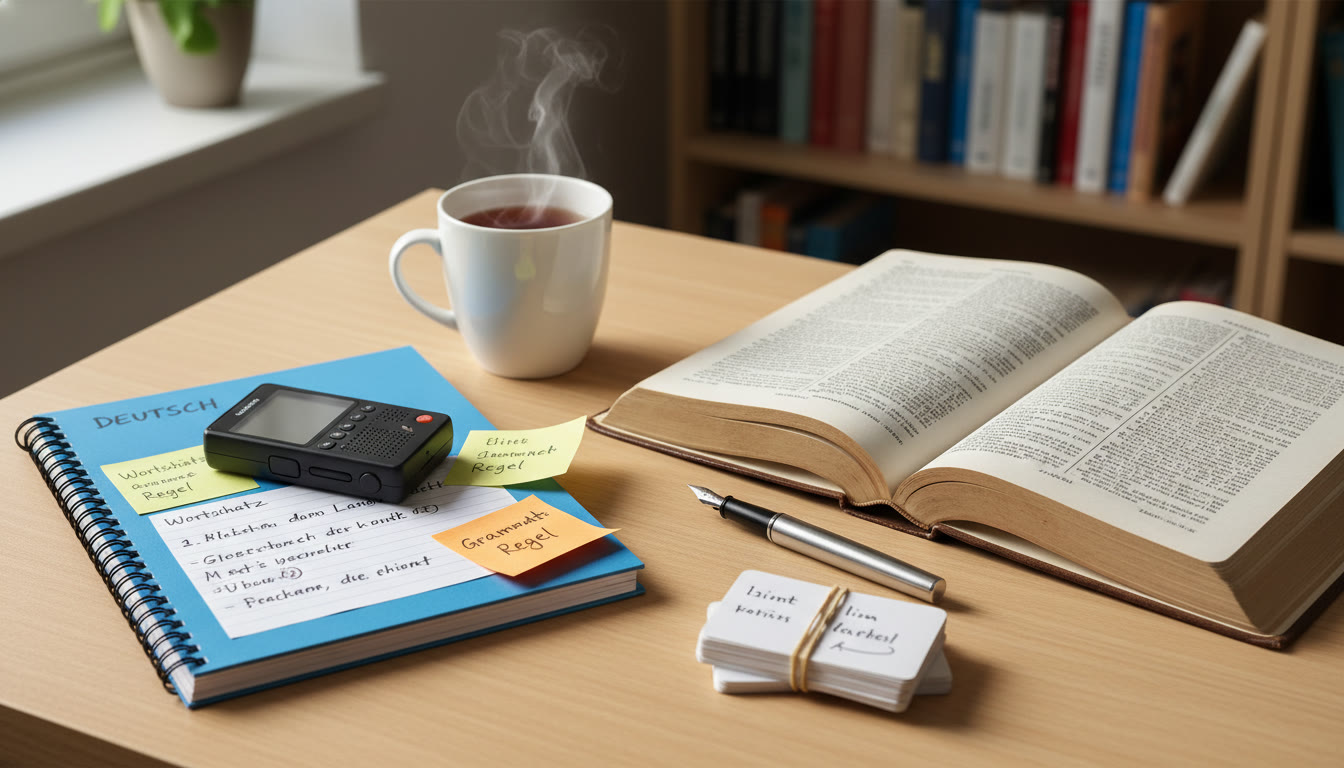
Quick Reference: Which Fits You Best?
Use this quick checklist to nudge your decision. Tick the boxes that match your strengths and interests.
- If you enjoy conversation, media, and travel, AP German likely fits.
- If you enjoy literary puzzles, translation, and ancient culture, AP Latin likely fits.
- If you prefer active, spoken skills over written analysis, lean German.
- If you prefer careful text work and argument, lean Latin.
Final Practical Tips Before You Start
- Start small and be consistent: 20–45 minutes/day beats cramming.
- Make error logs: write down the same mistakes until they stop being mistakes.
- Mix passive exposure with active production: listening plus speaking for German; reading plus translating for Latin.
- Try a few tutor sessions early: targeted feedback often prevents small habits from becoming entrenched.
- Stay curious: let the culture, history, or contemporary relevance of the language keep your practice enjoyable.
Want a Plan Tailored to You?
If you’re ready to commit but unsure where to start, a short consult with a tutor is a smart next step. With tailored study plans, one-on-one guidance, and AI-informed insights that highlight your most useful practice items, a structured approach (used selectively) will make your prep both efficient and confidence-building. Good luck — whichever road you pick, the language will reward you in ways beyond the score.



















No Comments
Leave a comment Cancel