
Why Habit Stacking Is the Secret Weapon for AP Success
There’s a myth that studying for AP exams is all about marathon review sessions and last-minute cramming. The truth? Consistency beats intensity almost every time. Habit stacking—linking new, small study habits onto existing routines—lets you build momentum without the drama of overhauls or burnout. For students juggling classes, extracurriculars, jobs, and life, stacking tiny, effective behaviors is how big gains happen over weeks and months.
This post walks you through the what, why, and how of habit stacking for AP gains. We’ll give concrete stacks for different AP subjects, sample weekly schedules, a simple tracking table, troubleshooting tips, and ideas on when to bring in personalized help like Sparkl’s tailored tutoring, 1-on-1 guidance, and AI-driven insights to accelerate your improvements.
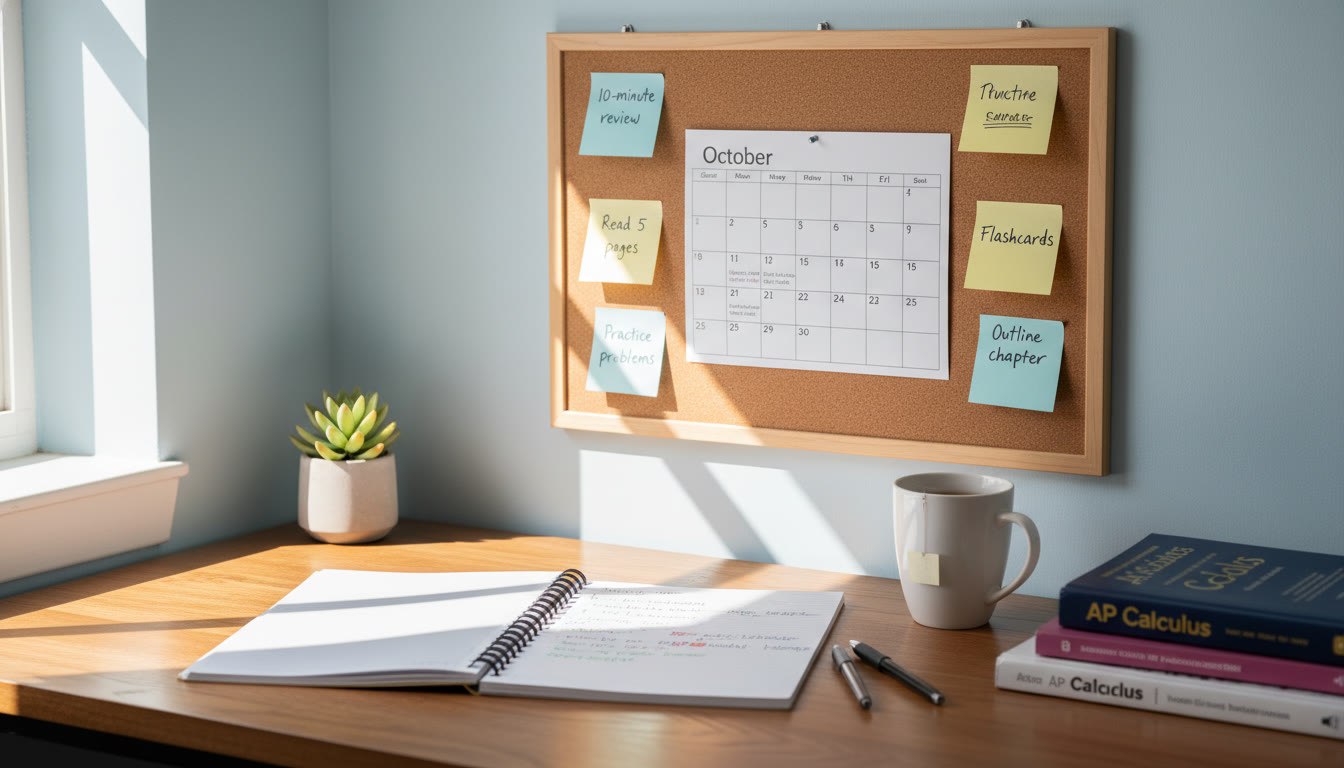
The science in one line
Small habits, repeated in a predictable context, create outsized results by conserving willpower, reducing decision fatigue, and making progress visible. AP prep isn’t about dramatic last-minute effort; it’s an accumulation of deliberate, well-timed micro-actions.
Principles of Habit Stacking That Actually Work
Before you build your stacks, anchor to a few practical principles. These are the guardrails that keep stacks sustainable and aligned with what AP exams measure—knowledge, skill, timing, and exam strategy.
- Start tiny: If a habit feels like work, shrink it. Ten minutes of focused practice beats an unfocused hour.
- Attach to existing cues: Use a morning routine, a class transition, or a bus ride as your launchpad.
- Make it specific: “Review 1 AP Bio concept” beats “study Bio.”
- Focus on retrieval: Active recall and timed practice map better to AP performance than passive re-reading.
- Track progress visually: A simple checklist or habit tracker creates accountability and momentum.
- Iterate: If a stack stalls after two weeks, tweak one element—not everything.
Build-Your-Own Stack: A Step-By-Step Blueprint
Follow this four-step method to create stacks tailored for your schedule and AP subject.
- Choose your anchor: Find a daily event you won’t skip—e.g., brushing your teeth, finishing dinner, or logging off from classes.
- Pick a tiny study task: 5–15 minutes of targeted work. Examples: flashcard review, one practice FRQ part, one worked problem, a short translation for language APs.
- Set a micro-goal: One concept explained aloud, one timed question, one summary sentence written in your own words.
- Track and reward: Check a box. Celebrate briefly: stand up, spin around, or text a friend a victory emoji. Small rewards cement habits.
Example: A Monday Morning Stack for AP U.S. History
Anchor: After breakfast. Stack:
- 2 minutes: Skim the timeline sticky note for the era you’re focusing on.
- 8 minutes: Answer one short document-based question (DBQ) prompt or analyze a primary source aloud.
- 3 minutes: Jot one thesis-level sentence that connects the source to a broader theme.
Total time: 13 minutes. Doable. Repeat five days a week and you’ll have hours of targeted DBQ practice without needing a huge block of time.
Habit Stacks by AP Subject: What to Prioritize
Different AP exams reward different skills—calculation fluency, argumentation, synthesis, language comprehension—so your stacks should match the skill profile of each exam. Below are practical stacks you can adopt or adapt.
AP Calculus (AB/BC)
- Anchor: Right after school or before dinner.
- Tiny task: One timed problem (8–12 minutes). Alternate between procedural and conceptual questions.
- Micro-goal: Explain the solution method aloud in 2 minutes to check conceptual clarity.
- Weekly: One 45-minute timed practice set simulating exam pacing.
AP Biology
- Anchor: Before bed.
- Tiny task: 10 minutes of active recall with flashcards on systems and processes (e.g., cellular respiration steps).
- Micro-goal: Draw one labeled diagram from memory (3–5 minutes).
- Weekly: One full practice section emphasizing data interpretation and experimental design.
AP English Language & Composition
- Anchor: After lunch or a study hall session.
- Tiny task: 10 minutes—annotate one passage focusing on rhetorical devices.
- Micro-goal: Write a 5-sentence thesis-driven paragraph responding to a prompt.
- Weekly: One timed synthesis/argument essay with quick peer or tutor feedback.
AP World History / AP US History
- Anchor: Commute or before dinner.
- Tiny task: 12 minutes—one practice LEQ (outline + thesis) or a short primary source analysis.
- Micro-goal: Connect the source or essay to one thematic thread across eras.
- Weekly: Full timed essay practice and document analysis session.
AP Chemistry
- Anchor: Right after homework completion.
- Tiny task: 10 minutes—solve one stoichiometry or kinetics problem with units checked carefully.
- Micro-goal: Summarize the main idea in one sentence and list one real-world application.
- Weekly: Lab-style data interpretation practice and conceptual review.
Sample Week: How to Stack Across APs Without Drowning
Below is a sample weekly plan for a student taking three APs (Biology, Calculus, English Lang). Notice the stacks are short, focused, and repeatable.
| Day | Morning (Anchor) | Afternoon | Evening | Weekly Focus |
|---|---|---|---|---|
| Monday | Bio flashcards (10 min) | Calc problem set (12 min) | English passage annotation (10 min) | Timed Calc set (45 min) |
| Tuesday | Bio diagram recall (10 min) | Calc concept talk (8 min) | English paragraph (10 min) | Peer review of English paragraph |
| Wednesday | Bio practice FRQ (15 min) | Calc practice (12 min) | Reading review (10 min) | Office hours / tutor check-in |
| Thursday | Flashcard mix (10 min) | Quick derivation recap (10 min) | Timed essay outline (12 min) | Full practice essay (1 hour) |
| Friday | Bio concept quiz (10 min) | Calc cumulative problem (15 min) | Relaxing read about a historical case (15 min) | Reflection & plan next week |
| Saturday | Long practice block (2 hours) | Group study or tutoring session | Review mistakes (30 min) | Weekly review and tweak stacks |
| Sunday | Rest & light review (20 min) | Prep materials for week | Short reflection & reward | Rest and reset |
Tools and Tracking: Keep Your Stacks Honest
Tracking is where habit stacking transforms into measurable improvement. Use simple tools—paper trackers, a spreadsheet, or a lightweight app—to record completion and note quick reflections.
- Daily checklist: A 3-line checklist is often enough (Anchor, Tiny Task, Reflection).
- Weekly review: 10 minutes every Sunday to decide whether to keep, tweak, or drop a stack.
- Error log: One column for mistakes and one for “Why I made it” so you learn faster.
- Progress milestones: 5, 15, and 30 consecutive days of a stack deserve increasingly bigger rewards.
Simple Progress Table Example
Use this in a notebook or spreadsheet to visualize gains.
| Stack | Daily Time | Days Completed (wk) | Improvement Marker | Next Action |
|---|---|---|---|---|
| Calc Timed Problem | 12 min | 5/7 | Speed +1 Q | Add one FRQ |
| Bio Flashcards | 10 min | 6/7 | Recall accuracy 85% | Introduce diagrams |
| English Annotation | 10 min | 4/7 | Thesis clarity improved | Peer review session |
When to Pull in Personalized Help
Habit stacking is powerful, but sometimes you need targeted expertise to unlock a plateau. Consider 1-on-1 tutoring when:
- You’ve plateaued despite months of consistent stacks.
- Concept gaps are blocking multiple topics (e.g., weak algebra hurting calculus).
- You need a tailored plan that aligns with a specific college goal or score target.
Sparkl’s personalized tutoring fits naturally here: an expert tutor can diagnose weak nodes in your knowledge graph, design targeted stacks, and use AI-driven insights to identify blind spots quickly—so your small daily habits convert to measurable score gains faster.
Common Roadblocks and How to Fix Them
Students run into predictable snags. Here’s how to handle the five most common ones.
- Inconsistent anchors: If your chosen anchor fails, switch to a more reliable one (e.g., from “after school” to “after dinner”).
- Task creep: If tiny tasks balloon into long sessions, shrink them back and protect your stack’s identity as “quick and non-negotiable.”
- No urgency: Build mini-deadlines—e.g., score improvements, timed practice, or a weekly check-in with a tutor or study buddy.
- Demotivation: Reconnect the stack to a meaningful goal: admission to a program, scholarship, or personal mastery. Visualize the result.
- Bad feedback loops: If you can’t interpret practice mistakes, get targeted feedback—peer review, teacher notes, or a short 1-on-1 tune-up.
How to Scale Stacks Into Exam Season
As AP season approaches, scale stacks gradually rather than flipping to all-out intensity. Two guiding ideas:
- Increase quality, not just quantity: Change 10 minutes of aimless work into 10 minutes of high-quality, timed practice.
- Simulate real conditions: Once weekly, replicate test length and timing to build stamina and timing strategies.
Example ramp: In the six weeks before the exam, increase one weekly short stack session into a longer timed block, reduce the number of new topics learned, and focus revisions on weak areas identified in your tracker and practice tests.
Real-World Examples: Students Who Stacked Their Way Up
Imagine Maya: a junior juggling AP Calculus, AP Chem, and extracurriculars. She started with five-minute calc problems attached to her morning coffee and a ten-minute bio diagram draw before bed. Within three months, her timed problem speed improved, and she made fewer conceptual errors in chem because she’d been consistently translating formulas into process descriptions.
Or Jamal, who used a 12-minute evening stack for AP Lang: annotate one paragraph and then write a single-sentence thesis. His essays tightened, and his ability to spot rhetorical moves quickened. He combined that with monthly 1-on-1 sessions—short, focused tutoring check-ins—where an expert helped him convert weak spots into tiny, targeted stacks.
These are small, realistic stories but they show a pattern: predictable, repeated action beats sporadic intensity. When students add expert input—like tailored plans, focused feedback, or AI-driven question selection—they compress the journey from habit to mastery.
Checklist: Your First 30 Days of Stacking
Use this compact checklist to start strong.
- Pick one AP subject and one anchor for the first two weeks.
- Define one tiny daily task (5–15 minutes) and one weekly longer block.
- Track daily completion and one quick reflection: “What I learned” (1 sentence).
- After two weeks, review the tracker and tweak: keep what works, drop what doesn’t.
- At week four, add a second stack for another AP or request a short 1-on-1 review to validate progress.
Final Thoughts: Make Your Stacks Yours
Habit stacking is not a rigid formula; it’s a flexible scaffolding that helps you turn effort into results without burning out. The best stacks are tiny enough to be non-negotiable and meaningful enough to move the needle. Keep them simple, attach them to reliable anchors, and investigate plateaus with targeted feedback.
If you want faster diagnosis or a tailored study map, consider short, focused personalized tutoring sessions. A coach or expert can design stacks that match your strengths and fill gaps efficiently. Whether you work with a tutor for a one-off tune-up or integrate AI-driven insights to refine practice selection, the combination of consistent habits plus precise feedback is where AP gains accelerate.
Start tonight: choose an anchor, pick a 10-minute task, and do it. Habit stacking turns the small things you do every day into the big results you want on exam day.

Quick Resources to Keep in Mind
Keep searching for up-to-date exam dates and score report details from official AP channels, plan around posted deadlines, and use official score reporting when you’re ready to send scores. Combine that official information with your habit stacks and targeted tutoring to hit the scale you want—steady progress, less stress, and better scores.
Your Next Action
Pick one AP, pick one anchor, and do a 10-minute stack tonight. Check it off. Repeat. Build momentum. If you want personalized stacks—from daily plans to one-on-one coaching to AI-informed study suggestions—consider setting up a short consultation to map the most efficient route from your current baseline to your target score.





























No Comments
Leave a comment Cancel