
Why Go Beyond AP? The Case for Advanced Humanities Seminars
So you aced AP Language, AP Literature, or AP History—or at least you survived them with a stronger sense of reading closely, writing clearly, and thinking historically. First: congratulations. Those classes are a powerful foundation. But if you’re the kind of student who loved the intellectual stretch, the next logical (and thrilling) step is not more multiple-choice practice; it’s advanced seminars: classes or projects that take AP skills and turn them into original research, interdisciplinary argumentation, and sustained creative or scholarly work.
Advanced seminars give you a place to practice what colleges will ask of you: sustained inquiry, seminar-style discussion, independent research, and written (or multimedia) products that have real audiences. They’re also a way to explore majors and career interests while you’re still in high school—showing colleges that you’re not just completing coursework but building intellectual leadership.
What Makes a Great Humanities Seminar?
Not every “advanced” label guarantees depth. A great seminar tends to share a few key features:
- Focused Inquiry: A narrow, provocative question (e.g., “How has dystopian fiction shaped modern political rhetoric?”).
- Seminar Discussion: Student-driven conversation rather than lecture-heavy class time.
- Primary-Source Engagement: Texts, archival material, interviews, or media that students analyze firsthand.
- Research and Production: A capstone product—research paper, portfolio, public presentation, or digital project.
- Iterative Feedback: Drafts, peer review, and teacher or mentor input across the term.

Designing Your Own Seminar: Roadmap from Idea to Capstone
You don’t need a college stamp to run a meaningful seminar. Here’s a step-by-step roadmap to design a semester-length humanities seminar that builds directly on AP Lang/Lit/History skills.
1. Pick a Compelling Guiding Question
Great seminars begin with a question you can revisit throughout the course. Keep it narrow enough to research and broad enough to sustain conversation. Examples:
- “How do narrative structures create social memory in memoirs and oral histories?”
- “What role has satire played in political change from the 18th century to today?”
- “How has rhetoric in environmental discourse shifted in the past 50 years?”
2. Build a Multimodal Syllabus
Mix primary and secondary sources, fiction and nonfiction, articles and podcasts. The goal is to practice skills: textual analysis, evidence evaluation, synthesis, and persuasive writing. A sample 12-week unit might look like the table below.
| Weeks | Focus | Sample Activities | Assessments |
|---|---|---|---|
| 1–2 | Orientation & Methods | Seminar norms, close reading practice, primary source workshop | Short close reading (1–2 pp.) |
| 3–5 | Thematic Deep Dive | Primary/secondary readings, guest speaker or interview | Analytical essay (5–7 pp.) |
| 6–8 | Methods in Practice | Archival research or oral history project, workshop drafts | Annotated bibliography + research proposal |
| 9–11 | Production | Drafting capstone, peer review, multimedia editing | Capstone draft |
| 12 | Presentation & Reflection | Public symposium, reflective portfolio | Final capstone + reflective essay |
3. Choose Assessment That Reflects Higher-Order Skills
Replace timed multiple-choice pressure with assessments that reward reasoning: annotated bibliographies, evidence-based essays, oral presentations, and public-facing projects (blogs, podcasts, zines). These not only measure learning but create artifacts you can show in college applications.
Seminar Ideas You Can Start Tomorrow
Below are concrete seminar blueprints that students or teachers can adapt. Each one connects to AP skills while expanding into deeper, often interdisciplinary, territory.
Seminar A: Narrative and Memory — “Remembering the Ordinary”
Builds on AP Lit skills (close reading, poetic analysis) and AP History skills (contextualization, source interpretation). Students analyze memoirs, oral histories, and photographs to understand how private lives become public memory.
- Capstone: A 10–12 page research-memoir that pairs an archival source with a contemporary interview.
- Skills highlighted: primary-source evaluation, synthesis, narrative craft.
Seminar B: Rhetoric in Public Life — “Argument, Ethics, and Persuasion”
Ideal for AP Language students who want to apply rhetorical analysis to modern debates. Compare speeches, op-eds, social media threads, and political cartoons to analyze framing, ethos, pathos, and logos in action.
- Capstone: A multimedia persuasive campaign (essay + short video or series of op-eds) that addresses a local issue.
- Skills highlighted: argument construction, evidence integration, audience adaptation.
Seminar C: Global Histories through Objects — “Material Culture and Meaning”
For AP History students who want to move from timelines to objects. Use artifacts, maps, and primary documents to tell cross-cultural stories—linking trade, technology, and daily life.
- Capstone: A digital exhibit or zine that pairs objects with interpretive essays and short primary-source analyses.
- Skills highlighted: contextualization, synthesis, visual literacy.
How to Structure Your Weekly Seminar Time
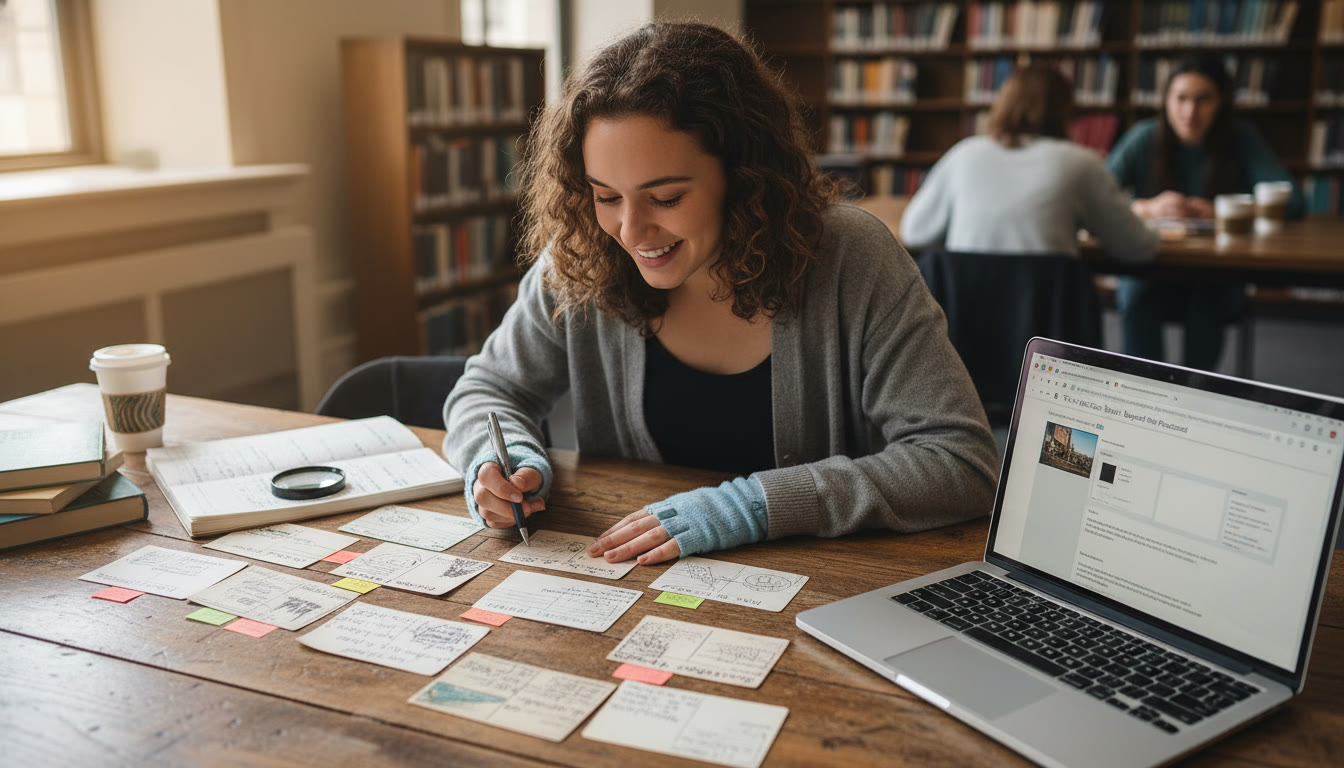
Seminars are intimate; they thrive on routine. Here’s a weekly template you can use:
- Pre-Seminar Reading (2–3 hours): Short primary source + 1 secondary article.
- Seminar Meeting (90 minutes): Student-led discussion; 2 students present close readings or mini-lessons.
- Workshop Block (30–60 minutes): Peer review of drafts or project check-ins.
- Independent Work (2 hours): Research, interviews, or production work.
Example Weekly Roles
- Discussion Lead: Prepares 3 interpretive questions and opens the seminar with a 5–8 minute mini-lecture.
- Primary-Source Analyst: Presents a short close reading and highlights two interpretive choices.
- Methodologist: Explains how they gathered evidence or why a methodological choice matters.
Practical Research Tips: From Sources to Signature Project
Transitioning from AP-style essays to original research can feel daunting. These practical tips will make the move manageable and rewarding.
Start With a Map, Not a Thesis
Begin by mapping questions, not asserting answers. Use a one-page research map: guiding question, three potential primary sources, three secondary texts, possible methods, and a provisional capstone format.
Triangulate Evidence
AP training gives you a great instinct for evidence; advanced research asks you to triangulate—compare sources of different kinds (textual, visual, oral). A newspaper op-ed plus a diary entry plus a photograph will reveal different perspectives on the same moment.
Keep an Annotated Bank
Create a running annotated bibliography in a shared doc. For each source, write a 3–5 sentence note about the source’s perspective, usefulness, and a short quote to track. This saves time when you draft your capstone and shows process—something admissions readers like.
Assessment Rubric Example
Here’s a simple rubric to keep evaluation transparent. Adapt it for your seminar’s goals.
| Criteria | Exemplary | Proficient | Developing |
|---|---|---|---|
| Argument & Thesis | Clear, original, and supported by evidence | Clear but needs deeper evidence or nuance | Vague thesis or insufficient support |
| Use of Sources | Primary and secondary sources integrated insightfully | Sources used correctly but integration is surface-level | Heavy reliance on summary or few sources |
| Research Methods | Appropriate and clearly reflected in the work | Appropriate but inconsistently applied | Methods unclear or missing |
| Writing & Presentation | Elegant, well-structured, polished | Clear, some lapses in organization or polish | Disorganized or needs substantial editing |
How to Showcase Seminar Work on College Applications
Admissions officers notice original work. Here’s how to present seminar projects the right way:
- Choose one signature piece for your portfolio (capstone essay, digital exhibit link, or recorded presentation).
- Write a short process statement (250–500 words) that explains your research question, methods, what surprised you, and why the project mattered.
- If possible, host work publicly (a blog, a simple website, or a PDF in a cloud folder) and include a single stable link in your application materials or resume.
Mentorship, Tutoring, and Using Expert Support
Strong seminars balance student independence with expert feedback. If you can, find mentors—teachers, college grad students, or local scholars—who will read drafts and push your thinking. If you prefer structured support, personalized tutoring is a useful option: it offers 1-on-1 guidance, tailored study plans, and focused feedback on writing and research strategies. When that support includes subject-matter expertise and tools that surface areas for improvement, it speeds growth and deepens projects without replacing your voice.
How to Use Tutoring Effectively
- Schedule targeted sessions for key transitions: moving from proposal to draft, and from draft to final revision.
- Bring specific questions: “How do I integrate this oral-history quote?” or “Is my thesis defensible against alternative interpretations?”
- Use tutors as sounding boards for presentation practice and for tightening argumentation.
For students wanting a structured, personalized path, Sparkl’s personalized tutoring can be a helpful complement—providing expert tutors, tailored study plans, and AI-driven insights that identify weak spots in drafts and offer revision strategies. When used judiciously, it amplifies student ownership over the project rather than replacing it.
Navigating Common Roadblocks
Every seminar hits bumps. Here are common problems and realistic fixes:
Problem: “My topic feels too broad.”
Fix: Map a 6–8 week subset of the topic. For instance, instead of “media influence,” focus on “political cartoons and election discourse in the 1920s.” Depth beats breadth for a capstone.
Problem: “I can’t find primary sources.”
Fix: Think locally. Newspapers, city archives, school yearbooks, local libraries, and interviews with community members are often overlooked treasure troves. Digital collections and newspaper archives are also accessible through public and school libraries.
Problem: “I write okay, but my drafts never feel finished.”
Fix: Use iterative checkpoints: outline, 1st draft, peer feedback, 2nd draft, mentor review, final polish. Each pass should have a narrow focus: clarity of thesis, evidence, structure, then prose polish.
Examples of Student Capstones That Work
To help you visualize, here are a few sample capstone titles and what made them effective:
- “Echoes of Industry: Oral Histories and the Decline of a Mill Town” — integrated interviews, demographic data, and primary documents to show lived economic change.
- “Rhetoric of Resistance: Protest Songs and Political Framing, 1965–1985” — used music as primary source and paired lyrical analysis with historical context.
- “From Penny Press to Twitter: Visual Satire and Public Opinion” — a comparative study that used cartoons, op-eds, and social media threads to track changing rhetorical strategies.
Final Thoughts: What This Work Gives You
Advanced humanities seminars are not just academic exercises; they are miniature laboratories where you build the habits colleges prize: curiosity, intellectual resilience, research literacy, and clear public communication. The skills you sharpen here—framing questions, evaluating evidence, revising thinking—carry into every major and career path.
Whether you’ll pursue literature, history, law, public policy, or something else entirely, designing and completing an advanced seminar after AP Lang/Lit/History shows that you can move beyond standardized expectations to create original work. And that matters—both to admissions readers and to your future self.
Next Steps Checklist
- Pick a guiding question and write a one-page research map.
- Gather 3 primary and 3 secondary sources within two weeks.
- Plan a capstone format (paper, exhibit, podcast) and draft a timeline.
- Find at least one mentor or tutor for targeted feedback during key milestones.
- Schedule a public presentation or portfolio share to create an authentic audience.
Keep the curiosity front and center. Humanities seminars are less about ticking boxes and more about loving the question enough to follow it through messier, interesting places. If you want help shaping a research map, drafting a proposal, or practicing a presentation, consider pairing your work with expert 1-on-1 guidance—someone who knows the field and can help translate your ideas into a powerful capstone. That blend of independence and focused mentorship is where the best student work often lives.
Go on—take what you learned in AP and make something that’s fully, unmistakably yours.



























No Comments
Leave a comment Cancel