
Why Micro-Stretches Matter When You’re Preparing for AP Exams
Studying for AP exams often means long hours at a desk, fired-up brain cells, and a slowly stiffening neck. If you’re in the middle of a Collegeboard prep marathon—practice tests, flashcards, timed essays—your body and mind both need small, reliable resets. That’s where micro-stretches come in: short, seated movements that take 30–90 seconds and can be done without changing clothes, leaving the room, or interrupting momentum.
Micro-stretches aren’t magic, but they are powerful. They relieve muscle tension, improve circulation, and send a clear signal to your brain: attention reset. The result? Less pain, fewer distractions, and a fresher ability to retain information—exactly what you want when prepping for AP Chemistry, AP US History, AP Calculus, or any other Collegeboard exam.
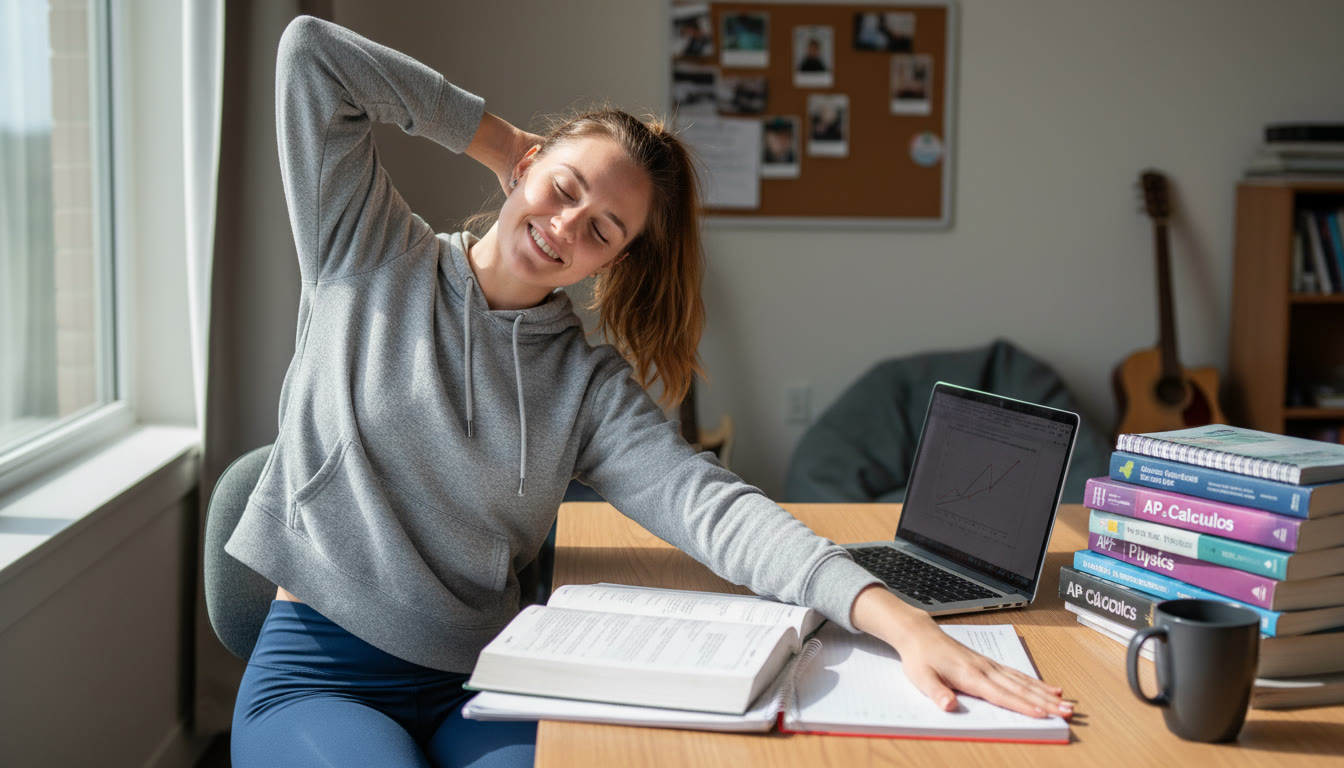
How Micro-Stretches Help Study Quality (Not Just Your Body)
There’s a neat mind-body loop at work: when muscles are tight, your brain senses discomfort and dips into low-level stress mode. That stress eats cognitive resources—working memory, attention switching, recall—which are essential for AP success. Short stretches lower that physical stress, boost blood flow to the brain, and give you a quick emotion and energy reset.
Think of micro-stretches as mini study-boosters. They don’t replace full exercise or sleep, but they slot perfectly between 25–50 minute study blocks (Pomodoro-style) to keep you sharp for long study days. And if you’re using personalized tutoring—like Sparkl’s 1-on-1 guidance—adding consistent micro-stretch breaks can increase the return on your tutoring time: better focus during sessions, fewer mid-tutor distractions, and improved retention of targeted strategies from your tutor.
Quick Principles Before You Start
- Keep it short: Aim for 30–90 seconds per micro-stretch so you’ll actually do them.
- Breathe: Inhale to prepare, exhale as you release tension—this calms the nervous system.
- Be gentle: No bouncing or intense force. Stretch to a comfortable tension, not pain.
- Stay seated: All movements here are designed to be done in a chair—no gym required.
- Consistency beats intensity: Doing multiple short breaks across a study day is better than one long stretch.
Micro-Stretches: A Practical Routine You Can Use Today
Below is a set of micro-stretches grouped by area (neck, shoulders, upper back, wrists/hands, hips), with simple cues and timing. Try rotating through 3–4 of these every 30–50 minutes during heavy study or right before an AP practice test.
Neck Mobility (30–45 seconds)
Neck tension is the classic study-day complaint. These moves relieve stiffness and improve blood flow to the head.
- Chin Tucks: Sit tall, gently pull your chin straight back (think double chin), hold 3–5 seconds, relax. Repeat 5 times.
- Side Tilt Stretch: Tilt your head toward the right shoulder until you feel a gentle stretch on the left side of the neck. Hold 10–15 seconds, breathe, then switch sides.
Shoulder and Upper Back Release (45–60 seconds)
Perfect after an hour of reading or typing—these reduce rounded-shoulder posture and opening your chest helps breathing.
- Seated Eagle Arms (modified): Cross one forearm over the other at chest level and press gently so the shoulder blades squeeze together. Hold 10–15 seconds, switch sides.
- Shoulder Rolls: Lift shoulders toward your ears, roll them back and down in a smooth motion. Five rolls back, five rolls forward.
Wrist and Hand Refresh (30–45 seconds)
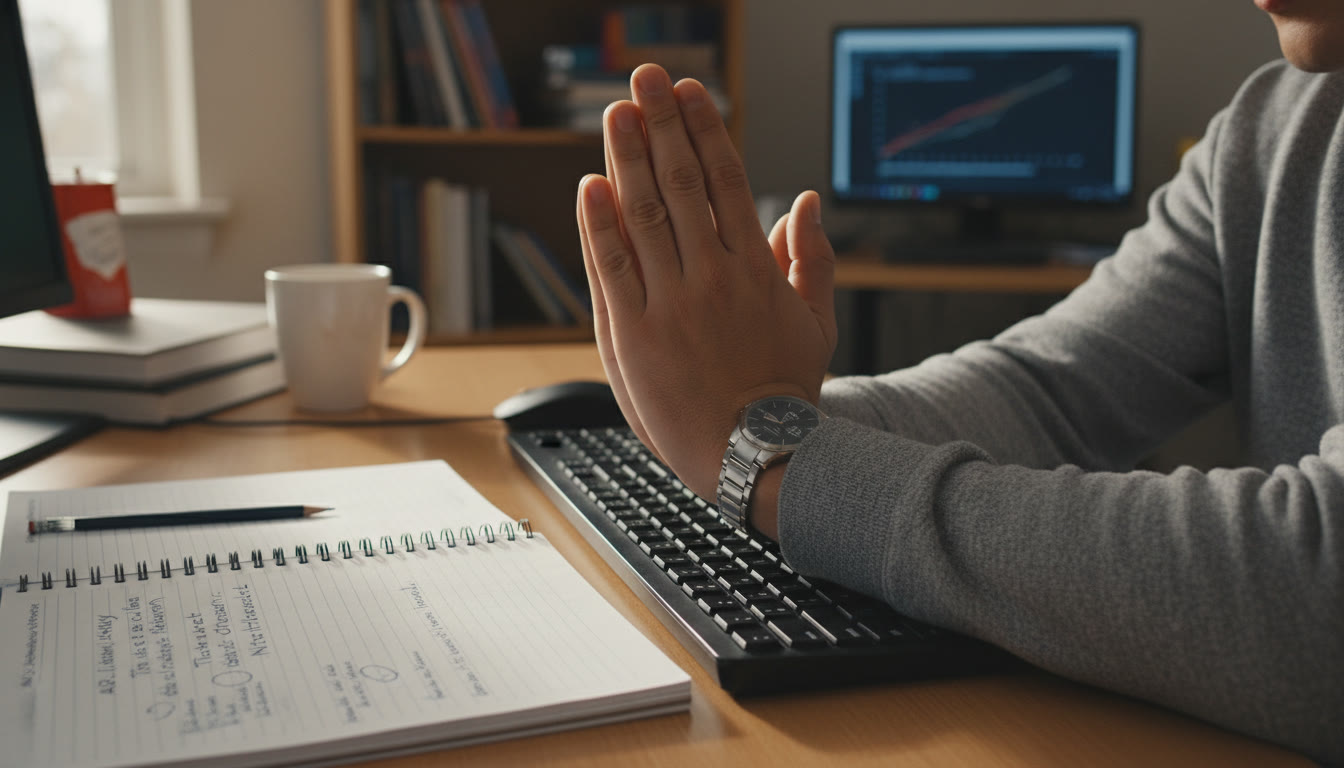
If you’re writing long-form answers or doing practice exams on a laptop, tiny wrist stretches prevent fatigue and soreness.
- Prayer Stretch: Press palms together at chest height, fingers pointing up. Lower your hands while keeping palms pressed until you feel a stretch through the wrists and forearms—hold 10 seconds.
- Wrist Flexor Stretch: Extend one arm with the palm up and gently pull fingers downward with the other hand to stretch the underside of the forearm. Hold 10–15 seconds, repeat other side.
Hip Openers (45–60 seconds)
Sitting collapses the hips; opening them keeps circulation flowing and prevents grogginess.
- Seated Figure-Four: Cross the right ankle over the left knee, sit tall, and hinge slightly forward from the hips to feel a stretch in the right outer hip. Hold 15–20 seconds, switch sides.
- Hip Marches: Lift one knee toward chest while holding the edge of the desk for balance. Lower, switch. Do 6–8 alternating marches to warm the hips.
Sample 10-Minute Micro-Stretch Break (Use Between Study Blocks)
Here’s a compact sequence that mixes mobility and breathing—ideal when you want a structured reset without losing study momentum.
| Time | Move | Purpose |
|---|---|---|
| 0:00–0:45 | Chin Tucks + Side Tilts | Reduce neck tension, improve posture |
| 0:45–1:30 | Shoulder Rolls | Release upper back tension |
| 1:30–2:15 | Seated Eagle Arms | Open chest, improve breathing |
| 2:15–3:00 | Prayer Stretch | Refresh wrists |
| 3:00–4:00 | Seated Figure-Four | Open hips, reduce stiffness |
| 4:00–5:00 | Deep Breathing | Calm nervous system, reset focus |
Repeat this mini-cycle twice during a 50–60 minute study session, or do it once after a timed practice test to recover quickly.
When to Use Micro-Stretches During AP Prep
- After completing a timed multiple-choice section—reset before essays.
- Between tutoring sessions to store new strategies in a calmer state of mind.
- During long review days to avoid mental fatigue and maintain consistent concentration.
- Right before bed if evening study left you tense (gentle stretches only).
Small Adjustments That Multiply Over Time
Micro-stretches are most effective when combined with a few ergonomic and habit tweaks. These changes don’t require equipment and take seconds to implement.
- Chair Setup: Ensure your feet are flat on the floor and thighs roughly parallel to the ground.
- Screen Height: The top third of your screen should be at or slightly below eye level to avoid forward head posture.
- Pomodoro Pairing: Pair a 25–50 minute focused block with a 60–90 second micro-stretch. It’s an easy habit loop to build.
- Hydration Cue: Take a sip of water after each micro-stretch. Hydration helps concentration and reduces headaches.
How Personalized Tutoring Enhances This Routine
Micro-stretches are simple, but pairing them with a strategic study plan amplifies their value. If you’re working with a personalized tutor—Sparkl’s 1-on-1 guidance can help you schedule these micro-breaks so they align with high-impact learning tasks. Tutors can recommend when to stretch during a practice test cycle, identify which study blocks need more frequent resets, and tailor breaks based on your energy patterns. This way, the breaks support deliberate practice rather than interrupting it.
Evidence-Informed Tips to Maximize Benefit
While this guide keeps things practical, there are a few physiology-backed ideas worth noting:
- Short, frequent movement beats rare long sessions: Regular micro-breaks combat the negative effects of static posture more effectively than a single long stretch at the end of the day.
- Combine breath with movement: Slow exhalations during each stretch activate the parasympathetic nervous system, helping you feel calmer and more focused.
- Move before you feel pain: Use stretches proactively. When you already hurt, your brain is distracted and less able to absorb challenging AP material.
Common Mistakes and How to Avoid Them
- Overstretching: Don’t chase dramatic range-of-motion improvements mid-study. Aim for comfortable tension.
- Skipping breathing: Stretching without controlled breaths reduces the calming effect—breathe slowly.
- Using breaks as social-media anchors: If you plan micro-breaks, keep them movement-focused. It’s easy to let a short break turn into 15 minutes on your phone.
Personalization: Build a Micro-Stretch Menu
Create a short menu of 4–6 favorite moves from this article. Label them A, B, C, etc., and rotate one every study block. Over a week you’ll learn which ones restore your energy fastest. If you have a tutor, share that menu—your tutor can remind you to take the break and tie specific stretches to study tasks (for example, wrist refresh after multiple-choice question sets, hip opener before a full practice exam).
Tracking Progress: Small Wins for Big Payoffs
Micro-stretches are easy to measure. Keep a simple tracker in your study planner:
- Note how many breaks you took each day and which stretches you used.
- Record subjective focus level before and after (scale of 1–5).
- Watch for trends—do certain stretches reliably boost your focus? Do you feel fewer headaches or less wrist pain?
Sharing these observations with your tutor can help tailor your personalized plan. Sparkl tutors, for instance, can incorporate stretch timing into your study schedule and suggest modifications based on how you respond.
Real-World Example: A Typical AP Study Day with Micro-Stretches
Imagine an AP Biology student prepping for an upcoming exam. They plan a 4-hour study block that includes focused learning, practice questions, and a mock exam. Here’s how micro-stretches fit in:
- 9:00–9:50 Study block (active recall, note review). End with 60-second neck and shoulder stretches.
- 10:00–10:50 Tutor session with Sparkl (1-on-1). Tutor suggests a quick wrist refresh after the multiple-choice practice to prepare for the free-response questions.
- 11:00–11:50 Timed practice set. After finishing, do seated figure-four and deep breathing to reset before reviewing answers.
- 12:00 Review and wrap-up—track subjective focus improvements in the study log.
Over several weeks the student notices fewer headaches and improved consistency on practice exams. The micro-stretches didn’t replace study, but they made each session more efficient and less physically draining.
Final Notes: Make Movement Your Study Ally
Micro-stretches are deceptively simple. They don’t require fancy gear, and they take less time than opening a new app. The real value is consistency—short resets that keep your body comfortable and your mind ready to absorb Collegeboard-level content.
If you’re using a personalized tutoring service like Sparkl, mention your micro-stretch routine to your tutor. A smart 1-on-1 tutor will help you integrate breaks at strategic moments, tailor them to your exam schedule, and support better study habits so your time with them is even more productive.
Start today: pick two stretches from this article, set a timer for your next study block, and commit to taking a 60-second break when it ends. Little choices add up—and when AP exam day arrives, you’ll be grateful for the small rituals that kept you sharp, steady, and ready to show what you know.
Quick Reference: 6 Micro-Stretches to Memorize
- Chin Tuck
- Side Tilt
- Shoulder Roll
- Seated Eagle Arms
- Prayer Stretch (wrists)
- Seated Figure-Four (hip opener)
Parting Thought
Preparing for AP exams is as much about managing energy and comfort as it is about mastering content. Micro-stretches are one of the simplest, highest-utility habits you can add to your toolkit. They honor your body, amplify your focus, and keep momentum steady—so the hard work you put into Collegeboard prep actually sticks.
Good luck, and breathe through it—one short stretch at a time.


















No Comments
Leave a comment Cancel