
Why a Mixed FRQ Day Is One of the Best (and Scariest) Ways to Prep
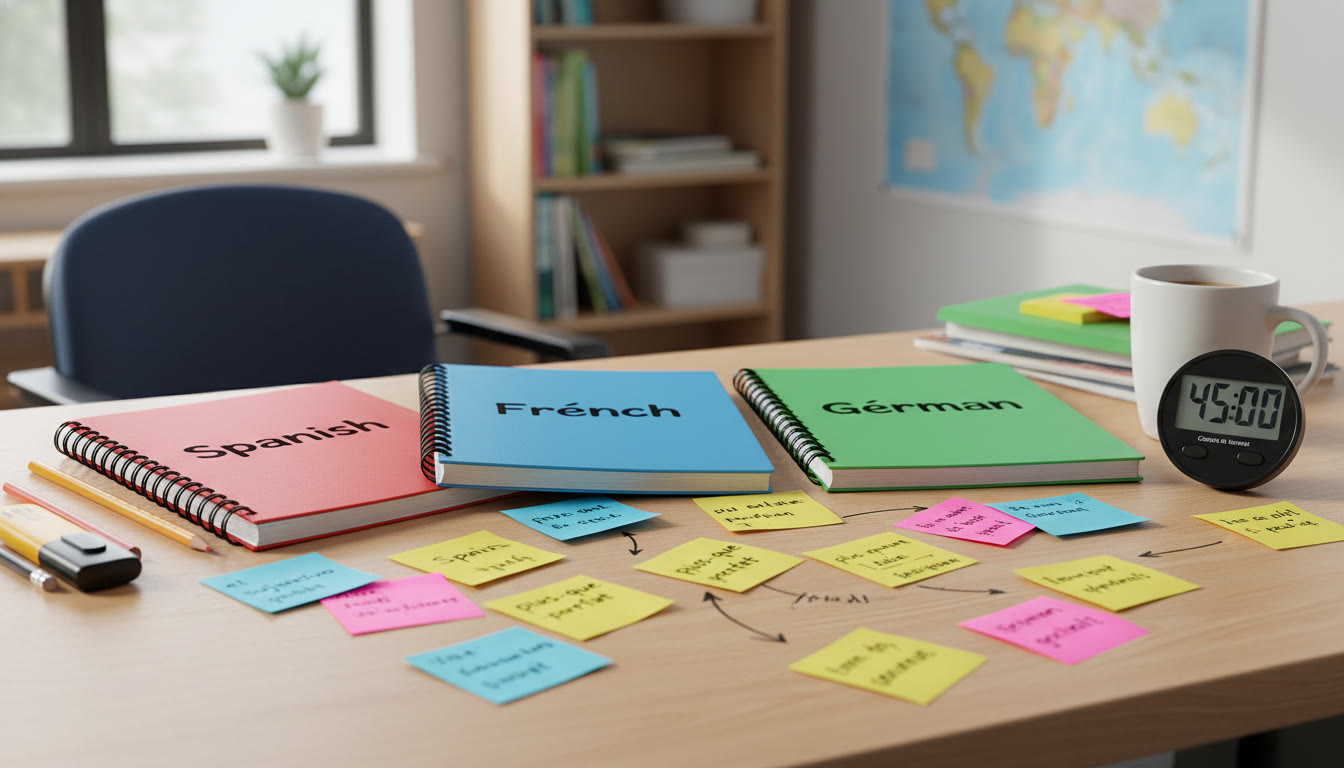
Imagine this: it’s a Saturday morning, you’ve got three practice exams stacked on the table, and today’s mission is a mixed FRQ (Free‑Response Questions) session covering Spanish, French, and German. Sounds intense — and it is. But that intensity is exactly why mixed FRQ days are pure gold for AP language prep. They train you to switch registers, think on your feet across languages, and manage the peculiar timing and cognitive load of exam day.
In this guide I’ll walk you through a friendly, human plan to run a mixed FRQ day that actually feels doable — even fun. You’ll get strategy, a sample schedule, concrete practice prompts, scoring tips, a mini rubric cheat sheet, and a sample table of what to focus on by language. I’ll also show how Sparkl’s personalized tutoring — one‑on‑one guidance, tailored study plans, expert tutors, and AI‑driven insights — can be woven naturally into your prep when you want extra lift.
What a Mixed FRQ Day Trains You For
At first glance, the three exams look similar: interpretive listening and reading, interpersonal speaking/writing, and presentational tasks. But each language exam has its own cultural touchpoints, common idioms, and typical prompt styles. A mixed FRQ day trains you in:
- Code‑switching between vocabulary and grammar rules
- Time management across multiple writing and speaking tasks
- Rapid mental resets (moving from German grammar focus to French register rules, for example)
- Stress inoculation — becoming comfortable making the best choice under pressure
The Psychology Behind It
When you practice under varied, realistic conditions your brain learns to generalize skills instead of overfitting to a single test style. That means fewer surprises on exam day and faster recovery when you hit an unexpected prompt. Treat mixed FRQ days like mental cross‑training: they build flexibility, endurance, and confidence.
How to Structure a Productive Mixed FRQ Day (Sample Schedule)
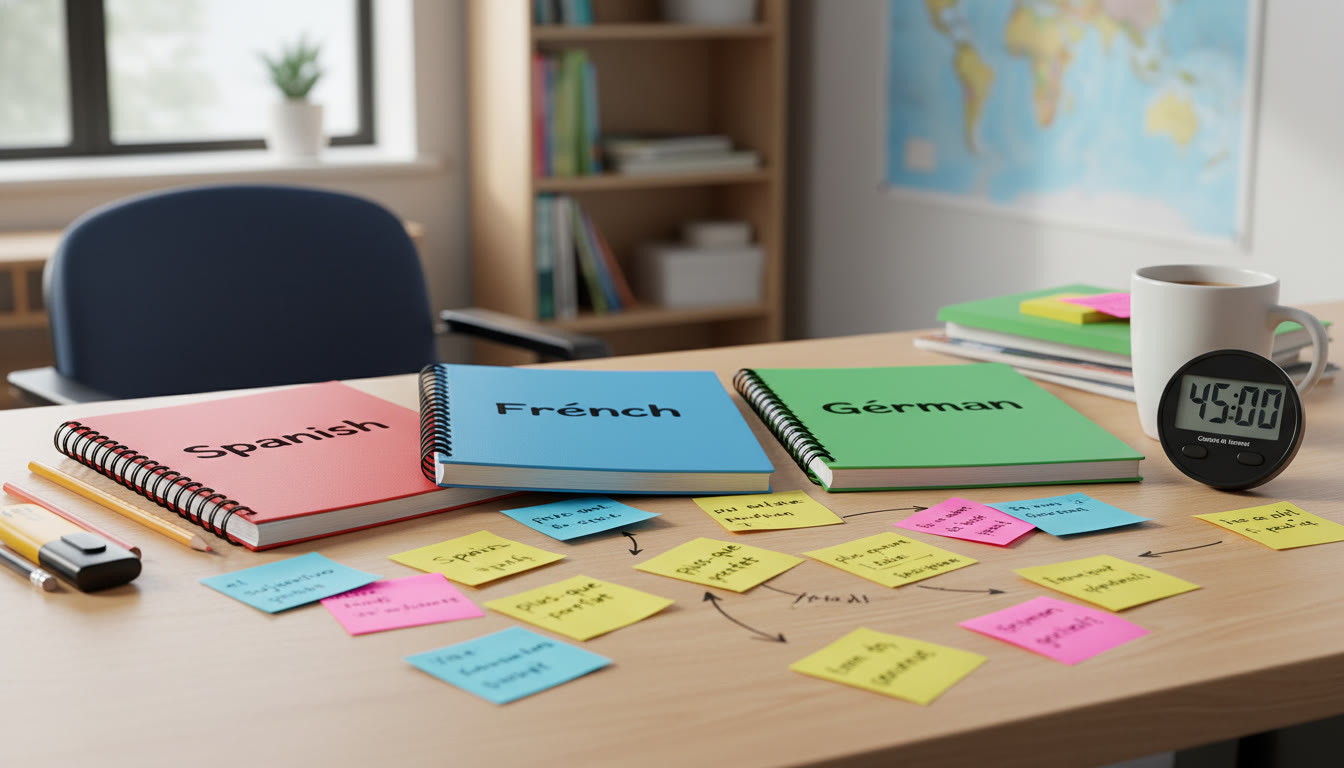
Below is a realistic, student‑friendly timeline you can copy and tweak based on your energy, class schedule, or time of day you focus best.
| Time | Activity | Goal |
|---|---|---|
| 0:00–0:20 | Warm‑up (20 min) — quick grammar drills & 5‑minute journaling | Activate language mode and reduce switching friction |
| 0:20–1:20 | Spanish FRQs (full set) — reading, interpersonal, presentational | Practice pacing and Spanish‑specific tasks |
| 1:20–1:40 | Break (20 min) — short walk, water, and mental reset | Avoid fatigue; clear attention for next language |
| 1:40–2:40 | French FRQs (full set) | Test switching skills and idiomatic expression |
| 2:40–3:00 | Lunch/Rest (20–30 min) | Recharge; avoid passive scrolling |
| 3:00–4:00 | German FRQs (full set) | Focus on accuracy and syntactic control |
| 4:00–4:30 | Review & Reflection (30 min) | Identify one improvement for each language and plan the next practice |
Note: adjust durations to match actual AP section lengths if you want hyper‑realistic simulation. The key is rhythm: focused work, short break, focused work, longer break, finish strong.
Language‑Specific Strategies: What to Emphasize
Each language exam values different strengths. Below are practical micro‑strategies you can apply during your mixed FRQ day.
AP Spanish — Tell a Story, Don’t Translate
Spanish FRQs often reward fluid narrative and cultural awareness. Avoid literal English‑to‑Spanish translations. Instead:
- Use connective phrases (por eso, sin embargo, además) to glue ideas
- Favor common, natural constructions over overly complex grammar you might misuse
- Show cultural awareness where relevant — a short, authentic reference can score points
AP French — Mind Your Register and Idioms
French examiners pay attention to register. Know when to write tu vs vous, and prefer idiomatic expressions in presentational responses:
- Keep formal essays polished; shorter interpersonal exchanges can be casual but correct
- Use linking expressions (cependant, par conséquent, quant à) to demonstrate cohesion
- Practice common collocations (prendre une décision, mettre en œuvre)
AP German — Precision and Logical Structure
German often rewards syntactic clarity and accurate case use. Aim for clear, logical paragraphs:
- Master key case markers and prepositional phrases; small errors can obscure meaning
- Use modal verbs correctly to nuance obligation and possibility
- Organize presentational responses into clear problem / solution / recommendation segments
Sample Prompts to Practice During Mixed FRQ Day
Use these mock prompts to build muscle memory. Time yourself and then score honestly with a rubric or have a tutor check them.
- Spanish Interpersonal Speaking: You receive a message from a pen pal about school traditions. Respond and ask two follow‑up questions. (2–3 minutes)
- French Presentational Writing: Write a 150‑word article for a school magazine about how social media affects youth culture in your city. (12–15 minutes)
- German Interpretive Listening: Listen to a short news clip about an environmental initiative and answer multiple choice and short answer questions. (Use available College Board samples if possible)
Simple Rubric: What High Scorers Do
When you grade your own work or review with a tutor, look for these high‑impact features. You don’t need perfection in every area — prioritize clarity and communication.
| Score Band | What to Look For | Quick Fix |
|---|---|---|
| 5 (Top) | Clear task completion, natural vocabulary, strong cohesion, culturally aware where relevant | Keep natural phrasing; review one advanced structure per week to add nuance |
| 3–4 (Solid) | Meets the prompt with minor errors; communicates ideas well | Target recurring mistakes (gender, case, agreement) in quick drills |
| 1–2 (Needs Work) | Incomplete task, unclear organization, frequent grammar errors | Slow down, outline before writing/speaking, and practice templates |
Time Management Tactics That Actually Work
Time pressure is the silent score‑stealer. Here are concrete approaches you can implement during mixed FRQ day:
- Use a 3‑part approach when writing: Plan (20%), Produce (60%), Polish (20%). Even a 1‑sentence outline helps.
- For speaking tasks, jot quick bullet points for the intro, two main points, and a closing line — that structure saves time and words.
- When switching languages, use the first 60 seconds to re‑anchor: read a short paragraph aloud, do one conjugation drill, or review signal words.
Common Mistakes Students Make on Mixed FRQ Day — and How to Fix Them
Knowing what trips people up helps you avoid the same trap. Here are the big ones:
- Trying to sound advanced rather than clear. Fix: prioritize communication; use complex grammar only when you can control it.
- Skipping the outline because it feels slow. Fix: make outlines tiny (3–5 bullets). They’re time multipliers.
- Failing to simulate real test conditions. Fix: do at least one mixed FRQ day monthly under timed conditions and one full simulation closer to exam day.
How to Use Feedback Effectively After a Mixed FRQ Day
Feedback is where the learning happens. After each mixed practice, spend time on three loops: diagnose, plan, execute.
- Diagnose: Identify the two most frequent error types across languages (e.g., verb tense confusion, register mistakes).
- Plan: Create a 7‑day micro plan to fix them. Short targeted drills beat generic practice.
- Execute: Use deliberate practice — 10–15 minutes per day on the weak area, then re‑test on the next mixed FRQ day.
Example of a Mini Action Plan
If you notice that your German case endings and French register are weak, a 7‑day plan might look like this:
- Days 1–2: 15 minutes of German case drills + review 10 sample sentences.
- Days 3–4: French role‑play prompts to practice tu/vous and formal phrasing (record yourself).
- Day 5: Mixed 20‑minute drill (one prompt per language focusing on the weakest skill).
- Day 6: Rest or light review of corrections.
- Day 7: Mini mixed FRQ session and reflection.
How Sparkl’s Personalized Tutoring Can Boost Your Mixed FRQ Prep
When you’re juggling three languages, targeted support can save weeks of inefficient practice. Sparkl’s personalized tutoring can help in three practical ways:
- One‑on‑one guidance: An expert tutor pinpoints recurring errors and models native‑level phrasing during review sessions.
- Tailored study plans: Instead of guessing what to practice, you get a plan focused on the exact weaknesses revealed by your mixed FRQ day.
- AI‑driven insights: Data from your practice (timing, common mistakes, speaking fluency) highlights where small changes yield big score gains.
Use tutoring sessions to review the hardest prompt from your mixed day — that concentrated feedback loop is one of the fastest ways to improve.
Real Student Example: Turning a 3 into a 5
Meet Ana (pseudonym). On her first mixed FRQ day she earned mostly 3s: solid communication but frequent awkward phrasing and tense slips. With a Sparkl tutor she did three things differently:
- Targeted drills for tenses and modal verbs in German and Spanish — 10 minutes daily.
- Role‑play sessions in French to practice register, especially business vs casual interactions.
- Timed mixed FRQ practices every two weeks with focused review afterward.
Three months later Ana’s practice scores jumped to 5s on presentational tasks and 4–5 on interpersonal tasks. Her improvement came from the feedback loop: practice, immediate tutor feedback, specific drills, repeat.
Checklist for a Successful Mixed FRQ Day
Pin this checklist somewhere visible before you start your next mixed FRQ session.
- Set timers for each block and commit to breaks
- Prepare three notebooks or digital folders — one per language
- Warm up for 10–20 minutes in the language you start with
- Outline before you write or speak — 1–3 bullets
- Record spoken responses and listen back for 1–2 micro‑errors to fix
- Log three takeaways and one action item per language
Final Tips for Exam Week and Beyond
As you approach the official AP exam, scale the intensity wisely. Two weeks before, shift from hammering content to polishing exam stamina and stress management. In the final week do two realistic mixed FRQ runs, but also prioritize sleep, hydration, and quick active recovery (walks, stretching).
On exam day itself, remember: the graders reward clarity, authenticity, and consistent response to the prompt. Keep your language natural, organize your thoughts, and use the skills your mixed FRQ practice built: quick outlining, effective time splits, and self‑correcting when you spot an error.
Parting Encouragement
Mixed FRQ day might sound brutal at first, but with a thoughtful structure it becomes one of the most efficient and confidence‑building practices you can do. Treat each language like a different instrument you’re learning to play in the same band — the more you rehearse switching between them, the more beautiful the performance.
If you ever want targeted feedback after a mixed FRQ session, Sparkl’s personalized tutoring with expert tutors and AI‑driven insights can help you pinpoint the highest‑impact changes and turn those steady 3s into 4s and 5s. You don’t have to get there alone — but with the right plan and a few focused mixed FRQ days, you’ll get there faster than you think.
Ready to Run Your Own Mixed FRQ Day?
Grab your timer, set your plan, and start small. One well‑run mixed FRQ day every two weeks will transform your preparation — and your confidence — in ways that a thousand unfocused practice questions never will.
























No Comments
Leave a comment Cancel