
Why ‘Night-Before’ Practice Should Feel Like a Friendly Checklist, Not a Panic Scene
You’ve read the documents, practiced timed essays, and maybe even argued loudly with friends about interpretations of primary texts. The night before your AP humanities exam (History, English Literature, Comparative Government, or any other course with long-form thinking), the goal isn’t to learn new facts — it’s to convert what you already know into calm, usable performance. This is a review night, not a boot camp. Done right, a single focused evening can sharpen your recall, tune your essay structure, and ease test anxiety so you walk into the room thinking clearly and writing with purpose.

Core Principles: What the Night Before Should Actually Accomplish
Think of the night-before review as a short performance checklist for your brain. Keep these four principles in mind:
- Consolidate, don’t cram: Strengthen links you’ve already built rather than forcing new ones.
- Practice for the format: If your exam asks for timed essays, practice time management and outlines — not three-hour reading binges.
- Manage stress physiologically: Sleep, light movement, and proper nutrition beat late-night panic studying every time.
- Have a fight plan, not a hope: When stress hits during the exam, you want a clear, practiced sequence of moves to fall back on.
Two-Hour Night-Before Routine (a Template You Can Customize)
This routine is compact, evidence-friendly, and respectful of sleep. Tweak the times to fit your personal rhythm, but keep the structure: warm-up, targeted review, simulated practice, and wind-down.
0:00–0:20 — Active Warm-Up: Get Your Brain On the Task
- Skim a one-page cheat sheet you made earlier (dates, terms, theorists, literary devices).
- Speak aloud two thesis statements and two topic sentences for likely prompts — hearing yourself verbalize helps retrieval.
0:20–0:50 — Targeted Review: High-Leverage Content Only
Pick 3–5 high-impact items that are commonly rewarded on AP humanities exams: major events or turning points for history; one or two crucial passages for literature; a handful of interpretive lenses (e.g., Marxist, feminist, formalist). For each item, do this:
- Write a one-sentence definition or claim.
- List two pieces of evidence and one possible counterargument.
0:50–1:20 — Mini Timed Practice: One Outline, One Paragraph
Choose one probable prompt and spend 10 minutes outlining a response. Then write a single, fully polished paragraph in 15–20 minutes (topic sentence, two evidence sentences, brief analysis, concluding sentence). This isn’t to test stamina — it’s to rehearse the moves your brain will make under time pressure.
1:20–1:40 — Quick Table Review and Red Flags
Scan a compact table (below) you prepared with common errors and must-show elements for the rubric. This is where checklist thinking beats textbook rereads.
| Exam Element | Must-Show | Common Red Flag | Fast Fix |
|---|---|---|---|
| Thesis | Clear, defensible claim that answers the prompt | Vague or off-target statement | Rewrite as: “Because X, Y follows — therefore Z.” |
| Evidence | Specific names/dates/lines with brief context | Generic references without specifics | Insert one concrete primary detail per body paragraph |
| Analysis | Explain “so what” — why evidence matters | Summary of facts instead of interpretation | Answer: “This matters because…” in one sentence |
| Organization | Clear topic sentences and transitions | Loose structure; random facts | Use simple transitions: Therefore, Conversely, Additionally |
| Time Management | Allocated minutes per section/essay | Spending all time on intro | Set a timer visible on desk |
1:40–2:00 — Wind-Down: Prepare Your Body and Mind
- Lay out materials for the morning: ID, pencils, watch, water bottle, clean notecard with key facts.
- Do a short breathing sequence or 5–10 minute walk to reduce cortisol.
- Lights out goal: prioritize at least 6–8 hours of sleep if possible.
What to Include on Your ‘Quick Sheet’ (One Page, Handheld)
This is the single most useful artifact for the night before. Think of it as a pocketable memory scaffold that primes your recall system without inviting endless reading.
- Three concise thesis templates you can adapt to prompts.
- Five-to-seven key names/dates/works and one-line significance statements (e.g., “1776 — Declaration: rhetoric asserting national unity and natural rights”).
- Two sample evidence pairings (e.g., text quote + historical context) for quick insertion into a paragraph.
- Two quick ways to answer “so what?” — consequence and comparison.
Example Quick-Sheet Entries
- Thesis Template A (Causation): “Because [X], [Y] occurred, which reveals [Z].”
- Evidence Pair Example: “T. Jefferson, Declaration (1776): rhetorical appeal to natural rights — use to link Enlightenment ideas to revolutionary legitimacy.”
- So-What Sentence Starters: “This matters because…” and “Compared to…, this shows…”
Memory Tricks That Respect Sleep
Last-minute memorization often backfires because our brains need time to consolidate. But a few smart tricks will boost recall without wrecking your night:
- Spaced Flash Checks: Instead of long sessions, run 10-minute flash checks at two points during the evening separated by other activities.
- Interleaving: Mix different types of content (a poem excerpt, a treaty date, a political concept) rather than focusing on one topic for an hour. This strengthens retrieval pathways.
- Retrieval Practice: Quiz yourself in full sentences. Saying the answer aloud helps anchor it better than silent reading.
- Visual Anchors: If you have a map, timeline, or annotated passage, walk through it with a finger—embodied gestures help memory.
How to Practice Essays So You Don’t Burn Out Before the Exam
Full timed essays are useful, but the night before you should practice the most exam-relevant slices of the skill:
- Write a thesis and two topic sentences for a prompt in 10 minutes.
- Practice turning raw evidence into analysis in a 12–15 sentence paragraph.
- Outline a whole essay quickly: decide thesis, three body paragraph points, and a one-sentence conclusion.
Why this works: it rehearses the mental choreography — claim, evidence, analysis — that graders reward, without exhausting your mental reserves.
Exam-Day Logistics to Confirm the Night Before
Nothing kills confidence on test morning like a missing ID or an incompatible device. Make a simple checklist and tick it off an hour before bed.
- Exam ticket/ID, pencils (sharp), pens (if allowed), eraser.
- Water bottle, snack, and a layered outfit for unpredictable room temperatures.
- For digital or Bluebook exams: charge your device, have the app installed and updated, and have a backup charger.
- Know your testing center arrival time and transportation plan.
The Morning Of: Small Routines That Make a Big Difference
A calm morning sets your tone. Keep things simple and repeatable.
- Breakfast: aim for protein plus complex carbs—oatmeal with nuts, yogurt with fruit, or eggs and toast.
- 10-minute light exercise or brisk walk to wake up the body.
- Review your one-page quick sheet (no new learning).
- Practice one breathing or centering routine you used the night before when you feel nervous during the exam.

Common Night-Before Mistakes and What to Do Instead
Students often make three big errors. Flip these mistakes into positive actions:
- Mistake: Trying to re-read the entire textbook. Instead: Use a one-page synthesis and targeted retrieval practice.
- Mistake: Pulling an all-nighter. Instead: Prioritize 6–8 hours of sleep and short active review sessions.
- Mistake: Ignoring logistics (transport, ID, charger). Instead: Pack tonight and create a calm leaving checklist.
How to Handle Nervousness During the Exam
It’s normal to feel the adrenaline surge. Use these micro-techniques to convert stress into focus:
- Box Breathing: 4 in, 4 hold, 4 out, 4 hold — two rounds reset your nervous system.
- Micro-Goals: Break the exam into small wins: “Finish the multiple-choice in 45 minutes,” “Write my thesis in 10 minutes.”
- Start Somewhere: If an essay is intimidating, begin with a body paragraph you can confidently write; build the essay around that evidence.
- Use the Test Rubric: If you memorized the key words that graders look for (claim, evidence, reasoning), label those subtly in the margins when drafting — it keeps you aligned to scoring priorities.
Real-World Context: Why This Night Matters Less Than You Think (and More Than You Feel)
Humanities exams reward clarity of thought and persuasive reasoning. These are skills developed over months, not hours. The night before is about enabling those skills, not manufacturing them. In the long run, consistent practice and good feedback matter more than any single evening. That perspective reduces stress and improves performance: you’re not humiliated by a single result, you’re building a skillset that college professors will value.
How Personalized Support Can Make Your Night-Before Review More Efficient
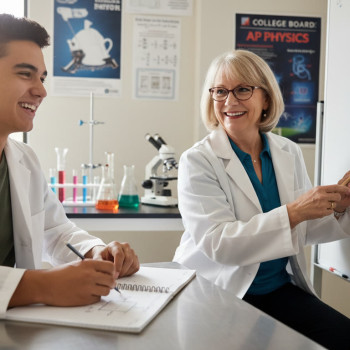
Some students benefit from a quick, targeted conversation with an expert who can pinpoint weaknesses and give a tailored plan for the final evening. Sparkl’s personalized tutoring can fit naturally here: a short 30–45 minute session the day before can clarify rubric expectations, suggest a focused practice prompt, and provide AI-driven insights that point to the most missed content specific to your profile. A single focused session often saves hours of ineffective study.
Checklist: Night-Before Essentials
- One-page Quick Sheet with thesis templates and three key evidence pairings.
- Two short timed practices: one outline and one paragraph.
- Device charged, Bluebook installed (if applicable), exam materials packed.
- Wind-down routine scheduled: walk, breathing, and lights-out target.
- Optional: 30–45 minute targeted tutor session to fine-tune strategy.
Small Examples: Turning Evidence into Analysis
Practice seeing evidence as a springboard. Here are two short examples you can keep in mind when you write:
- Historical Prompt (Sample): “Explain how economic changes contributed to political reform in X period.” Evidence: Tariff reform of 1833. Analysis: Explain how tariff reform shifted elite alliances, altering incentives for reform and legitimizing new political coalitions.
- Literary Prompt (Sample): “Analyze how the author’s language shapes the reader’s perception of the protagonist.” Evidence: A specific sentence or image. Analysis: Show how diction narrows or widens sympathy—connect a word choice to a broader theme like alienation or resilience.
Final Encouragement: Confidence Is a Practice, Too
The night before an AP humanities exam is a ritual of refinement. If you’ve prepared over the semester, tonight is about clarity, rehearsal, and rest. If you’re still anxious, small targeted actions—outline one essay, sleep early, pack your bag—stack to create calm. Remember: grading rubrics reward clarity and defensible claims. Be clear, be specific, and trust the work you’ve already put in.
Parting Note: After the Test
Whatever happens, treat the exam as a step in a longer learning path. Review your performance afterward — what felt effortless, and what felt clunky? Use that feedback to guide future study. If you want one-on-one guidance to convert that feedback into a personalized plan, consider a short follow-up session with a tutor. Sparkl’s tutors specialize in turning test experiences into targeted improvements through tailored study plans and expert feedback.
Wrap-Up
On the night before a humanities AP exam, aim for three things: clarity in your thesis moves, precision in your evidence choices, and calm in your body. You don’t need to invent knowledge tonight—just make your thinking visible, practiced, and reliable. Walk into the exam knowing you have a checklist, a plan, and the mental tools to write with authority. Good luck — you’ve got this.





















No Comments
Leave a comment Cancel