
Predicted Grades vs AP Study: Why This Tension Exists
It happens every fall: your school hands out predicted grades (or you and your teacher talk about target grades), college counselors ask for estimated scores, and your friends start planning study groups for AP exams. Predicted grades are tidy, numerical snapshots. AP study is messy, iterative, and often personal. Which deserves more of your limited time and energy? The short answer: neither is inherently more important than the other — but how you prioritize them makes all the difference.

What we mean by “Predicted Grades” and “AP Study”
Let’s define terms upfront so we’re all on the same page. “Predicted grades” are teacher-provided estimates of how you’ll perform on course assessments — often used by schools to forecast final grades or for college applications where actual exam results aren’t available. “AP study” means the deliberate preparation you do for the College Board’s Advanced Placement exams: content review, practice tests, skills training, and exam-day strategy.
Both matter, but they serve different purposes. Predicted grades influence course placement, recommendations, and early expectations. AP study determines the actual score you walk into the College Board’s scoring machine with on exam day.
The Priority Matrix Framework — A Simple Way to Choose What Matters Now
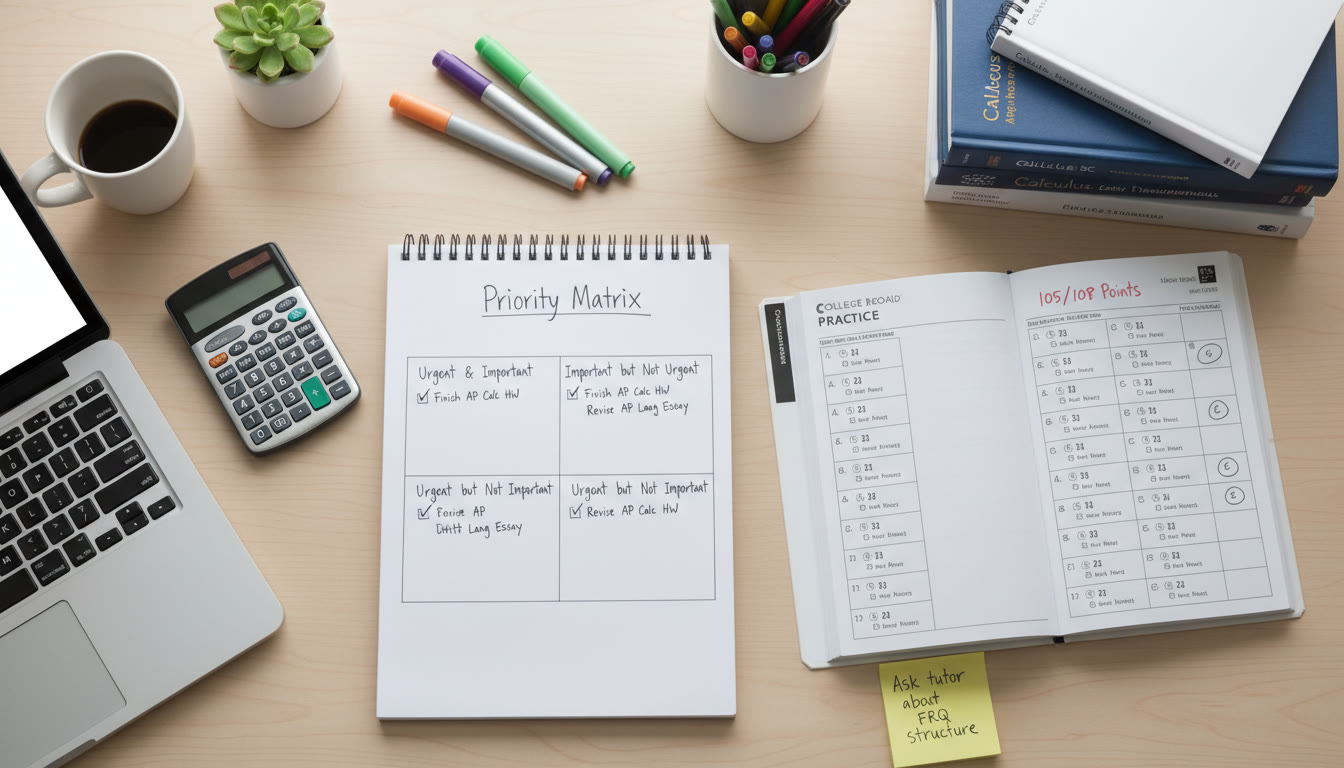
When decisions feel overwhelming, a matrix helps. Think of a 2×2 grid with axes: “Impact on Outcome” (low to high) and “Effort Required Now” (low to high). This framework helps turn vague goals into clear next steps.
How to map AP prep into the 2×2
- High Impact, Low Effort: Quick wins you can do this week that significantly boost your score or predicted grade (e.g., mastering a commonly tested formula, fixing a recurring exam technique mistake).
- High Impact, High Effort: Big projects that will shape your final performance (e.g., completing full-length practice exams, creating a year-long study plan, doing systematic weak-skill remediation).
- Low Impact, Low Effort: Comfort tasks that feel productive but don’t move the needle much (e.g., re-reading textbook chapter summaries without testing yourself).
- Low Impact, High Effort: Activities that consume time with minimal return (e.g., obsessively perfecting marginally relevant notes or doing countless low-quality practice items).
Why this helps with predicted grades
Predicted grades are often based on classroom performance, assessments, class participation, and teacher judgment. If you want a predicted grade that reflects your potential, prioritize high-impact classroom actions first: do the major projects well, show consistent improvement on quizzes, and ask targeted questions. But don’t let the pursuit of a perfect predicted grade overshadow the longer-term goal of an actual AP score you’ll be proud of.
Practical Priority Map for AP Students (By Time Horizon)
Here’s a realistic, time-based translation of the matrix: immediate (next 2 weeks), short-term (1–3 months), medium (3–6 months), and long-term (6+ months). Use this to structure weekly to-semester plans.
Immediate (Next 2 Weeks)
- Identify 1–2 recurring weak spots from recent classwork or past AP-style questions.
- Take a diagnostic 1-hour practice set for the topic and review mistakes carefully.
- Communicate with your teacher about how predicted grades are calculated and what evidence could bump them.
- Set up a short daily checklist: 30–45 minutes of focused practice plus a short active recall session.
Short-Term (1–3 Months)
- Complete 1–2 full-length practice exams under timed conditions.
- Create a targeted remediation plan: 2–3 specific skills to strengthen, with weekly micro-goals.
- Use the priority matrix weekly: do the highest-impact tasks first on exam days and class project deadlines.
Medium (3–6 Months)
- Establish a steady cycle of practice tests, content review, and error analysis.
- Work with a 1-on-1 tutor or teacher for focused feedback on exam strategy — personalized tutoring can accelerate weak-skill repair and make study time far more efficient.
- Ensure predicted grades are improving in parallel by aligning classroom efforts with AP-style assessments.
Long-Term (6+ Months)
- Deepen endurance for multi-hour exam sessions and refine pacing.
- Adopt habits for sustained learning: spaced repetition, interleaving topics, and reflective error logs.
- Use mock score trends to adjust your predicted grade expectations and inform college conversations.
Table: Tasks Placed in the Priority Matrix
| Task | Impact on AP Score | Effort Required | When to Do It |
|---|---|---|---|
| Timed full-length practice exam | High | High | Monthly (start 3–6 months out) |
| Targeted concept drills (e.g., FRQ structure, calculus limits) | High | Low–Medium | Weekly |
| Improving classroom project grades | Medium | Medium | Now (affects predicted grades) |
| Rereading textbook chapters | Low | Low–Medium | Briefly, as review |
| Multiple low-quality practice sets | Low | High | Avoid — replace with targeted practice |
Balancing Predicted Grades and AP Study: Real-Life Examples
Stories make strategy stick. I’ll share three anonymized archetypes so you can spot yourself and decide what to prioritize.
Case A — “The Grade-Focused Student”
Sam was young, consistent in class, and relied on strong homework scores to secure a high predicted grade. When AP prep ramped up, Sam continued the same approach: polished notes, attentive classwork, and near-perfect quiz scores. But practice AP problems exposed a gap in timing and free-response technique. Sam’s predicted grade looked great, but mock AP scores lagged. The fix? Sam shifted 30–40% of study time to timed practice and FRQ training, while keeping the classroom performance steady. Over weeks, both mock AP scores and predicted grades aligned upward.
Case B — “The Exam-Focused Student”
Maya already took lots of practice tests on her own and was deeply familiar with AP question styles, but her school’s predicted grades were middling because she skipped some required classwork and projects. Colleges that saw only predicted grades could underestimate her ability. Maya started sharing practice test results with her teacher, asked to submit optional assignments, and briefly prioritized tasks that directly affected the predicted grade. That communication bridged perception and reality, improving both teacher trust and formal predictions.
Case C — “The Balanced Planner”
Jordan used a weekly priority matrix. Mondays and Wednesdays targeted problem sets and content review for AP prep; Tuesdays and Thursdays focused on class projects and participation; weekends were for full-length exams or a restorative reset. Jordan used one-on-one tutoring for the trickiest topics. This balanced strategy raised both predicted grades and actual AP practice scores in a gradual, sustainable way.
How to Make Your Predicted Grade Work for You
Predicted grades aren’t just numbers — they’re a signal. They tell teachers and counselors how you’re perceived academically. Use that perception strategically.
- Discuss: Don’t be shy about asking your teacher what specific evidence could raise your prediction.
- Show growth: Radical improvement between assessments is persuasive; keep a brief portfolio of corrected work and recent practice tests that demonstrate progress.
- Align evidence: If your AP exam is skills-heavy, show how recent in-class performances align with those skills (e.g., lab reports for AP Biology, timed essays for AP English).
Study Techniques That Belong in the “High Impact” Quadrant
These methods reliably produce score gains across AP subjects when used intentionally:
- Active recall and spaced repetition — turn facts into questions and revisit them over increasing intervals.
- Deliberate practice with feedback — targeted drills on weak areas, followed by focused review.
- Full-length timed practice exams — practice pacing and exam stamina under realistic conditions.
- Structured error logs — record what went wrong, why, and the plan to fix it next time.
- Targeted tutoring or coaching — one-on-one guidance that highlights blind spots and accelerates progress.
Where Personalized Tutoring Fits Naturally
Personalized tutoring is a classic “high impact” investment when used sparingly and smartly. An expert tutor can pinpoint pattern mistakes, model strategies for Free Response Questions, and create a tailored plan that values your classroom obligations and predicted grades. If you have limited time, a few focused sessions to fix a recurring problem can yield more improvement than dozens of unfocused hours.
For example, Sparkl’s personalized tutoring offers 1-on-1 guidance, tailored study plans, expert tutors, and AI-driven insights. When a student used that combination for targeted FRQ practice, the tutor helped reframe answers from “what I know” to “what the scorers look for,” producing measurable score improvements in subsequent practice exams. The key is fit — use tutoring to attack specific high-impact areas, not as a catch-all substitute for practice.
Pacing and Mental Health: A Non-Negotiable Priority
Effort without rest produces burnout, and burnout kills performance. Your priority matrix should have a hard edge that protects sleep, nutrition, and mental health. Short, high-quality study sessions beat long, frantic marathons. Try this weekly rhythm:
- 5–7 hours of focused AP prep per week per subject if you’re mid-season (ramping up to 10–12 hours in the final months for subjects you need the most).
- At least one full day with no AP work to recharge.
- Consistent 7–9 hours of sleep.
Checklist: A Week Using the Priority Matrix
Use this sample weekly checklist to get started. Tweak for your subject and timeline.
- Monday: 45 minutes — targeted concept drill; review errors from last quiz.
- Tuesday: 60 minutes — timed section practice (MCQ or SAQ) + 15-minute review.
- Wednesday: Class focus — submit strong in-class work; ask teacher for feedback on a specific skill.
- Thursday: 45 minutes — spaced repetition flashcards and a short writing task (where relevant).
- Friday: 90 minutes — full practice set under timed conditions (rotate weekly between sections).
- Saturday: Rest or light review (30 minutes) + optional tutoring session if booked.
- Sunday: Reflective hour — error log update and plan the next week using the matrix.
Measuring What Matters: Metrics to Track
Good metrics turn guesswork into decisions. Track the following to see real progress over time:
- Timed practice exam scores (MCQ and FRQ separately).
- Percent improvement on targeted skills after remediation.
- Number of recurring errors (those that reappear despite practice).
- Teacher feedback on class assignments and any change in predicted grades.
- Hours of effective, focused study (quality beats quantity).
Final Thoughts: Make the Matrix Your Habit, Not a One-Time Fix
Predicted grades and AP study should be friends, not rivals. Predicted grades help with perception and short-term goal-setting; AP study is the engine that converts effort into a concrete score. Use the priority matrix to push high-impact tasks ahead of busywork, and communicate with teachers so predicted grades reflect your true trajectory.
Remember: targeted, smart effort delivered consistently beats last-minute panic. If you find yourself stuck, a short series of 1-on-1 tutoring sessions — the kind that combine human expertise with data-driven insight — can untangle the toughest knots in your preparation. Sparkl’s personalized tutoring model is designed to do precisely that: tailor study plans to your needs, provide expert feedback, and use AI-driven insights to monitor progress — but only as a strategic supplement to your own consistent work.
Parting Thought
Think of this process as investing in a portfolio. Predicted grades are one asset; AP study is another. Diversify wisely, rebalance regularly with the priority matrix, and keep your long-term goal — the AP exam result and the skills behind it — as the guiding star. Your best score is the one that reflects both steady classroom achievement and disciplined, targeted exam preparation.
Ready to build your matrix? Start with one small change this week: swap one hour of passive review for a timed practice set and an error log. Measure the result, and iterate. You’ll be surprised how quickly clarity replaces anxiety.
























No Comments
Leave a comment Cancel