
Why a Meeting Agenda Is Your Research Superpower
You walk into a 30-minute slot with your research advisor and somewhere between your backpack and the whiteboard the clock starts sprinting. Sound familiar? That’s why a clear, student-driven meeting agenda matters. An agenda transforms a potentially scattered conversation into a focused strategy session. It helps you and your advisor prioritize decisions, surface blockers, and leave each meeting with concrete next steps — not just inspiration.
This guide gives you ready-to-use agenda templates tailored to common stages of an AP Research project (or any high school/undergraduate research effort), plus tips for prepping, running, and following up on meetings. These templates are flexible: use them as-is or adapt to your rhythm. If you’re working with a tutor or 1-on-1 mentor like Sparkl’s personalized tutoring, you’ll also find suggestions on how to integrate that support without duplicating effort.
How to Use These Templates — Quick Principles
Before the templates, a few simple principles will make every meeting more productive.
- Send an agenda 24–48 hours in advance. This gives your advisor time to prepare feedback and prevents surprises.
- Lead the meeting. Advisors are allies; they appreciate when students come prepared and drive the conversation.
- Prioritize decisions over status updates. Use status updates that are short and factual, and spend most time on questions, choices, and blockers.
- Timebox topics. If you have a 30-minute meeting, the agenda should add up to 30 minutes — including time for action items.
- Capture next steps. End each meeting with a clear list of who does what, by when.
Meeting Templates by Stage
Below are templates you can copy-paste into an email or a shared doc. Each includes suggested timings (adjust to your meeting length) and the ideal outcome for the meeting.
1) Kickoff Meeting (First Meeting with Advisor)
Length: 45–60 minutes. Outcome: Shared expectations and an initial research plan.
- 0–5 min — Greetings & Context: Brief self-introduction, project title, and current status.
- 5–15 min — Research Question & Motivation: Explain your research question, why it matters, preliminary hypotheses, and what you hope to learn.
- 15–25 min — Scope & Feasibility: Discuss scope, available data/resources, potential constraints (time, access, equipment).
- 25–35 min — Methodology Ideas: Share initial design ideas, data collection plans, or key literature you’ll consult.
- 35–45 min — Expectations & Meeting Cadence: Decide how often to meet, preferred communication (email, shared doc), and feedback turnaround time.
- 45–60 min — Action Items: List next steps with owners and deadlines.
Ideal outcome: A one-page plan (question, aim, rough method, 3 immediate next steps).
2) Weekly Progress Check (Short Recurring Meeting)
Length: 20–30 minutes. Outcome: Clear progress alignment and quick problem solving.
- 0–3 min — Quick Recap: One-sentence status (e.g., “Data collection 40% complete; 2 pilot interviews done”).
- 3–12 min — Roadblocks & Questions: Focus on 1–3 specific blockers where you need advisor input.
- 12–22 min — Feedback & Decisions: Advisor provides guidance, suggests refocusing if necessary.
- 22–28 min — Next Steps: Assign tasks and confirm deadlines.
Tip: Keep a recurring shared agenda doc. Add your weekly points and let the advisor add comments asynchronously to save time during the meeting.
3) Data Collection or Pilot Review
Length: 30–40 minutes. Outcome: Validation of methods and adjustments for full-scale data collection.
- 0–5 min — Overview of Pilots: What you did, sample size, instruments used (surveys, protocols).
- 5–20 min — Results & Issues: Share key numbers, surprising results, and any anomalies or ethical concerns.
- 20–30 min — Method Refinement: Discuss changes to instruments, sampling, consent, or analysis approach.
- 30–40 min — Timeline Update: Decide revised timeline for full data collection and checkpoints.
4) Draft Review Meeting
Length: 45–60 minutes. Outcome: Specific revision plan for a written draft (literature review, method section, or full draft).
- 0–5 min — Purpose of Review: Clarify whether you want high-level feedback or line-by-line edits.
- 5–20 min — Major Structural Feedback: Discuss clarity of argument, flow, and any structural weaknesses.
- 20–40 min — Specific Issues: Go through the most important sections needing attention.
- 40–55 min — Editing Priorities: Agree on what to fix first and what can wait.
- 55–60 min — Deadlines & Next Review: Confirm when you’ll submit the revised draft.
Sample Agenda — 30-Minute Template (Copy-Paste Ready)
Use this for most weekly check-ins. Paste into your calendar invite or shared document.
| Time | Topic | Goal |
|---|---|---|
| 0–3 min | Quick Status | One-sentence update |
| 3–12 min | Top Blocker | Get focused advice |
| 12–22 min | Decision or Feedback | Make a choice or gather actionable feedback |
| 22–28 min | Next Steps | Assign tasks with deadlines |
| 28–30 min | Wrap-up | Confirm deliverables |
How to Prepare Before the Meeting
Preparation is the single biggest multiplier for meeting value. Here’s a concise checklist to follow before each appointment.
- Update a one-page progress summary: two-sentence status, three bullets of progress, two bullets of blockers.
- Attach or link the specific files the advisor should read (draft excerpt, dataset sample, survey instrument).
- Number your questions — that helps both of you track answers.
- Estimate how long each question will take; prioritize the most important ones.
- If you’re using support like Sparkl’s personalized tutoring, share what you covered with your tutor so meetings don’t repeat content and instead focus on advisor-specific insights.
During the Meeting — Communication Best Practices
How you speak in the meeting shapes the result. These conversational habits keep the meeting efficient and collaborative.
- Be concise. State the problem in one sentence, then add one data point or example.
- Ask specific questions. “Which analysis is better?” beats “What do you think?”
- Paraphrase decisions. After a key point, restate it: “So I’ll change X to Y and run Z by next Monday, correct?”
- Don’t fear to propose solutions. Advisors like students who suggest next steps; it makes their feedback sharper.

After the Meeting — Follow-Up That Actually Works
The meeting isn’t over until next actions are logged. Use this simple follow-up routine:
- Within 24 hours, send a concise meeting summary (3–6 bullets) listing decisions and action items with owners and deadlines.
- Update your project plan or timeline and mark dependencies.
- If a decision was deferred, add it to the agenda for the next meeting with any new materials attached.
- Share relevant materials with any collaborators or tutors (for example, provide your Sparkl tutor with the advisor’s feedback so tutoring can be optimally targeted).
Two Proven Templates You Can Customize
Below are two text templates you can copy into an email or calendar invite and modify for your situation.
Template A — Pre-Meeting Email (Send 48 hours before)
Subject: Agenda for Research Meeting — [Your Name] — [Date]
Hi [Advisor Name],
Looking forward to meeting on [date/time]. Brief agenda below (30 minutes):
- Quick status (1 sentence)
- Top blocker: [short description; 1–2 bullets]
- Decision needed: [what choice you want to make]
- Files attached: [file names]
Goal: Leave with a revised timeline and confirmation of next steps. Thanks — [Your Name]
Template B — Post-Meeting Summary (Send within 24 hours)
Subject: Notes & Action Items — [Your Name] — [Date]
Hi [Advisor Name],
Thanks for the time today. Quick summary:
- Decisions made: [brief list]
- Action items: [Who — What — By When]
- Next meeting proposed: [date/time]
Attachments: [relevant files]. Please let me know if I missed anything. — [Your Name]
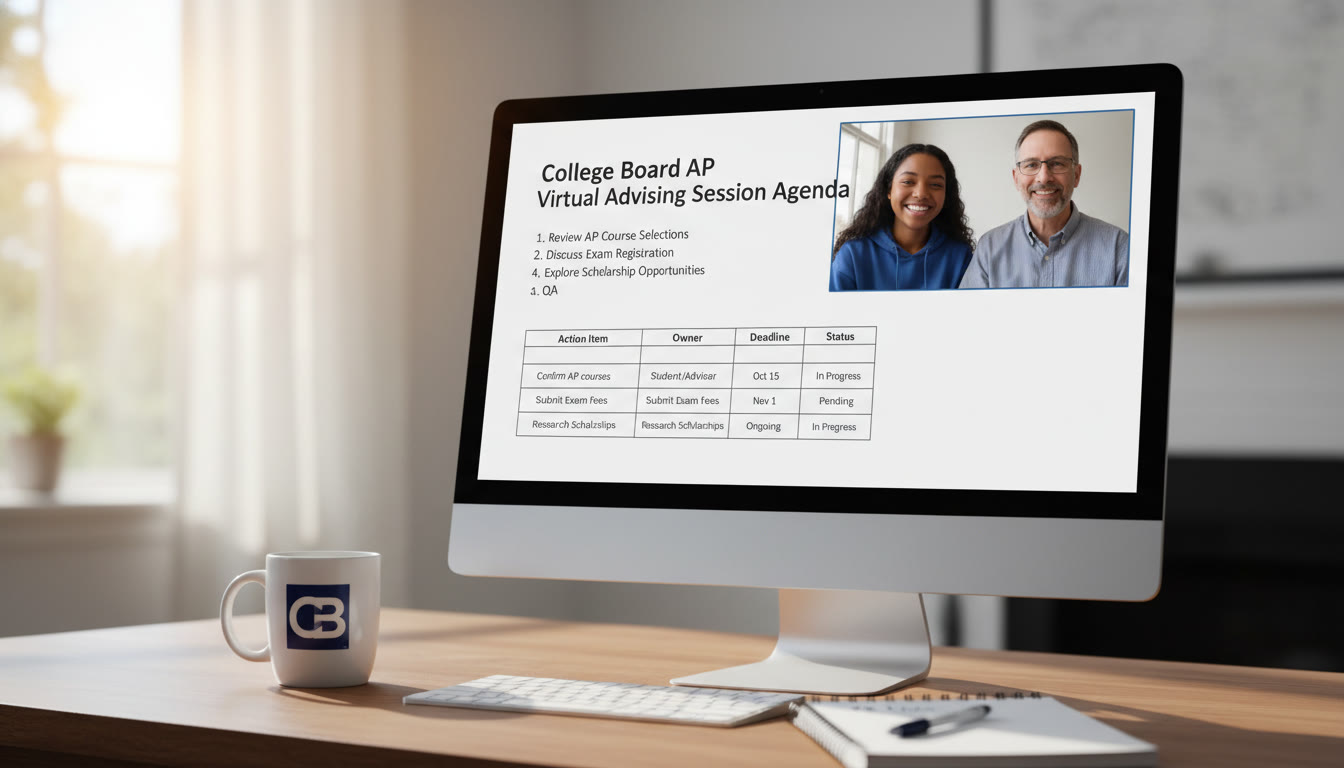
Sample Tracking Table for Ongoing Progress
Use a table like this in a shared document to quickly orient your advisor before every meeting.
| Item | Status | Owner | Due Date | Notes |
|---|---|---|---|---|
| Survey Revision | In Progress (pilot complete) | Student | Oct 12 | Reduce scale from 7 to 5 points per advisor suggestion |
| Consent Form | Complete | Student | Sept 30 | Institutional review not required for this project |
| Data Analysis Plan | Needs Review | Advisor | Oct 5 | Requested power analysis; student to run after meeting |
Common Pitfalls and How to Avoid Them
- Going in empty-handed: If you can’t summarize progress succinctly, your advisor may spend the meeting trying to reconstruct the timeline from scratch. Keep a 1-page living summary.
- Ambiguous action items: Instead of “work on literature review,” write “Revise lit review intro (500 words) and submit by [date].”
- Back-to-back meetings without follow-ups: If you book weekly slots but never close loops, momentum falters. Use the tracking table and short post-meeting notes to preserve continuity.
- Using meetings for training: If you need skill-building (e.g., statistics or coding), complement advisor time with targeted tutoring. Sparkl’s personalized tutoring can provide the 1-on-1 guidance and tailored study plans that let advisor time focus on conceptual and project-level feedback.
How to Tailor Agendas for Different Advisor Styles
Advisors vary — some are big-picture thinkers; others are detail-oriented editors. Here’s how to adapt:
- Big-picture advisors: Focus agendas on decisions that affect direction (scope, methodology). Bring concise evidence for why you prefer option A or B.
- Detail-oriented advisors: Offer a clean excerpt or dataset and ask for line-by-line feedback. Give them time to review by sending materials early.
- Busy or intermittent advisors: Make each meeting count. Prioritize one major decision and 1–2 critical blockers instead of a laundry list.
Sample Questions to Bring (Save Time, Get Better Feedback)
These quick prompts help convert vague advice into actionable guidance.
- “Given my sample size of X, is a t-test or nonparametric test more appropriate?”
- “Is my research question narrow enough to answer within the timeline? If not, where should I tighten it?”
- “Which three journals or studies should I prioritize in the literature review for framing the theoretical background?”
- “If I can only collect Y more participants, how should I adjust power expectations?”
Measuring Meeting Effectiveness — A Simple Scorecard
After a few meetings, reflect using this mini-scorecard. It’s a quick way to improve habits.
| Question | Yes / No | Notes |
|---|---|---|
| Was there a clear decision made? | Yes | Decision on survey scales and timeline confirmed |
| Were action items assigned with deadlines? | Yes | 3 items assigned |
| Did I send materials in advance? | No | Will send next time |
Final Thoughts — Make Meetings Work for You
Advisors are your allies in navigating the maze of a research project. Meetings become less intimidating and far more productive when you lead with clarity, prioritize decisions, and follow up systematically. Whether you’re tackling AP Research, an independent study, or prepping a college-level paper, these agenda templates will help you protect your most valuable resource: time.
One last practical note — pairing advisor time with targeted tutoring can fast-track skill gaps. If you’re using services like Sparkl’s personalized tutoring, coordinate what you and your tutor will cover before meetings so advisor time is reserved for strategic input and decision-making.
Start small: pick one template, run it for three meetings, and adapt. You’ll be surprised how fast momentum builds when every meeting ends with clarity and action.
Appendix — Quick Copy-Paste Agendas
30-Minute Weekly Check-In (Copy)
0–3 min: One-sentence status. 3–12 min: Discuss top blocker. 12–22 min: Advisor feedback and decisions. 22–28 min: Assign next steps. 28–30 min: Confirm deadlines.
Kickoff (Copy)
0–5 min: Introductions. 5–15 min: Research question and motivation. 15–25 min: Scope and feasibility. 25–35 min: Methods. 35–45 min: Expectations and next steps.
Good luck — and treat each meeting as a small milestone. With an agenda in hand, you’ll turn every session into real progress.























No Comments
Leave a comment Cancel