
Why Spaced Repetition Works for AP Students
When you’re staring down a stack of AP concepts—dates in AP US History, equations in AP Physics, vocabulary in AP French—the real challenge isn’t reading everything once. It’s making that knowledge stick when you need it: on the final unit test, on a timed section, and most importantly, on exam day. Spaced repetition is more than a memorization trick; it’s a learning architecture built around how your brain consolidates information.
At its heart, spaced repetition uses the spacing effect: reviewing information at increasing intervals as your memory of it fades. Couple that with active recall—forcing your brain to search for an answer rather than simply re-reading—and you have a study method that turns short-term exposure into long-term mastery. For AP courses, which demand both breadth and depth, this approach is a game changer.
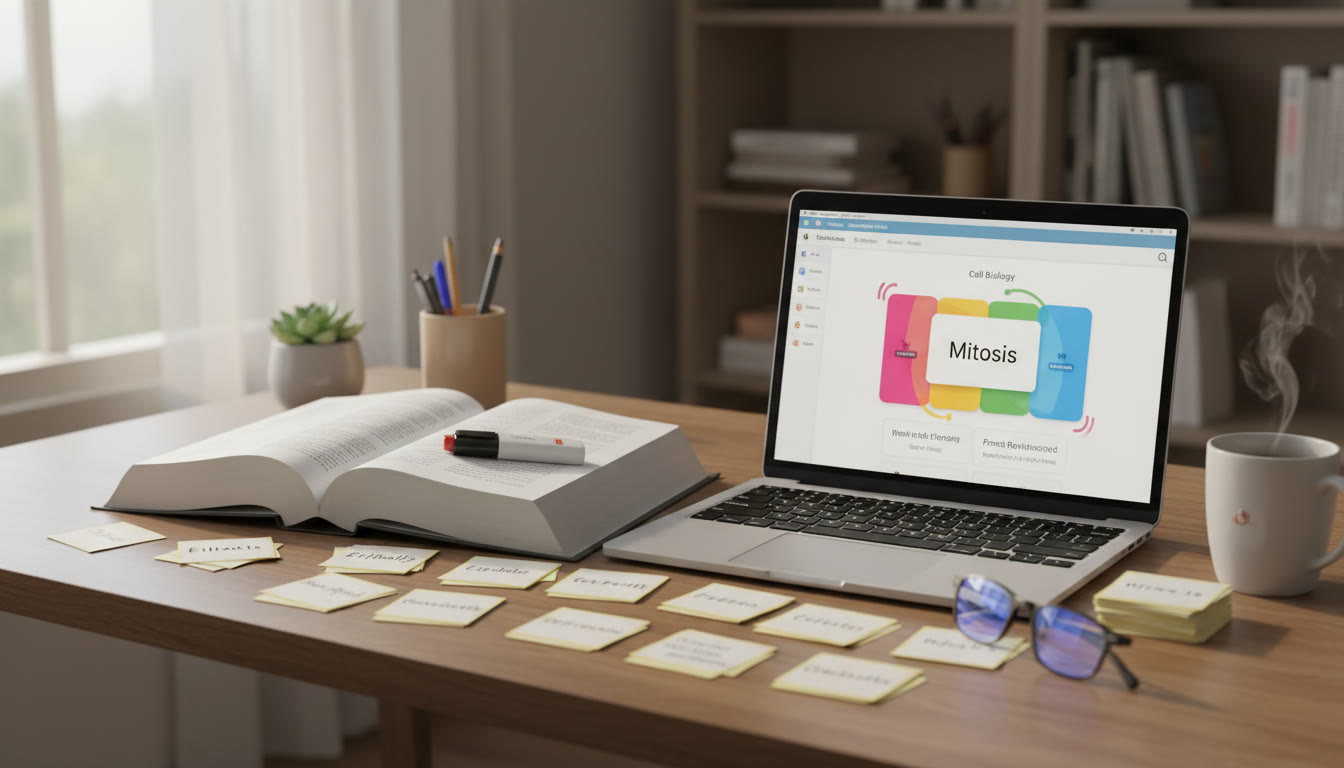
Getting Started: Why Deck Design Matters
Not all flashcard decks are created equal. A messy deck with inconsistent formatting, vague prompts, and mixed-topic cards will slow you down and hurt recall. Designing effective decks means creating cards with predictable structure, clear retrieval cues, and a robust tagging system so you can review efficiently and with purpose.
Think of your deck like a well-organized library instead of a junk drawer. When cards are consistent and searchable, you spend less time deciding what to study and more time strengthening memories.
Deck Types by AP Course
Different AP classes require different strategies. Here’s a simple way to pick a deck type by course:
- AP Biology / AP Chemistry: Concept-to-definition cards, mechanism-step cards (e.g., stages of cellular respiration), and reaction/problem-solution cards.
- AP US History / AP European History: Date-event cards, cause-effect chains, and document-analysis prompts (source + question).
- AP Calculus / AP Physics: Problem statement → solution steps (not just final answer), concept → formula derivation, and common-mistake cards.
- AP Languages (English, Spanish, French, etc.): Vocabulary in context, grammar-rule → example, and short-essay prompts for synthesis practice.
- AP Psychology: Term → experiment/findings, researcher → key contribution, and comparison cards (e.g., behaviorism vs. cognitivism).
Three Core Principles of Every Card
- Be specific: One idea per card. Don’t cram whole paragraphs under a question—break concepts into atomic pieces.
- Use strong cues: Instead of “Photosynthesis” write “List the steps of the light-dependent reactions and their main outcomes.” Strong cues prompt meaningful retrieval.
- Include context or examples: Where applicable, add brief context (example problem, historical source, or diagram description). Context creates memory hooks.
How to Structure Cards: Front, Back, and Extras
A consistent card template helps you learn faster and makes reviewing less mentally taxing. Here’s a practical template you can adapt.
- Front (Prompt): A focused question or cue. If possible, include a hint (e.g., year, unit, or a single-word context).
- Back (Answer): Concise correct response. Include stepwise reasoning and a short mnemonic if helpful.
- Extra (Tags/Fields): Course, unit/topic, difficulty level, and exam-relevance (Multiple Choice or Free Response).
Example Card Templates
Concrete examples help. Here are three AP-oriented examples you can copy.
- AP Biology (Cellular Respiration): Front: “Light reactions: main inputs and outputs.” Back: “Inputs: H2O, light, ADP + Pi; Outputs: O2, ATP, NADPH. Key site: thylakoid membrane.” Tags: AP Biology, Unit 4, High Priority.
- AP US History (Progressive Era): Front: “What were three major goals of Progressive reformers (1900–1917)?” Back: “1) Reduce corruption and political machines; 2) Regulation of monopolies; 3) Social reforms (child labor, sanitation). Examples: Sherman Antitrust Act enforcement, direct primary laws.” Tags: APUSH, Unit 7, Essay Prep.
- AP Calculus AB: Front: “Evaluate ∫ (2x + 3) dx.” Back: “x^2 + 3x + C. Note: Check for substitution when inner function exists.” Tags: AP Calc, Unit 5, Practice Problem.
Tagging, Filtering, and Prioritizing: The Backbone of Review
Tagging is your secret weapon. Create a system that tells you, at a glance, why a card matters and when to review it. Think tags for topic, unit, difficulty, and exam type. This makes it easy to build targeted review sessions: “All Unit 3 high-difficulty cards for free-response practice.”
Suggested Tag Set
- Course (e.g., AP Biology)
- Unit (e.g., Unit 2: Photosynthesis)
- Priority (High, Medium, Low)
- Question Type (MC, FRQ, Short Answer)
- Difficulty (1–5)
Study Filters You’ll Use Often
- High Priority + Difficulty ≥ 4: For weekly focused practice.
- MC Tagged + Last Seen > 7 days: Quick warm-up before class.
- FRQ Tagged + Low Confidence: Targeted practice block with timed writing.
Scheduling Your Spaced Repetition: A Practical Calendar
Having a review calendar stops your study sessions from becoming reactive. Pair spaced repetition with a schedule that reflects how AP exams are structured: build the foundation early, intensify review near the exam, and use targeted bursts for weak areas.
General Timing Framework
- Early Phase (8–12 weeks before exam): Build decks and review daily with short sessions (20–40 minutes). Focus on coverage and concept clarity.
- Mid Phase (4–8 weeks before exam): Increase review intensity. Use mixed-topic sessions and timed practice for FRQs and problem sets.
- Peak Phase (2–3 weeks before exam): Daily, longer sessions focusing on practice exams, high-priority cards, and weak topics.
- Final Week: Light spaced reviews to keep recall sharp; prioritize sleep and active, spaced retrieval rather than cramming.
Sample Weekly Plan (AP Biology Example)
| Day | Activity | Duration | Goal |
|---|---|---|---|
| Monday | Review 30 high-priority cards (Unit 3) | 40 min | Strengthen core content |
| Tuesday | Practice FRQ-style prompts + review related cards | 60 min | Apply knowledge under timed conditions |
| Wednesday | Mixed-topic MC-style review (50 cards) | 30–45 min | Improve speed and retrieval |
| Thursday | New card creation and light review | 30 min | Convert class notes into atomic cards |
| Friday | Group study / teach-back session | 45–60 min | Explain concepts to peers to cement memory |
| Weekend | Practice test or cumulative review | 90–120 min | Assess retention and update deck |
Card Quality Control: Keeping Decks Healthy
Decks deteriorate if you add low-quality cards or never clean up duplicates. Schedule weekly maintenance: merge overlapping cards, retire outdated ones, and reword cards that cause confusion.
Quick Maintenance Checklist
- Merge duplicates: If two cards test the same fact, combine and refine.
- Retire “memorized” cards: Move truly mastered cards to a lower-frequency review or archived deck.
- Rework weak prompts: If you consistently fail a card because it’s ambiguous, rewrite the cue to be clearer.
- Tag adjustments: Move cards between priority levels based on performance data.
Measuring Progress: Data That Actually Helps
Many apps provide metrics—accuracy, streaks, review time. Use these metrics strategically. Look at trends (Are certain units consistently low? Do you forget during long intervals?), not just daily scores. Create a simple tracking spreadsheet or habit log to record:
- Weekly % correct on high-priority cards
- Average recall latency (how long it takes you to answer)
- Number of new cards added versus retired
This data helps you design targeted interventions: extra FRQ practice for low-accuracy units, or switching to example-driven cards for conceptual trouble spots.
Active Recall Meets Exam Strategy
Spaced repetition isn’t just about memorizing facts; it’s about connecting recall to the AP exam formats. Make sure your decks include cards that mimic the form of the assessment: multiple-choice cues, short-answer prompts, and FRQ outlines. Practicing in the format of the test increases transfer—your ability to use knowledge effectively under test conditions.
Examples of Exam-Focused Cards
- MC-Style: “Which of the following best explains…?” with four short options on the back (write the correct option on the back, but practice recalling the reasoning first).
- FRQ Outline: Prompt with a question stem, back with bullet-point rubric-style responses and evidence examples.
- Timing Cards: Short problems designed to be solved in X minutes—then check for method accuracy and speed.
Integrating Spaced Repetition with Other Study Methods
Spaced repetition is powerful, but it’s more effective when combined with complementary strategies:
- Practice Exams: Full-length tests simulate pacing and endurance.
- Interleaving: Mix related but distinct problem types to build flexible problem-solving skills.
- Elaboration: After answering a card, explain why the answer is correct in a sentence. This deepens encoding.
- Peer Teaching: Teaching a concept to a classmate or study group reveals blind spots and strengthens recall.
Digital Tools and Human Guidance: Best of Both Worlds
Modern study workflows often combine spaced repetition apps with personalized coaching. If you use an app, choose one that supports tagging, custom intervals, and easy card editing. But technology alone isn’t a panacea. A human touch—an experienced AP tutor or mentor—can help you prioritize topics, shape card prompts for higher-quality active recall, and translate exam patterns into study actions.
If you’re exploring tutoring, consider options that offer 1-on-1 guidance, tailored study plans, expert tutors familiar with AP rubrics, and AI-driven insights that highlight weak areas. Personalized tutors can help you turn practice exam mistakes into targeted cards and keep your pacing realistic as the exam approaches.
Common Pitfalls and How to Avoid Them
Even good students fall into traps with spaced repetition. Here are the ones I see most often—and how to prevent them.
- Quantity over quality: Creating hundreds of shallow cards feels productive but rarely improves understanding. Make fewer, better cards.
- Passive review: Flipping a card and glancing at the answer is passive. Force yourself to write or say the answer before checking.
- Inconsistent maintenance: Old, incorrect, or duplicate cards accumulate. Schedule a weekly 15–20 minute clean-up.
- No exam-format practice: If your deck never mimics FRQ requirements, you’ll have trouble transferring recall to essay writing.
Case Study: Turning a Week of Class Notes into an AP Deck
Imagine you just finished Unit 5 in AP Psychology: Memory, Cognition, and Language. Here’s a step-by-step approach to convert those notes into an effective deck.
- Identify core concepts: Encoding, storage, retrieval, schemas, types of memory.
- Create atomic cards: Break each concept into 2–4 cards (definition, experiment, implication, example).
- Tag and prioritize: Tag each card with unit, priority, and exam relevance (e.g., “FRQ likely”).
- Write application cards: “Explain how retrieval cues improve recall—use an experiment as evidence.”
- Schedule targeted review: Add these cards to weekly high-priority reviews and a mixed-topic Saturday session.
Tips for Busy AP Students: Efficiency Without Compromise
AP students often juggle multiple courses, extracurriculars, and sleep. Smart deck design helps you get the most from limited time.
- Micro-sessions: 15–20 minutes of focused retrieval beats unfocused hour-long sessions.
- Morning or evening rituals: Build a consistent time to review—consistency matters more than duration.
- Make review automatic: Use app notifications and a simple daily goals checklist.
- Prioritize weakness: Spend 60–70% of your review time on weak, high-priority cards.
When to Add, Merge, or Delete Cards
Not every new fact needs a card. Be deliberate:
- Add cards when a fact is likely to be tested, or when you struggle to recall it during practice.
- Merge cards that test the same concept from different angles—unless those angles are exam-relevant distinctions.
- Delete (or archive) cards once you consistently answer them correctly for several spaced intervals and they haven’t been challenged in a practice exam.
Final Weeks: Peak Performance Tactics
As the AP exams near, focus shifts from accumulation to precision. Review your high-priority cards daily, simulate exam conditions weekly, and use your decks to diagnose last-minute gaps.
- Simulate timing: Do timed MC (25–40 minutes) and timed FRQs using cards that mimic exam prompts.
- Active summaries: Before bed, summarize a high-priority unit aloud in three minutes—then review cards related to those flashpoints the next morning.
- Sleep and spacing: Don’t sacrifice sleep to cram. Consolidation happens during sleep—spaced repetition and sleep work together.

Putting It All Together: A Checklist You Can Use Tonight
- Create or refine card templates for one AP course.
- Tag your existing cards with course, unit, priority, and exam type.
- Schedule three weekly spaced-repetition sessions: short daily review, one deeper mid-week session, and a weekend cumulative block.
- Implement a 10–15 minute weekly deck maintenance ritual.
- If you use tutoring, ask your tutor to review your deck structure and help convert weak areas into high-quality prompts—1-on-1 guidance can accelerate improvement.
Closing Thoughts: Make Spaced Repetition Work for You
Spaced repetition is a scaffold, not a cure-all. Its power comes from pairing thoughtful card design with consistent, purposeful practice. For AP students, the payoff is tangible: fewer forgotten facts, clearer syntheses in essays, and the confidence to apply knowledge under pressure.
As you build decks, remember: better beats bigger. A smaller set of well-crafted cards that you review deliberately will outpace a mountain of shallow flashcards every time. If you ever feel stuck, personalized help—whether from a teacher, an AP-focused tutor, or services that combine expert tutors with data-driven insights—can help you refine your approach and keep your deck lean, accurate, and exam-ready.
Start tonight: pick a single unit, write 10 atomic cards, tag them, and commit to 20 minutes of spaced review tomorrow morning. Over a few weeks, you’ll notice that concepts you once had to cram become second nature—and that’s the real point of AP prep.
Quick Resources for Next Steps
Keep things practical: practice FRQs under timed conditions, convert errors into cards, and use data from your reviews to inform your study plan. If you’re looking for personalized help, consider tutors who offer 1-on-1 guidance, tailored study plans, expert familiarity with AP rubrics, and AI-driven insights to highlight weaknesses—tools that can make spaced repetition even more effective.
Good Luck—and Keep the Process Human
Study systems are tools to support your learning, but they don’t replace curiosity, rest, and reflection. Celebrate the small wins—nailing a tricky FRQ structure, finally explaining a concept to a friend, beating your own accuracy record—and you’ll carry confidence into the exam room. Design your decks with care, review with purpose, and let spaced repetition turn your hard work into durable knowledge.


























No Comments
Leave a comment Cancel