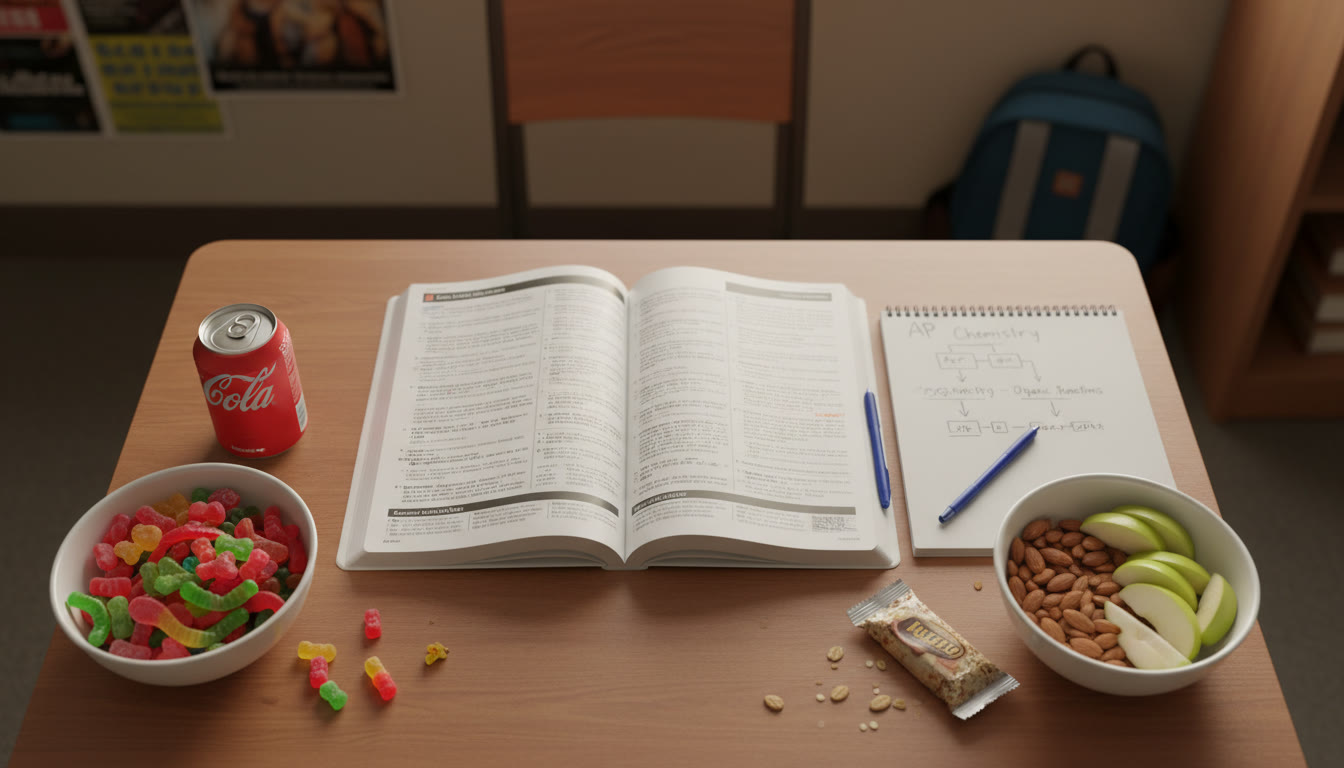

Why What You Eat Matters When You’re Studying for AP Exams
Ask any seasoned AP student and they’ll tell you: studying isn’t just about strategies, notes, or practice exams. It’s also about the behind-the-scenes stuff—sleep, mindset, and yes, the humble snack. When you’re carving out hours for AP Physics or AP U.S. History, the fuel you choose affects focus, memory, mood, and stamina. In this post we’ll explore the tug-of-war between sugary snacks and steady-energy options, translate the science into real-life snack choices, and give practical plans you can actually follow on big study days and exam mornings. Along the way I’ll point out how targeted support—like Sparkl’s personalized tutoring—can make it easier to incorporate smart habits into your AP routine.

Quick Science, No Jargon: What Sugar Does to Your Brain (and Why It’s So Tempting)
Sugar is delicious, fast, and psychologically satisfying. A small candy or a soda floods your bloodstream with glucose, which the brain can use immediately. That rapid availability can create a quick spike in alertness—exactly what you want when you’re dragging through a late-night review session.
But there’s a catch. The body responds to that spike by releasing insulin, and the result can be a rapid downturn: the classic sugar crash. When that happens you’re left feeling foggy, irritable, and less able to hold complex information in working memory—exactly when you need mental clarity for solving an AP Calc problem or writing a crisp DBQ (Document-Based Question).
Beyond the crash, frequent reliance on high-sugar snacks teaches your brain to expect instant rewards. That makes sustained study sessions harder. In short: sugar gives you a short-term lift and a longer-term liability.
What ‘Steady Energy’ Really Means
Steady-energy snacks release glucose into the bloodstream more slowly and provide accompanying nutrients—protein, fiber, healthy fats, vitamins—that support concentration and cognitive function for longer. Instead of a roller-coaster spike and crash, you get a gentle plateau: reliable mental energy, more consistent mood, and better endurance for multi-hour study sessions or lengthy exams.
Examples of steady-energy building blocks: whole grains, nuts, yogurt, fruit, eggs, hummus, and vegetables. They can be mixed in creative ways to satisfy hunger while supporting focus.
How This Translates to Studying
- Short study sprint (20–40 minutes): A small piece of fruit or a handful of nuts is perfect.
- Long review block (1–3 hours): Combine protein, fiber, and a low-GI carb—e.g., Greek yogurt with berries and granola.
- Exam morning: A balanced breakfast (complex carb + protein + small fat) keeps concentration steady for the test window.
Snack Showdown: Sugar Versus Steady Energy — Practical Comparisons
Below is a compact, practical table showing how common snacks behave in the real world of studying and test-taking.
| Snack | Immediate Effect | Energy Duration | Study-Friendly? |
|---|---|---|---|
| Cola or Sugary Sports Drink | Sharp alertness spike | 30–60 minutes (often followed by crash) | Not ideal—use only in rare emergencies |
| Candy or Gummy Bears | Rapid satisfaction | 20–45 minutes (high crash risk) | Not ideal; distracts focus later |
| Apple + Peanut Butter | Steady glucose + satiating fat/protein | 2–3 hours | Excellent for study blocks and exam mornings |
| Greek Yogurt + Berries | Protein and antioxidants support cognition | 2–3 hours | Great for review sessions |
| Trail Mix (Nuts + Dried Fruit) | Good combo of fat, protein, and carbs | 2–4 hours (depending on portion size) | Very good when portion-controlled |
| Energy Bar (High Sugar) | Useful short burst, variable nutrients | 1 hour (variable) | Okay in a pinch—read labels |
| Whole Grain Toast + Avocado + Egg | Sustained fullness and stable clarity | 3–4 hours | Excellent for long study days and exam morning |
Real-World Examples: Snack Plans for AP Routines
Different routines call for different fueling strategies. Below are three practical plans you can adapt.
Plan A: 2-Hour Evening Study Session
- 30 minutes before: Small banana or half an English muffin with almond butter.
- During: Water; if you need a nibble, a few whole-grain crackers or 10–12 almonds.
- After: A protein-rich small meal or snack (Greek yogurt with honey and walnuts) to aid recovery and prevent late-night hunger.
Plan B: Marathon Saturday (4–6 Hours of Sections + Breaks)
- Breakfast: Oatmeal with milk, berries, and a spoonful of peanut butter.
- Mid-morning mini-break: Apple slices and a cheese stick.
- Lunch: Quinoa or brown rice bowl with chicken or tofu, veggies, and a drizzle of olive oil.
- Afternoon snack: Trail mix (portion-controlled) and water.
Plan C: Exam Morning
- Early breakfast (2–2.5 hours before exam): Whole-grain toast with eggs and a half avocado OR a bowl of Greek yogurt with granola and fruit.
- If you’re peckish at break: A banana, a small pack of mixed nuts, or a plain granola bar with minimal added sugar.
- Hydration: Start hydrating the night before and sip water in the morning; avoid chugging caffeinated drinks right before the test.
Smart Substitutions: How to Beat the Sugar Urge Without Feeling Deprived
Craving candy after an intense review? Try these simple swaps that still satisfy the flavor while supporting steady energy.
- Chocolate craving: Dark chocolate (70% cacao) square + a few almonds — satisfies sweetness with less added sugar and a dose of healthy fat.
- Crunch craving: Baked chickpea snacks or air-popped popcorn instead of potato chips for fiber and crunch without refined carbs.
- Sweet and creamy: A spoonful of Greek yogurt with a drizzle of honey and cinnamon vs. a candy bar for sweetness and protein.
- Need an energy boost: A small piece of fruit with a handful of nuts beats the energy gum or soda in both duration and cognitive support.
Hydration and Caffeine: Use Them Wisely
Water is underrated. Mild dehydration reduces alertness and slows reaction time. Keep a bottle at your desk. Caffeine can be a helpful study ally—coffee, green tea, or an occasional matcha—for focus and reaction speed. But the rules are the same as sugar: timing and dose matter.
- Limit caffeine late in the day to avoid sleep disruption (sleep is one of the best study tools).
- Use small doses for a controlled lift: a single espresso or a regular cup of coffee rather than multiple large energy drinks.
- Combine caffeine with a balanced snack (protein + carb) to avoid jittery energy and subsequent crashes.
Portion Control: The Hidden Trick That Helps You Avoid the Crash
Even steady-energy snacks can backfire if you overdo them. Big meals right before a study sprint can make you sleepy. The middle ground is smart portioning: small to moderate snack sizes spaced through the study block keep glucose and focus steady.
Tip: Pack snacks in portioned containers (1 handful of nuts, 1 small fruit, 1 boiled egg) so you don’t graze mindlessly while reading notes.
Sample Grocery List for AP Students
Keep these staples on hand to build high-quality study snacks in minutes.
- Fresh fruit (apples, bananas, berries)
- Eggs
- Greek yogurt
- Nuts and seeds (almonds, walnuts, pumpkin seeds)
- Whole-grain bread, crackers, or oats
- Hummus
- Cheese sticks or cottage cheese
- Dark chocolate (70%+ cacao)
- Pre-cut veggies (carrot sticks, bell pepper strips)
- Trail mix (no extra sugar added)
Case Study: Two Students, Two Approaches
Imagine two AP students: Mia and Jamal.
- Mia studies in 90-minute blocks. She reaches for a soda and a candy bar during her sessions. The first 20 minutes of each block are productive, then she experiences a slump. To compensate she snacks again, which repeats the cycle. By the next morning she’s tired and less sharp for class.
- Jamal studies in similar blocks but eats small steady-energy snacks: a banana with peanut butter before he begins, a yogurt mid-session, and nuts afterward. He stays productive for entire blocks and sleeps better, which helps memory consolidation.
The difference is subtle but decisive: Mia gets repeated short keystone boosts; Jamal gets sustained output and better recovery. Over weeks, Jamal’s consistent approach translates into better practice-test performance and less stress.
When Sugar Can Be Useful (Yes, Seriously)
I promised nuance—and here it is. There are times when a quick-sugar boost makes sense:
- Morning grogginess right after a poor night of sleep (an emergency, not a habit).
- During prolonged sports or testing when glycogen stores are low and a quick refill is needed.
- When you’re hypoglycemic and need a rapid blood-sugar correction (for students with medical needs follow prescribed guidance).
In other words: sugar is a tool, not the default fuel. Use it deliberately, not reflexively.
How to Build a Sustainable Study-Day Food Routine
Here’s a simple framework to turn nutrition into an ally for AP success:
- Plan: Map out your study sessions and fit snack windows into them, so you don’t reach for whatever’s nearby.
- Balance: Aim for a mix of a complex carb + protein + a healthy fat (e.g., oatmeal + milk + nuts).
- Portion: Use small, repeatable portions to avoid post-snack fatigue.
- Hydrate: Keep water visible and accessible—sip often.
- Sleep: Prioritize sleep; nutrition helps, but nothing substitutes a restorative night.
Sparkl’s Role: Making Habits Stick During AP Prep
Changing habits can be the hardest part. That’s where targeted support helps. Sparkl’s personalized tutoring pairs subject-matter guidance with study-plan design that can incorporate healthy routines like regular snack windows, sleep scheduling, and timed practice tests. Tutors can provide 1-on-1 guidance to figure out what foods work best for your energy patterns, help you design tailored study blocks, and use AI-driven insights to track what’s actually improving your retention and focus.
Rather than telling you what to eat in a generic way, Sparkl’s approach helps you test small changes, measure outcomes (practice-test performance, focus duration), and adapt your nutrition and study plan so that both become sustainable parts of your AP strategy.
Practical Tips for Exam Day—Snack Edition
Exam days are small rituals. Here’s a checklist to keep your energy level steady:
- Avoid drastic diet changes the morning of the exam. Stick with foods you know your body tolerates.
- Eat a balanced breakfast 2–2.5 hours before the test.
- Pack a small exam-break snack (banana, small pack of nuts, or a plain granola bar with low sugar).
- Use water rather than sugary drinks during breaks.
- If you take medication or have dietary rules, plan accordingly so you’re not improvising under stress.
Common Questions Students Ask (And Straightforward Answers)
Is fruit sugar bad?
No. Fruit contains natural sugars plus fiber, vitamins, and antioxidants. Those added nutrients slow absorption and support cognitive function—so fruit is usually a better choice than candy.
What about energy drinks?
They deliver caffeine and sugar rapidly. They can help short-term focus but risk over-caffeination and crashes. Use sparingly and with caution—especially before bedtime.
Can I just skip snacks and rely on coffee?
Not reliably. Coffee can sharpen focus briefly but doesn’t provide the nutrients the brain needs to sustain long study sessions. Combine caffeine with a balanced snack when possible.
Putting It Together: A Weeklong Study-Snack Menu
Here’s a flexible, realistic menu you can rotate through a busy week of AP prep. Portions are moderate—adjust by hunger and study intensity.
- Monday: Breakfast—Oatmeal with berries and walnuts. Mid-study—apple slices and almond butter. Evening—herbed popcorn and tea.
- Tuesday: Breakfast—Whole-grain toast, avocado, and egg. Mid-study—Greek yogurt with a spoonful of granola. Evening—carrot sticks and hummus.
- Wednesday: Breakfast—Smoothie (milk, banana, spinach, protein powder). Mid-study—handful of mixed nuts. Evening—cheese stick and whole-grain crackers.
- Thursday: Breakfast—Greek yogurt parfait. Mid-study—trail mix (portion-controlled). Evening—sliced pear and peanut butter.
- Friday: Breakfast—Egg and veggie scramble with toast. Mid-study—small bowl of grapes and a few almonds. Evening—dark chocolate square and tea as a treat.
- Saturday (Marathon): Breakfast—Oatmeal + fruit + nut butter. Snacks—bananas, boiled eggs, hummus with veggies, and a modest lunch bowl. Hydrate steadily.
- Sunday (Review + Rest): Lighter meals, focus on sleep, hydration, and easy-to-digest snacks like yogurt and fruit.
Final Notes: Practical Psychology and Small Wins
Nutrition is as much behavioral as it is biochemical. The most sustainable strategies are simple, repeatable, and compassionate. If you slip up and binge on candy during a stressful week—don’t self-flagellate. Reset the next meal. Small, consistent changes beat perfect-but-unsustainable rules every time.
Finally, if you want help turning these ideas into a daily routine that fits your AP course load and personal energy responses, consider pairing study coaching with nutritional planning. Sparkl’s personalized tutoring blends 1-on-1 guidance, tailored study plans, and AI-driven insights to help students test what works and build habits that stick—so you’re not guessing in the middle of a cram session.
Wrap-Up: Choose the Fuel That Fits Your Goals
Short bursts of sugar feel great—but for exam prep and long study sessions, steady-energy snacks win. Pick options that combine complex carbs, protein, and healthy fats; control portions; drink water; and prioritize sleep. Use occasional sugary treats strategically, not as a default. With small habit shifts and the right support, you’ll notice clearer focus, fewer energy crashes, and better performance on practice exams and in the real test.

Good luck with your AP preparation—eat well, rest well, and keep practicing. The brain you’re building today is the one that will carry you through test day and beyond.





























No Comments
Leave a comment Cancel