
Why a Summer Bridge Matters for AP Science Students
Summer Bridge is more than a few review worksheets and a stack of flashcards; it’s your launchpad. If you’re about to start an AP science course — Biology, Chemistry, Physics, or Environmental Science — the summer before class is the best time to set habits, shore up gaps, and enter class curious and calm instead of anxious and overwhelmed. The goal of a strong Summer Bridge is threefold: knowledge readiness (the concepts you need), skills readiness (lab practice, quantitative reasoning), and mindset readiness (time management, stress resilience).
What this guide gives you
This guide walks you through a flexible, evidence-informed Summer Bridge plan that fits different starting points: whether you’re ahead, behind, or right on track. You’ll find a week-by-week schedule, sample activities, quick diagnostic checks, study techniques that actually stick, and a realistic plan for lab and math skills. I’ll also show how targeted support — like Sparkl’s personalized tutoring — can accelerate your progress with tailored study plans, expert tutors, and AI-driven insights, when you want extra help.
First Things First: Assess Where You Are
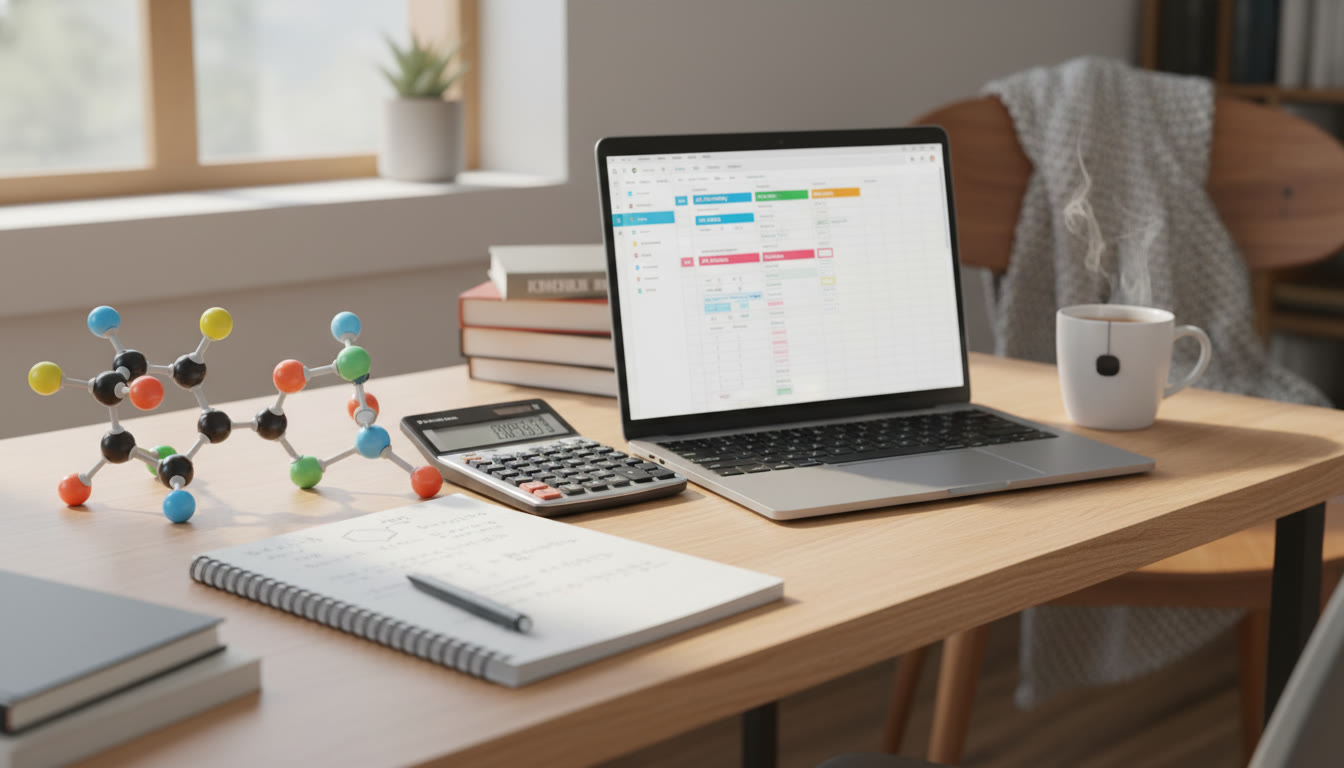
Before you dive into content, take ten to twenty minutes to check your baseline. The point is not to judge yourself harshly, it’s to target your effort. A short diagnostic saves hours later because you’ll spend time where it matters.
Quick Diagnostic Checklist (30 minutes)
- Core math: Solve two algebra problems and one basic trigonometry/problem involving graph interpretation.
- Core vocabulary: List five key terms you associate with the upcoming AP course (e.g., “stoichiometry,” “natural selection,” “kinematics”) and write a one-sentence definition for each.
- Reasoning task: Read a short scientific paragraph and answer two inference questions about cause/effect or trends in data.
Score yourself honestly. If more than half of the math problems feel shaky, prioritize quantitative practice. If vocabulary and conceptual summaries are hard, prioritize reading and note-building. If reasoning is tricky, practice interpreting graphs and experimental setups.
Designing a Practical Summer Bridge Plan (8–10 Weeks)
This plan assumes you have 6–10 weeks of summer. If you have less time, compress blocks; if you have more, deepen lab projects and data analysis. Each week includes a daily rhythm: 4–6 days of focused activity, one lighter day for reflection and rest, and a weekly synthetic task (e.g., a mini-lab report or a problem set).
Weekly Structure (sample)
- Days 1–2: Concept refresh (30–45 minutes/day) — short videos, targeted readings, key definitions.
- Day 3: Practice problems (45–60 minutes) — mix calculation and conceptual questions.
- Day 4: Skills session (45–60 minutes) — lab technique revision, graphing, or experiment design.
- Day 5: Synthesis (45–60 minutes) — write a one-page summary or mini lab report.
- Day 6: Optional stretch (project-based or deeper practice) or tutoring session.
- Day 7: Rest and reflection — update your study log and set goals for next week.
What to Cover Each Week: A Modular Roadmap
Below is a modular approach. Pick modules based on your diagnostic results. For example, if you’re entering AP Chemistry and your math is strong but stoichiometry is weak, emphasize the stoichiometry and lab modules.
Module Examples (choose 4–6 over the summer)
- Foundational Math for Science: algebra manipulation, unit conversion, scientific notation, basic trig/graphs.
- Essential Vocabulary and Concepts: flashcard sets and one-sentence summaries for major units.
- Lab Skills and Scientific Method: experimental design, error analysis, graphing, protocol writing.
- Data Interpretation and Graphing: reading scatterplots, interpreting slopes and residuals, basic statistics (mean, median, standard deviation conceptually).
- Practice with Past-Style Questions: short free-response prompts and multiple-choice sets (timed and untimed).
- Project-Based Learning: a mini independent investigation (collect data, analyze, write brief report).
Daily Habits That Actually Work
Consistency beats marathon sessions. Build small, repeatable habits that compound.
Power Habits (15–60 minutes/day)
- Micro-Reading (15–20 minutes): read a focused section and write 3 summary sentences.
- Active Recall (10–15 minutes): close the book and write what you remember; correct and repeat later.
- One Practice Problem (10–20 minutes): keep a running problem bank and solve one problem daily.
- Reflective Logs (5 minutes): what worked today, what’s confusing, plan for tomorrow.
Lab Skills Without a School Lab: Practical Alternatives
Not all students have access to a full lab over the summer. You can still build experimental thinking and data literacy with low-cost or simulated options.
At-Home or Virtual Ideas
- Kitchen Chemistry: simple, safe experiments exploring reaction rates (e.g., vinegar and baking soda variations), with careful controls and measurements.
- Physics Practicals: measure projectile motion with a smartphone camera and timestamp frames to calculate velocity and acceleration.
- Virtual Labs and Simulations: use reputable simulations to practice experimental design and data collection (note: if you use any platform, log the experimental steps and data as if in a real lab).
- Data-focused Projects: download open data sets (like climate or population data) and practice plotting trends and making arguments from evidence.
Study Materials and How to Use Them
Quality matters more than quantity. Choose a few reliable resources and learn to extract what you need.
How to Use: A Simple Workflow
- Preview: skim headings and figures for 5 minutes to form expectations.
- Read actively: annotate, ask questions in the margins, connect to previous knowledge.
- Practice: do related problems immediately — this cements learning.
- Reflect: create a one-paragraph synthesis or a concept map.
Sample 8-Week Summer Bridge Schedule (Condensed)
This table gives a concise week-by-week focus you can adapt to any AP science course.
| Week | Primary Focus | Weekly Task |
|---|---|---|
| 1 | Baseline Diagnostic and Math Refresher | Complete diagnostic, 3 algebra sessions, create study plan |
| 2 | Core Vocabulary and Concepts | Build 100 flashcards, write one-sentence summaries |
| 3 | Lab Skills and Experimental Design | Conduct 2 mini-experiments and write reports |
| 4 | Data Interpretation and Graphing | Analyze 3 datasets and present findings |
| 5 | Unit-Specific Deep Dive | Cover 2 major units in depth, solve end-of-unit problems |
| 6 | Free Response Practice and Writing | Write 4 timed mini FRQs and get feedback |
| 7 | Synthesis Projects | Complete an independent mini-project or presentation |
| 8 | Review, Rest, and Final Prep | Light review, polish notes, organize binder and calendar |
Practice Strategies That Move the Needle
Not all practice is equal. These strategies are research-backed and student-tested.
Active Recall and Spaced Repetition
Instead of rereading, close the book and retrieve facts and processes from memory. Use spaced repetition to revisit hard concepts at expanding intervals. Flashcards with a brief explanation on the back (not just a definition) work well.
Interleaved Practice
Mix different problem types instead of doing dozens of the same problem. Interleaving improves discrimination between problems and strengthens retrieval cues.
Explain Like I’m Five (ELI5)
Summarize a concept in plain language. If you can explain natural selection, acid-base titration, or kinematics to a curious younger sibling, you’ve likely internalized the idea.
Preparing for AP-Style Questions
AP science exams test process and evidence as much as facts. Practice with timed tasks and clear scientific writing.
Free Response Tips
- Outline first: spend 1–2 minutes outlining your answer before writing.
- Label clearly: use bold or underlining for claim, evidence, and reasoning.
- Quantify when possible: a correct calculation with units often scores strongly.
- Use scientific vocabulary precisely, but don’t overcomplicate phrasing.
Multiple Choice Tips
- Predict before you look at choices — this reduces distractor traps.
- Eliminate obviously wrong options to increase odds if you must guess.
- Manage time: don’t spend too long on a single question during timed practice.
Motivation, Mindset, and Stress Management
Study skills are important, but a sustainable mindset underlies everything. Here are practical ways to protect motivation and reduce burnout.
Growth Mindset + Small Wins
Reframe mistakes as data. Keep a weekly “small wins” list — three concrete things you learned or improved. Over weeks, this becomes visible progress that fuels motivation.
Pomodoro and Energy Management
Work in focused sprints (25–50 minutes) with short breaks. Use your highest-energy time of day for cognitively demanding tasks (e.g., practice problems or writing explanations).
When to Bring in a Tutor or Coach
Personalized help speeds progress when you’re stuck, short on time, or aiming for a competitive AP score. Consider tutoring if:
- Your diagnostic shows persistent gaps after 2–3 weeks.
- You need structured accountability to complete a Summer Bridge plan.
- You want targeted feedback on lab write-ups or free-response practice.
Personalized tutoring — for example, Sparkl’s 1-on-1 guidance — can fit naturally into a Summer Bridge: weekly sessions to review errors, tailor problems to your weak points, and set a realistic schedule for the school year. Their tailored study plans and AI-driven insights help make your practice efficient rather than just busy.
How to Track Progress and Adjust
Tracking isn’t about micromanagement — it’s about learning faster. Use these simple metrics weekly:
- Accuracy on practice problems (percentage correct).
- Number of FRQs attempted and scored (self-score or tutor feedback).
- Confidence rating for each unit (1–5 scale).
- Hours spent on focused study (aim for consistency over extremes).
Update your plan: if accuracy doesn’t improve after a week of targeted practice, change the approach — switch format, reduce material per session, or get a targeted explanation from a tutor.
Example Week: AP Biology Student (Concrete)
Here’s a real-feeling sample week for an AP Biology Summer Bridge focused on evolution and genetics.
- Day 1: Diagnostic recap + 30 minutes of algebra review and unit vocabulary flashcards.
- Day 2: Read two short sections on natural selection (20–30 minutes) and write a one-paragraph synthesis.
- Day 3: Practice problems — Hardy-Weinberg calculations and pedigree interpretation (45 minutes).
- Day 4: Lab skills — design a hypothetical selection experiment, define controls and variables (45 minutes).
- Day 5: FRQ practice — timed 20-minute prompt, outline and write (30 minutes). Get feedback or self-score using the rubric.
- Day 6: Optional stretch — read a contemporary science article related to genetics and summarize for a friend.
- Day 7: Rest and reflection — update study log and plan for next week.
Final Two Weeks: Transition to Course Readiness
As the summer ends, pivot from learning new things to consolidating and organizing. Make your binder, digital folders, and calendar teacher-ready.
End-of-Summer Checklist
- Organize notes into unit folders with summaries.
- Compile a problem bank of the toughest 30 problems you solved — review weekly during the semester.
- Practice two full timed free-response questions and one multiple-choice set weekly.
- Schedule a final tutor check-in to set goals for the first six weeks of class.
Real-World Context: Why This Matters Beyond the Exam
AP courses develop habits of scientific thinking: evidence-based reasoning, controlled experimentation, and quantitative literacy. These skills matter for future college work and real-world problems like evaluating studies, making data-informed decisions, and communicating complex ideas clearly. A strong Summer Bridge doesn’t just chase a test score; it builds intellectual habits that last.
Wrapping Up: Your Summer Bridge Roadmap in Three Sentences
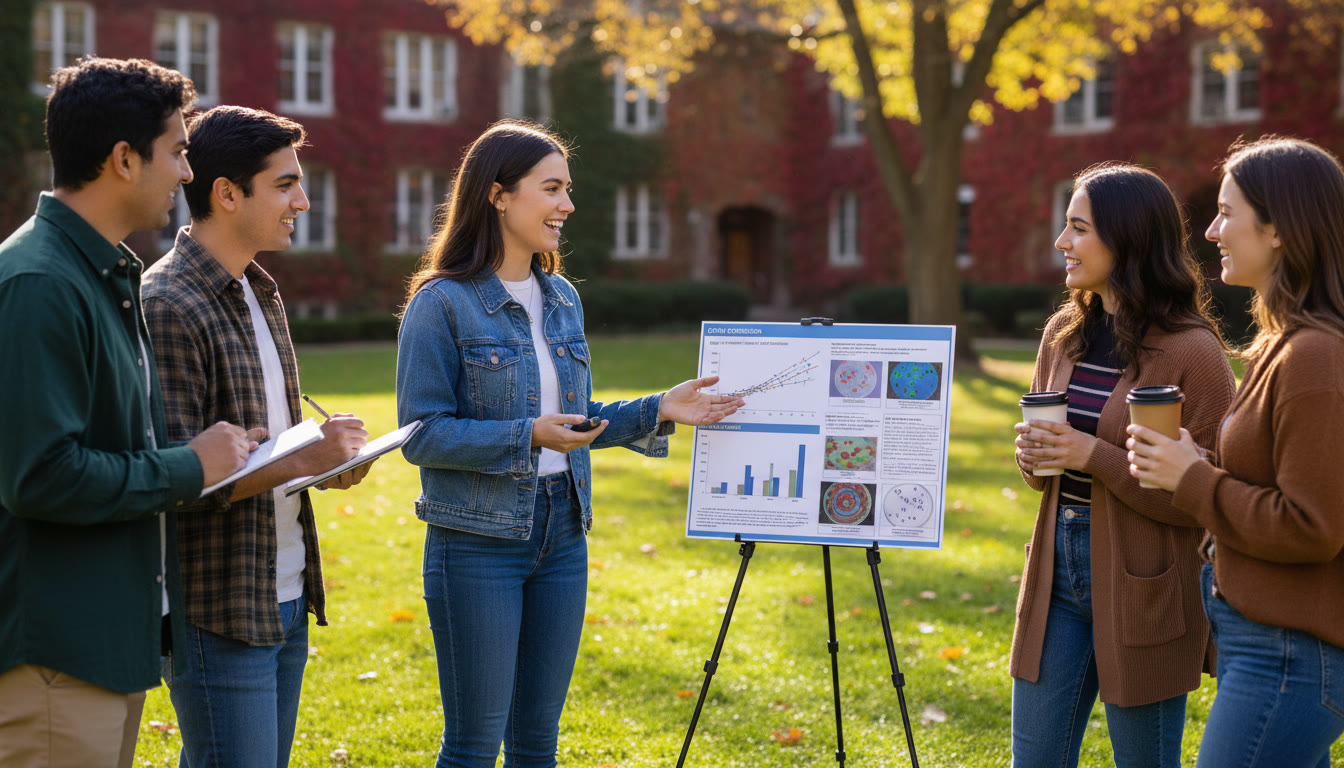
Start with a short diagnostic, focus on essential math and lab skills, and practice with targeted problems that emphasize reasoning. Build small daily habits, use interleaved practice, and synthesize learning through mini-projects and FRQs. If you need a boost, targeted 1-on-1 support like Sparkl’s personalized tutoring can make your time more efficient with tailored plans, expert tutors, and AI-driven insights.
Parting Advice
Be kind to yourself. Progress in science is often non-linear: one moment of confusion can lead to a sudden insight after you try a different explanation or talk it through. Treat the summer as a chance to experiment with learning strategies as much as the content itself. Enter the AP classroom not with the pressure of perfection, but with curiosity and a growing toolkit — that’s the real bridge to success.
Good luck — you’ve got this. Build steadily, ask questions early, and keep a log of your small wins. The first day of class will feel a lot friendlier when you do.


























No Comments
Leave a comment Cancel