
Why Labs Matter — And Why They Feel Like a Time Sink
Hands-on labs are the heartbeat of many AP courses. They turn abstract concepts into tangible experiments, grow students’ scientific reasoning skills, and can actually increase long-term retention. Yet for many teachers, those same labs provoke frazzled pacing charts, skipped examples, and the anxious whisper: “Will we cover everything before the exam?”
This post isn’t about choosing labs over content or vice versa. It’s about weaving labs into your unit plans so they amplify, rather than interrupt, learning. You’ll find practical pacing strategies, assessment-aligned lab designs, scheduling templates, and classroom-tested tips to keep both content coverage and inquiry skills on track. Where it fits naturally, I’ll also point out how targeted, personalized support (like Sparkl’s personalized tutoring with 1-on-1 guidance and tailored study plans) can help students bridge lab experiences and conceptual mastery.
Start With Unit Backwards Design: Lab Outcomes First
Effective unit planning begins with the end in mind. For any unit, ask: what are the essential knowledge targets and the science practices (or AP skills) students must demonstrate? Once you have those clarified, you can design labs to directly target those outcomes rather than treating labs like optional extras.
- Identify 2–3 major content goals for the unit (e.g., “Understand conservation of energy” or “Explain Mendelian inheritance patterns”).
- Map the AP skills or practices you want to develop (e.g., designing experiments, data analysis, evaluation of evidence).
- Choose one lab that explicitly targets a content goal + one practice for deeper mastery.
By doing this, each lab earns its slot on the pacing calendar by serving a measurable instructional purpose.
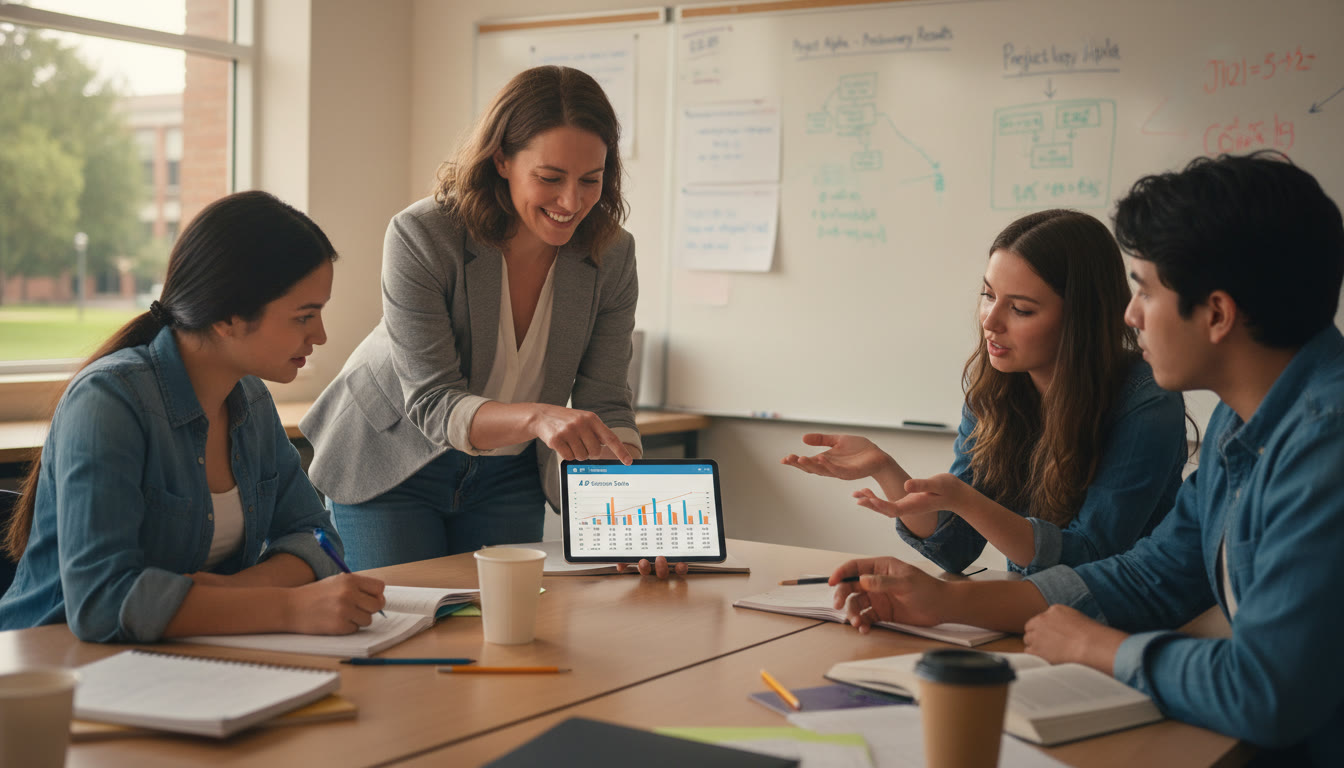
Pacing Hacks: How to Save Time Without Shrinking Learning
Here’s the heart of praxis: how to schedule a lab so students get the inquiry experience, but you still preserve time for explanations, practice, and review.
1. Split Labs into Bite-Sized Phases
Rather than a single multi-hour block, break the lab into four short phases across class periods:
- Day A — Hook + Prediction (15–25 minutes): Present a problem, show a demo, ask predictions and collect hypotheses.
- Day B — Mini-Investigation (30–40 minutes): Students gather data in small groups; teacher circulates and probes reasoning.
- Day C — Data Analysis & Discussion (30–45 minutes): Groups analyze results, create a claim-evidence-reasoning (CER) statement.
- Day D — Application & Assessment (20–30 minutes): Quick quiz or exit ticket tying lab findings to the target concept.
Splitting keeps momentum and reduces the pressure to complete everything in one sitting. It also creates multiple formative assessment points.
2. Flip Where Possible
Use short flipped videos or reading-guides for background theory. When students arrive to lab, they spend class time on higher-order tasks (design, analysis) instead of passive instruction. This reduces in-class lecture load and preserves lab time for discourse and thinking.
3. Co-Design Assessments with Labs
Design formative checks tied directly to lab phases—quick quizzes, Google Form checks, or an Explain-This-Graph slide. When assessment is aligned, every minute of the lab serves both inquiry and evaluation, making lab time doubly productive.
Designing Labs That Maximize Conceptual Return
Not all labs are equal. Some are great for engagement but weak on measurable learning gains. Choose labs that produce data students can analyze meaningfully and that expose common misconceptions.
Checklist for High-Value Labs
- Clear, measurable purpose tied to a unit target.
- Data collection methods that are simple and repeatable.
- Built-in comparisons or controls to highlight causal relationships.
- Opportunities for students to make, test, and revise claims.
- Short, scaffolded analysis tasks that connect results to theory.
Example: Energy Unit Mini-Lab
Goal: Students will connect energy transfer with changes in kinetic and potential energy.
| Phase | Task | Time | Formative Check |
|---|---|---|---|
| Hook | Demonstration of a rolling cart on ramps; students predict energy changes. | 15 min | Prediction sheet |
| Data Collection | Groups measure speed at intervals with ticker/timer or phone app. | 30 min | Raw data submission |
| Analysis | Graph KE and PE vs. position; write CER linking results to conservation. | 35 min | Short CER |
| Application | Two quick conceptual MCQs and one short explanation problem. | 20 min | Quiz |
This table shows planning that compresses a meaningful lab into managed chunks that support retrieval and practice.
Classroom Logistics That Save Minutes (and Sanity)
Small efficiencies have outsized effects. Here are teacher-tested routines that shave off wasted minutes.
Station Prep and Roles
- Pre-made stations with numbered trays — students bring a lab notebook and a pen only.
- Assign roles in groups (Lead, Data Recorder, Materials Manager, Reporter). Rotate weekly so everyone builds different skills.
Material Shortcuts
- Create a ‘Lab Kit’ for each group with the essentials; replenish kits during non-lab days.
- Use simple, low-friction sensors or phone apps for common measurements (timing, light, sound). Complexity kills time.
Time Signals and Micro-Deadlines
- Use visible timers on the board and stated micro-deadlines: “By minute 12, you must have three trials completed.”
- Freeze the room for a 3–4 minute whole-class data-share to compare findings — prevents endless tinkering.
Scaffolding Data Analysis Without Taking Over
Many teachers feel they must walk students through every calculation; instead, scaffold just enough so groups can make useful sense of results.
Provide Analysis Templates
- One-page analysis guides with key equations, graph axes, and a CER template reduce cognitive load.
- Include a small example of an analyzed trial so students have a reference but must still interpret their own data.
Use Peer Review for Rigor
Structure brief cross-group peer reviews focused on evidence strength: “Is the sample size adequate? Do error bars overlap? Where is uncertainty largest?” This encourages deeper thinking without the teacher having to inspect every notebook.
Assessment Strategies That Reclaim Content Time
Assessment is where lab learning translates into course credit. Use assessments that simultaneously check lab skills and content retention.
Low-Stakes, High-Frequency Checks
- Quick exit tickets that require a one-sentence claim and one piece of evidence from the lab.
- Two-question quizzes that pair a data-interpretation item with a content transfer item.
Performance Tasks That Count Twice
Create summative tasks that incorporate data interpretation into broader units tests. For example, a question that gives a small dataset from the lab and asks students to predict outcomes under a new condition checks both lab literacy and conceptual understanding.
Equity and Differentiation: Ensuring All Students Benefit
Labs can widen gaps if some students consistently dominate group work or if vocabulary and background knowledge are uneven. Plan for inclusion.
Simple Differentiation Strategies
- Pre-lab vocabulary mini-sheets for students who need language support.
- Structured roles to ensure equitable participation.
- Tiered analysis prompts: basic (describe results), intermediate (interpret trends), advanced (extend or critique the method).
For students who need extra reinforcement, targeted tutoring helps. A student working one-on-one with a tutor can get faster conceptual bridges between lab results and AP-level theory. Sparkl’s personalized tutoring—offering 1-on-1 guidance and tailored study plans—can be scheduled for follow-up reinforcement so students practice lab-linked skills outside class time without stealing classroom minutes.
Technology as a Time-Saver, Not a Time-Sucker
Technology accelerates data collection and boosts precision, but only if chosen carefully.
Best Practices
- Standardize on one set of apps/sensors for the year so students and teachers become fluent.
- Train the class once on the tool and then enforce quick user checks (e.g., “Before you collect, check battery and calibration.”)
- Have backups (manual timing or inexpensive meters) so a dead app doesn’t derail a lab day.
Communicate With Students: Set Expectations to Save Time
Clarity reduces wasted minutes. Share the lab flow, learning targets, and what success looks like before students enter the room.
- Post a visible agenda with learning targets and time allocations for each phase.
- Share rubrics for lab notebooks and CERs so students know how they’ll be assessed.
- Give explicit routines for cleanup and data submission; practice them once and be consistent.
Sample 3-Week Unit Plan: Integrating Two Labs
Below is a practical model for a 3-week unit that integrates two labs while still providing time for content, practice, and review.
| Week | Focus | Lab/Activity | Assessment |
|---|---|---|---|
| Week 1 | Foundational concepts, vocabulary, and simple problems | Pre-lab demos; flipped background video | Formative quiz on vocabulary and basics |
| Week 2 | Lab 1: Guided investigation (split across 2–3 days) | Collect data Day 2; Analyze Day 3 | Exit tickets; peer review of CER |
| Week 3 | Apply Lab 1 ideas to problem sets; Lab 2 (application/extension) | Short application lab using different conditions | Unit assessment with embedded data interpretation |
This structure reserves early time for concepts, uses the middle for inquiry, and closes with application and assessment. The lab phases are scheduled so they don’t monopolize classroom calendar blocks.
When Things Go Off the Rails: Rapid Recovery Techniques
Even the best plans hit bumps. Here are fast responses that rescue the unit without losing the learning goal.
- If a lab runs long, shift analysis to a flipped assignment: students finish graphs at home and submit a one-paragraph CER.
- If equipment fails, convert the session into a data-analysis workshop using teacher-provided datasets.
- If class time is lost to testing or events, compress the lab phases into two intense blocks and add a short homework analysis to recover the missing chunk.
Using Data From Labs to Drive Future Instruction
Think of labs as diagnostic opportunities. Student errors in analysis or reasoning are formative gold — use them to guide the next instructional steps.
- Compile common misconceptions from CERs and plan a targeted mini-lesson the next day.
- Use a quick sortable matrix (who needs more guided practice vs. who’s ready for challenge) to decide grouping and intervention.
For students who are behind or need accelerated challenge, sparking individualized attention can be transformative. That’s where structured tutoring sessions—like those offered through Sparkl—help teachers maintain pace without sacrificing personalized remediation. A short 1-on-1 session can quickly move a student from confusion about data analysis to confident application on a unit quiz.
Final Tips From Teachers Who’ve Been There
- Plan labs in realistic chunks — if it feels like a marathon, it probably is. Keep labs achievable within the unit rhythm.
- Make analysis visible. Put student graphs on the wall or projector and debrief 2–3 meaningful takeaways together.
- Rotate leadership. Students who write the final CER present their group’s claim; accountability rises and teacher grading load decreases.
- Harvest artifacts. Keep a folder of student CERs and data for the year to compare growth and identify recurring misconceptions.

Conclusion: Labs As Strategic, Not Optional
When carefully designed and tightly aligned, labs become accelerators of understanding rather than pacing liabilities. The secret is careful unit design: start with outcomes, sequence labs as purposeful phases, scaffold analysis just enough, and leverage quick formative checks to recapture lost time. Use technology and classroom routines to squeeze wasteful minutes out of the day, and don’t be shy about assigning targeted follow-up practice or tutoring for students who need it.
Finally, remember that you’re building habits — for students and for your own planning. Over a semester, these small changes compound into more meaningful inquiry, stronger conceptual grasp, and a calmer pacing calendar. If you want help translating this framework to a specific AP curriculum or student group, consider scheduling targeted support; personalized tutoring (with 1-on-1 guidance, tailored study plans, expert tutors, and AI-driven insights) is a practical way to keep students connected to lab ideas outside class without pulling more class time away from content.
Happy planning — may your labs be purposeful, your data clear, and your pacing peaceful.

























No Comments
Leave a comment Cancel