
Why AP Insights Matter When You’re Thinking About the SAT or ACT
Let’s start with a simple truth: your AP experience is more than a one-off exam. It’s a revealing mini-portfolio of how you learn, manage time, and perform under pressure. AP scores and the data from AP Classroom or AP Score reports give you a real signal about academic readiness. Used smartly, those signals can save you months of anxious prep, let you target weak spots, and even inform whether you need both the SAT and ACT—or neither.
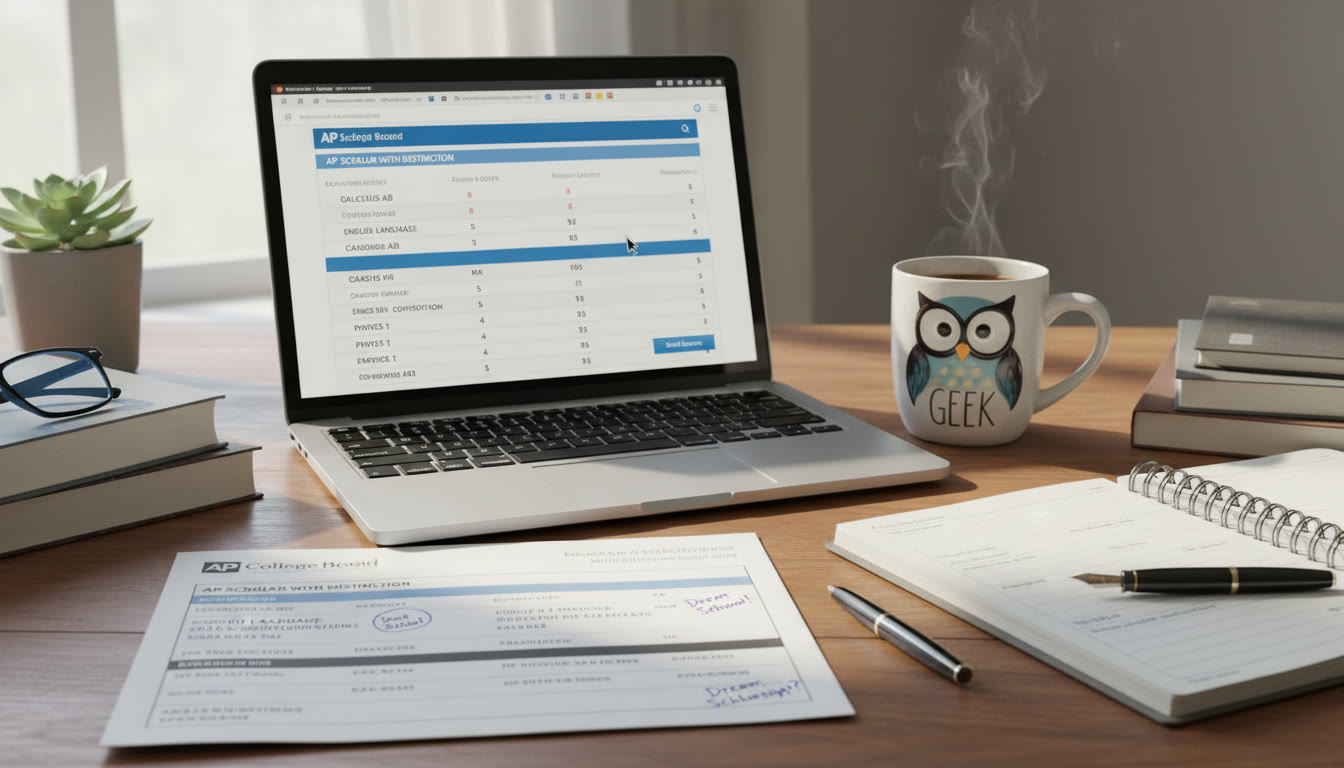
The high-level logic
Think of AP insights like a weather forecast for your college-testing season. They won’t tell you the exact minute rain will start, but they’ll give you the probability that you’ll be ready for a college-level curriculum. If your AP scores and in-course progress checks show strength in evidence-based reading, writing, or math-heavy subjects, that’s useful information when choosing between the SAT, ACT, or a do-it-yourself gap-closure plan.
Step 1 — Read Your AP Data Like a Coach
Before you sign up for another test date, make time to read the facts. AP reports and AP Classroom progress checks show which topics you ace and which still trip you up. Don’t skim—dig in. Look for patterns rather than single test-day flukes.
What to extract from AP reports
- Section-level strengths: Multiple choice vs. free response, quantitative vs. qualitative reasoning.
- Topic clusters that repeat: For example, if you miss synthesis questions in AP Lang but do fine on vocabulary, the gap is skill-based, not knowledge-based.
- Timing and stamina indicators: Were mistakes clustered at the end of the exam? That suggests pacing issues.
- Progress Check history from AP Classroom: These mirror the kinds of passages and problems you’ll see on the SAT/ACT.
Step 2 — Translate AP Patterns into SAT/ACT Decisions
Not every AP score translates neatly into an SAT or ACT result, but they map to the same building blocks—reading comprehension, evidence, algebra and geometry fluency, and problem solving.
How to use AP signals to decide which test to take (or skip)
- If AP English Language shows strong synthesis and rhetorical analysis: lean toward the SAT or ACT Reading/Writing sections being manageable with targeted practice.
- If AP Calculus or AP Statistics scores are high: the math-heavy portions of both tests will be familiar—your focus can be on speed and test-specific strategies rather than content review.
- If AP scores are mixed across subjects: consider taking a diagnostic SAT and ACT to see which format fits your thinking style better (timed multiple-choice vs. multi-part prompts).
- If you have consistently high AP performance across the board: many colleges value AP rigor and scores—so a modest SAT/ACT score, combined with strong APs, can still look very competitive.
Step 3 — Build a Targeted Study Plan Based on AP Insights
Here’s where data becomes direction. Use the concrete weaknesses you found in AP feedback to design your study priorities—no filler, no guesswork.
Template: 8-week targeted plan using AP data
| Week | Focus | Actions | Measure |
|---|---|---|---|
| 1–2 | Diagnostic & Foundation | Take a full diagnostic SAT and ACT; identify 3-4 recurring AP weaknesses to prioritize. | Two diagnostic scores; list of prioritized skills. |
| 3–4 | Skill Repair | Daily targeted practice (30–60 min) on weak AP topics mapped to test skills; timed section practice. | Improvement in targeted practice accuracy by 10–20%. |
| 5–6 | Strategy & Pacing | Practice full sections under timed conditions; learn guessing/pacing strategies; review errors daily. | Faster section completion and fewer careless errors. |
| 7 | Full-Length Tests | Take two full-length official practice tests separated by rest days; analyze mistakes using AP insights. | Score trend upward; error categories identified for final week. |
| 8 | Final Polish | Light practice, rest, targeted review of last weak points, sleep and logistics planning for test day. | Confidence and plan for test day; logistical checklist completed. |
This plan is intentionally adaptable: if AP data suggests severe gaps, swap in more weeks for content repair. If AP strengths are strong, focus more on speed and strategy.
Step 4 — Use AP Resources to Practice the Right Skills
AP Classroom materials, released free-response questions, and AP Daily videos are perfect complements to SAT/ACT prep. They train analytical reading, structured argumentation, and variable problem difficulty—skills that cross-test boundaries.
Practical pairings
- AP Free Response → SAT Essay practice or ACT Writing prompts (where applicable): map thesis construction, evidence selection, and time management.
- AP Multiple Choice Sections → timed SAT/ACT section drills: focus on passage interpretation and discrete math skills.
- AP Classroom Topic Questions → targeted micro-sessions: pick 10–15 minute drills for weak topics identified in your AP report.
Step 5 — Timeline: When to Test (and When to Wait)
Timing is everything. Your AP schedule and test registration windows influence the best time to take the SAT/ACT. If you can delay an SAT/ACT sitting until after AP results arrive, that can be gold: you’ll have concrete score evidence to shape final prep.
Smart timing rules of thumb
- If you already have strong AP scores from junior year: consider taking the SAT/ACT in spring of junior year (or summer) so scores are ready for college applications.
- If you take AP exams in the same year as planned SAT/ACT: wait for AP score reports before your final prep push—AP scores often release in July and can inform which sections to prioritize.
- If you’re applying early decision/early action: prioritize an earlier SAT/ACT date and use AP insights from past years to focus your revision.
How to Read the Risk/Reward Tradeoffs
Every decision—take another test, retake, or rely on AP scores—has costs: time, energy, and often money. Use AP insights to estimate marginal benefit. If AP data shows mastery in reading and math, the marginal gain from another standardized test may be small; instead, invest in application-strengthening activities or subject extensions.
Example scenarios
- High AP scores in STEM courses, but weaker in timed multi-step problems: Focus ACT/SAT study on pacing and algebraic manipulation to convert that AP content knowledge into test speed.
- Strong AP Lang scores but average SAT reading: practice multiple short, timed passages to adjust to the SAT’s pace and question styles.
- Middle-of-the-road AP results across the board: a balanced prep approach is best—content refresh + strategy + 1-on-1 coaching for efficient gains.
Practical Tools: How Tutoring and Personalized Help Fit In
Personalized tutoring is not a luxury—it’s a multiplier. When AP insights have pinpointed a handful of persistent errors, a tutor can design micro-lessons that turn concept gaps into confidence. Sparkl’s personalized tutoring approach—1-on-1 guidance, tailored study plans, expert tutors, and AI-driven insights—can fit naturally into this workflow by turning AP data into a day-by-day action plan.
What to expect from focused tutoring
- Targeted lessons based on AP weak spots (e.g., rhetorical analysis modules for AP Lang students preparing for SAT Reading).
- Custom practice sets that mirror the types of questions you miss, with immediate feedback and progress tracking.
- Test-day simulations and pacing drills that build stamina without burning you out.
Real Student Example: Turning an AP Signal Into Test-Day Success
Imagine Maya, a junior with a 4 on AP Calculus and a 3 on AP English Language. Her AP report shows consistent accuracy on complex calculus problems but slower speed on multi-part reasoning items in AP Lang. Using that insight, Maya’s plan was simple:
- Keep math review light—focus on timed practice to translate content knowledge into speed.
- Prioritize reading speed and passage mapping strategies for reading and writing sections.
- Take two diagnostic tests (SAT and ACT) to see which format rewarded her strengths—SAT’s discrete question style suited her tighter argument analysis.
- Use three 1-on-1 sessions with a tutor to practice passage annotation and thesis spotting; use AP free-response questions to practice structuring quick evidence-based answers.
Maya’s targeted approach reduced her weekly prep time while producing measurable score improvements. That’s the point: correct signals lead to efficient action.
Common Mistakes Students Make (and How AP Insights Help Avoid Them)
Here are traps students fall into—and how AP data keeps you honest.
Mistake 1: Treating SAT/ACT as purely separate from AP learning
Why it’s a problem: you waste time relearning content you already know. Fix: map AP topics to test skills and reuse AP practice materials for targeted drills.
Mistake 2: Over-practicing low-leverage areas
Why it’s a problem: you plateau with diminishing returns. Fix: use AP reports to focus on high-impact errors—those that cost you the most points.
Mistake 3: Ignoring pacing and stamina
Why it’s a problem: even strong content knowledge can fail a timed format. Fix: use AP timed practice segments and simulate the sat/act schedule in full-length tests.
How Colleges Read APs and Standardized Tests Together
Admissions teams look for a coherent academic narrative. AP exams show you sought challenge; SAT/ACT scores add another standardized snapshot. When APs show consistent rigor and your testing strategy uses AP strengths to shore up weaknesses, your application looks intentional and well-prepared.
Practical advice for application season
- Send your strongest signals: if your AP scores are stronger than a test score, make sure your academic record and course rigor are visible in your application.
- Use optional essays or teacher recommendations to contextualize any testing strategy choices (e.g., focusing on APs over repeated SAT attempts).
- Remember that policies vary—some colleges emphasize AP credit, others weigh standardized tests differently—so align your decisions with schools you’re targeting.
Checklist: A Last-Minute AP-Informed Test Prep Audit
- Have you pulled your latest AP score report and AP Classroom progress checks?
- Did you map 3–5 weak skills from AP data to SAT/ACT question types?
- Have you taken at least one full-length diagnostic of both SAT and ACT if undecided?
- Is your study plan prioritizing gaps identified by AP feedback rather than generic content?
- Do you have a final logistics plan for test day (ID, arrival, breaks, snacks, sleep)?
When AP Insights Suggest You Might Pause on Testing
Sometimes the data says: you’re already doing well where it counts. If AP scores align with your intended major and the colleges you’re targeting value AP performance, taking more standardized tests may offer limited returns. Use that saved time for advanced projects, creative supplements, or deepening subject competence—things that make your application stand out beyond numbers.
Final Thoughts: Make Your AP Data Work Harder for You
AP exams aren’t just a gate to credit or placement—they’re a diagnostic gold mine. When you read them carefully, map weaknesses to SAT/ACT question types, and build a targeted plan, you turn a scattershot test-prep season into an efficient, confidence-building campaign. Whether you choose self-study, a short burst of strategy work, or a tailored series of 1-on-1 sessions, your AP insights should be the heartbeat of the plan.
And if you want a partner who can translate AP data into a custom study path—delivering one-on-one guidance, tailored study plans, and AI-driven insights to track what matters—consider a tutoring approach that respects your time and the specifics of your AP profile. When tutoring fits the data, every hour counts for more.

One last practical piece of advice
Start small and specific: pick one recurring error from your AP report, build a ten-minute daily drill around it, and track progress. Tiny wins stack faster than marathon cramming. Use your AP insights as the map, not the map’s legend: they show the route, but you still need to walk it with intention.
Good luck—plan with clarity, practice with purpose, and let your AP hard work guide the next steps. You’ve already done the hardest part: choosing challenge. Now let those insights turn into smart wins on test day and beyond.




























No Comments
Leave a comment Cancel