
Why Board Mock Papers Can Be a Goldmine for AP Preparation
Students and parents often ask: can we use high school board mock papers as practice for AP exams? The short answer is yes — but with important caveats. When used intelligently and ethically, board mock papers can supplement AP study, build exam stamina, and offer diverse problem styles. This blog unpacks the how, the why, and the what-to-avoid, turning otherwise ordinary mock tests into a powerful bridge to AP success.
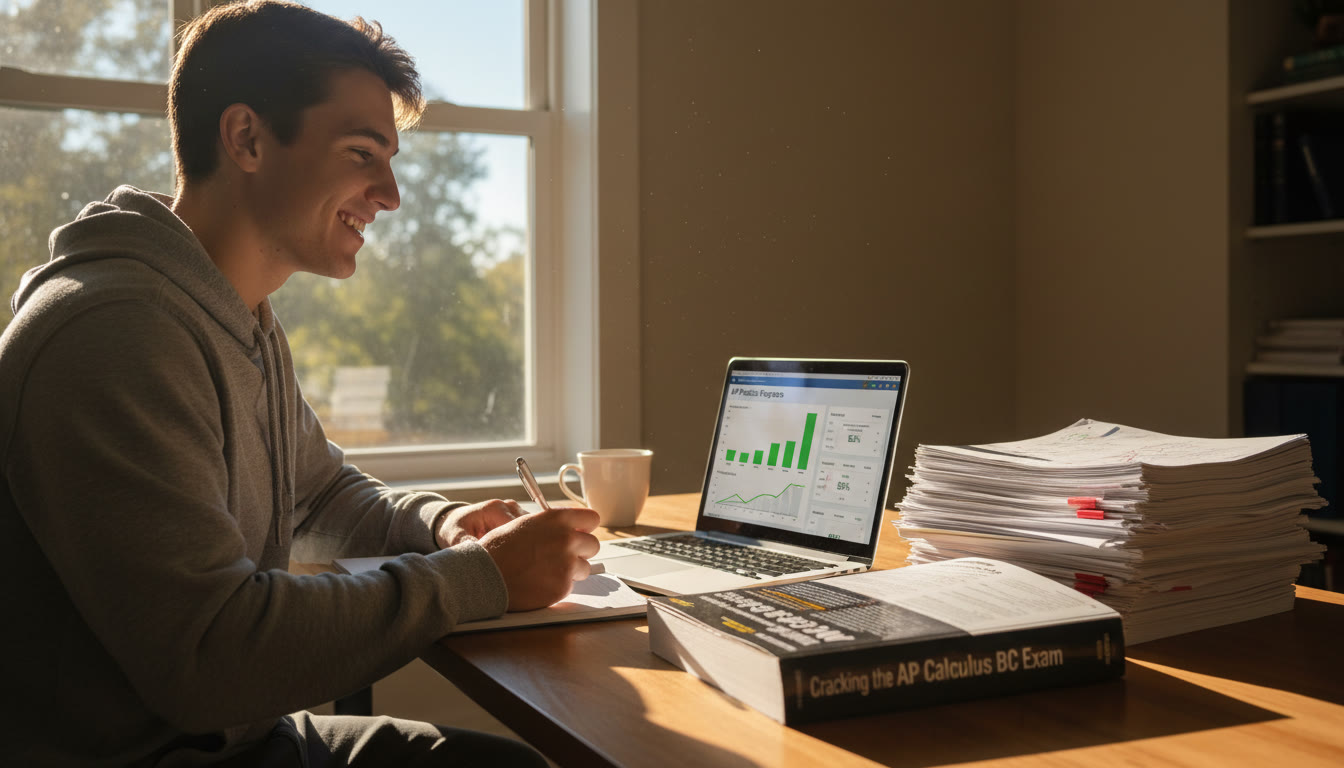
Understanding the Differences (So You Use Mock Papers Smartly)
Board mock papers and AP exams are not identical. Knowing their differences helps you extract the highest value without confusing format or scoring expectations.
Format and Structure
- Board mock papers often mirror the format of local/state board exams — longer essays, multiple-choice, or short answer formats tailored to that curriculum.
- AP exams have a standardized format set by College Board: multiple-choice/multiple-select sections and free-response sections that require specific types of argumentation, evidence, or calculations.
Depth and Scope
- Board papers may emphasize local syllabi or regional perspectives. AP exams assess college-level breadth and depth aligned with AP course frameworks.
- Some board questions can still test higher-order thinking and topics that overlap strongly with AP learning objectives.
Scoring and Rubrics
AP free-response scoring uses College Board rubrics designed to reward specific evidence, reasoning, and procedural accuracy. Board mock papers might not include such rubrics — but you can retrofit them (more on that below).
Legal and Ethical Use: The Non-Negotiables
Before you dive into using mock papers, keep this principle top of mind: ethical practice preserves integrity and protects you from violations that could harm college applications or your own learning. Here’s how to stay on the right side of the law and ethics:
1. Use Only Legally Obtained Materials
- Practice with mock papers you or your school created, were given permission to use, or obtained from reputable public sources. Avoid pirated or leaked exam content.
- If a mock paper copies proprietary AP items or copyrighted College Board material, do not use it. Always verify the origin.
2. Don’t Misrepresent Your Work
When schools or tutors share scores from mock papers, clarify the source and context. Misrepresenting a mock score as an official AP score is misleading and unethical.
3. Protect Confidentiality and Exam Security
If a mock paper was created for internal school use, respect any restrictions. Never circulate mock items that are meant to remain internal if those items could compromise an actual exam’s integrity.
How to Turn a Board Mock Paper into an AP-Caliber Practice Set
Transforming a board mock paper into a meaningful AP practice experience requires intentional alignment with AP expectations. Follow this practical, step-by-step approach:
Step 1 — Map Topics to the AP Course Framework
List the topics in the mock paper and map them to AP course objectives. For instance, in AP Biology, map a mock question on cellular respiration to the AP learning objective about energy transformations.
Step 2 — Adjust Question Format Where Needed
- Convert some long-answer questions into AP-style free-response prompts with explicit tasks (e.g., “Explain, Using Data, How…”).
- For multiple-choice, create plausible distractors that mimic AP reasoning traps — this trains strategic elimination skills.
Step 3 — Create or Adopt an AP-Like Rubric
Write a rubric that awards points for the exact features AP readers look for: thesis, evidence, reasoning, and use of data. If you’re unsure what to include, focus on clarity, correctness, and use of discipline-specific terminology.
Step 4 — Time the Test and Simulate Conditions
- Set strict timing that mirrors the AP section lengths and breaks. Practicing under realistic timing improves pacing and reduces test-day anxiety.
- Make the environment distraction-free. Encourage wearing noise-reducing headphones if ambient noise is unavoidable.
Scoring, Feedback, and Iteration: The Learning Loop
Practice without feedback is less effective. Use the following cycle to convert mock practice into measurable improvement.
1. Score using the AP-Informed Rubric
Assign scores to free-response items using your rubric. For quantitative problems, emphasize process as well as final answer — half-credit for correct approach can be a major learning signal.
2. Provide Actionable Feedback
- Highlight where reasoning, evidence, or calculation steps were missing.
- Offer precise, small steps for improvement: rewrite a thesis, show how to cite data, or detail key formula derivations.
3. Track Progress with a Simple Table
Use a table to monitor strengths, weaknesses, and score trends. Below is a sample you can adapt:
| Practice Date | Section (MC/FRQ) | Score | Top 3 Errors | Action Plan |
|---|---|---|---|---|
| Aug 12, 2025 | MC | 38/55 | Misread stems, weak algebra | Targeted algebra drills; practice parsing stems |
| Sep 10, 2025 | FRQ | 6/9 | Weak evidence, incomplete justification | Practice evidence-based paragraph structure |
Study Plans: How to Integrate Board Mocks Into Your AP Schedule
Board mock papers are most effective when they’re part of a balanced study plan. Below are sample schedules for different timelines.
Six Months Out
- Monthly full-length AP-style mock (adapted from board papers) to build endurance.
- Weekly topic-focused sessions using individual mock questions to shore up weak areas.
Three Months Out
- Bi-weekly timed sections; alternate MC and FRQ practice.
- Detailed rubric-based review after each test; track improvements in the table above.
One Month Out
- Weekly simulated test conditions with strict timing and no aids.
- Focus on test-taking strategy: pacing, question triage, and stress management.
Common Pitfalls and How to Avoid Them
Many students use mock papers ineffectively. Here are common mistakes and practical fixes:
Pitfall: Doing Too Many Mock Papers Without Reflection
Fix: Follow each mock with a feedback session and an explicit action plan. Quality of practice outweighs quantity.
Pitfall: Treating Board Scoring as AP Scoring
Fix: Re-score free responses with AP-style rubrics and reinterpret multiple-choice performance in the context of AP question difficulty.
Pitfall: Ignoring Exam-Specific Skills (e.g., DBQ for History)
Fix: Identify AP exam-specific tasks (document-based essays, synthesis) and convert relevant mock questions to mirror those tasks.
Real-World Example: Turning a Chemistry Mock into AP Chemistry Practice
Imagine a local board mock question about reaction rates that asks students to explain factors affecting rate. To convert:
- Rewrite the prompt to include data (reaction progress table) and ask for a graph, calculation of rate, and explanation of mechanism — mirroring AP free-response parts A, B, and C.
- Create an AP-aligned rubric: awarding points for correct calculation, accurate graph labeling, and use of collision theory vocabulary.
- Time the section and require students to show clear steps so that partial-credit reasoning is captured.
This method preserves the educational value of the board question while training AP-specific skills.
How Tutoring Enhances Mock Paper Use (and Where Sparkl’s Fits In)
One-on-one guidance turns raw practice into strategic growth. Tutors can:
- Help map board content to AP frameworks;
- Design AP-style rubrics and reformat prompts;
- Provide targeted feedback that accelerates learning.
Sparkl’s personalized tutoring offers tailored study plans, expert tutors, and AI-driven insights that can identify the most beneficial mock papers for your goals. A tutor from Sparkl’s can pinpoint patterns in your errors, help you refine your rubric, and build a short-cycle improvement plan so every mock becomes a stepping stone.
Measuring Readiness: Benchmarks to Watch
Practice scores only tell part of the story. Watch for these readiness indicators:
- Consistent improvement across three consecutive mocks;
- Ability to write clear, evidence-based FRQs within time limits;
- Reduced careless errors and improved pacing;
- Confidence in applying conceptual knowledge to unfamiliar contexts.
Ethical Scoring Examples and a Mini Rubric Template
Below is a short rubric template you can adapt for many AP subjects. It focuses on features AP readers commonly value.
| Criterion | Points | What to Look For |
|---|---|---|
| Thesis/Claim | 0–2 | Explicit statement answering the prompt |
| Evidence/Data | 0–3 | Relevant facts, data, or quotations used correctly |
| Reasoning/Analysis | 0–3 | Logical connections between evidence and claim |
| Organization & Clarity | 0–1 | Clear structure and discipline-appropriate language |
Practical Checklist for a Mock Practice Session
- Confirm the mock paper’s origin and legal status.
- Map each question to an AP learning objective.
- Adjust formats to mimic AP question types.
- Create or adopt an AP-like rubric before grading.
- Time the session and simulate testing conditions.
- Score, give feedback, and set three targeted tasks for the next week.

Answering Tough Questions From Parents and Students
“Will practicing with board mock papers hurt my AP score?”
No — not if you adapt and use them ethically. The danger is using mock papers that mislead you about AP format or give a false sense of mastery. Use rubric-based scoring and supplement with official AP question types when possible.
“How often should we use mock papers?”
Quality matters more than frequency. Monthly full-length, supplemented by weekly targeted practice, is a sensible rhythm. If you’re working with a tutor, adjust frequency based on progress data.
“Can I share adapted mock papers with classmates?”
Sharing is fine when you have permission and the materials aren’t confidential. Collaborative review sessions are valuable for discussion, but never share anything that was provided under confidentiality.
Final Thoughts: Make Practice Honest, Strategic, and Student-Centered
Board mock papers are versatile tools — if you treat them as raw material, not finished products. With thoughtful adaptation, AP-aware rubrics, and honest assessment, they become a cost-effective way to deepen understanding, build exam skills, and develop confidence.
Remember: practice is most powerful when accompanied by reflective feedback and targeted action. Whether you’re a student, a parent, or a tutor, focus on the learning loop: practice, feedback, plan, repeat. For families seeking extra support, Sparkl’s personalized tutoring can provide expert guidance, tailored study plans, and AI-driven insights to make every mock paper count.
Quick Takeaway Checklist
- Verify the legal origin of each mock paper.
- Map content to AP objectives and reformat questions where needed.
- Use AP-style rubrics for scoring and feedback.
- Simulate real testing conditions for at least some practice sessions.
- Track progress, iterate, and target weak areas deliberately.
Used responsibly, board mock papers become more than a practice test — they become a customized training ground for the intellectual and strategic demands of AP exams. Approach them with integrity and intention, and each paper will bring you measurably closer to your AP goals.























No Comments
Leave a comment Cancel