
Why World History Feels Big — and Why That’s Good News
Take a breath. World History on the AP exam can feel like a tidal wave of dates, names, empires, revolutions, and cultural threads. But once you step back and see the patterns — the themes, the ways historians periodize, and the core skills the exam tests — that tidal wave turns into a map. You start to sail, not drown.
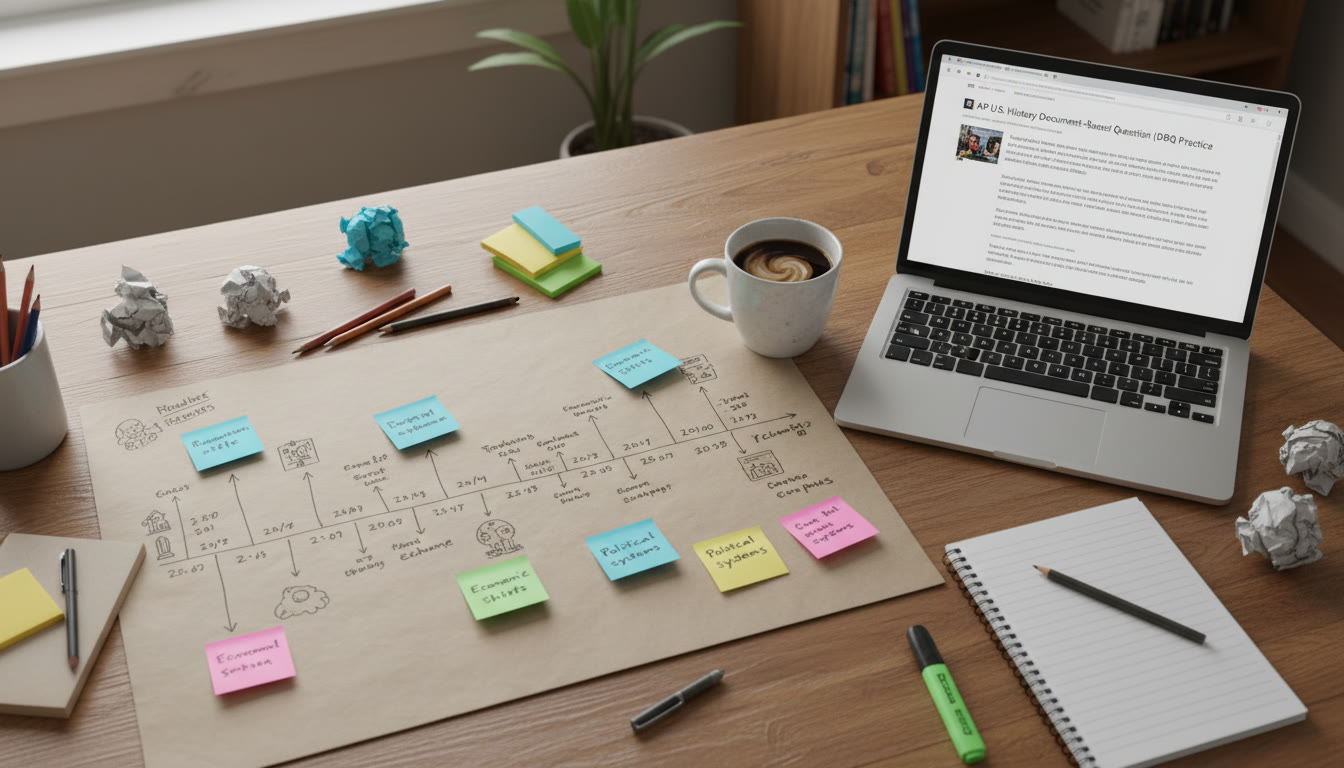
What You’ll Gain from This Guide
By the time you finish this article you’ll have: a clear list of the recurring themes AP World centers on; an easy-to-use periodization lens that helps you place facts into stories; a skill map aligned with the AP rubric (what graders look for); study tactics you can slot into a weekly plan; and concrete examples of how to practice with primary sources, comparisons, and synthesis. I’ll also sprinkle practical ways personalized tutoring — like Sparkl’s 1-on-1 guidance and tailored study plans — can accelerate weak spots without changing the fundamentals of how you learn.
Core Themes of AP World History (and How to Use Them)
The AP World exam organizes content around big, repeating ideas. Think of themes as lenses: instead of memorizing isolated facts, you learn how those facts matter in larger processes. Here are the most valuable themes and how to use them in practice.
1. Interaction Between Humans and the Environment
This theme asks: how do geography, climate, disease, and resource distribution shape societies — and how do societies change their environments in return? Use this theme when you explain agricultural revolutions, migration patterns, or environmental impacts of industrialization.
- Practice prompt: Explain how the Columbian Exchange reconfigured ecosystems and economies between 1450–1750.
- Study tip: Create cause-effect pairs: e.g., “Deforestation (cause) → Soil erosion and plantation economies (effect).”
2. Development and Interaction of Cultures
Religion, philosophies, art, and exchange of ideas belong here. This theme helps you trace how belief systems spread, how syncretism happens, and why cultural identities shift.
- Practice prompt: Compare the spread of Buddhism along trade routes with the spread of Islam during the same centuries.
- Study tip: Build a two-column chart: “Core Beliefs / Mechanisms of Spread.” This makes synthesis easier on essays.
3. State Building, Expansion, and Conflict
How do states form, maintain authority, expand, or fragment? Focus on institutions, military innovations, bureaucracies, and legitimacy claims — crucial for long-essay questions and comparative essays.
- Practice prompt: Analyze how imperial bureaucracies in China and the Ottoman Empire maintained control over diverse populations.
4. Creation, Expansion, and Interaction of Economic Systems
Trade networks, labor systems, industrialization, and capitalism are central here. Tie economic changes to social and political consequences: who gains power, who loses it, and why.
- Practice prompt: Explain how industrialization changed labor systems and family life in Britain between 1750 and 1900.
5. Development and Transformation of Social Structures
Social hierarchies, gender roles, family structures, and social mobility live under this theme. Connect social change to laws, religion, and economic shifts.
- Practice prompt: Compare the roles of women in two different societies and explain how economic changes affected gender roles.
Periodization: The Roadmap Through Time
Periodization is the historian’s road sign. Instead of memorizing every date, you can place events into manageable eras. AP World typically organizes content into large periods — use these as scaffolding for essays and quick recall.
Practical Period Blocks and What to Emphasize
| Period | Years (Approx.) | Key Developments |
|---|---|---|
| Foundations | to c. 600 BCE – 600 CE | River valley civilizations, classical empires, major belief systems (Hinduism, Buddhism, Confucianism, Christianity), trade routes beginnings. |
| Postclassical | c. 600 – 1450 | Islamic Caliphates, Byzantium, trade networks (Silk Roads, Indian Ocean), feudal systems, Mongol expansions. |
| Early Modern | c. 1450 – 1750 | Age of Exploration, Columbian Exchange, rise of maritime empires, global trade networks. |
| Long 19th Century | c. 1750 – 1900 | Industrial Revolutions, imperialism, nationalist movements, social reforms. |
| 20th Century | c. 1900 – present | World wars, decolonization, Cold War, globalization, technological acceleration. |
Use these blocks to anchor essays. If a prompt asks about “long-term changes since 1750,” you can immediately locate that question in the Long 19th Century era and pull relevant trends (industrialization, imperialism, political revolutions).
How to Practice Periodization Efficiently
- Weekly timelines: Every week, add 3–5 events to a running timeline. Label each with the theme it best illustrates.
- Link events by cause: For example, link industrialization to urban migration and then to labor movements.
- Mini-essays: Write a 200–300 word paragraph that explains continuity and change across a given period — this trains the skill without burning time.
The Skill Map: What AP Graders Really Want
The AP World exam evaluates historical thinking skills, not just content knowledge. Think of this as a toolbox — the better you know when to pull out each tool, the more persuasive your essays and responses will be.
Seven Core Historical Thinking Skills
- Contextualization — Place a source, event, or development within its broader historical moment.
- Comparison — Identify similarities and differences across places or periods, and explain why they matter.
- Causation — Distinguish between short-term and long-term causes and identify consequences.
- Continuity and Change Over Time — Track what changed and what stayed the same across a span.
- Primary Source Analysis — Evaluate audience, purpose, POV, and reliability.
- Argumentation — Develop a thesis that answers the prompt and is supported by evidence.
- Synthesis — Connect the argument to a different time, place, worldview, or discipline.
Scaffolded Practice: How to Build Each Skill in 20–30 Minutes
- Contextualization: Read a short primary source and write one paragraph situating it in a two- or three-sentence background.
- Comparison: Take two short case studies (e.g., Meiji Japan and Ottoman reforms) and make a Venn diagram for 10 minutes, then write a thesis sentence that uses both similarities and differences.
- Causation: Pick an event and list immediate vs. long-term causes; practice phrasing cause chains (A → B → C).
- Continuity and Change: Use a 5-minute timeline to mark continuities and changes across 50 years and write why each occurred.
- Primary Source Analysis: Practice SOAPStone (Speaker, Occasion, Audience, Purpose, Subject, Tone) on short excerpts.
- Argumentation: Write a concise thesis statement (1–2 sentences) for random prompts; refine for specificity and defensibility.
- Synthesis: After finishing an essay, add one sentence connecting the argument to a different region or era.
How to Turn Skills Into Exam Points
On the AP exam, phrases like “effective thesis,” “uses historical evidence,” or “addresses a counterargument” translate into rubric points. Here’s a practical breakdown so you don’t chase vague advice — you chase rubric-based moves.
Thesis = Doorway
Open with a precise thesis. Don’t recap the prompt; answer it. A strong thesis identifies time, place, claim, and the reasoning you will use.
Evidence = Paint the Room
Include specific, relevant evidence. This can be names, dates, processes, or primary source details. For DBQs, use the provided documents as anchors; for long essays, pull two to three detailed examples.
Analysis = Show How Things Connect
Explain why the evidence supports your thesis. Use terms from the themes and demonstrate causation, comparison, or continuity where appropriate.
Synthesis = Leave the Reader with a Wider View
Add a sentence showing how your argument connects to another period or place. This small move can turn a good essay into an excellent one.
Practice Tools: How to Build a Study Plan that Works
Consistency beats intensity. The following plan is realistic, test-oriented, and tailored for busy students balancing classes, activities, and sleep.
8-Week Focused Sprint (example)
| Week | Focus | Key Activities |
|---|---|---|
| 1–2 | Foundations & Core Themes | Build timelines, practice contextualization, 3 quick DBQs on ancient/classical periods. |
| 3–4 | Postclassical & Early Modern | Compare trade networks, practice CCOT (continuity/change) essays, SOAPStone drills. |
| 5–6 | Long 19th Century & 20th Century | Industrialization, imperialism, world wars — long essays and multiple-choice timed sections. |
| 7 | Mixed Practice | Full practice exam under timed conditions, focus on pacing and answer structure. |
| 8 | Targeted Review | Fix weak rubric skills, write 2 timed LEQs, 1 DBQ, short review notes for quick recall. |
Daily Micro Sessions
- 15 minutes: Flashcards for key terms and people (theme-tag each card).
- 30 minutes: Source analysis or a short practice question.
- 10 minutes: Quick timeline update or synth sentence linking last two study topics.
Small, consistent inputs compound. If you need more structure, personalized tutoring — for example, Sparkl’s tailored study plans and 1-on-1 guidance — can create weekly drills targeted to your rubric weaknesses and accelerate progress without overwhelming you.
Example Walkthroughs: Turning a Prompt into an Outline
Seeing the process makes it real. Here are two quick walkthroughs: one DBQ tactic and one LEQ (long essay) outline.
DBQ Walkthrough (15–25 minutes)
- Minute 0–3: Read the prompt and the background. Identify the task and time frame.
- Minute 3–6: Skim documents. Mark the author, audience, purpose, and one key point for each. Note which documents agree or contradict each other.
- Minute 6–10: Draft a one-sentence thesis that answers the prompt and indicates at least two lines of argument.
- Minute 10–18: Build body paragraphs: use 3–5 documents as evidence per paragraph and add 1–2 pieces of outside evidence. Always analyze — don’t just quote.
- Minute 18–25: Conclusion plus synthesis sentence. Quick proofread for clarity and rubric coverage.
LEQ Outline (10–15 minutes planning)
- Prompt analysis: Circle the task words (compare, analyze causes, evaluate change over time).
- Quick brainstorm: List 6–8 pieces of relevant evidence (dates, events, people).
- Thesis: 1–2 sentences stating claim and main argument lines.
- Two body paragraphs with clear topic sentences, evidence, and analysis; optional third paragraph for nuance or counterargument.
- Conclusion with synthesis or broader significance.
Common Pitfalls and How to Fix Them
Students often lose points in predictable ways. Fix these and your raw content knowledge will translate into points.
- Weak thesis: Make it specific. Replace vague claims with time, place, and reason.
- Poor evidence: Swap general statements for specifics — names, dates, or short quotes from documents.
- Descriptions instead of analysis: After each piece of evidence, write a quick sentence explaining why it matters.
- No synthesis: Add one sentence connecting your argument to a new region, era, or theme.
- Bad pacing: Practice timed sections to build muscle memory; timed practice reduces anxiety on test day.
Making Study More Human: Motivation, Balance, and Support
Studying isn’t a sprint; it’s a marathon with sprints inside it. Keep your motivation engines running by mixing types of study, celebrating small wins, and asking for help when a pattern keeps tripping you up.
Practical Motivation Tricks
- Theme-playlists: Make a playlist for different study modes (document analysis vs. recall).
- Reward rhythm: After three micro-sessions, allow a 30-minute break doing something you love.
- Peer practice: Teach a friend a one-minute explanation of a theme; teaching is the fastest way to reveal gaps.
If you find the exam’s skill structure confusing, a little targeted tutoring can help streamline your study. Personalized tutors can give immediate feedback on DBQs and LEQs, pinpoint rubric misreads, and build tailored study plans so your limited study time returns maximum gains.
Final Checklist Before the Exam
- Know your themes — be able to name and explain them in one sentence each.
- Have a cheat-sheet timeline in your head for major eras and turning points.
- Practice one DBQ and one LEQ under timed conditions every 7–10 days until the exam.
- Refine thesis-first habit: craft clear, direct thesis statements within 3–5 minutes.
- Do a full practice exam at least once in simulated conditions two weeks before test day.
Parting Advice — The Heart of Doing Well
AP World History rewards thinkers more than memorizers. If you can explain — in your own voice — why an event mattered, how it connected to bigger themes, and how it compares to something else in history, you’ll consistently earn points. Build the habit of asking “why does this matter?” and “what changed as a result?” every time you study a fact. That habit turns fragmented facts into persuasive stories.
And remember: getting help is smart. Whether that means a teacher, a study group, or targeted 1-on-1 tutoring that offers tailored study plans and AI-driven insights like Sparkl provides, the right support can accelerate your progress and keep stress in check. You don’t need to go it alone — you just need the right map, the right tools, and steady steps.

Want a Quick Next Step?
Pick one weak area right now — maybe contextualization, or maybe identifying change over time — and do a focused 20-minute session using the scaffolds in this article. Write a 200–300 word paragraph applying that skill to a topic you’ll likely see on the exam. Then compare it to a rubric or ask for specific feedback. Small, targeted practice beats giant, unfocused study blocks every time.
Good luck. You’ve got the map. Now go practice the route.




























No Comments
Leave a comment Cancel