

CBSE Preparation Plan for High Scorers: A Smart, Practical Roadmap
If you already land high marks but want to climb another rung, this plan is written for you. High scorers win by turning small errors into reliable points and by sharpening exam technique until excellent answers become predictable. This isn’t about cramming more hours — it’s about smarter practice, sharper correction, and exam-style precision.

What a high-scorer’s plan looks like (brief)
High performers often miss out on a few marks because of avoidable slips, time misallocation, or vague presentation. A targeted plan focuses on three pillars: diagnose, practise with the marking lens, and refine. Each pillar is short cycles of practice and correction — not a one-off marathon.
- Diagnose: find the 6–12 mistakes that cost the most marks.
- Practice: timed full-length mocks and topic drills aligned with the syllabus and marking expectations.
- Refine: focused micro-revisions, answer templates, and presentation drills.
Step 1 — Honest diagnosis: baseline with purpose
Start with a single full-length CBSE-style paper in strict timed conditions. Treat it like an exam: silence, clock, no phone. The aim is a clear snapshot — not to panic. After the test, split every lost mark into categories: conceptual gap, careless error, presentation/formatting loss, time-pressure omission, or interpretation mistake.
Create a one-page diagnosis sheet that lists each question you missed, the marks lost, and the immediate root-cause. Keep it crisp: a problem listed without a clear cause is a problem still waiting to be solved.
| Problem | How it shows up | Root cause | Quick fix |
|---|---|---|---|
| Careless arithmetic | Small numerical slip in final answer | Rushing final step | Box final answer and do a 30-second backward check |
| Misreading question | Answer to different part; lost marks on worded question | Skipping key words | Underline keywords and paraphrase the question in one line |
| Presentation loss | No steps shown; partial credit missed | Assuming final result is enough | Write steps and label each step with short reasons |
Step 2 — Map the syllabus and weight your time
Turn the CBSE syllabus into a practical map. For each subject, list all subtopics and tag them with three labels: Core (must-master), Score-Boosters (high frequency in papers), and Low-Return (rarely tested or easy to skip). Schedule weekly hours according to that tag and your personal diagnosis.
Example guideline: devote 60–70% of your focused practice time to Core + Score-Boosters from the diagnosis; the rest goes to securing Low-Return areas without losing momentum.
| Topic Category | Sample Focus | Weekly Hours (example) |
|---|---|---|
| Core | Fundamental theories, frequent long-answer types | 6–10 hours |
| Score-Boosters | High-yield problem types and previous-year repeatables | 4–7 hours |
| Low-Return | Less frequent topics; quick polish | 1–3 hours |
Step 3 — Practice with the marking-lens: full-length mock practice
Mocks are where you convert learning into marks. For high scorers, mocks are not just performance checks; they are training sessions for time management, presentation, and edge-case questions. Treat every mock as two sessions: (A) attempt under exam conditions and (B) mark the paper strictly using the marking scheme and examiner expectations.
- Simulate exam pressure: same time, same desk, no interruptions.
- After the mock, mark it rigorously: allocate marks exactly as the scheme would. If you don’t have an official marking scheme, recreate one: what partial steps earn marks? Where are the strict answer-wording requirements?
- Record the reasons for each mark lost and convert those into 15–30 minute micro-tasks you can practise that week.
| Mock # | Focus | Key Action | Target next week |
|---|---|---|---|
| Mock 1 | Baseline | Full paper, strict marking | Reduce careless errors by 50% |
| Mock 2 | Time allocation | Practice target minutes per question | Consistent time per mark |
| Mock 3 | Presentation & long answers | Answer templates for long questions | Full marks on one long-answer model |
Minutes-per-mark rule (practical math)
A simple formula keeps time decisions objective: Minutes per mark = total exam minutes ÷ total marks for the paper. Use that to plan. For example, if a main paper offers three hours, calculate the minutes per mark and practice answering under that constraint. For high scorers, practice shaving seconds off routine steps and converting that saved time into better answers for the high-mark questions.
| Question Type | Marks | Approx. Minutes | Strategy |
|---|---|---|---|
| Very short | 1–2 | 1–3 | Quick recall — don’t over-explain |
| Short/Value-based | 3–5 | 3–8 | One-paragraph answer; underline keywords |
| Long/Structured | 6–12 | 10–30 | Plan answer in 30 sec; write steps and conclude |
Step 4 — Answer-writing that earns marks
High scoring is equal parts correct content and exam-friendly presentation. Follow a compact template for long answers: open with a one-line answer statement, show numbered steps or labelled points, include a very brief explanation for each step, and box or underline the final line. Examiners reward clarity and a visible method.
- Number steps and keep sentences short and purposeful.
- For numerical subjects, include units and final boxed answers.
- In language and social science answers, use dates and keywords where relevant — but do not crowd the answer with unnecessary facts.
Important note: do not assume partial marks. Write so that every step shows method. When partial credit is possible, the examiner can only award it if the method is visible.
Step 5 — Micro-practice and error-labs
After each mock or practice session, schedule a 20–40 minute ‘error-lab’ to practise exactly the skills that cost marks. If algebra slips cost you two marks on several problems, do five targeted problems where sign errors are the only variable. These micro-sessions convert analysis into durable skill.
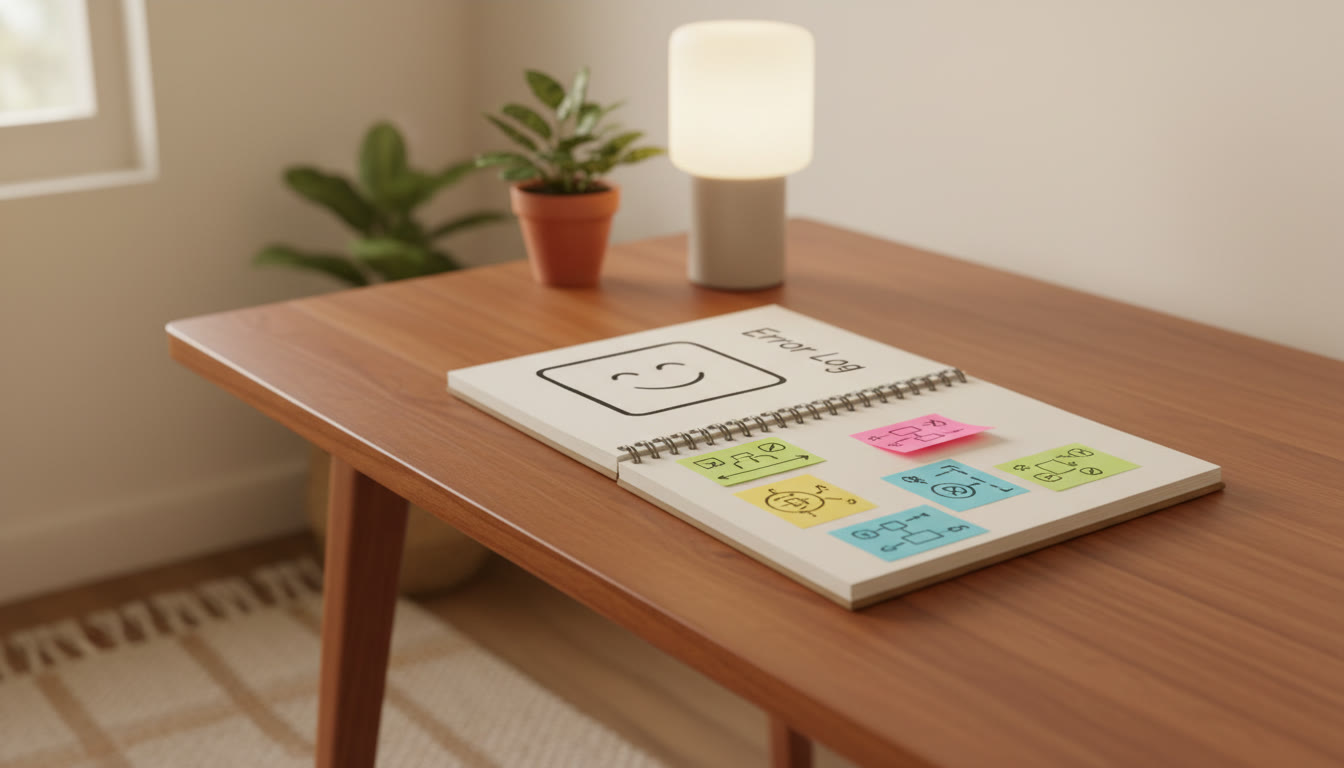
High scorers benefit from targeted micro-practice: timed mini-sets (5–10 minutes), forced error checks, and repetition until the error disappears twice in a row. Keep the sessions short and focused; fatigue kills precision.
Step 6 — Revision matrix: what to revise and when
Use a revision matrix to schedule topics across cycles: Rapid review, Focused problem-work, and Consolidation. Each topic should pass through all three cycles before the final phase. For high scorers, consolidation gets most time: this is where you rehearse full answers and the best method for each recurring question-type.
| Cycle | Duration | Goal |
|---|---|---|
| Rapid Review | 1–2 sessions | Recall formulas, definitions, timelines |
| Focused Problem-Work | 3–6 sessions | Practice application and tricky variations |
| Consolidation | 2–3 sessions | Full answers, timing, and examiner-style presentation |
Subject-specific micro-tips
High scorers must switch modes by subject. A short list of subject-focused moves helps you convert knowledge into marks.
- Mathematics: Maintain a set of 1-page templates for common long problems (e.g., geometry proofs, integrals). Write a one-line approach before solving every long question.
- Physics: Practice numerical accuracy and diagram labelling. Use dimensional checks on final answers and annotate assumptions clearly.
- Chemistry: Convert reaction mechanisms into compact flowcharts for quick recall; memorise reagent–product pairs with short mnemonics.
- Biology: Diagrams and processes are higher-yield when neatly labelled. Create a quick legend for each drawing and rehearse labelling under time pressure.
- Social Science: Anchor answers with dates, names, and one-line significance. Use subheadings for structured answers.
- English & Languages: Practice concise writing, and rehearse précis and summary formats. Know the rubric for marking schemes: content, organization, accuracy, and expression.
Tracking progress: numbers that matter
Turn improvement into measurable steps. Track three metrics weekly: correctness rate on core topics, average marks in full mocks, and the frequency of careless errors. Small steady gains on these metrics compound quickly.
| Metric | Week 1 | Week 4 | Target |
|---|---|---|---|
| Average mock score | Baseline | Improved | Consistent +5–8% |
| Careless errors / paper | High | Lower | Less than 2 per paper |
| Core topic accuracy | Variable | Stable | >90% |
Mental fitness and routine for sharp performance
High marks need a steady mind. A consistent sleep routine, short daily breaks, and one recovery day per week keep focus sharp. Use short active breaks (walks, stretching) between focused sessions and practise under slightly noisy conditions to reduce exam surprise.
Nutrition, hydration, and micro-rest before a mock improve concentration. Avoid last-hour cramming; the final hours before sleep are better invested in light review and rest.
How targeted tutoring and tech can fit in (when it helps)
Sometimes one-on-one coaching speeds up the closure of stubborn gaps. If you prefer guided correction, precise, short sessions that focus strictly on your diagnosis yield the best ROI. For example, a single session to fix the way you present long answers or to scrub recurring conceptual mistakes can unlock several marks.
For tailored feedback and AI-driven practice scheduling, consider focused options that provide 1-on-1 guidance, tailored study plans, expert tutors, and analytics that point straight to your weak questions. Sparkl‘s approach to personalised tutoring is designed to fit into the kind of short, high-impact cycles described here, helping you convert error analysis into reliable gains.
Final phase: last 2–4 weeks — sharpen, not rewrite
The final phase is small cycles of mocks, error-labs, and consolidation. Keep new learning to a minimum; focus on the most valuable corrections from your diagnosis. Use a 3:1 rule: three timed questions for every one hour of review. That balance keeps skill fresh and reduces panic.
- Keep a short cheat-sheet of formulas and one-line templates for long answers.
- Do one timed full-length mock every 4–6 days and use each result to set three improvement tasks for the next mock.
- Practice reading the question paper quickly and making a 3–5 minute plan before attempting long answers.
Sample one-week micro-plan for a focused window
| Day | Activity | Duration |
|---|---|---|
| Monday | Core topic drill (focused error-lab) | 2 hours |
| Tuesday | Timed mini-set + review | 90 minutes |
| Wednesday | Full-length mock (timed) | Exam duration |
| Thursday | Mark mock strictly; create 3 correction tasks | 1.5–2 hours |
| Friday | Presentation practice & answer templates | 90 minutes |
| Saturday | Mixed short questions & consolidation | 2 hours |
| Sunday | Rest and light review (flashcards) | 45–60 minutes |
Common pitfalls and quick remedies
- Over-polishing a weak topic: Move on after one or two focused sessions and return later for consolidation.
- Ignoring presentation: Add 10 minutes after each practice session to tidy answers and follow your template.
- Inconsistent marking: Mark every practice using the marking lens — guessing won’t tell you what to fix.
When time or energy runs short, pick the highest-impact exercise: a timed mock or an error-lab that targets a recurring mistake. Small wins compound faster than low-impact volume.
Closing academic note
Improving from high to higher is a process of disciplined diagnosis, marking-oriented practice, and deliberate refinement. Keep your cycles short: test, analyse, fix, and consolidate. Measure progress with consistent metrics and protect your mental sharpness through routine and rest. With focused practice that mirrors examiner expectations, even small changes in technique and presentation reliably convert into marks.

























No Comments
Leave a comment Cancel