

ISC Board Preparation Strategy for Science Students: A Practical Roadmap
Hey — if you are reading this between classes or during a study break, breathe. Preparing for the ISC science exams is a combination of smart planning, steady practice, and exam-aware presentation. This guide is written like a conversation: practical, human, and focused on what actually moves marks — not on gimmicks. Expect clear routines, subject-specific habits, a plan for full-length mock practice, and sensible ways to use personalised help when you need it.

Get clarity first: syllabus, paper pattern and marking approach
Before you deep-dive, spend a dedicated session to map the syllabus for each subject. List the units, mark-wise weight (as given in the official syllabus for the current cycle), practical components, and internal assessment or project requirements. The aim is to convert a long document into a one-page study map for each subject: units to finish, units to master, and units for revision. Keep that one-page map visible on your wall or as the top note on your phone.
Remember: answers are evaluated against the official marking expectations. That means write what is asked, structure your answers to match the marks on the paper, and follow any instructions about diagrams, numerical steps, or experiment records. Treat diagrams and derivations as tools that make answers clearer and exam-ready — they are not optional extras when the question asks for them.
How to build a realistic, sustainable plan
A plan without reality checks won’t last. Break the remaining work into three overlapping phases: discovery, consolidation and exam-simulation. Discovery is topic-by-topic learning with concept checks; consolidation is building speed and accuracy; exam-simulation is frequent full-length mock practice with timed correction cycles. Each phase has its own rhythm: discovery is slower and deliberate, consolidation accelerates practice volume, and simulation is all about timed stamina and marking accuracy.
- Start with subject-wise topic lists and rank topics by difficulty and weight.
- Allocate daily micro-goals (for example, one sub-topic + 10 questions) rather than vague targets.
- Reserve fixed weekly slots for full-length mock practice and post-mock analysis.
Sample study template and weekly rhythm
Consistency is more powerful than occasional marathon sessions. A weekly rhythm that alternates heavy practice with light consolidation keeps learning fresh and reduces burnout.
| Time Block | Primary Focus | Example Activities |
|---|---|---|
| Morning (2–3 hours) | Core concept study | Study a theory topic, work through derivations, build a summary sheet |
| Afternoon (1.5–2 hours) | Problem solving / numericals | Attempt practice problems, timed question sets, lab calculations |
| Early evening (1–1.5 hours) | Revision & short tests | Flashcards, short quizzes, formula review |
| Late evening (30–60 mins) | Light consolidation | One-page notes, mind-map, review mistakes |
Subject-by-subject strategies
Physics
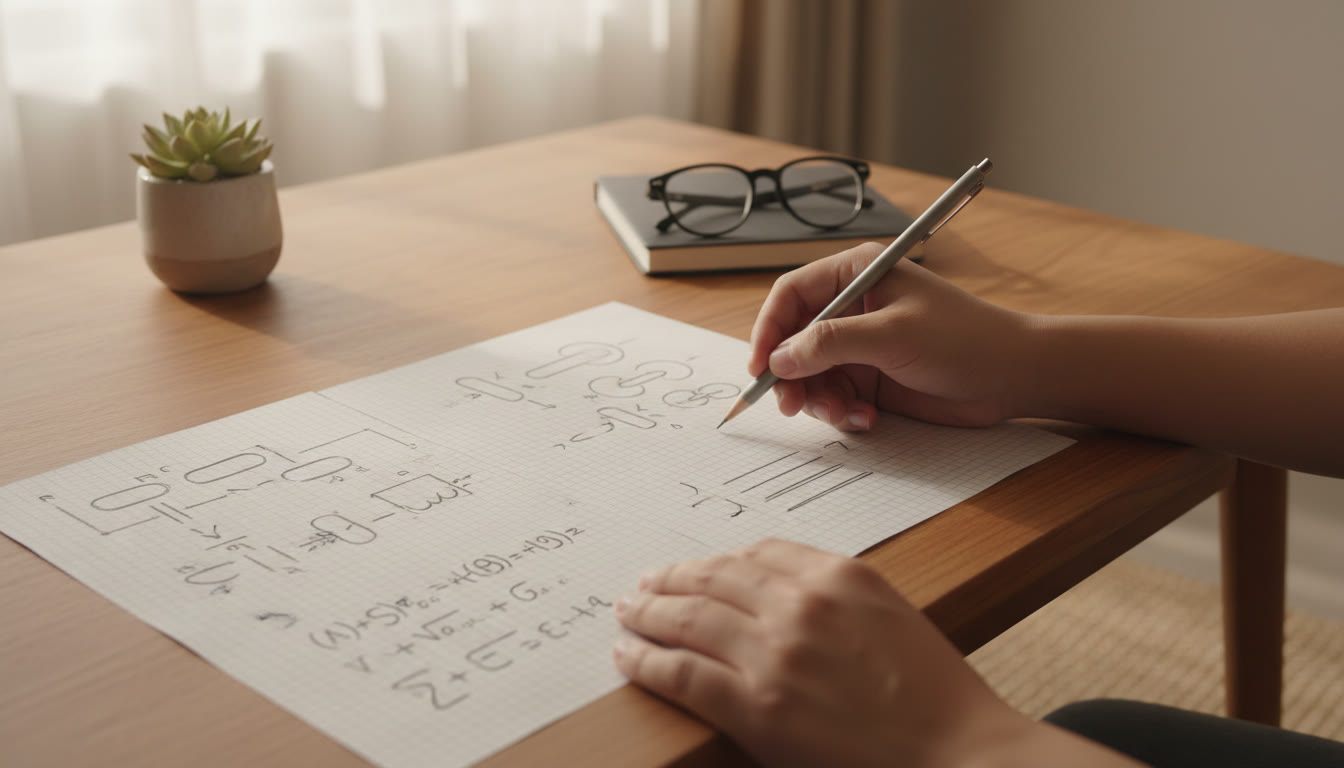
Physics rewards clear concepts and systematic problem-solving. Start with understanding the physical ideas behind formulas — why they work, what assumptions they carry, and where they apply. Practice deriving a handful of core results from first principles; that deepens recall and helps in questions where the exam asks for derivations.
- Do topic-focused problem sets: mechanics, electricity, waves, optics, thermodynamics — rotate topics through the week.
- When you practice numericals, write steps clearly and box final answers with correct units.
- Use dimensional checks as a habit — they catch careless mistakes fast.
For laboratory preparation, maintain a neat practical file with clear experiment objectives, procedure, observations and error analysis. Practice drawing graphs and labeling axes correctly; examiners look for presentation and interpretation in practical answers.
Chemistry
Chemistry splits into physical, organic and inorganic strands — each needs a slightly different approach. For physical chemistry, focus on practice and numerical fluency; do core calculations repeatedly until pattern recognition becomes automatic. For organic chemistry, work on mechanism logic and practice reaction pathways until you can reproduce them without hesitation. For inorganic chemistry, build concise recall sheets for properties, reactions and exceptions.
- Make balanced habit: numericals for physical chemistry, mechanism maps for organic, quick fact-tables for inorganic.
- Practice lab calculations and familiarise yourself with practical reagents, observations and report writing style.
Biology
Biology often rewards precise wording and neat diagrams. Focus on process understanding — instead of rote memorising entire paragraphs, be able to explain a process step-by-step and redraw clear diagrams with labels and annotations. Use flowcharts to convert long descriptions into memory-friendly sequences.
- Practice writing concise definitions and application answers; many marks are for correct terms used in context.
- Draw and label diagrams repeatedly until they are fast and accurate under time pressure.
Mathematics
Maths is practice, practice and more practice. Focus on solving varied problems, proving standard results, and writing clean, logical steps. Keep a running index of problem-types and the techniques needed to solve them — that helps during revision to select practice sets efficiently.
- For proof-style questions, write short introductions, step-by-step workings, and a concluding boxed result.
- Keep a cheat-sheet of standard integrals, identities and theorems for quick revision (use only for study, not exam).
Practicals and internal assessment
Practical marks are often straightforward to secure by following a few simple rules: keep a tidy practical file, write clear observations, show sample calculations for results, and be ready to explain procedures during vivas. Maintain dated entries and highlight key observations so you can revise them quickly before practical exams or internal assessments.
Full-length mock practice: how to make mocks work for you
Mocks are not just tests; they are feedback machines. Doing a full-length mock without an effective post-mock routine is wasted effort. Here is a compact cycle that turns every mock into measurable gains:
- Simulate real conditions: time yourself strictly, sit in a quiet place, and follow the exact paper format.
- After the test, mark strictly using the exam-style expectation: treat it like a real paper.
- Do a detailed error analysis: identify conceptual gaps, careless mistakes, and time-management issues.
- Create a short, specific revision list of weaker topics and practice them before the next mock.
Over time, increase the frequency of full-length mock practice as the exam approaches. Early on, use topic-wise tests and partial papers; later, move to weekly or twice-weekly complete simulations so you condition stamina and pacing.
How to analyse mock performance
Don’t just record scores — convert them into action. Maintain a mock log with these fields: topic missed, reason (concept/careless/time), corrective action, and follow-up date. After two or three mocks, patterns emerge. If a topic repeatedly appears in the error column, it moves to the top of your focused revision list.
Answer-writing and presentation tips that win marks
Presentation matters. Examiners are balancing many scripts, and clarity speeds marking. Follow these practical rules:
- Read the question carefully and underline command words; answer exactly what is asked.
- Structure long answers with short steps and, where helpful, headings like ‘Given’, ‘Approach’, ‘Solution’.
- Always show working: partial marks are awarded when method is visible, so a tidy method often recovers marks even when arithmetic slips.
- Label diagrams, draw neat graphs, and box final answers where appropriate.
- Keep units consistent and write them clearly next to numerical answers.
Revision techniques that stick
Switch from learning to retrieval. Spaced repetition and active recall beat passive rereading. Some techniques to adopt:
- Create a one-page summary per topic with only key formulas, definitions and tricky steps.
- Use flashcards for short facts, reaction sequences and definitions; test yourself at intervals.
- Teach a concept to an imaginary student or a friend — verbalising clarifies gaps quickly.
- Maintain an error log from past papers and revisit those questions until they are solved without hints.
Time management during study and on the exam day
On study days, use focused blocks of time (for example, 45–60 minutes) followed by short breaks. That rhythm keeps concentration high. For exams, allocate time per section ahead of the paper: skim the paper quickly, mark questions you will answer first, and stick to your plan. If a question is taking too long, move on and return later — unanswered sections with partial attempts usually score more than a perfectly solved single long question while the rest is blank.
When to ask for personalised help
Plateaus are normal. If you find that repeated practice and self-review aren’t closing a particular gap — whether it is conceptual clarity, exam technique, or time management — targeted one-on-one guidance can accelerate progress. With Sparkl‘s 1-on-1 guidance you can get tailored study plans, focused doubt-clearing sessions, and targeted practice based on your mock test analysis. Personalised tutoring helps convert weak areas into reliable scoring topics when the extra attention is timed right in your revision cycle.
Healthy routines and mindset
Academic performance and wellbeing go hand in hand. Keep regular sleep, short exercise breaks, balanced meals and small social respites. Mental stress reduces working memory and slows learning — a consistent routine reduces stress and improves recall during exams. Use short breathing exercises or brisk walks to reset after heavy sessions.
Practical checklist: the last 2–3 weeks before a paper
- Switch to consolidation and mock simulations; avoid starting new big topics at this stage.
- Create a short ‘paper day’ checklist: stationery, formula sheets for quick revision, practical file ready and a clean handwriting practice sheet.
- Do short, timed practice for the specific paper pattern you expect: long answers first, then short notes.
- Revise error logs and one-page summaries daily — low-effort revision stacks up.
Top do’s and don’ts
- Do practice full-length papers under timed conditions; do review them thoroughly.
- Do focus on presentation: neat steps, labeled diagrams, and boxed final answers.
- Don’t cram entire new units the night before a paper; prefer active revision of known material.
- Don’t ignore practical files and internal assessments — these are planned marks you can secure with good organisation.
Using technology wisely
Use digital tools for quick practice sets, formula flashcards and revision trackers — but be disciplined. Schedule focused offline study blocks where possible. If you use personalised tutoring tools, align sessions with the topics you flagged from mock analysis so that every tutoring hour targets the highest-impact area.
Sample quick action-plan for the next fortnight
- Week 1: Finish any remaining discovery topics, make one-page summaries for those units, and do topic-wise practice daily.
- Week 2: Move to consolidation — take two full-length mock papers under real-time conditions and follow the post-mock correction cycle strictly.
- Ongoing: Maintain an error log and revise it twice a week; update one-page notes as you fix mistakes.
Final academic takeaway
Improving ISC science scores is methodical work: map the syllabus, practice progressively from topic tests to full-length mocks, refine answer presentation, and use targeted help when self-study stalls. Consistent, exam-aware practice combined with clear, concise summaries and disciplined mock analysis will yield measurable improvement in both confidence and marks.
This concludes the academic guidance on preparation strategy for ISC science students.






















No Comments
Leave a comment Cancel