

NEET Study Plan for Beginners: Start from Scratch and Build a Winning Routine
If you are standing at the beginning of a long but achievable journey toward NEET, this article is written for you — calm, practical, and friendly. Starting from scratch doesn’t mean starting alone or aimlessly. It means you have a clean slate: no bad habits to dismantle, a chance to build a study routine that fits how you learn, and plenty of time to grow concepts step by step. The goal here is simple: help you design a plan that keeps your curiosity alive, protects your energy, and turns steady effort into reliable progress.

How to read this article
Think of this as a practical map. You’ll get: an exam-aware mindset (MCQ format, 3-hour practice, OMR discipline and negative marking), subject-by-subject tactics, a sample weekly and daily timetable, guidance on mock tests and analysis, revision tricks, and small mental-health checks so you don’t burn out. When the idea of tailored help comes up, I’ll point out how focused one-on-one guidance can fit into this plan — naturally and unobtrusively.
Know the Exam Shape Before You Study
The smarter your practice, the better the return on every hour. Begin by keeping a few exam realities firmly in mind: the test is multiple-choice, runs for a fixed three-hour period, requires strict OMR discipline, and includes negative marking for incorrect answers. Answers are all-or-nothing in the paper itself — there’s no partial credit for descriptive steps in the final OMR. That means accuracy, not just speed, is crucial.
What this means for your study
- Practice MCQs early and often so concept clarity and question reading become automatic.
- Train with full-length, timed sessions to simulate the three-hour rhythm of the actual exam.
- Build OMR-check habits: clean markings, no stray pencil marks, consistent filling technique.
- Work on accuracy: blind guessing hurts because of negative marking — sharpen elimination skills instead.
Mindset and Habits: Small Changes, Big Gains
Before diving into hours and tables, set up a few habits. The first 30–60 minutes after you sit down should be reserved for a focused task (no social scrolling). Use short, clear goals for every study block: ‘Understand one chapter’s core concept’ or ‘Finish and analyze 30 mixed MCQs.’ Keep a simple error log where you record the question, your mistake, and the correction in a single line. This tiny practice is one of the best productivity multipliers you’ll adopt.
Build the Foundation: Subject-by-Subject Strategy
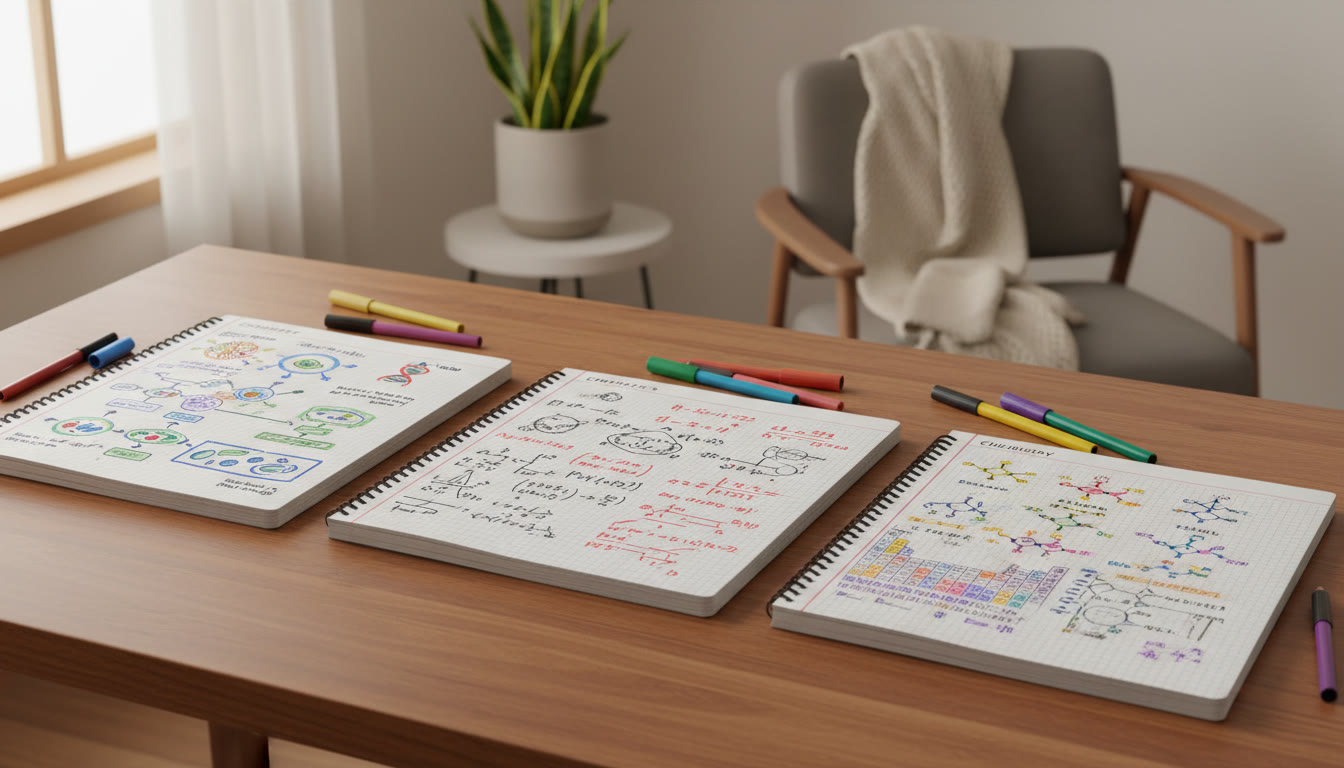
NEET rewards clarity and recall more than last-minute cramming. For beginners, it’s essential to treat Physics, Chemistry, and Biology as different ecosystems — each has its own language and techniques.
Biology — Story, Logic, and Organized Notes
Biology is large in volume but predictable in structure. For beginners, a two-step study rhythm helps: learn the story (narrative understanding of systems) and then build recall aids (flowcharts, one-page summaries). Use diagrams as memory scaffolds — redraw them until you can sketch and label them without peeking. Always convert a paragraph into a one-line takeaway: that one line is your revision hook.
Physics — Concepts, Equations, and Problem Patterns
Physics rewards conceptual clarity and repeated problem exposure. Start by understanding definitions and derivations as tools rather than as items to be memorized. Practice derivations until you understand why each step exists, and then solve representative problems to capture the pattern a chapter follows. Mark ‘tricky’ problem types in your notebook and revisit them once a week until they feel routine.
Chemistry — Balance Memory and Reaction Sense
Chemistry splits into theory (some factual recall) and problem chemistry (stoichiometry, reaction mechanisms). Develop two parallel strands: clean, structured notes for reactions and a problem-log for calculations and mechanisms. For reaction-heavy chapters, create reaction maps that show inputs, outputs, and the conditions that change behavior — these maps are powerful during revision weeks.
Designing a Weekly and Daily Study Plan
A study plan should be precise, but flexible. Precision gives accountability; flexibility prevents breakdowns when life interrupts your schedule. Below is a sample four-week rolling structure that beginners can repeat and adapt. It balances concept-building, problem practice, and test simulation.
| Focus | Weekly Hours (Beginner) | Why |
|---|---|---|
| Biology (theory + diagrams) | 12–14 | Large syllabus; favors reading and recall |
| Physics (concepts + problems) | 10–12 | Requires problem practice to internalize methods |
| Chemistry (organic + inorganic + physical) | 10–12 | Mix of memorization and calculation |
| Mixed MCQ practice & full-length test prep | 4–6 | Converts knowledge into exam skill |
| Revision & flashcards | 4–6 | Spacing helps long-term recall |
Sample Daily Block (for a 6–8 hour study day)
| Time | Activity |
|---|---|
| 06:00–07:30 | Concept study (fresh brain — pick a hard chapter) |
| 07:30–08:00 | Breakfast & short break |
| 08:00–10:00 | Problem practice / numerical sessions |
| 10:00–10:30 | Light revision of previous material (flashcards) |
| 10:30–13:00 | Biology reading and diagram practice |
| 13:00–14:00 | Lunch + rest |
| 14:00–16:00 | Mixed MCQ session (timed sets, 30–50 questions) |
| 16:00–17:00 | Active revision: notes condensation |
| 17:00–18:00 | Light practice / hobby / exercise |
Use that daily pattern as a scaffold: some days will lean toward heavy problem practice, other days toward reading and notes. Keep one full-length, timed three-hour mock every 1–2 weeks early on; increase frequency as you approach the final stretch.
Mock Tests, Analysis, and OMR Discipline
Mocks are not just checkpoints — they are the engine of improvement. Treat each full-length mock (three hours) as a goldmine of feedback. But a mock without a disciplined analysis routine will not change your score. Follow this simple loop:
- Take the mock under strict exam conditions (timed, no materials, strict OMR practice).
- Mark time splits: which sections took longer than expected, where you rushed, and where OMR errors occurred.
- Analyze every incorrect answer: classify it as knowledge gap, careless error, calculation mistake, or misreading.
- Create a targeted micro-plan to fix the top two recurring error types.
To make mock practice realistic, simulate OMR filling. Practice filling circles cleanly and erasing fully — these small motor habits reduce mistakes under pressure. Keep a checklist by your desk for mock days: sharpened pencils, eraser, rough sheet practice for OMR numbering, and a wristwatch or timer.
| Mock Frequency | Focus |
|---|---|
| Early months | One full-length mock every 2 weeks + topic-wise tests |
| Middle phase | Weekly full-length mocks + mixed sectional tests |
| Final stretch | 2–3 full-length mocks per week with focused analysis |
How to Analyze Tests Effectively
A test is useful only when you extract its lesson. Use a two-column error log: on the left, paste the question number and a one-line reason for the mistake; on the right, write the corrective action and set a date to revisit. Over time you’ll spot patterns — for instance, a surprising number of errors from a particular chapter. That’s your target for the next week.
Smart Revision: Make Each Pass Count
Revision should shrink material, not expand it. After an initial reading of a chapter, produce a one-page condensation: the core definitions, a couple of essential diagrams or equations, and three high-yield MCQs (with explanations). The first condensation is your workshop; the tenth pass should be a skim that takes 3–5 minutes.
- Use spaced repetition: revisit difficult condensations after 3 days, 10 days, and then 30 days.
- Create a personal ‘must-know’ page per subject that you can scan in 15 minutes on test day.
- Transform long paragraphs into flowcharts or bullet checklists — the brain remembers images and lists better than walls of text.
When and How to Use Personalized Help
Beginners often benefit from occasional targeted mentoring — not to hand-hold every day, but to fix recurring blind spots. One-on-one guidance helps you build a tailored study timeline, pinpoints conceptual gaps quickly, and provides accountability for the routine. If you choose a guided program, look for tutors who build a plan around your strengths and weaknesses, show past methods they use for analysis, and help you practice OMR and time management in real test settings.
If you prefer tech-enabled support, blended solutions that combine human mentors with AI-driven insights can highlight weak topics and suggest practice sets that match your learning curve. For example, some programs provide adaptive quizzes and personalized feedback loops that slot cleanly into a beginner’s study rhythm: focused practice in weak areas followed by immediate corrective review. A joined approach — your own effort plus occasional expert guidance — accelerates progress in a predictable way.
For students who want guided, tailored sessions, consider combining weekly self-study with occasional one-on-one reviews. A single session that identifies the top three recurring errors and gives a corrective template can change the next four weeks of study significantly. Where tutoring is mentioned, be selective: focus on clarity, correction, and how the mentor helps you practice under exam conditions.
Health, Routine, and the Long Game
Study plans fail when the student burns out. Protect three simple pillars: sleep, movement, and exposure to sunlight. Keep meals simple and regular. Build micro-breaks into long blocks (5–10 minutes every 50–60 minutes) and a longer 40–60 minute break after four hours. Physical activity widens attention and calms exam nerves; short daily movement is non-negotiable.
- Sleep: consistent 7–8 hours if possible — it’s when consolidation happens.
- Movement: 20–40 minutes daily of walking, stretching, or light exercise.
- Mind breaks: breathing or 5–10 minute mindfulness helps on high-pressure days.
Common Beginner Pitfalls and How to Avoid Them
Some mistakes are classic and easy to fix:
- Reading without practicing: convert every chapter into 20–40 targeted MCQs.
- Poor error analysis: write down corrective actions, don’t just mark answers as wrong.
- Skipping timed practice: train on three-hour full-length mocks to build pacing and stamina.
- Ignoring OMR practice: simulate real sheet-filling to avoid last-minute surprises.
Tools and Routines You Can Start Today
Make a few practical choices and stick to them for at least four weeks before changing anything:
- Create one consolidated notebook per subject for condensations.
- Keep a small, dated error log for every mock and every weekly test.
- Block social apps during deep study using simple phone settings or an app-blocker.
- Review one condensed page per subject first thing on low-energy days — it keeps momentum going.
Final Word: A Practical Roadmap You Can Start Now
Begin with small, repeatable actions: pick three chapters this week, convert each into one-page condensations, practice 30 mixed MCQs, and schedule one timed 3-hour mock within the next ten days. Track time, track mistakes, and protect your health. Over months, these tiny cycles compound into strong conceptual clarity, better accuracy under pressure, and the stamina to sit a full-length test confidently. Stay patient with the process; steady, deliberate practice beats last-minute marathons every time.
Success in this exam is an outcome of clear concepts, regular timed practice, disciplined revision, and calm exam execution. Build your plan with those pillars in mind and make steady progress each week.


























No Comments
Leave a comment Cancel