
Why What You Eat Matters for SAT Prep
Studying for the SAT is a marathon of concentration, memory work, and stamina. You can spend hours perfecting math strategies and timing, but if your fuel is inconsistent, your brain will protest. The foods you choose influence blood sugar stability, neurotransmitter production, inflammation, and even sleep quality — all of which affect attention, recall, and mental endurance on test day.
This isn’t about fad diets or miracle foods. It’s about practical, science-backed choices that support cognition: steady energy from complex carbohydrates, healthy fats for brain cell integrity, protein for neurotransmitters, and micronutrients that help your neurons communicate. Below you’ll find an approachable guide to brain-boosting foods, sample meal plans, test-day tactics, and easy recipes you can rely on while preparing for the SAT.
Simple Principles: How to Eat for Focus and Memory
Before diving into specific foods, keep a few straightforward principles in mind. These are easy to apply every day and will yield better study sessions more reliably than extreme or complicated regimens.
1. Prioritize steady energy
Choose complex carbohydrates (whole grains, oats, legumes) paired with protein and healthy fats to avoid blood sugar spikes and crashes. Stable glucose supports sustained attention during long practice sessions and the exam itself.
2. Emphasize healthy fats
Omega-3 fatty acids (found in fatty fish, walnuts, and flaxseeds) are associated with better memory and cognition in many studies. The brain is largely fat, and these fats help maintain cell membranes and communication between neurons.
3. Don’t skip breakfast
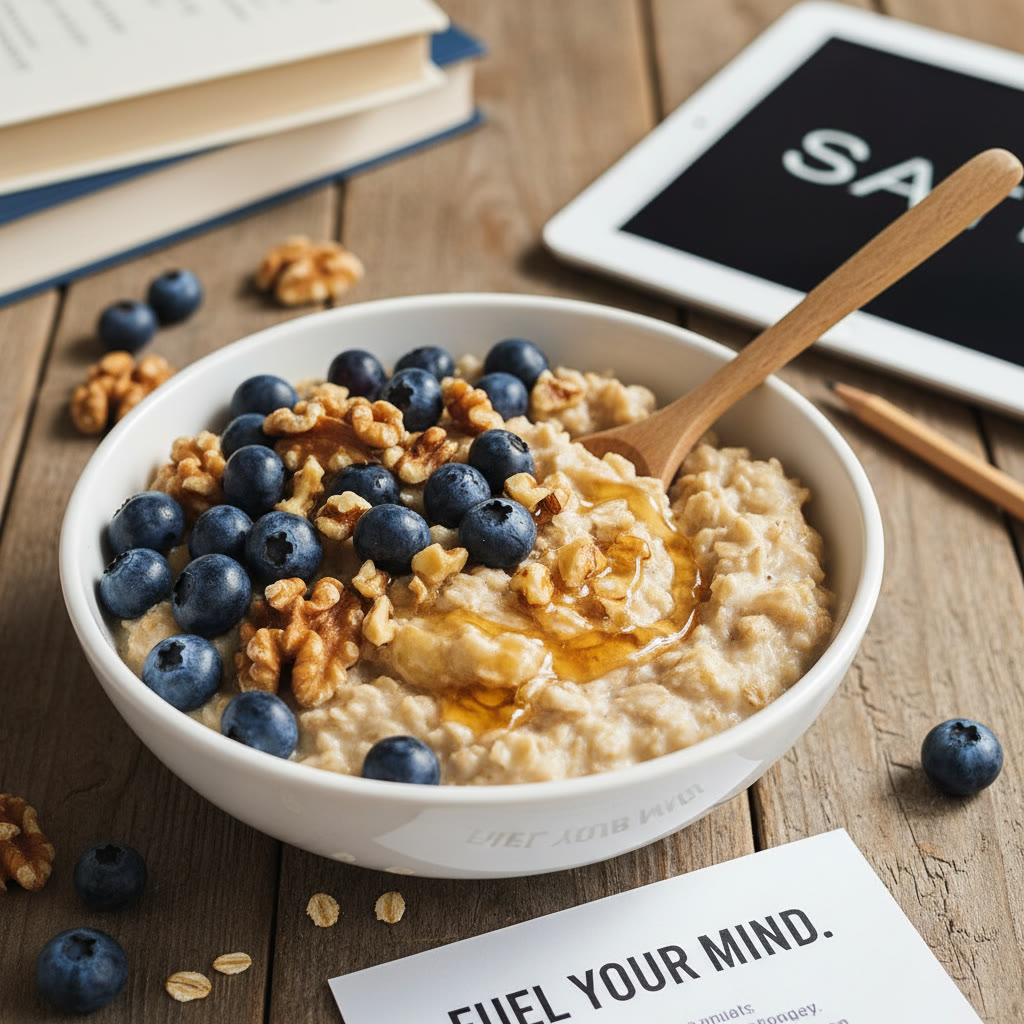
A balanced breakfast enhances working memory and concentration. Even a simple bowl of oatmeal with nuts and fruit is far better than nothing or a sugary pastry.
4. Hydrate consistently
Mild dehydration can impair attention and short-term memory. Keep water available during study blocks and sip regularly. Limit sugary beverages and use caffeine strategically.
5. Time caffeine and sugar
Caffeine can sharpen focus in the short term but avoid late-afternoon intake that might disrupt sleep. Similarly, sweets can boost energy briefly but lead to crashes that hurt study productivity.
6. Test foods before the big day
Never try a new breakfast or energy supplement the morning of the SAT. Test-day food should be familiar, easy to digest, and practiced during mock exams.
Top Brain-Boosting Foods and How to Use Them
Below are practical, tasty foods that support cognition along with quick tips for including them in your study diet.
Berries (blueberries, strawberries, raspberries)
Why they help: Rich in antioxidants and flavonoids, berries support blood flow to the brain and may enhance memory and learning.
How to use: Toss a handful on yogurt or oatmeal. Freeze to make a grab-and-go smoothie. Add to pancakes or cottage cheese for a bright, fresh flavor.
Fatty fish (salmon, trout, sardines)
Why they help: High in DHA and EPA omega-3s, which are linked to improved attention and memory. These fats support neuronal membranes and reduce inflammation.
How to use: Bake or pan-sear salmon for dinner a couple of times a week. Try canned sardines on whole-grain toast for a fast, nutrient-dense snack.
Eggs
Why they help: A great source of choline, a nutrient involved in memory and brain development, as well as high-quality protein for sustained focus.
How to use: Scrambled, hard-boiled, or as an omelet with veggies. Keep hard-boiled eggs for quick study-break protein.
Leafy greens (spinach, kale, Swiss chard)
Why they help: Packed with folate, vitamins K and E, and antioxidants that support brain health and blood flow.
How to use: Blend a handful into smoothies, make quick sautéed greens, or layer them into wraps and sandwiches.
Nuts and seeds (walnuts, almonds, chia, flax)
Why they help: Provide healthy fats, protein, and micronutrients like magnesium and vitamin E that protect brain cells.
How to use: Keep a mixed-nut jar for studying, sprinkle chia or flax on yogurt, or make nut butter sandwiches for portable energy.
Whole grains (oats, brown rice, quinoa)
Why they help: Slow-digesting carbohydrates that provide a steady release of glucose — the brain’s preferred energy source. They also contain B vitamins important for energy metabolism.
How to use: Start your day with steel-cut oats, have quinoa salads for lunch, or snack on whole-grain crackers with hummus.
Yogurt and fermented foods
Why they help: Probiotics support gut health, and emerging research links gut-brain interactions to mood and cognitive function. Yogurt also delivers convenient protein and calcium.
How to use: Greek yogurt with berries and nuts makes a balanced study snack. Try kefir or fermented vegetables occasionally to diversify gut microbes.
Dark chocolate (70% cocoa or higher)
Why they help: In moderation, dark chocolate provides flavonoids that can boost blood flow to the brain and increase alertness via mild caffeine and theobromine.
How to use: A small square after a focused study block is a pleasant reward and cognitive pick-me-up. Avoid overdoing it to prevent sugar crashes.
Legumes (beans, lentils)
Why they help: High in complex carbs, fiber, and protein. They’re excellent for sustained energy during long study sessions.
How to use: Make a hearty bean chili, add lentils to salads, or have hummus with veggies as a snack.
Avocado
Why they help: Provides monounsaturated fats, vitamin E, and B vitamins. Avocado supports flexible thinking and long-term brain health.
How to use: Smash on toast, add to salads, or blend into smoothies for creaminess without the sugar spike.
Practical Meal and Snack Plans for SAT Prep
Here’s a realistic plan that balances convenience with nutritional impact. Swap in local, seasonal ingredients and adjust portions to meet your energy needs.
Sample day: steady focus
- Breakfast: Steel-cut oats with sliced banana, a tablespoon of flaxseed, and a small handful of walnuts.
- Mid-morning snack: Greek yogurt with a few blueberries and a sprinkle of granola.
- Lunch: Quinoa salad with mixed greens, chickpeas, diced cucumber, avocado, and a lemon-olive oil dressing.
- Afternoon snack: Apple slices with almond butter or a small mix of almonds and dark chocolate pieces.
- Dinner: Baked salmon, sweet potato, and steamed spinach.
- Evening: Herbal tea and a small piece of fruit if hungry; avoid late heavy meals that disrupt sleep.
Quick table: Foods, nutrients, and how to include them
| Food | Key Nutrients | Why It Helps | Easy Ways to Include |
|---|---|---|---|
| Blueberries | Flavonoids, antioxidants | Supports memory and blood flow | On yogurt, in smoothies |
| Salmon | Omega-3 (DHA/EPA) | Maintains neuronal membranes, reduces inflammation | Baked, canned on toast |
| Eggs | Choline, protein | Supports memory and neurotransmitter synthesis | Boiled, omelet, breakfast sandwich |
| Oats | Complex carbs, fiber, B vitamins | Steady energy for focus | Porridge, overnight oats |
| Walnuts | Omega-3, vitamin E | Supports cognition and neuronal health | Snack, salad topping |
Snack Smart: Portable, Brain-Boosting Options
Study sessions often need short, portable snacks that won’t slow you down. Choose items that combine complex carbs with protein or healthy fats to get the most cognitive bang for your bite.
- Hard-boiled eggs and whole-grain crackers
- Greek yogurt with cinnamon and chopped nuts
- Apple slices with peanut or almond butter
- Trail mix with walnuts, pumpkin seeds, and a few dried cranberries
- Hummus with carrot and cucumber sticks
- Banana and a small handful of almonds
What to Avoid During SAT Prep and on Test Day
Some foods and habits are surprisingly counterproductive when you want clear thinking and steady mood. Avoid experimenting on test day — and even during the week of the SAT, aim for consistency.
- Heavy, greasy foods that can cause sluggishness (think: oversized fast-food meals right before a practice test).
- High-sugar snacks and beverages that lead to quick energy followed by a crash.
- Too much caffeine, especially late in the day; it can fragment sleep and impair next-day memory consolidation.
- Spicy or unfamiliar dishes on test morning — new foods can upset your stomach under stress.
- Alcohol and nicotine — both disrupt sleep and cognitive performance.
Timing Is Everything: How to Schedule Meals Around Study Sessions
Think of your day in focused blocks and use meals/snacks to support those blocks. A general rule: larger meals before long sessions, smaller protein-rich snacks before short, intense study bursts.
Before a long study block (90+ minutes)
Eat a balanced meal 60–90 minutes before: complex carbs + protein + healthy fats (e.g., brown rice bowl with salmon and veggies).
Before a short, intense session (30–60 minutes)
Grab a small protein-and-fat snack 15–30 minutes before (e.g., apple with almond butter) to sharpen focus without digestive distraction.
On full-length practice test days
Eat exactly what you plan to eat on test day during full practice tests. Practice the timing: breakfast 1–2 hours before beginning, a familiar mid-test snack at your scheduled break, and hydration throughout.
Test-Day Nutrition: A Practical Checklist
On SAT day itself, your priorities are familiarity, digestion, and steady energy. Use this checklist as a simple routine you can follow without decision fatigue.
- Night before: Balanced dinner with lean protein, vegetables, and complex carbs. Avoid heavy alcohol or stimulants.
- Morning: Familiar breakfast containing complex carbs, protein, and a small amount of healthy fat (e.g., oatmeal with nuts and fruit or an egg sandwich on whole-grain toast).
- Hydration: Sip water—don’t chug. Bring a water bottle for before/after the test if permitted.
- Break snack: A small, practiced snack that you’ve tried during mock tests (banana, small nut mix, or whole-grain crackers and cheese).
- Caffeine: If you normally drink coffee, have your usual amount but not more. Avoid introducing caffeine if you’re not a regular consumer.
- Avoid: New supplements, heavy meals, and excessive sugar right before the test.
Sample 3-Day Prep Menu (Practical and Repeatable)
Rotate these meals for simplicity. They contain a mix of the foods above and are designed to be easy to prepare.
Day 1
- Breakfast: Greek yogurt, blueberries, chia seeds, small handful of granola.
- Lunch: Turkey and avocado whole-grain wrap with spinach.
- Snack: Carrot sticks and hummus.
- Dinner: Baked salmon, quinoa, steamed broccoli.
Day 2
- Breakfast: Steel-cut oats with banana and walnuts.
- Lunch: Lentil salad with feta and mixed greens.
- Snack: Apple with peanut butter.
- Dinner: Stir-fried tofu with brown rice and mixed vegetables.
Day 3
- Breakfast: Two eggs scrambled with spinach and whole-grain toast.
- Lunch: Chickpea and avocado salad.
- Snack: Small trail mix (almonds, pumpkin seeds, dried cherries).
- Dinner: Grilled chicken, sweet potato, and a side salad.
Easy, Test-Friendly Recipes to Try
Here are two quick recipes that are easy to prep and nutritious for study days or test morning.
Berry-Oat Power Bowl (serves 1)
- 1/2 cup rolled oats, cooked in water or milk
- 1/2 cup mixed berries
- 1 tablespoon ground flaxseed or chia
- 1 tablespoon chopped walnuts or almonds
- Optional: drizzle of honey or maple syrup
Combine cooked oats with berries and seeds, top with nuts. Eat warm or cold. Provides complex carbs, omega-3 precursors, and antioxidants.
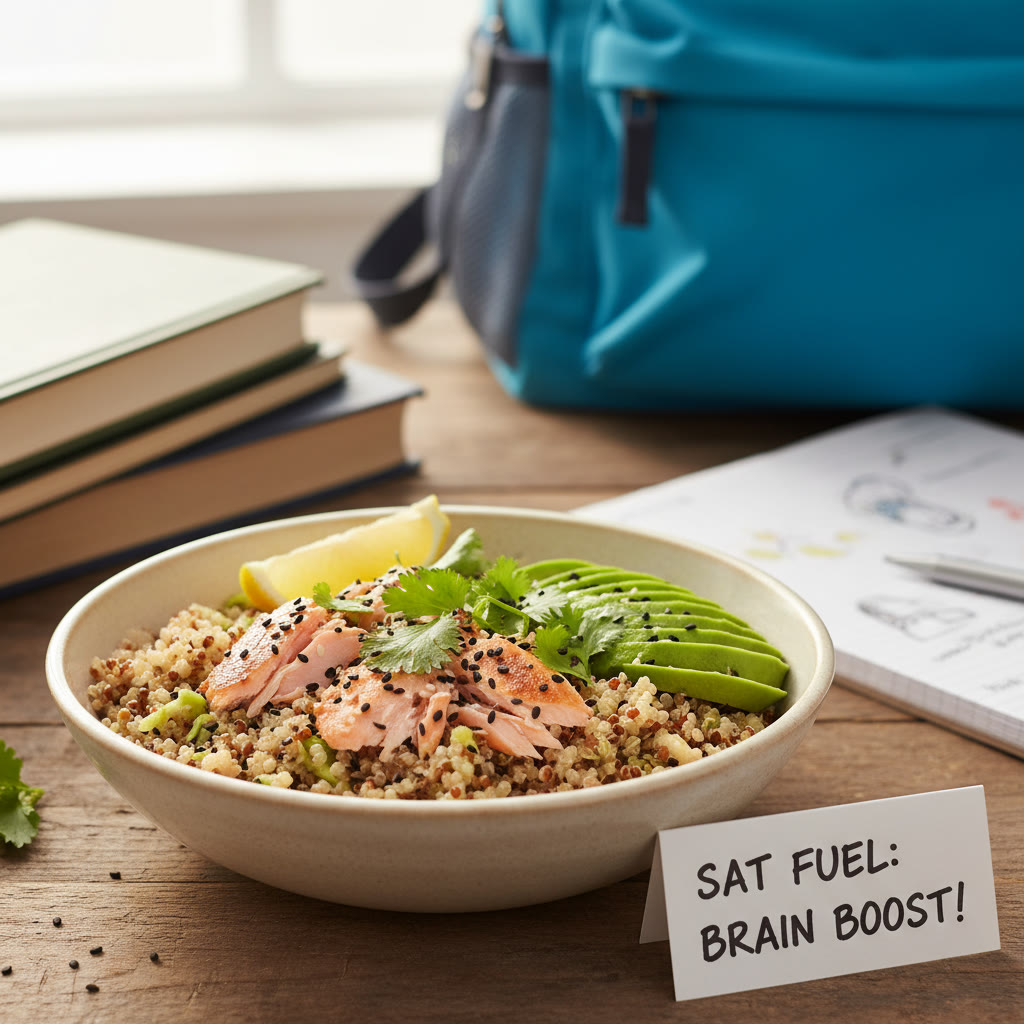
Quick Salmon & Quinoa Bowl (serves 1)
- 1 fillet cooked salmon or 1/2 cup canned salmon
- 1/2 cup cooked quinoa
- Handful of mixed greens
- 1/4 avocado, sliced
- Olive oil and lemon to taste
Layer quinoa, greens, and salmon. Drizzle with olive oil and lemon. Balanced protein, healthy fats, and slow carbs for sustained focus.
Pairing Nutrition with Smart Study Habits
Food is part of a bigger system. Pair these dietary strategies with clear study planning for best results. Nutrition improves the hardware — your brain’s readiness — while quality study provides the software: techniques, practice, and feedback.
If you’re working with a tutor, you’ll get extra leverage by aligning study timing with nutrition. For example, schedule the most demanding tutoring session after a nutrient-dense meal and short rest so you bring the sharpest focus. This is one place where Sparkl’s personalized tutoring and benefits (1-on-1 guidance, tailored study plans, expert tutors, and AI-driven insights) fit naturally: combine individualized study plans with consistent, brain-friendly eating to maximize learning gains and performance on the SAT.
When to Seek Professional Advice
Most students benefit from these general tips. However, if you have specific medical conditions, food allergies, or persistent fatigue that nutrition changes don’t fix, consult a registered dietitian or your healthcare provider. They can help with tailored plans, blood tests for deficiencies, or specialized timing to support both health and performance.
Final Tips: Small Habits, Big Returns
In the final stretch of SAT prep, focus on small, consistent habits rather than last-minute overhauls. A reliable breakfast, practiced test-day snack, regular hydration, and a few fish or walnut meals each week will do more for your brain than a single “superfood” obsession.
- Practice the test-day meal routine during full-length practice tests.
- Keep snacks handy during study blocks to avoid low-energy distractions.
- Pair smart nutrition with consistent sleep and a study schedule—you’ll retain more and feel calmer on exam day.
Preparing for the SAT is both mental and physical. Treat your brain like the high-performance engine it is: give it steady fuel, protect its sleep and recovery, and combine that with focused practice. With a few simple changes to what you eat and how you schedule your meals, you’ll approach the exam sharper, calmer, and more resilient.
Good luck — fuel well, study smart, and remember that small, steady choices make the biggest difference on test day.






















No Comments
Leave a comment Cancel