
Why Distractions Matter More Than You Think
Picture this: you sit down for an hour of SAT practice, determined to conquer a difficult Math section. Fifteen minutes in your phone buzzes, you glance down, and suddenly 25 minutes are gone scrolling through memes. It happens to the best of us. But the real cost isn’t just the lost minutes—it’s the fragmentation of attention. When you break focus, your brain needs time to refocus and rebuild momentum. That’s why a small distraction can shave large chunks off the quality of study time.
For students preparing for the SAT, time is both precious and finite. The test rewards deep, deliberate practice, not frantic multitasking. And while people often blame willpower, understanding the mechanics of attention and building practical systems to protect it is the smarter path.
The science in a sentence
Attention is a limited resource: switching tasks costs time and mental energy. Aim to maximize uninterrupted focus and use structured breaks to recharge.
Know Your Distractions: The Usual Suspects
Before you can fight distractions, get familiar with what derails you. Categorize your biggest interruptions to handle them strategically.
- Digital distractions: notifications, social media, messages, and tempting apps.
- Environmental distractions: noisy household members, pets, cluttered or uncomfortable spaces.
- Internal distractions: stress, hunger, fatigue, or that looping thought about a game, a friend, or an upcoming event.
- Study-style distractions: ineffective study methods that feel productive but aren’t (passive reading, highlight-only study).
Quick reflection exercise
Keep a simple distraction log for three study sessions. Note what broke your focus, when it happened, and how long it took to get back on track. Patterns emerge fast and help you choose the right countermeasures.
Design Your Study Environment Like a Focus-Friendly Zone
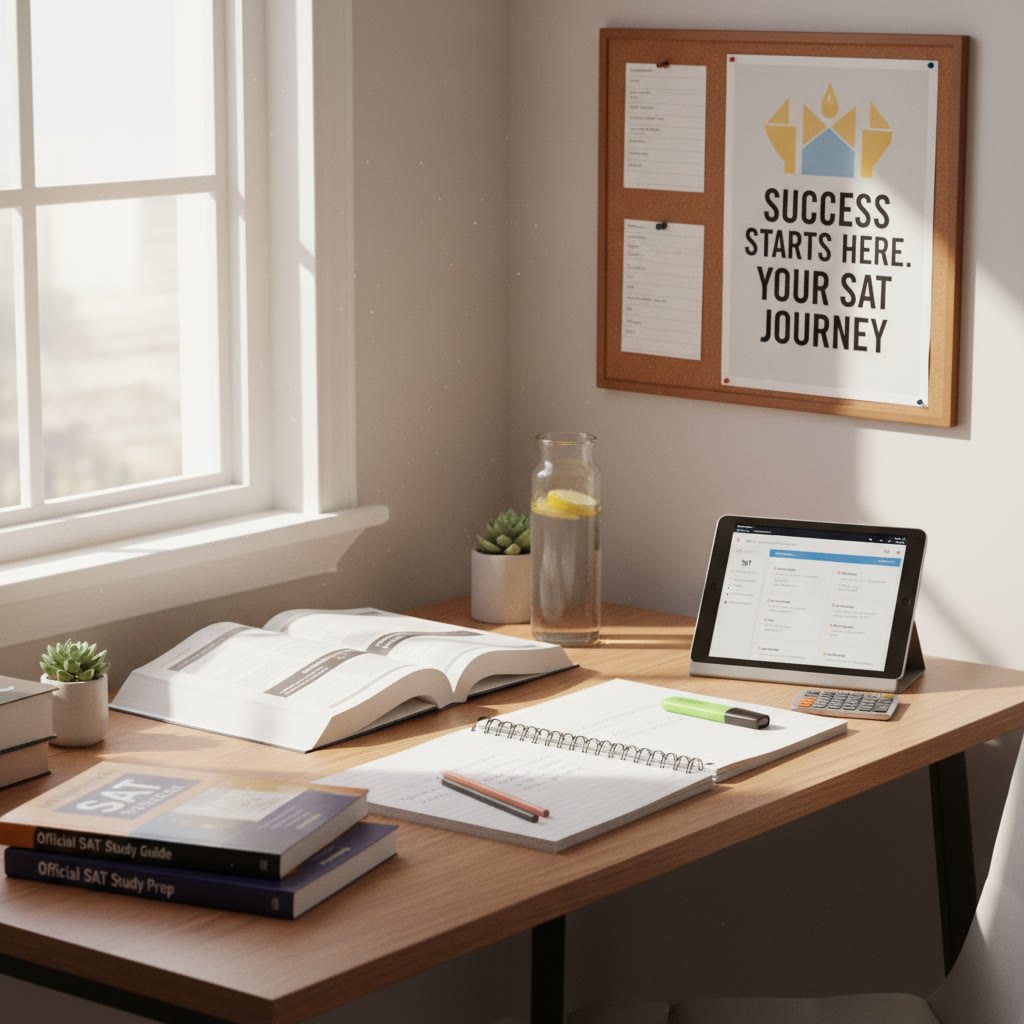
Small environmental tweaks yield surprisingly large gains in concentration. Think of your study space as a lab where you test what helps you focus.
- Declutter the surface: Only keep what you need for the session—test booklet, calculator, pencils, water.
- Control sound: Try silence, instrumental music, or white noise. Use headphones if you share a space.
- Light and posture: Work near natural light if possible, and use a chair that supports an upright posture. Comfort helps attention but don’t make it too comfortable (temptation to nap!).
- Dedicated study spot: When possible, reserve one place for focused work so your brain starts associating it with study-mode.
Make the environment your ally
Think beyond aesthetics. Use cues like a specific playlist, a particular desk lamp, or a study-only mug. These small rituals prime your brain for focused work and make starting easier.
Phone Strategy: Your Most Powerful Tool—or Your Biggest Temptation
Phones are engineered for distraction. But they can also be co-opted as study tools. The difference boils down to control.
- Out of sight, out of mind: Put your phone in another room during focused blocks. Physical separation reduces impulsive checking.
- Use Do Not Disturb smartly: Allow alarms or calls from family but silence social apps while studying.
- App limits: Set strict daily time limits for social apps. Many phones let you lock apps after a quota is reached.
- Leverage phone for study: Use the timer for Pomodoro, timer apps for practice sections, or apps that read questions aloud if that helps.
An example phone rule
For a 2-hour evening study: place phone in another room for the first 50 minutes, allow a 10-minute check, then another 50-minute block, finish with a 10-minute review. Repeat for consistency.
Session Structure: How Long to Study and When to Break
Not all study minutes are equal. Structured sessions, where focused work alternates with deliberate rests, produce higher-quality learning.
- Pomodoro-style: 25–30 minutes focused, 5–10 minutes break. After 3–4 cycles, take a longer break (20–30 minutes).
- Ultradian rhythm approach: 90-minute focus windows followed by 20–30 minute breaks—fits longer practice like full practice sections.
- Active breaks: Move your body, hydrate, or do a quick breathing exercise. Avoid doomscrolling during breaks.
Which structure is right for you?
If you’re building concentration, start with Pomodoro and gradually increase focus window length. If you already can sustain attention, try 90-minute blocks for full-length sections or timed practices.
Active Learning Beats Passive Reading Every Time
Practice that mimics the test is the highest-leverage activity. Work that forces retrieval and problem-solving creates stronger memory traces than rereading notes.
- Self-testing: After a passage or problem set, close the book and recall the main idea or steps.
- Explain aloud: Teach a concept to an imaginary student or record yourself explaining a difficult problem.
- Mix practice: Interleave math problem types or switch between Reading and Writing practice for better long-term retention.
Example active task
Instead of rereading a grammar rule, write three original sentences that incorporate the rule and then correct them from memory after 15 minutes. That forces application, not recognition.
Use Tools and Tricks to Reduce Temptation
We live in a world where convenience is constant. Use simple tools to make distractions inconvenient, and productive behaviors easy.
- Website blockers: Temporarily block social media sites during study windows.
- Accountability timers: Use shared timers or study-with-me sessions (video off) with a friend to create mild social accountability.
- Physical reminders: Sticky notes with a specific goal for the session stuck to your laptop screen help pull you back when your mind wanders.
Nutrition, Sleep, and Movement: The Unsung Heroes
Cognitive endurance depends on the basics. Skipping sleep or studying on an empty stomach makes distraction far more likely.
- Sleep: Aim for 7–9 hours. Memory consolidation happens during sleep, and reduced sleep increases impulsivity.
- Fuel: Balanced meals and snacks that combine protein, healthy fats, and complex carbs keep glucose stable for steady focus.
- Movement: Short walks or stretching between sessions increase blood flow and improve concentration.
Practical habit
Try a 10–15 minute brisk walk after two focused blocks—your brain gets a reset and the post-walk session often feels more productive.
Accountability and Social Tools That Actually Help
Accountability is a powerful antidote to distraction. When someone else knows your plan, you’re more likely to follow through.
- Study partner or group: Short, focused sessions with a friend studying for the SAT—agree on goals and share quick progress checks.
- Mentor or tutor: Regular check-ins provide structure and personalized feedback. Sparkl’s personalized tutoring offers 1-on-1 guidance, tailored study plans, expert tutors, and AI-driven insights to help you identify the moments you’re most prone to distraction and build routines around them.
- Public commitments: Tell someone about your practice schedule. A quick daily message confirming completion works wonders.
Real-world example
One student I know committed to morning practice: 45 minutes before school, she did a timed Reading section and messaged her tutor with her score. The small social check-in removed the temptation to skip and led to steady score gains over three months.
When Motivation Waning: Small Wins and Micro-Goals
Motivation fluctuates. When it dips, break tasks into tiny, approachable micro-goals so you can win quickly and build momentum.
- Instead of “study Math,” try “complete five algebra practice problems” or “review two geometry theorems.”
- Celebrate small wins—a short 30-second acknowledgement (a fist pump or a note in your planner) reinforces the habit.
- Pair a less enjoyable task with a tiny reward: finish a tough section, then enjoy a 10-minute break with your favorite tea.
Use Realistic Schedules: Quality Over Quantity
Long cram sessions rarely pay off. A consistent schedule with fewer, high-quality hours per week outperforms erratic bursts.
| Study Block | Duration | Recommended Use |
|---|---|---|
| Short Focus | 25–30 minutes | Targeted practice, question sets, vocabulary drills |
| Medium Focus | 50–90 minutes | Timed sections, deep problem sets, full passage analysis |
| Long Focus | 2–4 hours | Full-length practice test segments with review |
This table helps you match the task to the right attention window. For instance, use a 50–90 minute block to complete a full Reading section and then spend 20 minutes reviewing mistakes while your memory of the test is fresh.
When You Slip: Reset Rather Than Shame
Everyone succumbs to distraction sometimes. What matters is how you respond. A quick reset is more effective than self-criticism.
- Pause, take three deep breaths, and record what distracted you.
- Adjust: move the phone, close unnecessary tabs, or switch to a different study method for a change of pace.
- Recommit to a short, achievable task to rebuild momentum—maybe a 20-minute targeted review.
Example reset script
“Okay, my phone distracted me. I’ll put it in the kitchen and do 25 minutes on the next practice set. After that, I’ll take a 10-minute walk.” Short, practical, and forgiving.
Putting It All Together: Sample Weekly Plan
Here’s a realistic plan that balances practice, review, and life. Adjust to your schedule and progress.
| Day | Morning | Afternoon/Evening |
|---|---|---|
| Monday | 30 min vocab drill (Pomodoro) | 50 min Math (timed, targeted problems) |
| Tuesday | Full Reading section (timed) + 20 min review | Light review, 30 min practice of weak topic |
| Wednesday | 50 min Writing and Language practice | 1-on-1 tutoring/check-in (if available) |
| Thursday | Timed Math set + answer review | 30 min practice quiz and micro-goal reflection |
| Friday | Half-length practice test (focus on pacing) | Relaxed review — mistakes and patterns |
| Saturday | Full-length practice test (timed) | Detailed review of missteps |
| Sunday | Active rest — light review or reading | Plan next week’s micro-goals and prep materials |
Swap items based on your school schedule and energy patterns. The key is consistency and reflection: track what helped and what didn’t.
How Tutoring Fits Into Your Focus Strategy
A tutor isn’t just for solving problems—they’re a focus amplifier. Regular sessions provide structure, personalized strategies, and an external accountability mechanism. For example, Sparkl’s personalized tutoring blends 1-on-1 guidance and tailored study plans with AI-driven insights to highlight when and why you get distracted, and how to restructure study blocks for maximum focus. That kind of tailored attention can be a game-changer when you’re aiming to make steady, measurable progress.
What to look for in tutoring
- Tutor who asks about your distractions and routines, not just content.
- Customized practice that targets your weak areas and attention patterns.
- Regular reviews of strategy, not only problem solutions.
Exam Day: Keeping Distractions at Bay When It Counts
The strategies you practice at home translate directly to test day. The difference is stakes and environment control. Use what you’ve learned to protect focus on the big day.
- Pack the night before: snacks, approved calculator, pencils, and a photo ID.
- Practice in a simulated environment: timed sections, strict breaks, no phone cues.
- Arrive early to the test center to settle anxiety and avoid last-minute rush distractions.
- During the test, if anxiety or wandering thoughts appear, take three slow breaths, refocus on the current question, and use your scratch paper to map out a plan.
Final Notes: Build Systems, Not Just Willpower
Beating distractions isn’t an act of heroic willpower—it’s about building systems that reduce temptation and make focused effort the easy default. Start with small changes: one phone rule, one dedicated study spot, and one consistent session structure. Track your progress, tweak what doesn’t work, and reward yourself for the small wins. Over weeks, those small changes compound into reliable focus and steady score improvements.
A closing challenge
For the next two weeks, commit to a single experiment: pick one distraction to eliminate (phone in another room, website blocker, or a dedicated study spot) and track your focused minutes. Share the results with a friend or tutor. Small experiments like this teach more than indefinite good intentions.
Studying for the SAT is a marathon of attention, not a sprint of will. You don’t need perfect concentration—just consistent, high-quality practice. With the right environment, realistic routines, active learning strategies, and occasional outside support like Sparkl’s personalized tutoring to guide and maintain accountability, you’ll find your focus becoming stronger, your study sessions more productive, and your scores reflecting that effort.

Now take a moment, pick one change from this guide, and try it during your next study block. The right habit built today will make tomorrow’s practice noticeably easier.

















No Comments
Leave a comment Cancel