
How to Avoid Over-Studying the Week Before the SAT
The week before the SAT can feel like standing at the edge of a diving board: heart racing, questions zooming through your head, and a tempting urge to cram until midnight. But here’s the secret most high scorers know: the last week is not about piling on more hours. It’s about sharpening, resting, and showing up focused. Over-studying in this period often backfires—fatigue, confusion, and second-guessing replace confidence.
Why over-studying hurts more than it helps
We assume more hours equal more preparation. In many cases, the opposite is true during the final days. Cognitive science and test-day experience point to three core reasons:
- Mental fatigue: Your brain builds knowledge when it’s rested. Excessive late-night studying impairs recall and slows thinking—the exact skills the SAT tests.
- No new high-leverage gains: By the last week, raw content acquisition yields diminishing returns. You’re better off consolidating and practicing retrieval (active recall) than learning brand-new strategies or facts.
- Stress amplification: Constantly reviewing and changing tactics increases anxiety and self-doubt. Calm, consistent routines beat frantic last-minute shifts.
Mindset reset: quality over quantity
Think of the week before as a maintenance tune-up for a car, not a full rebuild. You want to polish what’s already there—practice timing, review common traps, and reinforce stamina—rather than rewrite your engine. That shift in mindset reduces panic and helps you use time efficiently.

Assess where you really are: three quick checks
Before you decide how to spend your final week, run three quick checks to pinpoint needs. These take 20–30 minutes total and tell you where to invest energy.
1. Accuracy vs. timing
Take a short, timed section (25–30 minutes): either a Reading passage or a Math subsection. Track two things: your accuracy (how many questions you got right) and timing (how many questions you left or rushed). If accuracy is high but timing is low, practice pacing and skip strategies. If timing is fine but accuracy lags, focus on deliberate review of errors.
2. Error pattern scan
Open your recent practice tests and note the categories where you miss questions: algebra, geometry, sentence structure, rhetorical skills, hypothesis interpretation, etc. If the same 3–4 error types repeat, those deserve targeted review. If errors are all over, it’s not a content problem—it’s a stamina or focus problem.
3. Emotional baseline
How do you feel when you think about test day? Calm, a little nervous, or overwhelmed? If you’re highly anxious, a week of relaxation strategies and simulated mornings may do more for your score than extra question sets.
Designing a smart, non-overwhelming week
Now we build a plan. The goal: maintain skills, sharpen timing, reduce anxiety, and arrive rested. Below is a sample seven-day framework you can adapt to your needs.
Key principles to follow
- Prioritize sleep: Aim for consistent bedtime and wake-up times. Sleep consolidates memory and sharpens reasoning.
- Short, high-quality sessions: Use 45–60 minute focused blocks followed by breaks. Intense concentration beats marathon reading.
- One practice test earlier in the week: Simulate conditions once and use the rest of the days to review it and do light practice.
- No heavy learning: Avoid introducing brand-new strategies or content in the final 72 hours.
- Test-day routine rehearsal: Practice your morning routine, travel plan, and what you’ll eat.
Sample week (you can adapt times to your schedule)
| Day | Morning | Afternoon | Evening |
|---|---|---|---|
| 7 days out (Monday) | 30–45 min light review: key formulas and strategies | 1 full practice section (timed) + quick review | Relaxing activity; early bedtime |
| 6 days out | 45 min targeted error work (top 2 weak areas) | Practice set: 20–30 questions, mixed | Brief review; visualizing test day |
| 5 days out | Full timed practice test (simulate as much as possible) | Careful review of mistakes (focus on patterns) | Light reading or hobby; keep phone away before bed |
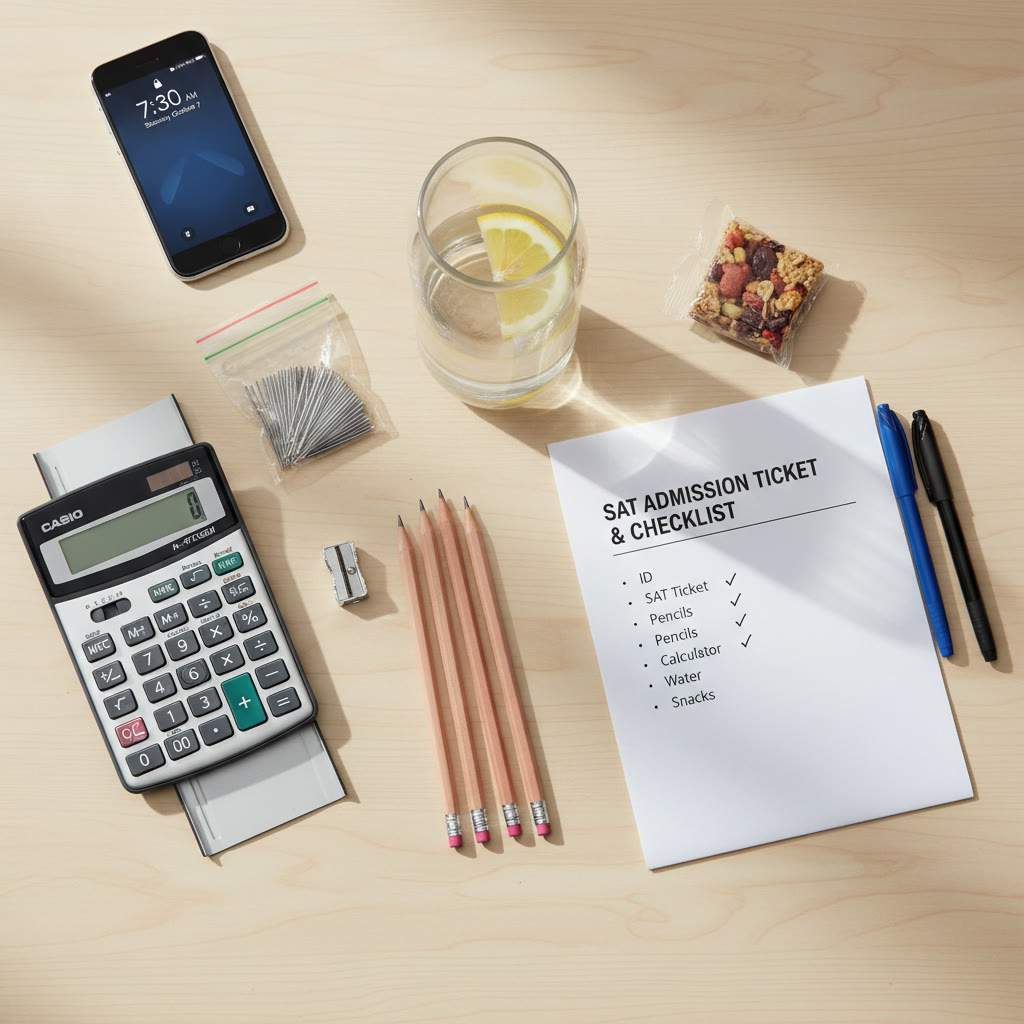
| 4 days out | Short review: vocabulary and formulas | One timed section, emphasis on pacing | Prepare test materials (admission ticket, calculator) |
| 3 days out | Easy practice: speed drills, 30–40 min | Mental rehearsal; practice wake-up time | Begin winding down; no intense studying |
| 2 days out | Light review of mistakes; final checklist | Rest, take a walk; short mixed set (optional) | Pack bag; plan snacks and clothing |
| 1 day out (Test eve) | Short, calm activity: 20–30 min review if needed | Avoid heavy studying; relax | Sleep early; visualizing success |
This structure balances practice with recovery. If you’re using a tutoring service like Sparkl’s personalized tutoring, a tutor can help customize this schedule to fit your strengths and offer AI-driven insights to highlight the most impactful drills—without increasing study volume unnecessarily.
Concrete tactics to replace over-studying
When you feel the urge to cram, try one of these high-impact, low-burn alternatives that protect your energy and sharpen performance.
Active review over passive rereading
Passive rereading of notes is the classic time-sink. Instead, do quick active tasks:
- Flash recall: Close your notes and write down formulas or rules from memory.
- Teach someone: Explain a tricky concept aloud to a friend or family member for 5–10 minutes.
- Error self-quizzing: Look at the question you missed, cover the solution, and try to solve it again in 90 seconds.
Micro-practice for timing
If timing is the problem, practice in micro-bursts: 20 minutes on 10–15 questions, aiming for consistent pacing. This improves speed without draining your energy for the day.
Simulate the test morning
Do a morning rehearsal: wake up at your test-day time, eat the breakfast you plan to eat, and go through what you’ll bring and how you’ll get there. Rehearsal lowers anxiety and reduces decision fatigue on the big day.
Mindful breaks and movement
Short walks, stretching, or breathing exercises reset your attention and speed cognitive recovery. A 10-minute brisk walk raises blood flow and improves concentration for the next study block.
What to do the day before and the day of the test
These are high-leverage moments. The wrong moves here undo weeks of good work; the right ones consolidate gains.
The day before: calm, prepared, confident
- Limit study to 20–40 minutes of gentle review in the morning or early afternoon if you must.
- Pack everything: admission ticket, ID, calculator with fresh batteries, pencils, snacks, and a light jacket.
- Plan travel time and backup options—know exactly how long it takes to get to the test center.
- Do a short relaxation routine before bed: breathing, stretching, or a favorite song.
Test morning: rituals that work
A routine anchors your mind. Keep it simple:
- Wake at the same time you practiced.
- Eat a breakfast with mix of carbs and protein (e.g., toast plus yogurt or a banana and peanut butter).
- Arrive early—about 30 minutes before check-in to avoid last-minute stress.
- Use a two-minute breathing exercise to calm your pulse and focus attention before the first section.
Common last-week pitfalls and how to avoid them
Below are mistakes students repeatedly make in the final stretch—and quick fixes you can implement today.
Pitfall: Trying to learn new topics
Fix: Replace with targeted review. If you’re tempted to learn a new grammar rule or math trick, ask yourself: will one hour learning this yield a measurable improvement? Usually not. Spend the hour reworking recent mistakes instead.
Pitfall: Marathon study sessions
Fix: Use Pomodoro-style blocks (45–60 min work, 10–15 min break). You’ll retain more with less time invested.
Pitfall: Bingeing too many practice tests
Fix: One full practice test early in the week is best. Each subsequent practice should be short and focused—sections or specific question types with careful review.
Pitfall: Comparing yourself to others
Fix: Comparison increases stress and reduces focus. Keep your energy on what you can control: sleep, nutrition, and targeted practice.
When to lean on a tutor (or not)
There’s a right way to use tutoring in the final week. Personalized guidance can be a force multiplier if used to refine strategy, not to introduce new material.
Good uses for tutoring the week before
- 1-on-1 sessions to review your latest full practice test and prioritize your remaining weak points.
- Tailored study plans that reduce busywork and give you high-impact drills.
- Timed section simulations and pacing tips with real-time feedback.
For example, Sparkl’s personalized tutoring can offer tailored study plans and AI-driven insights that spot persistent error patterns, helping you focus the final days on strategies that move the needle while preserving energy for test day.
When tutoring might be counterproductive
Avoid last-minute lesson dumps that introduce unfamiliar techniques. If your tutor wants to overhaul your approach two days before the test, pause and request a stabilization plan instead—practice what you know under timed conditions.
Quick checklist for the final 72 hours
Use this checklist to keep the endgame simple and effective.
- One full practice test completed by mid-week, with careful error review.
- Three targeted review sessions (45–60 min) on recurring error types.
- Clear test-day routine practiced at least once.
- Test materials packed and ready the night before.
- Consistent sleep schedule: 7–9 hours per night, especially the two nights before test day.
- Hydrating, balanced meals; avoid heavy, unfamiliar foods the day before and morning of the test.
- Short movement breaks and at least one calming activity each day (walk, music, breathing).
Real student example: Emily’s calm comeback
Emily had been studying for months and felt tempted to cram the final week. She ran the three quick checks on Monday and discovered her main issue was timing—her accuracy on practice sections was consistently strong, but she ran out of time. Her tutor proposed a lighter week focused on micro-practice and pacing rather than more content. Emily replaced late-night study sessions with morning 30-minute drills, practiced the test morning once, and got to bed early. On test day she felt surprisingly calm. The result: improved pacing and a score that matched her practice potential—without a single all-nighter the week before.
Final note: trust your preparation
The week before the SAT is about trust. Trust in the months of practice you’ve already put in, trust in the systems you built, and trust in the plan to show up well-rested and mentally ready. Over-studying tends to signal panic, not productivity. Replace panic with a short, deliberate schedule: focused review, one simulated test early in the week, rehearsal of routines, and plenty of sleep.
If you want support tailoring this plan to your exact profile, consider a few sessions of personalized coaching. Sparkl’s tutors combine 1-on-1 guidance, expert tutors, tailored study plans, and AI-driven insights to target your final-week needs—helping you polish without panic.
Wrap-up: breathe, focus, and keep it simple
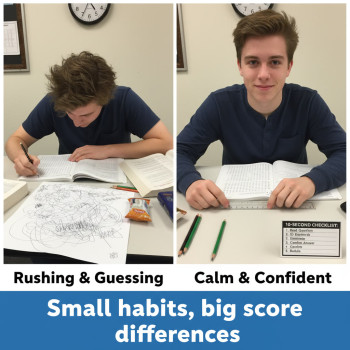
Show up to the SAT week with a gentle, structured plan. Cut the marathon sessions, focus on active review and timing, and invest in sleep and routine rehearsal. The test rewards clarity of thought more than last-minute cramming. When in doubt, do less—but do it better.
Good luck. You’ve prepared more than you think. Deep breath. Walk in calm, and let your preparation work for you.























No Comments
Leave a comment Cancel