

Why breaks aren’t a luxury — they’re part of your SAT strategy
If your SAT study plan reads like a strict boot camp—hours of nonstop practice tests, vocabulary drills, and math problem sets—you’re not alone. Many students assume the path to a higher score is simply more time spent with the test. But quantity without quality often leads to burnout, foggy thinking, and a plateau in progress. This is where smart, energy-boosting breaks come in: short, intentional pauses that restore focus, speed up learning, and make study hours actually more productive.
Think of studying like interval training. Sprinters don’t run full-speed for an hour without rest; they alternate effort and recovery. Your brain is no different. When you build micro-breaks and structured pauses into your Digital SAT prep, you’re giving your mind the chance to consolidate learning, recover attention, and show up fresher for the next round of reading passages or algebra problems.
How breaks help — the short version
- Restore attention and reduce mental fatigue.
- Improve memory consolidation — breaks help your brain store what you just practiced.
- Prevent decision fatigue during long practice tests and study sessions.
- Keep motivation high by adding variety and small wins throughout the day.
Match break type to the kind of cognitive work
Not all study sessions are the same. Reading dense passages and answering inference questions demand sustained verbal reasoning. Solving multi-step math problems uses working memory and logic. A single 10-minute break won’t refresh both systems equally. The trick is to match the break to the cognitive load you’re recovering from.
Quick guide: Which break when
- After intense verbal work (reading passages, sentence structure): Do a light physical activity or a breathing exercise to shift focus away from words and toward bodily regulation.
- After heavy math or problem-solving: Try a short puzzle of a different type (e.g., a visual or spatial puzzle), or walk outside to let working memory reset.
- After a full-length practice test: Take a longer recovery—30–60 minutes of low-stakes time (nap, meal, social time), plus a reflective review later.
Designing energy-boosting breaks: practical templates
Below are realistic templates you can plug into your weekly prep. These are adaptable to your schedule, whether you have long weekend blocks or 30–60 minutes between classes.
The 25/5 power session (for focused practice)
Based on the idea of short, concentrated work with a frequent reset. Great for focused passage practice and targeted skill work.
- Work: 25 minutes (e.g., 1 reading passage + questions, or targeted grammar drills)
- Break: 5 minutes (see energy-boosting break ideas below)
- Repeat 3–4 times, then take a longer 20–40 minute recovery break.
The 50/10 deep run (for practice tests or extended problem sets)
Use when doing longer practice sections or timed work. The longer work window supports getting into rhythm, while the longer break helps a true reset.
- Work: 50 minutes (e.g., full math section practice or two reading passages)
- Break: 10 minutes (walk, snack, quick mobility routine)
- Repeat once more or end with a 30–60 minute recovery if you finish a full practice test.
The micro-reset (for build-up during school days)
When you only have 10–20 minutes between classes, use micro-resets to keep energy steady.
- Work: 10–15 minutes (flashcards, targeted problem)
- Break: 3–5 minutes (neck rolls, hydration, step outside)
Energy-boosting break ideas that actually work
A good break does not mean getting lost in social media doomscrolling. It’s intentional and quick. Below are practical break recipes you can test and personalize.
1. Move to think: 5–10 minute mobility burst
Stand up and do a short sequence: 30 seconds marching in place, 10 bodyweight squats, shoulder rolls, and a two-minute walk outside if possible. Movement increases blood flow to the brain, enhances alertness, and releases stress chemicals that can be blocking concentration.
2. The power breath: 3–5 minutes
Set a timer and try a simple breathing pattern: 4 seconds inhale, 6 seconds exhale, repeat for 3–5 minutes. This calms an overactive mind, lowers anxiety before an intense section, and can sharpen focus when you return to study.
3. Quick cognitive shuffle: change the mental task
If you’ve been doing algebra, do a short visual puzzle or doodle for five minutes. Switching cognitive modes helps working memory reset. The trick is to choose something low-stakes that doesn’t feel like more studying.
4. Snack smart: 5–15 minute refuel
Choose a small snack that combines protein, complex carbs, and a little healthy fat: Greek yogurt with berries, a small handful of nuts and an apple, or whole-grain toast with peanut butter. Avoid sugary snacks that cause a quick crash.
5. Micro-review: 3–7 minutes of spaced recall
Instead of passively scrolling, close your eyes and try to recall what you just studied: three main ideas from the passage, key steps in a math solution, or five vocabulary definitions. Retrieval practice is one of the most effective learning techniques and can be done in minutes.
Sample weekly schedule: balancing practice with recovery
The table below gives you a sample weekly layout for a student who studies 10–12 hours per week for the Digital SAT. It spaces intense practice and active recovery so you stay consistent without burning out.
| Day | Focus | Session Structure | Break Strategy |
|---|---|---|---|
| Monday | Reading & Writing (timed passages) | 3×25-min practice + 5-min breaks; 1×50-min practice | Breathing breaks; mobility between sets |
| Tuesday | Math (algebra & problem solving) | 2×50-min problem sets; review 30 min | 10-min walk + protein snack |
| Wednesday | Light review & flashcards | 6×8–12-min micro-sessions throughout day | 3–5 min micro-resets (breath, step outside) |
| Thursday | Practice test simulation (half-length) | 90–120 min timed on Bluebook | 10-min structured break mid-test; 30–60 min recovery after |
| Friday | Weak-skill focus (targeted practice) | 3×25-min drills + error analysis 30 min | Micro-review + walk |
| Saturday | Full-length practice test | Timed test with scheduled breaks to mimic test day | Long recovery: meal, nap, and light activity |
| Sunday | Rest & reflective review | One-hour reflective review: errors and strategy | Social time, low-stakes hobby |
How to structure breaks during full-length Digital SAT practice
The digital SAT is shorter than the old paper test, and the Bluebook practice environment will automatically include scheduled breaks (and allow unscheduled ones for students with approved accommodations). When you simulate test day, mimic the test’s rhythm so your body and attention learn the pacing.
During a full practice test
- Schedule a 10–15 minute break roughly halfway through a long session (or follow the Bluebook timing for breaks if you’re taking the official practice test).
- Use this break to move, hydrate, and eat a small snack—avoid heavy meals that cause drowsiness.
- Keep your break automatic and predictable. Rituals (same snack, same walk route) help reduce decision fatigue.
Three quick rituals that supercharge a study break
Rituals make breaks more effective by turning them into predictable, repeatable resets. Try these three and pick one you’ll use consistently.
1. The Two-Minute Anchor
Stand up, take two deep breaths, and write down one sentence summarizing what you just learned. This anchors learning and signals a clean shift back to task mode.
2. The Movement Minute
One minute of brisk walking or stair climbing followed by 30 seconds of calf/hamstring stretch. Use a timer. Movement gives an immediate alertness boost.
3. The Sensory Reset
Close your eyes and notice five things you can hear, four things you can feel, three things you can see (after opening your eyes), two things you smell, and one good thing about your day. This mindfulness mini-ritual brings attention to the present and reduces test anxiety.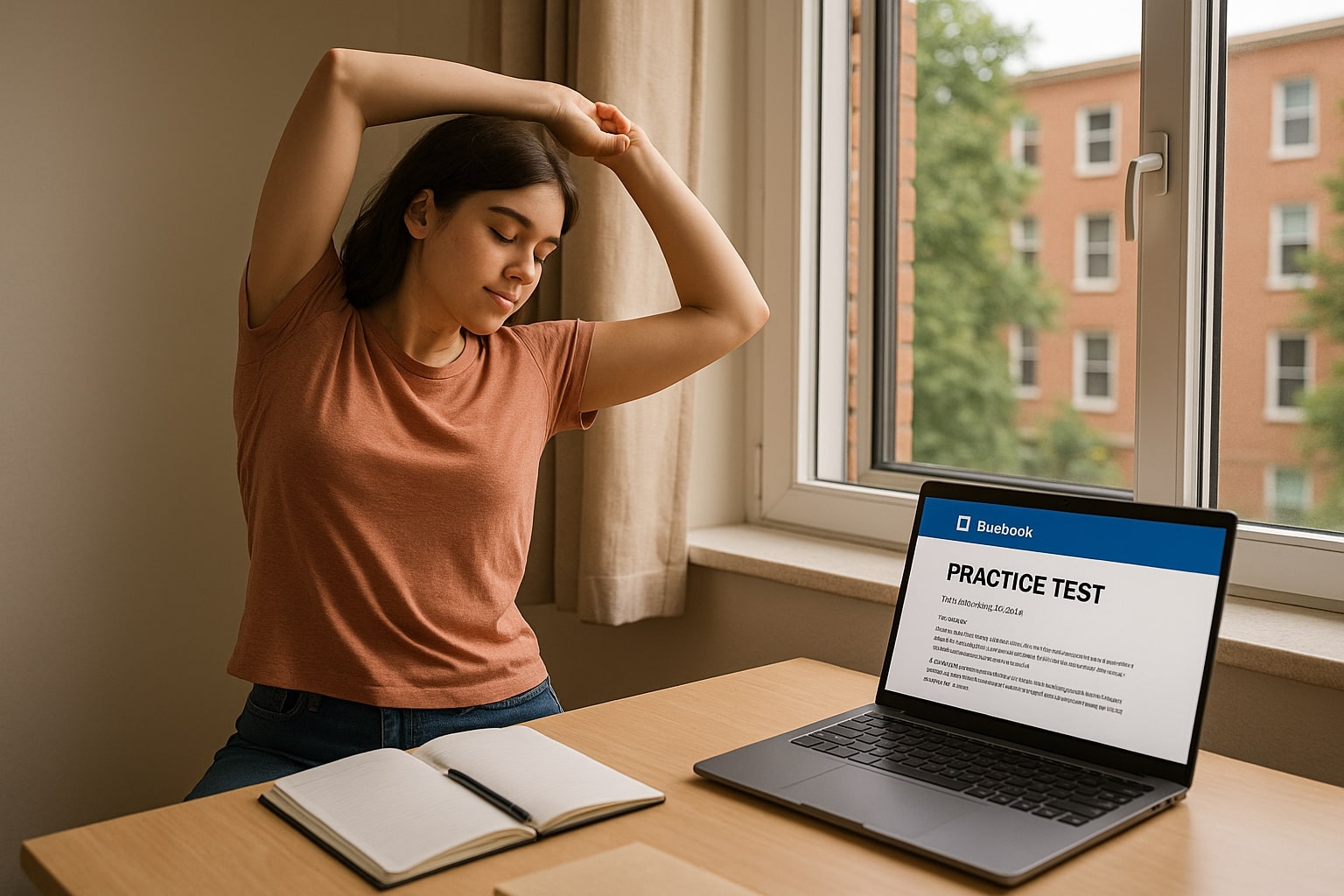
Snack, hydration, and sleep — the often-overlooked break essentials
Breaks aren’t only about a five-minute stretch. Nutrition and recovery are part of the same system. Without proper fuel and sleep, even the best break rituals have limited effect.
Hydration
Start your session with a bottle of water nearby and sip regularly. Mild dehydration reduces cognitive performance and attention. Keep a reusable bottle and refill during longer breaks.
Smart snacking
Go for snacks that sustain energy: mixed nuts, fruit with yogurt, small whole-grain sandwiches. Save high-sugar treats for rare rewards, not constant fuel.
Sleep as a strategic break
Sleeping is the most powerful recovery available. If you’re studying after school and feeling foggy, a 20–45 minute nap can restore alertness for an evening study block. If you’re chronically sleep-deprived, all the breaks in the world won’t be enough—prioritize 7–9 hours consistently when possible.
Using practice tools to reinforce break habits
Apps that support timing, focus, and analytics can help you build consistency. When you take official practice tests through Bluebook or other adaptive platforms, treat them as training runs for your break habits: follow the same pre-test routine, use the same snack, and schedule your recovery the same way.
If you’re working with a tutor or coach, mention your planned break strategy so they can structure sessions to match. For example, Sparkl’s personalized tutoring can integrate 1-on-1 guidance on pacing and tailored study plans that include built-in energy-boosting breaks — making sure your practice tests and review sessions build both skills and stamina.
When breaks need to be adjusted — personalization matters
Some students find breathing exercises super effective; others need brisk movement. Your schedule, sleep patterns, and stress levels will determine which break mix is best for you. Track how you feel after each break for a week and adjust. You might find that a 10-minute walk after heavy math clears your head more reliably than a breathing pause. That’s useful data.
Use a simple tracking chart
- Before break: Rate focus 1–5.
- After break: Rate focus 1–5 and jot one sentence about what helped.
- Adjust the type and length of breaks based on what gives the biggest focus lift per minute.
Putting it all together: A test-day blueprint
Test day introduces new stressors—logistics, unfamiliar spaces, and the knowledge that this is the real thing. Use your practice-day rituals as scaffolding for test day. Mimic the breakfast, snack, movement, and timing you trained with, and keep your break rituals simple and predictable.
Before the test
- Eat a balanced breakfast, hydrate, and arrive early to avoid last-minute stress.
- Do 5 minutes of light movement and one 2-minute breathing anchor.
During scheduled breaks
- Stand up and move for 60–120 seconds, have a small snack if you need it, then do a 60-second sensory reset before returning.
- Avoid heavy meals and prolonged social media use—those sap energy.
After the test
Give yourself a meaningful recovery: a meal with friends or family and at least an hour of low-key rest. Review your test later with fresh eyes rather than immediately dissecting every question in a stressed state.
How a tutor can help you nail break strategy (and why it matters)
Work with an experienced tutor who treats pacing and recovery as part of skill-building. Tutors can:
- Design practice sessions with realistic break timing.
- Recommend break rituals tailored to your energy patterns.
- Help you analyze what type of breaks lead to the biggest gains in attention and retention.
When tutoring is personalized—like the tailored study plans and AI-driven insights offered by Sparkl—breaks don’t become afterthoughts. They are integrated into a plan that tracks your performance and adjusts session pacing to the moments when you’re most receptive to learning.
Final checklist: make your breaks start working today
- Pick one break template (25/5 or 50/10) and use it for a full week.
- Choose two reliable break activities: one movement-based, one restorative (breath or nap).
- Create a pre-test ritual you’ll use before every practice test and on test day.
- Log focus before and after breaks for 7 days to see what actually helps.
- Consider a tutor or personalized plan if you hit a plateau—structured guidance can align your break strategy with skill-building and results.
Parting thought: breaks are practice too
People often treat breaks like an interruption to real work, but in high-quality SAT prep they’re part of the learning system. When you craft breaks intentionally—matching their length and content to the kind of thinking you just did—you’ll notice steadier focus, fewer frustrating plateaus, and more confidence walking into test day.
If you’d like help designing a break-integrated plan personalized to your strengths and schedule, consider combining targeted practice with 1-on-1 guidance. Sparkl’s personalized tutoring model can help translate these break ideas into a plan that fits your life, tracks progress, and gives you the accountability that makes good habits stick.
Ready to try it?
Start small: pick one session length, one break ritual, and track one week. The compound effect of consistent, energy-boosting breaks will surprise you—your brain learns faster, focuses longer, and shows up calmer on test day. That’s the quiet advantage that turns practice into performance.






















No Comments
Leave a comment Cancel