
Why SAT stress feels like a bully in your backpack
You know the scene: a practice test wiped you out on Saturday, and by Monday you’re late on a history project, your chemistry quiz scores slip, and you can’t focus in Spanish. SAT prep is intense by design — it’s a high-stakes, concentrated kind of studying — and when it becomes all-consuming, the rest of your school life feels the squeeze. But the good news is this: SAT prep doesn’t have to derange the rest of your academic life. With a few smart habits, some honest scheduling, and stress-management tools, you can prepare for the SAT without sacrificing your other classes.
What actually causes the spillover?
- Mental bandwidth: Big tasks drain cognitive resources. If your brain is exhausted from one subject, it has less energy to devote to others.
- Time displacement: Long SAT sessions steal hours you would otherwise spend on homework or review.
- Emotional carryover: Anxiety from test prep can lower motivation and make procrastination worse in unrelated classes.
- Poor recovery: Skipping sleep or breaks to cram for the SAT undermines learning and memory across the board.
Recognize the signs early
Physical, academic, and behavioral red flags
Before SAT stress becomes a full-on avalanche, there are usually small warning signs you can catch and address:
- Declining grades in subjects where you usually do fine.
- Increased forgetfulness about deadlines or details.
- Difficulty concentrating in class or during homework blocks.
- Frequent late nights followed by daytime drowsiness.
- A drop in motivation for activities you previously enjoyed.
When you spot these, it’s a cue to reassess your approach rather than push harder. Working more does not always equal studying better.
Practical routines that protect your other subjects
Time-blocking: the simplest armor against chaos
Time-blocking means assigning specific chunks of time to particular tasks and treating them like appointments. It’s not rigid punishment; it’s a promise to yourself so you don’t let SAT prep monopolize everything.
Here’s a compact way to think about blocks:
- Deep work (focused, 50–90 minutes): SAT practice tests, essays, challenging problem sets.
- Maintenance (20–40 minutes): reviewing class notes, flashcards, homework tasks.
- Recovery (10–30 minutes): breaks, movement, or a quick nap to reset focus.
Sample weekly schedule — balanced approach
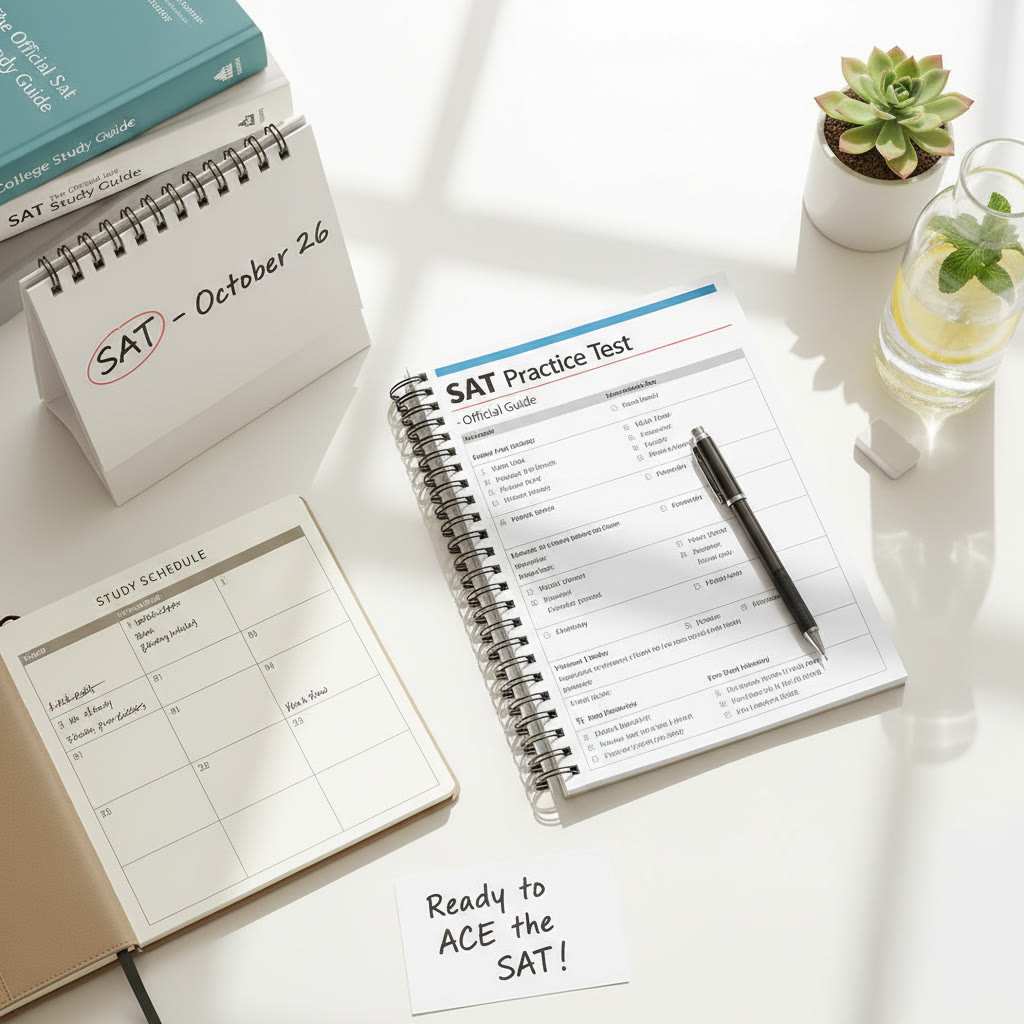
The table below shows a blend of SAT work and class maintenance across a week. It’s a template: tune it to your school day and extracurriculars.
| Day | SAT Focus | Other Subjects | Recovery/Extras |
|---|---|---|---|
| Monday | 60 min practice (sat math) | 45 min homework review (history + chemistry) | 30 min walk or light exercise |
| Tuesday | 45 min reading practice | 60 min lab write-up/homework | 20 min chill break |
| Wednesday | Full practice section (90 min) | 30 min review for biology quiz | Sleep-focused night (aim 8–9 hours) |
| Thursday | 30 min targeted grammar drills | 60 min math problem set | 30 min hobby time |
| Friday | 60 min mixed practice | Homework catch-up (as needed) | Social time / unwind |
| Saturday | Full practice test (4 hours including breaks) | Light review only | Longer recovery: exercise, family time |
| Sunday | Review errors from practice test (90 min) | Prep assignments for week (60 min) | Flexible: plan or rest |
Why the table helps
Seeing an explicit plan removes decision fatigue and protects time for other subjects. If you’re tempted to extend an SAT block, the schedule gives you a simple rule: finish the block, then move to a code-specified non-SAT task.
Study techniques that protect both SAT prep and coursework
Micro-study and distributed practice
Instead of long, aimless sessions, sprinkle short (15–30 minute) focused bursts throughout the day. Distributed practice strengthens memory and leaves more time for class assignments.
- Flashcard bursts after school: 15 minutes on vocabulary or formulas.
- Waiting-room reviews: use idle moments to quiz yourself.
- “Two-for-one” sessions: 20 minutes of reading comprehension that doubles as English class prep.
Active recall beats passive review
When you test yourself — instead of just re-reading notes — you build durable understanding. For example, after a math concept session, close your notes and solve two problems that require that idea. For history, write a 3-sentence summary from memory of a key cause or effect.
Use subject overlap to your advantage
Some SAT skills directly reinforce classroom learning. Recognize and capitalize on these overlaps:
- Reading comprehension practice improves performance in English, history, and social studies.
- Problem-solving speed on SAT math sharpens algebra and pre-calc fluency.
- Essay planning (if you’re practicing essay skills) can boost writing for school assignments.
Intentionally choosing SAT practice with crossover benefits means less overall time spent, because one activity helps multiple goals.
Practice tests: quality over quantity
How to make practice tests useful — not destructive
Full-length practice tests are powerful, but they can be draining and demoralizing if you don’t extract lessons from them. Treat each test as a diagnostic tool and a training opportunity:
- Simulate test conditions for one timed practice test per 1–2 weeks, not every day.
- Spend as much time reviewing mistakes as you spent taking the test. Identify patterns — types of questions, timing issues, or careless errors.
- Create targeted micro-lessons after tests: if algebra questions are your weak spot, schedule three 30-minute targeted drills that week.
One well-reviewed practice test is worth several unfocused attempts.
When to ask for help (and how to do it well)
Make help a strategic tool, not a last resort
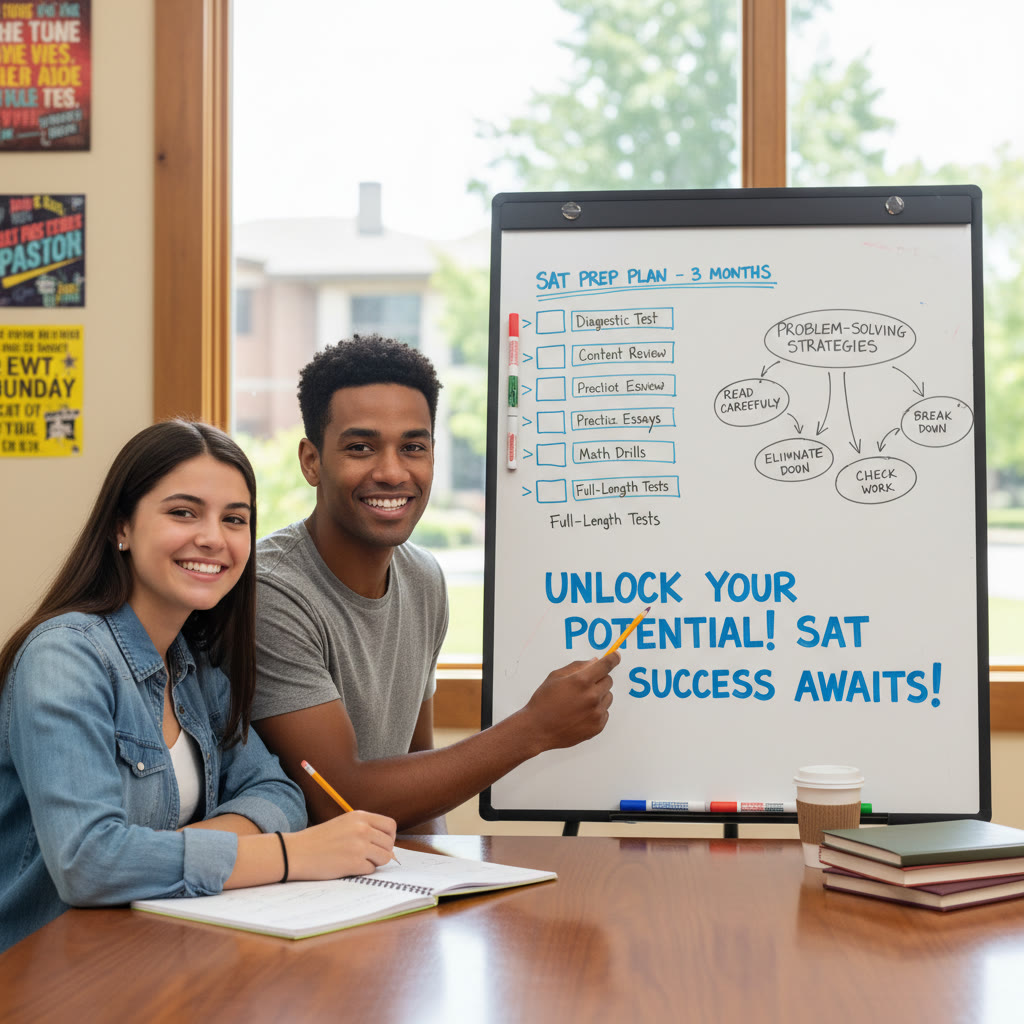
Reaching out for guidance can actually protect your grades in other classes. Quality help shortens the learning curve and reduces wasted time. For many students, a combination of school teachers and outside support is ideal.
If you’re considering tutoring, look for options that offer tailored, efficient support. For example, Sparkl’s personalized tutoring can fit naturally into this model — providing 1-on-1 guidance, tailored study plans, expert tutors, and AI-driven insights that identify exactly where to focus so your SAT work helps instead of hinders your other subjects. Imagine fixing a recurring weak point in 30–60 minutes a week rather than guessing for months.
How to make tutoring sessions efficient
- Bring a short list of one or two target problems or question types you struggled with that week.
- Ask the tutor to model how to break down a problem and to give you an explicit practice assignment to do afterward.
- Request techniques that transfer to schoolwork — e.g., annotation habits for close reading or step-by-step approaches for multi-step algebra.
Protecting your mental and physical energy
Sleep, movement, and nutrition are not optional
When life gets busy, the first thing many students cut is sleep. That’s counterproductive: sleep consolidates learning. Aim for consistent sleep windows. Even short naps (20–30 minutes) can boost focus during intense study weeks.
- Move for 10 minutes every hour of intense work — brisk walk, jumping jacks, or stretching.
- Prioritize protein and slow carbs before study sessions so your energy doesn’t spike and crash.
- Hydrate. Thirst degrades cognitive performance more than people realize.
Micro-recovery techniques
Short, intentional breaks reduce the accumulation of stress. Try a 5–10 minute ritual after each study block: deep breathing, a walk, or a quick call to a friend. Use these to reset and avoid letting frustration bleed into your next subject.
Mindset practices: how to think about competing priorities
From scarcity to strategy
It’s easy to believe you must choose: maximize SAT prep and risk other classes, or keep grades safe and underprepare for the SAT. A more helpful mindset is strategic prioritization: temporary, intentional focus shifts based on calendar and goals.
- During a midterm in a core subject, temporarily reduce SAT volume and maintain rather than intensify speedwork.
- Before an SAT test date, taper school work only if it’s an intense, high-yield revision — otherwise keep routines steady.
- Set non-negotiable “maintenance” time for each subject so nothing falls completely behind.
Reframe mistakes as data
Every frustrating practice test or missed homework is feedback. Turn negative emotions into a short action plan: what pattern does this reveal, what will you try differently this week, how will you measure progress?
Communicating with teachers, parents, and coaches
Be proactive and specific
Let teachers know you’re juggling SAT prep and ask for advice about prioritizing assignments. Teachers are often willing to point you toward high-impact tasks or occasional flexibility if you’re transparent and responsible.
- Example script to a teacher: “I’m planning a full practice SAT this weekend. Could you recommend the most important assignment to focus on so I don’t fall behind in your class?”
- To parents: share your schedule and explain how certain study choices are short-term — this builds trust and support.
When SAT intensity should be dialed up or down
Signals to increase focus
- Target test date is within 8–10 weeks and you need measurable score gains.
- Grades in other subjects are stable and you can maintain them with planned maintenance blocks.
- You have a support system (teacher, tutor, family) to help steer you through the crunch.
Signals to scale back
- Grades in core classes start dropping consistently.
- You’re chronically exhausted, anxious, or skipping essential responsibilities.
- Practice tests repeatedly show the same type of careless error that likely comes from fatigue, not knowledge gaps.
If you need to scale back, do so methodically: cut SAT hours by 25–50% for one week, maintain a short daily micro-practice, and reallocate time to critical school tasks. Reassess after the week.
Real-world examples: students who found balance
Case 1 — Maya: balancing AP Chemistry with SAT prep
Maya was spending five hours daily on SAT prep and falling asleep during chemistry lectures. She switched to a schedule with two 45-minute SAT blocks and a nightly 30-minute chemistry review. She used focused active recall for both subjects and met with a tutor for one targeted session per week to troubleshoot persistent SAT errors. Her SAT practice quality improved and her chemistry grade recovered.
Case 2 — Jamal: athlete, student, and SAT test-taker
Jamal plays varsity soccer and needed to protect both practice time and academics. He replaced weekend marathon SAT practice with a single full test every two weeks and short daily micro-practice sessions. His coach supported the plan and his teachers appreciated the transparency. Jamal maintained his athletic performance and raised his SAT score steadily.
Quick checklists: immediate actions you can take tonight
If you’re feeling overwhelmed right now
- Write down the three most important academic tasks for the next 48 hours.
- Schedule one 60–90 minute SAT block three days from now and stick to it (no multitasking).
- Sleep early tonight and set an alarm for a 10-minute walk tomorrow afternoon.
- If you haven’t already, try one tutoring session focused on a single weak area rather than a general review — focused help often shortens the problem.
Final thoughts: studying for life, not just a test
Preparing well for the SAT is practical and admirable, but it shouldn’t be at the cost of your broader learning and well-being. Think of SAT prep not as a siege but as a set of deliberate, measurable experiments. Use time-blocking to protect your classes, choose practice that transfers across subjects, and treat sleep and recovery as essential equipment, not optional luxuries.
And when you need the extra nudge, targeted help can be a game changer. Sparkl’s personalized tutoring (with 1-on-1 guidance, tailored study plans, expert tutors, and AI-driven insights) is one tool among many that can direct your energy to the right problems so your SAT work helps your overall academic journey.
Keep breathing, keep reflecting, and keep the rest of your education in the picture. With a few shifts in scheduling and mindset, you can build SAT momentum without losing ground elsewhere — and you’ll be better prepared for both the test and life beyond it.
Want a quick worksheet to get started?
Tonight, write a three-day plan that includes: one SAT block, two subject-maintenance windows, and a recovery ritual. Try it for a week. If you tweak it with steady feedback, you’ll be surprised how much calmer and more effective your prep becomes.





















No Comments
Leave a comment Cancel