

Why holidays are a make-or-break moment in SAT prep
Holidays feel like a breathing space: family dinners, travel, movies, naps, and—if you’re honest—plenty of tempting ways to let a study streak fizzle. Yet this same time, when other responsibilities shrink, can be one of the most productive windows in your SAT journey. The difference between coasting through a break and sprinting forward often comes down to one thing: momentum. Keep it, and you return to school stronger. Lose it, and getting back into the groove is a struggle.
Shift your mindset from “vacation” to “strategic recharge”
Think of holiday prep not as endless hours of flashcards but as a strategic recharge—a chance to cement concepts, fix weak spots, and rebuild confidence. Treating breaks as planned training blocks (with rest built in) reduces guilt, improves focus, and makes studying enjoyable again. It’s about small, smart habits that add up.
Set simple, non-negotiable goals
Ambition is great—ambition without a structure is where motivation goes to die. Replace vague goals like “study more” with specific, measurable, time-bound objectives. Specific goals act like decision-free autopilot; when you know exactly what you’ll do each session, it’s easier to show up.
- Example SMART goal: “Complete two timed 25-question Math sections on Tuesday and review errors the next day.”
- Mini-goal: “Practice 20 vocabulary items with spaced repetition twice this week.”
- Daily non-negotiable: “15 minutes of active review (flashcards or problem review) before dinner.”
Why tiny goals beat grand plans
Small, consistent actions guard against perfection paralysis. A single 30-minute focused session can be more effective than a four-hour, distracted marathon. During holidays, energy can be unpredictable—short, high-quality blocks preserve momentum while keeping you fresh for social events and travel.
Create a holiday rhythm (with flexibility baked in)
Rigid timetables fail in the face of holiday chaos. Instead, create a rhythm: a repeatable pattern you can adapt to different days. Rhythm gives structure without the anxiety of a strict schedule.
Sample daily rhythm
- Morning (optional): 30–60 minutes of a high-focus activity (timed practice or review of a weak topic).
- Afternoon: light active recall—flashcards, short grammar drills, or vocabulary practice.
- Evening: 30–45 minutes of review—go over mistakes made earlier or do a short passage-based practice.
Keep the longest, most intense sessions when you’re naturally sharp (for many students, that’s the morning). Use afternoons for low-stakes review that keeps skills warm without draining energy.
Use quality over quantity: focused techniques that preserve momentum
During holidays, you likely have broken blocks of time. Use evidence-based techniques that maximize retention and engagement.
- Active recall: Instead of re-reading notes, try to reproduce concepts or solve problems from memory. Write out steps for a math concept, summarize a reading technique aloud, or explain a grammar rule to a friend or yourself.
- Spaced repetition: Revisit flashcards and problem types at increasing intervals. Holidays are perfect to review material you first learned weeks ago—this cements long-term memory.
- Interleaving: Mix problem types within a session. Doing a variety of question types trains your brain to choose strategies rather than rely on pattern recognition of repetitive practice.
- Timed practice: Keep timed sections realistic. Even short, timed practice (25–30 questions) helps maintain pacing and reduces test anxiety.
Design a realistic holiday plan: sample two-week schedule
Below is a sample two-week holiday plan that balances practice, review, rest, and social life. Feel free to shrink or expand each slot based on your availability—what matters most is consistency.
| Day | Morning (focus) | Afternoon (light) | Evening (review/rest) |
|---|---|---|---|
| Day 1 | Timed Math section (25 q) + error log | 15 min vocab flashcards | Review errors and make 3 targeted practice sets |
| Day 2 | Reading passage set (timed) + annotation practice | Grammar drills (15–20 min) | Light review or family time |
| Day 3 | Targeted weak-topic drills (e.g., trig/algebra) | Active recall: write steps for two problem types | Leisure and sleep—no study |
| Day 4 | Full (or half) practice test depending on energy | Walk + flashcards (passive) | Review test mistakes |
| Day 5 | Essay practice or Writing questions | Vocabulary review | Family activity or light reading |
| Day 6 | Concept review session (one weak area) | Short practice set | Plan next week’s focus |
| Day 7 | Rest day—no SATs | Rest and hobbies | Reflective journaling: wins & adjustments |
The second week repeats this pattern with small adjustments—shift the focus to different weak spots and increase the intensity slightly if energy and motivation are good.
Practical tactics for holiday-specific challenges
When travel interrupts your routine
Travel often means limited quiet time and unreliable internet. Pack portable practice: a set of paper practice questions, a printed error log, or an offline vocabulary deck on your phone. Use transit time for mental practice—translate a paragraph into an outline, calculate a problem mentally, or quiz yourself using flashcards.
When family obligations consume your days
Communicate a short, polite schedule: “I’ll be free for dinner, but I need 45 minutes after breakfast for studying.” People usually respect clear boundaries. If you can’t get a solid chunk, do two 20-minute focused sprints instead of one long session.
When holiday emotions drain motivation
Holidays can stir up emotions—excitement, loneliness, stress. Accept that energy will ebb and flow. Use low-energy strategies like review, flashcards, or watching explanations, rather than forcing heavy new learning. Mental health is part of test prep—rest and social connection recharge your ability to study well later.
Track progress without obsessive measuring
Progress checks are essential—but beware of metric anxiety. Track the right things and keep logs lightweight and actionable.
- Keep an error log: brief notes on mistakes (type, cause, solution). Revisit this weekly.
- Record one performance metric per week: a timed section score or accuracy percentage on a single question type.
- Note a qualitative metric: confidence level for each section (1–5). This helps identify psychological barriers.
These simple metrics inform what to prioritize next without turning every day into an exam.
Use targeted resources, not every resource
Holidays tempt you to binge every book and app. Instead, pick a compact toolbox: a reliable practice test source, a question bank for targeted drills, a flashcard system, and one method for reviewing mistakes. A focused, consistent toolkit beats scattered exposure.
How a tutor or personalized support can help during holidays
Holiday periods are perfect for targeted, high-impact tutoring sessions. Sparkl’s personalized tutoring is helpful here because a tutor can quickly identify your most urgent gaps, create a short, tailored plan, and keep you accountable with a clear sequence of drills. Benefits include 1-on-1 guidance, tailored study plans, and expert feedback that accelerates improvement without wasting precious holiday hours. When time is limited, that personalization is gold.
Practice test strategy: when to take one during a break
A practice test is the clearest signal of progress—but timing matters. If you haven’t taken a full test recently, schedule one mid-break to diagnose weak areas and again near the end to measure gains. Keep these guidelines in mind:
- Don’t do a full test the day after travel—fatigue skews results.
- Treat practice tests as experiments, not final judgments.
- After each test, spend at least twice the test time reviewing mistakes—this is where learning happens.
Make review sessions meaningful: the 3-step error review
When you finish a practice set, avoid the instinct to glance at the right answer and move on. Use this 3-step method:
- Identify: What kind of error was it? Concept, careless mistake, timing, or misreading?
- Correct: Write a concise explanation of the correct approach in your own words.
- Practice: Do two or three similar problems immediately to reinforce the correct method.
That final practice step converts feedback into skill. Over holidays, this approach is especially effective because repetition spaced over days solidifies learning.
Fuel, sleep, and sanity: non-academic inputs that keep momentum
It’s tempting to sacrifice sleep for extra study, but sleep is where memories consolidate. Prioritize consistent sleep, good meals, and short movement breaks—walking or stretching enhances focus and memory retention.
- Target 7–9 hours of sleep—especially before practice tests.
- Hydrate and eat protein-rich meals to stabilize energy.
- Take short physical breaks during sessions—5–10 minutes to stand, breathe, or move.
Keep motivation alive with small rewards and social accountability
Momentum thrives on visible progress and celebration. Build in micro-rewards—an episode of your favorite show after a tough review, a dessert after completing a full practice test, or a call with a friend after a successful week. Share your goals with someone who will check in—an accountability buddy, a parent, or a Sparkl tutor who can keep plans realistic and celebrate wins.
How to end the holiday on a high note
Finish the break by reviewing your error log, noting three wins, and setting two clear targets for the next week back at school. This transition plan makes the return less jarring and preserves momentum.
- Pack a 30-minute warm-up routine to use the morning you return to classes.
- Schedule one short review session for the weekend after the holiday.
- Keep one accountability check scheduled (with a tutor or friend) to ensure follow-through.
One-week mini-plan for the last week before a test day
If your holiday ends with a test day soon afterward, taper practice and prioritize review and rest. Here’s a pragmatic mini-plan:
| Day | Focus |
|---|---|
| 7 days out | Light full practice test to check pacing; review errors briefly |
| 5 days out | Targeted practice on weakest area; 45–60 minutes max |
| 3 days out | Mixed review: formulas, grammar rules, reading strategies; short practice |
| 1–2 days out | Very light review, logistics planning (sleep, test location, materials) |
| Test day | Brief warm-up: 15 minutes of easy practice; focus on calm breathing and pacing |
When to bring in outside help
If momentum stalls despite your best efforts, outside help can be a game-changer. A targeted tutoring session can diagnose stubborn weaknesses in one hour that you might wrestle with for days. Sparkl’s approach—combining 1-on-1 guidance, tailored study plans, expert tutors, and AI-driven insights—helps prioritize what will move your score most efficiently, especially during limited holiday time. A few strategic sessions can boost confidence and create a clear roadmap for the next phase of prep.
Final thoughts: enjoy the process
Holidays are about balance. You can keep momentum without turning every moment into study. Use breaks as a chance to practice smarter, not harder—prioritize focused sessions, track a few meaningful metrics, sleep, enjoy time with family and friends, and let small wins build confidence. With a plan that respects your life and study goals, you’ll return from the break not just rested, but ahead.

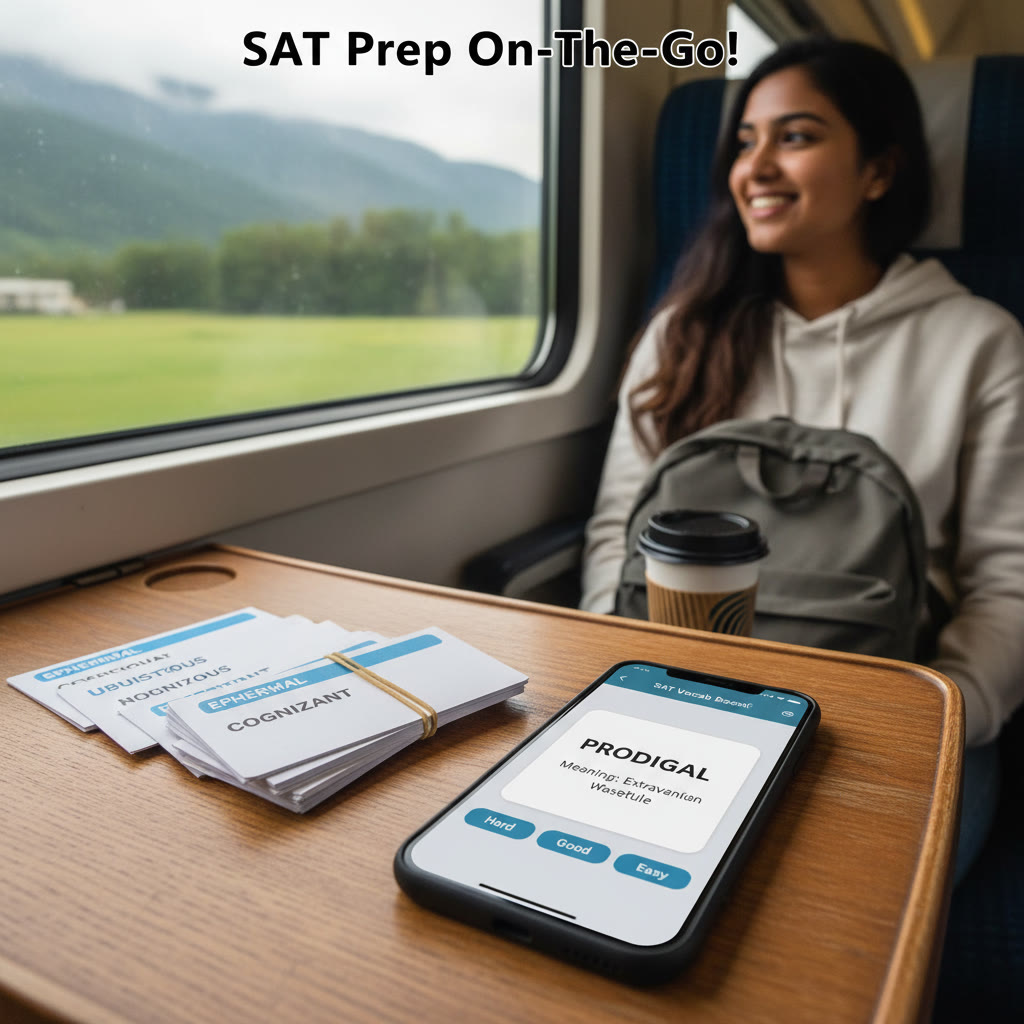
Remember: momentum is not constant speed; it’s a series of consistent, intentional choices. Keep them small, keep them regular, and when you need a push, consider a targeted session with a Sparkl tutor to make your holiday hours count. Happy studying—and enjoy the holidays.






















No Comments
Leave a comment Cancel