
How to Study for the SAT When Your Season Is Full-On
Balancing two big goals—winning on the field and scoring well on the SAT—feels like trying to juggle while sprinting. The good news: you can do both without burning out. Student-athletes have an advantage: discipline, routine, and a coachable mindset. In this post I’ll walk you through a practical, human approach to studying for the SAT during a busy sports season. Expect real-world schedules, examples you can actually use, and tips that respect early morning practices, travel, and the fatigue that follows a hard workout.
Start with the right mindset: small wins add up
First, be gentle with yourself. You’re not trying to cram six months of study into a week; you’re aiming for consistent improvement. Think of SAT study like conditioning for your sport. You don’t run one long hill and call it a season—you do repeated, focused sessions that build endurance and skill.
Frame studying as part of your team routine. If sports practice is non-negotiable, the SAT study time becomes another kind of practice: shorter, deliberate, and targeted. That shift in perspective makes scheduling easier and reduces the mental friction of “finding time.”
Audit your current weekly schedule
Before you design a study plan, map your week. Include everything—practices, games, lifting, classes, commuting, meals, sleep, and study. You’ll likely find predictable pockets of 20–45 minutes that, when combined, form powerful study time.
- Identify fixed commitments: practice times, games, team meetings.
- Find predictable small pockets: 20 minutes between study hall and practice, the hour after practice before dinner, travel time on buses.
- Mark high-energy windows: morning vs. evening—use your best times for harder work like math problems.
Sample weekly audit
Here’s an example for a typical high-school varsity athlete. Use it to compare and adapt.
| Day | Practice/Commitments | Available Study Windows | Recommended Focus |
|---|---|---|---|
| Monday | After-school practice 4–6pm | 6:30–7:15pm; 30 min before practice | 30-min focused math drill; quick vocab review |
| Tuesday | Lift 3–4pm; film review 4:30–5:30pm | 7–8pm; bus ride (20–45 min) | Reading passage practice; review incorrect answers |
| Wednesday | Practice 4–6pm; team meeting | Morning 6:30–7am; 8–9pm | Timed section practice (short), quick error log update |
| Thursday | Practice 4–6pm; travel day | Travel time 1–2 hours | Passive review: vocabulary flashcards, mental math |
| Friday | Light practice; game prep | 7–8pm; halftime downtime | Relaxed light practice; confidence-building review |
| Saturday | Game day (varies) | Pre-game morning, bus rides | Short warm-up: 20–30 min practice test questions |
| Sunday | Recovery day; homework | 2–4pm (larger block) | Full-length or extended practice; plan week ahead |
Designing study blocks that fit a sports schedule
If you have only 20–45 minutes daily during the season, structure matters more than quantity. Build three types of sessions that rotate through the week:
- Micro sessions (15–30 minutes): Great for vocabulary, math drill sets, grammar rules, or one reading passage. High frequency, low fatigue.
- Focused sessions (45–75 minutes): Use these after easy practices or on lighter days. Do section-aligned practice—one full math section or two reading passages with review.
- Recovery sessions (20–40 minutes, low intensity): Passive review like flashcards, reviewing error logs, or mental strategies that don’t require heavy cognitive load.
How to prioritize study targets during the season
With limited time, prioritize based on impact:
- Fix consistent errors first (e.g., careless arithmetic sign errors).
- Target high-frequency question types (algebra, function interpretation, main idea questions).
- Practice timing for sections you find slow; beat the clock in short drills.
Example: if you consistently miss grid-in algebra problems, swap one micro session into focused algebra practice each week. Small, repeated corrections compound into score improvements.
Concrete weekly plan example
This plan assumes you have practice most afternoons and one larger weekend block. Modify durations to match your energy and commitments.
- Monday: 25 min math drill (targeted algebra), 10 min review of mistakes.
- Tuesday: 30 min reading passage + 10 min annotation review on the bus.
- Wednesday: 40 min focused writing & language practice (grammar rules).
- Thursday: 20 min flashcards and error-log update during travel.
- Friday: 20–30 min relaxation review—favorite strategies and confidence reminders.
- Saturday (if no game): 60–90 min full section (math or reading) with timed conditions.
- Sunday: 90–120 min larger block—practice test section + thorough review and plan adjustments for next week.
Use the 2:1 review rule
For every minute you spend answering a question, spend roughly two minutes reviewing the answer, especially on incorrect or uncertain items. That review time is where learning sticks. When your week is tight, this rule helps you get maximum value from fewer practice questions.
Practice tests: timing and frequency
You don’t need to take full-length practice tests every week during the season. Too many full tests will sap your energy and can interfere with recovery. Instead:
- Early prep months: take a full practice test every 2–3 weeks to build stamina.
- In-season: switch to sectional practice under timed conditions once per week and one full-length test on a light weekend every 4–6 weeks.
- Close to the test (2–4 weeks out): increase full-length tests to every 1–2 weeks if you can recover physically and mentally.
Use sectional tests on travel days or right before practice to simulate pressure. The goal is to measure progress without compromising your athletic performance.
Travel and game-day strategies
Long bus rides and hotel downtime are study gold. Keep materials portable and low-friction:
- Prepare a travel study kit: laminated formula sheet, flashcards, one printed reading passage, and error log notes.
- Use audio for passive review—listen to vocabulary or grammar rule summaries during warmups or bus rides.
- On game days, keep study light and confidence-focused: review one easy section or look through notes that highlight progress.

Example: bus-ride 40-minute routine
- 0–10 min: Vocabulary flashcards (active recall).
- 10–25 min: One reading passage, annotate, answer questions.
- 25–40 min: Quick error log review; write down one strategy to use in the next practice test.
Nutrition, sleep, and recovery matter for learning
When you’re drying out and sprinting, your brain needs the same fuel and rest it does for practice. Good sleep, hydration, and protein-rich meals accelerate memory consolidation. For busy athletes, the SAT will respond to those same essentials.
- Priority 1—Sleep: aim for 8–9 hours on regular nights, and build naps into heavy days if possible. Sleep is when the brain stores what you’ve learned.
- Priority 2—Hydration and nutrition: balanced meals with lean protein, complex carbs, and healthy fats before study blocks help sustain focus.
- Priority 3—Active recovery: short light movement or stretching after a study block can reset blood flow and attention.
Efficient practice: what to study in limited time
With only 20–45 minutes most days, pick practice types that yield high return:
- Targeted problem sets: 6–10 math questions focused on one concept (e.g., ratios or systems of equations).
- Timed reading passages: one passage, complete with annotation and quick review.
- Grammar mini-sessions: 10–15 sentence corrections focusing on one rule (verb tense, subject-verb agreement).
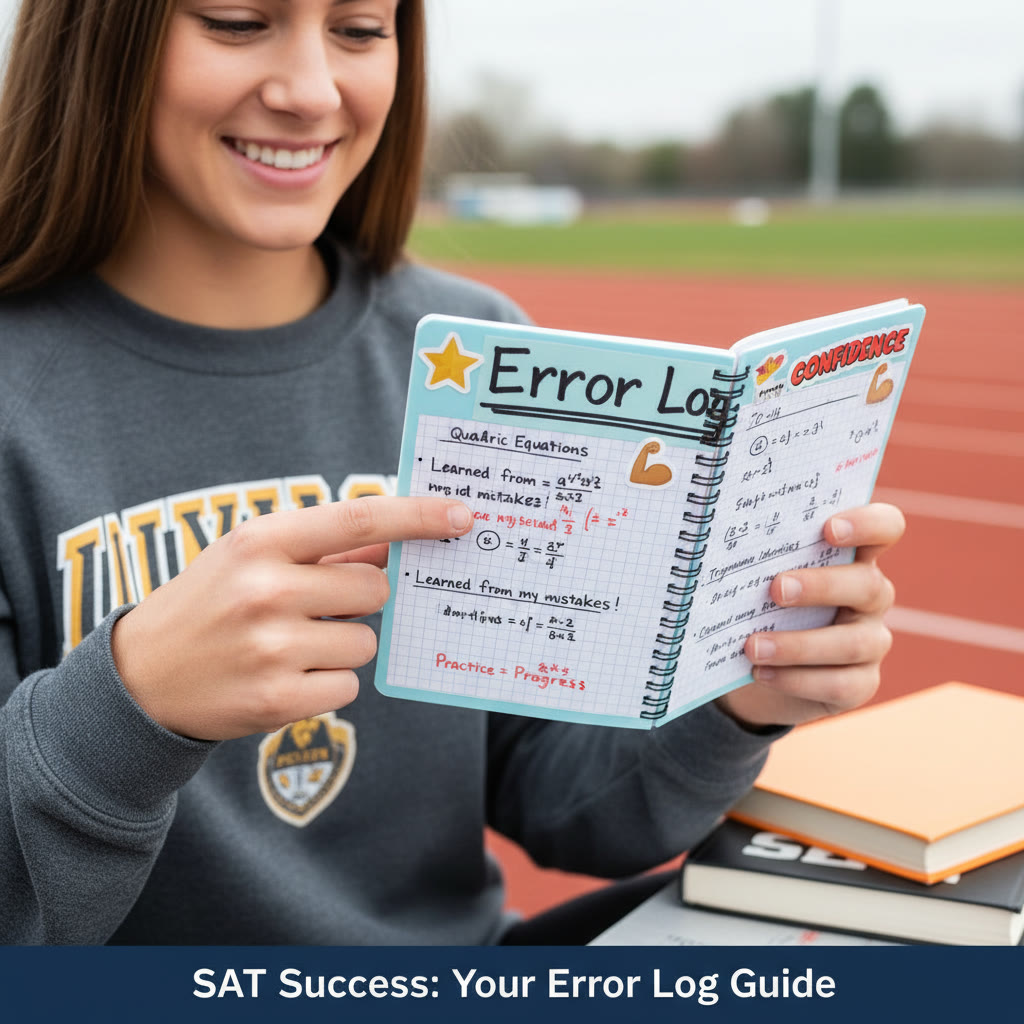
- Error logs: keep a small notebook or app where you record the mistake, why it happened, and a one-sentence fix.
The importance of active review
Active recall beats passive re-reading every time. Test yourself, explain an answer aloud, teach a teammate a trick for reading passages—these are powerful because they require retrieval, which strengthens memory.
Adjusting intensity during playoffs
Playoffs amplify the schedule pressure. Here’s a practical approach:
- Shorten study sessions to micro-sessions focused on strategy and low-cognitive loads—flashcards, mental math, tactical reading strategies.
- Shift any intensive review to off-days between playoff rounds or after a bye week.
- Maintain one weekly check-in: a 30–60 minute session to keep momentum without overcommitting.
Remember: short-term acceptance of lower study volume is okay if it preserves performance on the field. A confident athlete who is rested will likely perform better on the SAT than one who sacrifices sleep to cram.
When and how to get extra help
If you’re juggling practice, travel, and class, targeted support speeds progress. That’s where personalized tutoring comes in. For many student-athletes, working with a coach who understands both the SAT and athletic schedules removes the guesswork. If you want a boost, Sparkl’s personalized tutoring and benefits — 1-on-1 guidance, tailored study plans, expert tutors, and AI-driven insights — can fit into a busy athletic schedule. Their approach can help you target weaknesses, structure efficient sessions, and monitor progress without adding stress.
When to seek help:
- If your practice-test scores plateau despite steady effort.
- If you consistently run out of time on a section.
- If travel and practice make it hard to stay organized—tutors can provide structure and accountability.
Sample 8-week in-season ramp-up
Below is a realistic eight-week plan that balances sports commitments and SAT prep. Modify the hours as needed.
| Weeks | Weekly SAT Time | Main Focus | Notes |
|---|---|---|---|
| 1–2 | 3–4 hours | Baseline—diagnostic, error log creation | Take a diagnostic; identify 2–3 weak topics |
| 3–4 | 4–6 hours | Targeted practice (math & reading) | Micro sessions 4x/week; 1 focused weekend block |
| 5–6 | 4–6 hours | Timing & strategy; one full section test/week | Increase 2:1 review ratio on missed items |
| 7–8 | 5–8 hours | Polish & practice tests | 1 full-length test every 2 weeks if rest allows |
Example adjustments
If a playoff week hits during week 6, drop that week to 2–3 hours with only micro sessions and passive review. Then rebound the following week with a focused full section and a clear plan to close the gap.
Study tools that play well with athletics
Some tools are perfect for short, frequent practice:
- Flashcard apps for vocab and formulas.
- Short, timed quizzes that fit bus rides.
- Audio recaps of grammar rules or strategies you can listen to during warmups.
- An error-log notebook or app for quick capture and reflection.
Mental edge: confidence, focus, and rituals
Rituals help you switch roles between athlete and student. A five-minute pre-study routine—hydrate, review yesterday’s one-sentence takeaway, set a 25-minute timer—creates a signal your brain recognizes. Pair that with post-study micro-rewards: a favorite playlist, a recovery shake, or 10 minutes of social time. These small behavioral cues make study feel less like a chore and more like part of your training.
Handling stress and comparison
It’s easy to compare your prep time to friends with no sports. Don’t. Your progress is measured against your personal baseline. Track small wins: increased accuracy on a specific question type, better timing, or fewer careless mistakes. Those add up.
Final checklist before test day
- Two weeks out: cut heavy new learning; focus on review and practice tests you can recover from.
- 48 hours out: prioritize sleep, light review, hydration.
- Test morning: light breakfast, brief warm-up (one easy passage or a few math problems), and a confidence ritual.
- Bring a small error-log note if allowed by rules (or mentally review key formulas and strategies).
Wrapping up: sport-season success is compatible with SAT gains
Juggling sports and SAT prep is a study in priorities and design, not luck. Use short, purposeful sessions; review more than you answer; protect sleep and recovery; and make travel time productive. If you need structure or someone to hold you accountable, consider tutoring options that understand athletic schedules—Sparkl’s personalized tutoring and benefits (1-on-1 guidance, tailored study plans, expert tutors, AI-driven insights) often works well for student-athletes because it’s adaptable and efficient.
Most important: trust the process you build. The habits you practice—deliberate repetition, honest review of mistakes, and consistent recovery—pay off both on the field and on test day. One small, focused session per day during the season beats random marathon study bursts. Keep your head in the game, literally and figuratively, and you’ll cross both finish lines: a strong season and an SAT score that reflects your potential.
Quick action plan to start this week
- Map this week’s fixed commitments and find three 20–30 minute pockets.
- Take one timed reading passage and one timed math set; record mistakes.
- Set one confidence ritual for test day and one pre-study ritual for daily sessions.
Play your season well—and study smart. You’ve already got the discipline; now apply it, in small doses, to the SAT. Good luck out there.





















No Comments
Leave a comment Cancel