
Why official practice tests matter more than you might think
When you first start studying for the SAT, it can feel like you have a million moving parts to manage. Vocabulary lists, algebra review, essay structure, reading strategies, timed sections, and the nagging question of which resources are actually worth your time. Amid that whirlwind, one golden rule rises above marketing claims and flashy apps: official practice tests are irreplaceable. They are the closest thing you will find to the real exam, written by the people who write the test, and they give you a truth-check for every other part of your prep.
This isn’t to say other materials are useless. Far from it. Quality third-party books, tutors, and apps can help you learn techniques, target weaknesses, and build confidence. But when you want to know how you perform on test day, only an official practice test gives you the real baseline. Think of them as calibration tools for both your brain and your study plan.
What makes an official practice test different?
There are three ways official practice tests stand out:
- Authentic question style and difficulty — The College Board and test authors use real data and psychometric design, which means item types, passage complexity, and distractor choices match the actual SAT.
- Realistic scoring and timing — Official tests mirror the timing pressure and the way sections are scored, so your raw-to-scaled score experience is accurate.
- Consistent benchmark — When you take multiple official tests, you can trust that score differences reflect your progress or testing conditions, not differences between test makers.
Quick example
Imagine you score a 1320 on a third-party practice test and a 1280 on an official one. Which is closer to your true readiness? Most likely the official score, because third-party difficulty can vary widely. That mismatch can lead to overconfidence or unnecessary stress.
When to take your first official practice test
Start with a diagnostic. Take a full-length official practice test under conditions that mimic test day: timer on, no phone, quiet room, and the same breaks as the real SAT. This first test does three crucial jobs:
- Gives you a baseline score to measure progress against.
- Identifies major strengths and weaknesses so you can prioritize topics.
- Exposes your pacing issues and test stamina.
Most students benefit from taking this diagnostic early, after a couple of weeks of light review, rather than on day one before any study. That way you’ll recognize realistic mistakes versus pure unfamiliarity.
How many official practice tests should you take?
There is no universal number, but a practical guideline helps. If you have three to six months before test day, aim to take at least four full official tests: a diagnostic, a mid-prep checkpoint, a near-final dress rehearsal, and a final tune-up within two weeks of test day. If you have less time, prioritize two tests: an initial diagnostic and a final simulated exam.
| Prep duration | Recommended official tests | Purpose |
|---|---|---|
| 1 month | 2 | Quick baseline and a final simulation to measure improvement and pacing |
| 3 months | 3 to 4 | Baseline, one or two checkpoints, final dress rehearsal |
| 6 months or more | 4 to 6 | Baseline, periodic diagnostics, focused practice tests for weak areas, final simulation |
Why not take them every week?
Official practice tests are powerful but draining. Taking them too often creates test fatigue and reduces the learning you get from each one. Instead, alternate full tests with focused practice: targeted problem sets, concept drills, and sectional timed practice sessions. Use official tests as checkpoints to review your strategy, not as daily drills.
How to simulate test day correctly
Too many students take a practice test in bits and pieces—stop after a section to check answers, use notes, or allow extra time. Those shortcuts defeat the main purpose. To make each official practice test meaningful, follow these simulation rules:
- Take the test in one sitting, with the same breaks the SAT allows.
- Use a real timer and adhere strictly to time limits.
- Work on paper with a printed test or a faithful digital replica that matches the SAT format.
- Keep distractions out of the room and mimic your test-day routine: snacks, a watch, and an ID if you want to practice check-in rituals.
Simulating test day trains your mind and body. You become familiar with sitting for three hours, refueling during breaks, and pushing past mental fatigue when the fourth passage feels heavy. Stamina is a skill that responds to practice, and official tests are your best training tool.
Going deeper: how to analyze an official practice test
Taking the test is step one; the real progress comes from thoughtful review. Here is a step-by-step post-test routine that turns each practice exam into long-term gains.
- Record the raw and scaled scores for each section, and note your sub-scores where available. This helps track trends beyond the composite score.
- Classify every mistake into categories: careless error, concept gap, timing issue, misread question, or strategy error. Knowing the category shapes your next week of study.
- Time-map your sections to see when you slowed down. Did your timing collapse on passage 3 of the reading test? That points to stamina or pacing, not just comprehension.
- Make a remediation plan with specific drills. If algebra errors are recurring, set a block of focused practice on those problem types rather than random mixed practice.
- Retake targeted sections two to three days after the test, focusing on the exact content and question types you missed, and verify improvement.
Example mistake log
Create a simple table or list for each mistake with columns like question number, mistake type, correct concept, and remediation. This makes future review fast and purposeful, and shows whether recurring errors are getting fixed.
How official tests help you learn pacing and strategy
Many students think pacing is simply about finishing on time. The subtler reality is that good pacing is about allocating cognitive energy wisely. On the SAT, some problems require deep concentration; others are quick point-scorers. Official practice tests teach you where to spend your time and when to move on.
A common pattern is to get bogged down on a tricky math problem early in the section and then rush through later questions. An official testing simulation will expose that habit. Once you see it, practice strategies like skipping and flagging, or using time checks at predictable intervals to reset your attention.
Using official tests to build confidence and reduce test anxiety
Test anxiety is as much physiological as it is cognitive. A student who has never experienced an exam-like environment will feel novelty anxiety on test day. Regular official practice tests reduce the novelty. They normalize the feeling of sitting in a chair for three hours and facing pressure. Over time, your sympathetic system learns that this situation is familiar, and the spike in anxiety becomes smaller.
Make the tests part of your emotional training as well. After each practice test, spend five minutes practicing a relaxation or breathing routine you will use on test day. That paired rehearsal makes the cue-action link stronger and lowers stress when it matters most.
Integrating official tests into a study plan
Think of official practice tests as milestone markers in a larger journey. Here is a simple 12-week integration plan you can adapt:
- Week 1: Diagnostic official test, analyze, set goals.
- Weeks 2 to 4: Targeted content work based on diagnostic, weekly sectional timed practice.
- Week 5: Second official practice test to measure progress and adjust study focus.
- Weeks 6 to 9: Deep practice on weakest areas, integrate mixed timed sets.
- Week 10: Third official test as a dress rehearsal for pacing and stamina.
- Weeks 11 to 12: Final corrections, quick content refresh, rest, and one last official test within two weeks of test day if time permits.
How to use official test scores to set realistic goals
Official practice tests give you a realistic read on your current scale score. Use that to reverse-engineer your study. A dramatic jump of 150 to 200 points usually takes months of consistent work, targeted practice, and occasional tutoring help. Smaller jumps of 30 to 80 points are common with focused effort on one or two weak areas.
Here is a practical rule of thumb: aim for steady, measurable gains on each official test rather than chasing a single big leap. If your score moves up 30 to 50 points every full official test after diligent review, that pattern is sustainable and healthy. If scores bounce wildly, you need to check testing conditions and analysis quality.
When to bring in tutoring and how official tests guide tutoring sessions
Tutors are not magic, but they bring perspective. A tutor helps interpret official test results objectively, designs a targeted plan, and teaches efficient strategies. Sparkl’s personalized tutoring and benefits make this easy to see in practice; with 1-on-1 guidance, tailored study plans, expert tutors, and AI-driven insights, tutoring becomes a data-driven partnership rather than a guessing game.
Bring your most recent official test to every tutoring session. It gives the tutor concrete error logs and timing data to work from. Look for tutors who focus on diagnosing the root cause of mistakes, not just giving you more practice problems.
How to avoid common pitfalls with official practice tests
- Pitfall: Treating the test like only a score machine. The score matters, but the learning from mistakes matters more. Linger on analysis.
- Pitfall: Taking them too often. You need time between full tests to remediate and solidify change.
- Pitfall: Using only official tests. Combine them with focused practice and strategy work. Official tests show the problem; other resources often show the solution.
- Pitfall: Ignoring timing data. If you always focus on content and never on pacing, you will run out of time on test day.
Reality check
Some students believe that if they take every official practice test available, they will naturally improve. But without thoughtful review, practice tests are just practice attempts. Treat each test as a diagnostic tool that asks four questions: What did I miss? Why did I miss it? How will I fix it? When will I confirm the fix worked?
Using technology with official tests
AI and analytics can make official practice tests even more useful. Adaptive dashboards can show you which content clusters cause the most errors, which timing patterns repeat, and how your score trends across test conditions. If you work with a service or tutor that uses AI-driven insights, like those highlighted by Sparkl’s personalized tutoring and benefits, you can get faster cycles of diagnosis and remediation. Still, the core remains the same: the official test gives the raw, trustworthy data the analytics need.
Practical checklist for your next official practice test
- Print or set up the test and answer sheet exactly as the SAT would present them.
- Schedule it when you are well-rested, not on a rough day full of distractions.
- Follow the test-day timing and break structure precisely.
- Time and record every section, and save raw answers before checking anything.
- After the test, spend at least twice the amount of time you spent taking it on analysis and targeted remediation.
Case study: a realistic improvement path
Consider Maya, a typical student who started with a 1180 diagnostic on an official test. Her plan was simple: focused weekly math drills, daily reading practice for 30 minutes, and monthly official practice tests. She worked with a tutor who used her official test logs to design targeted lessons on algebra fundamentals and evidence-based reading strategies. Over 16 weeks, Maya took four official tests. Her scores moved 1180 to 1250, then to 1290, and finally to 1340. The steps that mattered were consistent review of mistakes, pacing practice, and a final two-week taper where she rested and focused on test-taking routines. The official tests provided reliable feedback at each stage, so her adjustments were intentional and effective.
Final thoughts: make official practice tests your north star
Official practice tests are not a ritual to be done and forgotten. They are instruments for calibration. When you use them as honest mirrors—taken under real conditions, followed by disciplined analysis, and connected to a targeted study plan—you give yourself the best chance to improve. They preserve your energy by preventing you from chasing shiny but misleading metrics, and they shape confidence because each simulated test makes the real day feel more familiar.
If you feel stuck or overwhelmed, consider pairing official tests with guided help. A thoughtful tutor or program can turn those tests into actionable plans. Sparkl’s personalized tutoring and benefits emphasize the combination of data and human coaching: 1-on-1 guidance, tailored study plans, expert tutors, and AI-driven insights that accelerate learning. But whether you work with a tutor or go it alone, make official practice tests the backbone of your plan.
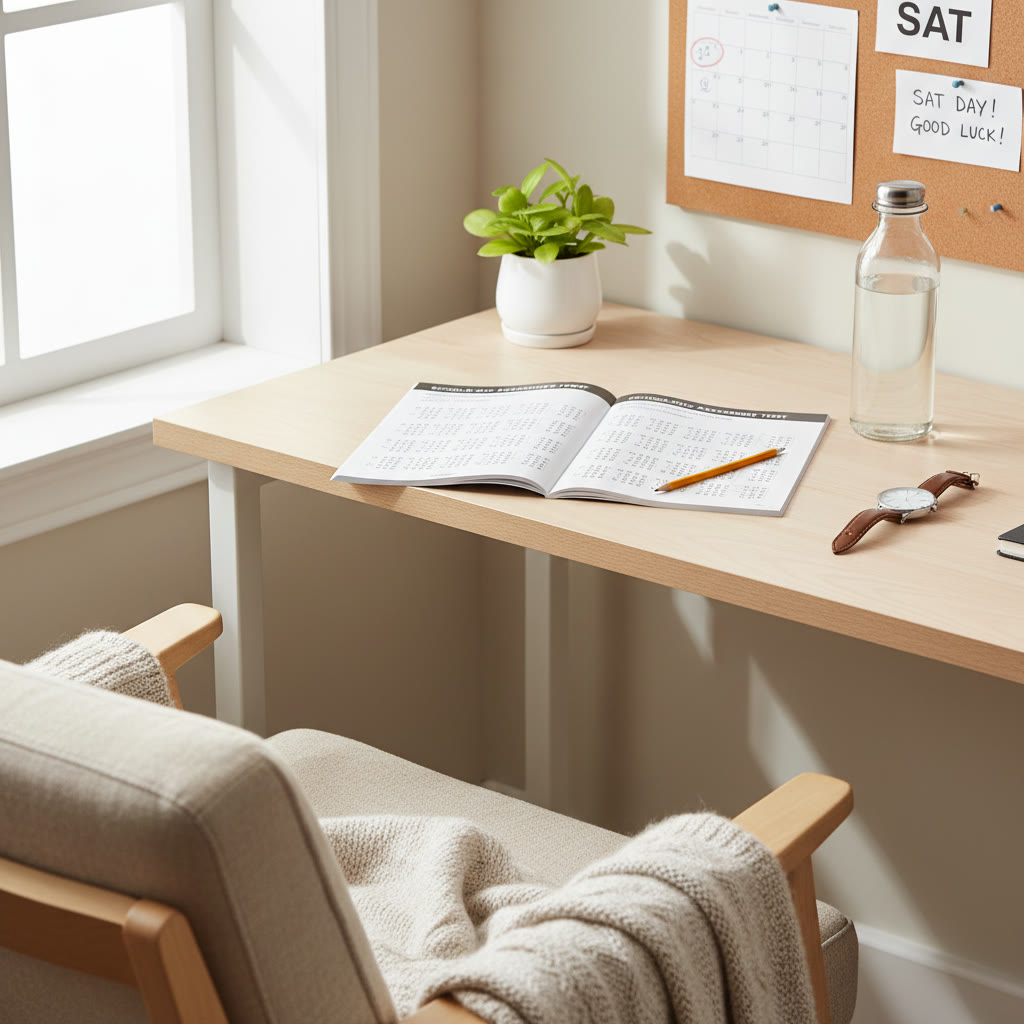

Next steps you can take tomorrow
Tomorrow, print or open an official practice test, set aside time, and take it under simulated conditions. Then spend time creating a detailed mistake log and a week-long focused practice plan. Make the test your starting point, not your finish line. With steady, thoughtful use of official practice tests, you will not only raise your score, you will learn how to approach exams with calm clarity—the sort of skill that pays off across college and beyond.
One last tip
Celebrate small wins. Every question you fix, every timing habit you change, and every practice test you complete is a step toward a stronger performance. Keep the focus on learning, not just the number on the score report, and the numbers will follow.



















No Comments
Leave a comment Cancel