

Why Self-Assessment Is the Secret Sauce of Smart SAT Prep
You can grind practice problems for months and feel like youre making progress, or you can spend those months practicing the right things. The difference is self-assessment. It is the compass that tells you where to go, how fast youre moving, and when to change course. Instead of guessing which weaknesses to tackle, self-assessment turns vague worries into precise action items.
This post is a friendly, practical guide to making self-assessment a habit in your SAT preparation. Ill walk you through what to assess, how to assess it, how to translate the findings into a study plan, and how to avoid the common traps that waste time and energy. There are examples, a hands-on checklist, a comparative look at two students, and a simple table you can use to track progress.
What Exactly Is Self-Assessment?
At its core, self-assessment is the practice of taking your current performance, breaking it into concrete pieces, and using those insights to decide what to study next. For the SAT, that means diagnosing not just your score, but where errors come from, how time pressure affects you, which question types are consistently tricky, and what study activities actually move the needle.
Think of it as a cycle: test, analyze, act, repeat. Each loop makes the next one shorter and sharper. When you do it with intention, practice tests stop being a ritual and become a precision instrument.
The components of a good self-assessment
- Score snapshot: Your raw and scaled scores on EBRW and Math and the total 400 to 1600 range.
- Question breakdown: Which question types or topics caused mistakes.
- Timing analysis: Where did you run out of time or rush?
- Mental game check: Stress, focus lapses, or careless errors.
- Resource audit: What tools and materials did you use and how effective were they?
Why It Matters More Than You Think
Some students assume more practice automatically equals higher scores. That can be true only when practice targets the right weaknesses. Self-assessment ensures that every hour you spend studying has the highest potential return. Here are the biggest ways self-assessment improves prep:
- Efficiency: You stop repeating the same mistakes and start closing skill gaps.
- Confidence: Knowing your pattern of mistakes reduces test-day anxiety.
- Smarter review: You focus on correction and reinforcement, not just exposure.
- Progress tracking: Objective measures help you see real improvement instead of guessing.
How to Self-Assess: A Step-by-Step Routine
Make this routine part of your weekly or biweekly rhythm. The more regularly you run the cycle, the quicker you build momentum.
1. Take a realistic, timed practice test
Use a full-length practice exam that mirrors official format and conditions. Simulate the test environment: quiet room, no phone, timed sections. Full-length tests reveal endurance and pacing issues you wont catch in isolated problem sets.
2. Score and record
Record scaled scores for Evidence-Based Reading and Writing and Math, plus your raw counts. Put those numbers in a simple tracker. Scores provide a baseline and help you set realistic goals.
3. Analyze with a microscope
Dont stop at the score. Ask precise questions:
- Which exact question types did I miss? For Reading: inference, vocabulary in context, command of evidence, passage mapping, or paired passages? For Writing: punctuation, sentence structure, rhetorical skills?
- Which Math topics tripped me up? Algebra, functions, geometry, problem solving with ratios, or data analysis?
- How many mistakes were careless versus conceptual?
- Where did timing cost me points?
Label each missed question: careless, concept, timing, or strategy. A single column in a notebook or a simple spreadsheet will do wonders.
4. Build an action list
Translate your analysis to study tasks. If 60 percent of errors were on geometry, schedule targeted geometry practice. If you lost time on long reading passages, practice shorter timed sets and active annotation techniques. Each task should have a measurement attached: number of problems, target accuracy, and a deadline.
5. Review and reteach
Teaching is one of the best ways to learn. Explain the correct reasoning for problems you missed to a friend, parent, or imaginary student. If you use a tutor or Sparkl s personalized tutoring, share your error log so they can tailor sessions to your needs. One-on-one guidance helps convert assessment into a customized plan faster than working alone.
6. Re-test and compare
After a focused study cycle, take another practice test. Compare not just the scores but the composition of errors. Did the percentage of careless mistakes drop? Did the topics you drilled show improvement? Keeping repeatable measures creates a feedback loop that accelerates growth.
Tools and Templates That Make Assessment Simple
You dont need fancy software. A notebook, a spreadsheet, and a handful of timed practice tests will carry you far. Below is a compact table you can adapt to your own use. It shows an example week by week snapshot for a 12-week build up to a test date. Use it to log score, error type distribution, and study focus.
| Week | Practice Test Score | Top 3 Error Types | Study Focus | Goal for Next Test |
|---|---|---|---|---|
| Week 1 | 1100 (EBRW 560, Math 540) | Reading inference, Algebra, Careless arithmetic | Reading strategies, targeted algebra practice, error checking drills | Improve to 1150; reduce careless errors by 50% |
| Week 5 | 1180 (EBRW 600, Math 580) | Time pressure on long passages, function questions | Pacing drills for reading, functions review | 1200; finish passages within time without losing accuracy |
| Week 9 | 1260 (EBRW 640, Math 620) | Minor careless slips, complex algebra | Timed mixed sets, error log review | 1300 with reduced slips |
Examples: Two Students, Two Different Uses of Self-Assessment
Real learning is clearer through examples. Here are two typical students and how self-assessment transforms their prep.
Case A: Maya, the overworker
Maya does a lot of practice. She completes dozens of problem sets and timed passages but sees her score plateau. Her self-assessment reveals a pattern: many mistakes are careless because she rushes through problems she technically knows how to solve. Timing analysis shows she finishes some sections with extra time yet makes arithmetic errors. Her plan becomes simple and surgical: slow down on math, implement a two-check routine for calculations, and do timed pacing drills to break the hurry habit.
Case B: Jordan, the concept gap
Jordan takes fewer tests but gets frustrated by unfamiliar question types, especially reading inference and linear equations with systems. His self-assessment shows conceptual gaps rather than pacing or carelessness. So Jordan prioritizes targeted topic study, works through foundational algebra problems, and practices reading inference strategies. Each week he returns to a mini-assessment of those topics to confirm improvement.
Both students benefit from the same cycle. The difference is where they focused. Without self-assessment they might both keep doing the wrong thing harder.
How to Interpret Results Without Losing Confidence
It is natural to feel anxious when a practice test score dips. Context matters. Scores vary test to test, especially early in prep. Dont overreact to one data point. Look for trends across 2 to 3 tests. If your average rises steadily, youre on track. If not, use your error log to identify persistent issues and re-evaluate study quality rather than quantity.
Here are practical thresholds to help you decide when to pivot:
- If the same error type appears in more than 25 percent of missed problems across three tests, make it a primary study goal.
- If timing costs you more than 5 questions per section consistently, insert pacing drills into every study block.
- If careless mistakes account for most wrong answers, implement systematic checking routines and slow your baseline pace by 10 percent to practice careful solving.
Turning Assessment into a Study Plan That Works
Once you know what to work on, structure matters. Here is a simple weekly template based on your assessment results.
- Two focused topic sessions: 45 to 60 minutes each, zero distractions, on your top-2 weak areas.
- One timed mixed practice set: 30 to 60 minutes, simulating test conditions for targeted sections.
- Weekly review: 30 minutes with your error log to identify patterns and track progress.
- Biweekly full-length practice test: Use this as your diagnostic and rhythm-setter.
- One reflection session: 15 to 20 minutes to re-assess goals and adjust the plan based on your latest results.
Keeping that schedule predictable makes improvements measurable. The reflection session is the heart of the self-assessment loop. It keeps you honest and adaptive.
Common Pitfalls and How to Avoid Them
Even students with good intentions stumble. Here are common mistakes and how to sidestep them.
Pitfall 1: Blind repetition
Doing more of the same problem types without diagnosing why you missed them. Fix: Use question labeling and error categorization. If a problem is conceptually unclear, reduce it to a single learning objective and relearn that objective until you can explain it clearly.
Pitfall 2: Ignoring timing issues
You can be technically correct on many concepts but still miss points due to time pressure. Fix: Always practice with official timing at least once every week and add pacing drills daily for sections that cost you the most time.
Pitfall 3: Overloading without sequencing
Trying to fix math, reading, and grammar all at once dilutes effort. Fix: Prioritize 1 to 2 weaknesses per week based on your assessment and revisit other areas with lighter maintenance work.
When to Bring in a Tutor or Personalized Support
Some problems are efficiently solved with help. If your self-assessment points to persistent conceptual gaps, unusual question types that confuse you, or a pattern of mistakes you cant diagnose, a skilled tutor can accelerate progress. Personalized tutoring can translate your error log into targeted lessons, simulate testing pressure, and provide one-on-one accountability.
Services like Sparkl s personalized tutoring combine expert tutors with tailored study plans and AI-driven insights to make each session count. Sharing your self-assessment results with a tutor allows them to craft focused sessions that address the exact skills you need to improve, turning data into results without wasted practice.
Sample 12-Week Self-Assessment Calendar
This timeline is for a student starting with a solid baseline who wants steady weekly progress. Adjust intensity based on your starting point and available time.
- Weeks 1 to 2: Baseline test, full analysis, set goals. Focus on identifying top weaknesses and building an error log habit.
- Weeks 3 to 5: Targeted study on top-2 weaknesses. One practice test every 2 weeks. Weekly reflection and small adjustments.
- Weeks 6 to 8: Scale up mixed practice and timed sections while maintaining targeted drills. Biweekly full tests to measure trend.
- Weeks 9 to 10: Fine-tune strategies for pacing, test anxiety, and careless errors. Simulated full tests under exact test conditions.
- Weeks 11 to 12: Taper and polish. Focus on consistency, light review of weaker topics, and mental preparation. Final full test to set confidence before test day.
Measuring Non-Score Progress
Scores are important, but other measures matter too. Use these indicators to know youre improving even when score increases are gradual.
- Reduced time per question on practice sets without losing accuracy.
- Greater clarity in error explanations; you can explain why you were wrong.
- Less test-day anxiety and more consistent practice habits.
- Improved accuracy on previously weakest topics in targeted drills.
Final Thoughts: Make Assessment a Habit, Not a Chore
Self-assessment is the difference between random practice and deliberate practice. It turns uncertainty into a plan and anxiety into small, solvable steps. The effort you spend building a simple, repeatable assessment cycle pays exponential dividends. You ll waste less time, build confidence, and see your scores rise in a way that feels earned and predictable.
Remember: small, targeted changes compound. A weekly reflection, a clear error log, and a few focused drills after each test will outpace unstructured studying. And when you need extra help turning data into a plan, personalized tutoring can be an efficient shortcut. Sparkl s personalized tutoring offers 1-on-1 guidance, tailored study plans, expert tutors, and AI-driven insights that fit naturally into the self-assessment loop, helping you translate test feedback into real improvement.
Quick Checklist to Start Today
- Schedule a full-length timed practice test this weekend.
- Prepare a one-page error log template: question number, error type, correct approach.
- Decide on two focus topics for the next 2 weeks based on your first test.
- Set a measurable goal for your next test and one habit youll change to reach it.
- Plan a reflection session after every practice test to update your plan.

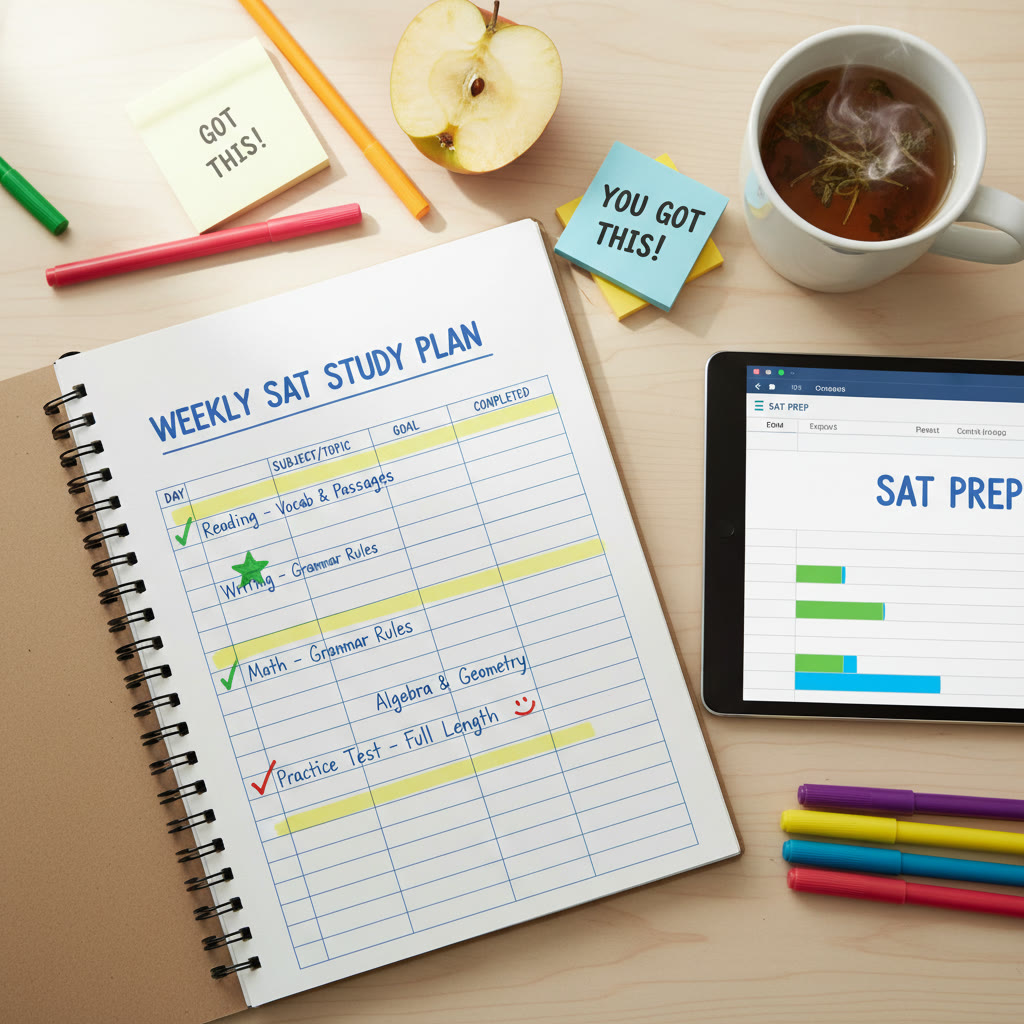
Self-assessment is practical, empowering, and surprisingly simple when you commit to the cycle. Make it part of your study DNA and you won’t just work harder; you’ll work smarter. Good luck, and enjoy the process of getting better each week.























No Comments
Leave a comment Cancel