
Why a Little Rhythm Can Make a Big Difference
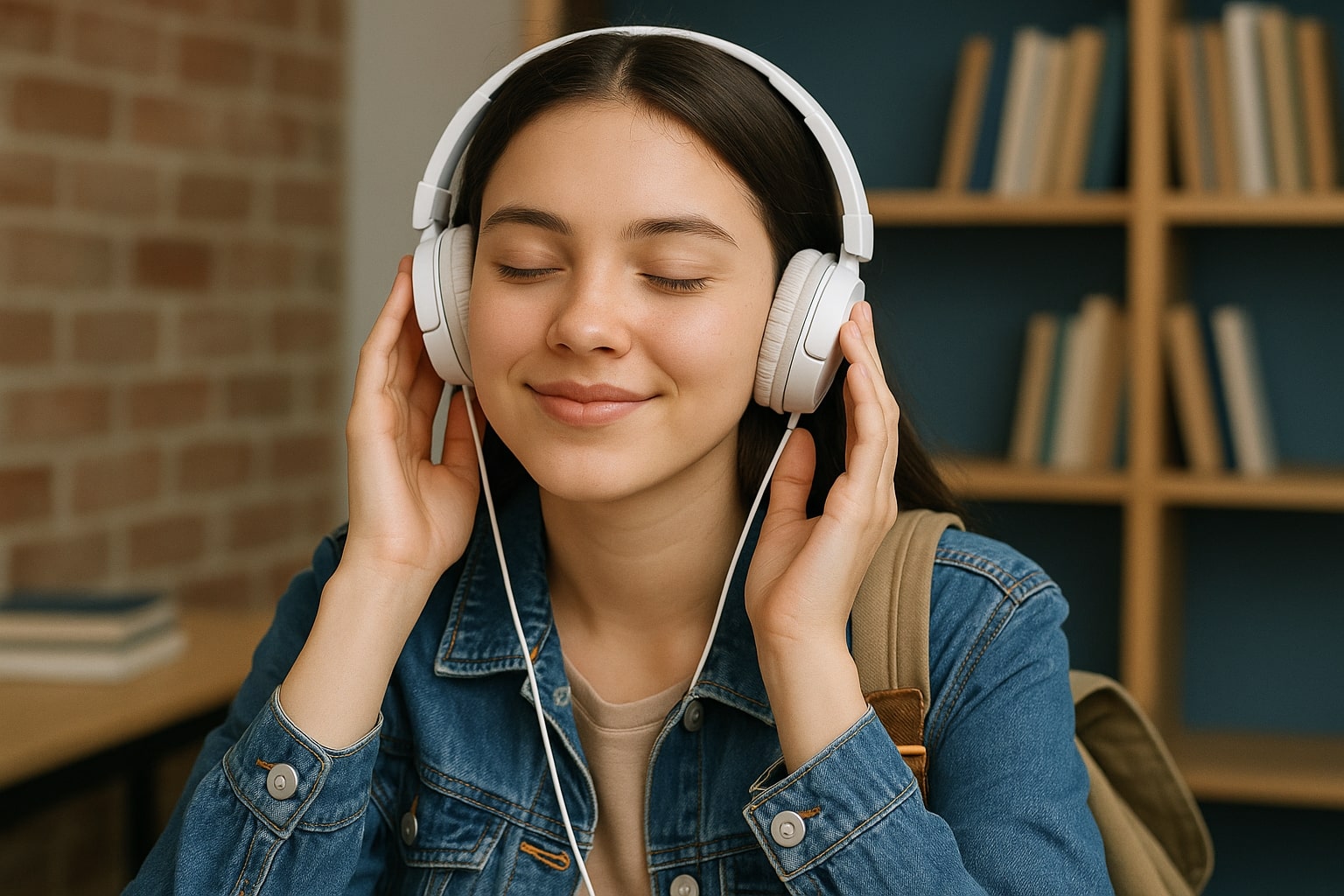
Walk into a library or a coffee shop and you’ll see a quiet tribe of students, headphones in, eyes on their laptops or practice papers. For some, background music is a distraction; for others, it’s the secret ingredient that turns scattered attention into steady focus. If you’re preparing for the Digital SAT, understanding how and why music helps some students concentrate can give you another tool to make your study sessions more efficient and less stressful.
What we mean by “helps”
When I say music helps, I’m not promising miracles. I mean that for certain students and certain study tasks, music can:
- Reduce perceived stress and anxiety before and during practice.
- Fill uncomfortable silence that otherwise encourages distraction.
- Provide a rhythmic structure that helps maintain steady effort.
- Mask background noises in shared spaces, making concentration possible.
The science made simple: why music can change your study state
Let’s keep this practical. You don’t need to memorize neuroscience to use music well. Still, a few concepts help explain why music sometimes works:
- Emotional regulation: Calm or uplifting music can lower stress hormones, making it easier to focus on problem-solving.
- Attention gating: When ambient noise is constant or chaotic, music acts like a filter that reduces the brain’s urge to monitor other sounds.
- Rhythmic entrainment: A steady beat can synchronize brain rhythms in a way that helps sustained attention and pacing.
- Task compatibility: Simpler or instrumental music often pairs better with analytical tasks (like math problems) than lyrical or highly dynamic tracks.
Important nuance: it’s not universally helpful
Music isn’t automatically beneficial. If you’re trying to decode a complex reading passage or learn new dense vocabulary, lyrics or highly engaging songs can compete for the same language-processing resources your brain needs. That’s why “does music help you study?” is the wrong question; a better one is “what kind of music helps me for which SAT task?”
Match music to the SAT task: practical pairings
Think of music as a study tool you tailor to the job. Below are practical pairings that many students find effective; treat them as starting points, not rules carved in stone.
For Digital SAT Math and Problem-Solving
- Choose low-intensity, instrumental music with a steady tempo (60–90 BPM is a common sweet spot).
- Try ambient electronica, soft piano, or light orchestral tracks that don’t surprise you with sudden changes.
- Keep volume moderate—enough to mask distractions, not enough to demand attention.
For Reading Passages and Evidence-Based Reading
Reading comprehension often requires language-focused attention, so many students prefer silence or very minimal, non-lyrical sound. If you want music:
- Use instrumental tracks with simple textures—sparse piano, slow strings, or minimal ambient soundscapes.
- Test your comprehension: read a practice passage both with and without music, then compare your accuracy and speed.
For Writing and Language (grammar, editing)
Short bursts of upbeat instrumental music can help when editing or completing short focused drills. If you’re drafting extended responses or practicing essay-type writing, try low-key music or quiet.
How to build a study-with-music routine that actually works
Randomly pressing play is different from designing a study routine. Here’s a step-by-step approach you can try over two weeks to see whether music helps your Digital SAT prep.
Week 1: experiment and measure
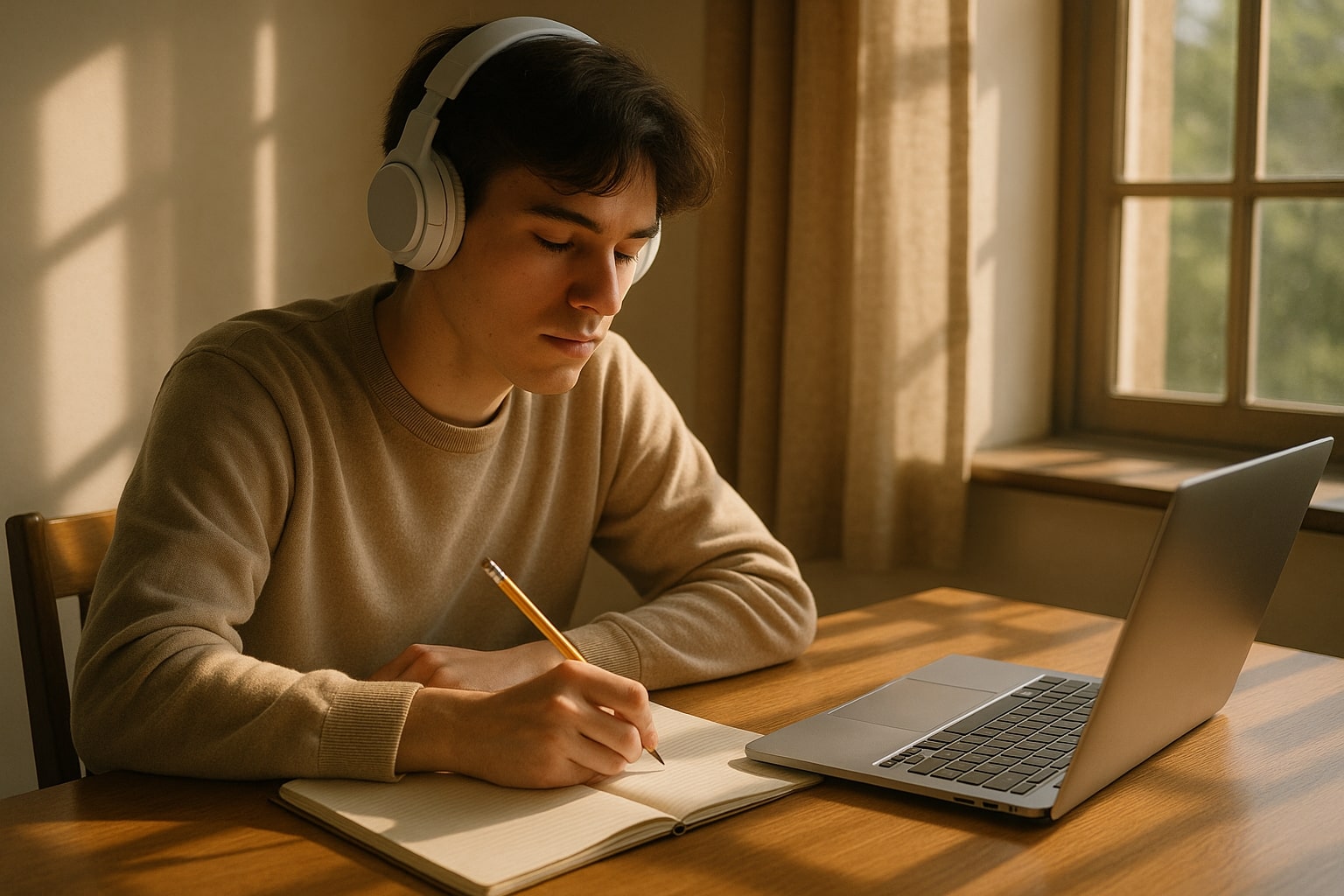
- Day 1–3: Complete a 45–60 minute practice block of math with instrumental music at low volume. Record accuracy and perceived focus (1–10).
- Day 4–6: Repeat the same block without music. Compare results.
- Track environmental factors—time of day, tiredness, caffeine—because music’s effects interact with these.
Week 2: refine and scale
- Pick the best-performing music type and incorporate it into longer study sessions (90–120 minutes), with planned breaks.
- Use the Pomodoro method (25/5 or 50/10) and test whether music helps maintain momentum across each interval.
Concrete examples: playlists and settings that students report work
Below are hypothetical playlist examples you can recreate. They’re organized by study focus and include suggested tempo and mood.
| Study Focus | Suggested Music Style | Tempo Range | When to Use |
|---|---|---|---|
| Digital SAT Math | Instrumental electronic, minimal piano | 60–90 BPM | Problem sets, timing practice |
| Reading Comprehension | Ambient soundscapes, slow strings (or silence) | 40–70 BPM | Passage reading, annotations |
| Writing & Language (editing) | Uplifting instrumental, light acoustic | 70–100 BPM | Grammar drills, sentence-level edits |
| Practice Tests & Full-Lengths | Silence or quiet focus tracks during timed sections; calming music for breaks | N/A | Simulate test conditions |
How to avoid common pitfalls
Many students try music and find it backfires. Here’s how to avoid the main mistakes.
Don’t use highly lyrical or novel music during language-heavy tasks
Lyrics compete with reading and writing because language processing uses overlapping cognitive resources. If you’re learning vocabulary or dissecting passages, silence or instrumental is usually better.
Don’t treat music as a substitute for structure
Music can help you focus, but it won’t replace a plan. Set goals for each session, use timed blocks, and check your accuracy and speed. Music supports habit, it doesn’t create it.
Beware of over-reliance
If every practice session requires a specific track to start, you could create a dependency. Occasionally practice without music—especially under simulated test conditions—because the Digital SAT will be silent and device-based. Use music as a bridge, not a crutch.
Personalization: find your “study soundtrack”
Individual differences matter. Below is a short self-audit to help you choose settings that match your temperament.
Quick self-audit
- If you’re easily distracted by words or conversation, favor instrumental tracks.
- If silence makes you anxious or sleepy, pick upbeat but non-lyrical music at low volume.
- If you thrive on rhythm and pacing, use tracks with a consistent beat to keep your tempo steady during timed practice.
- If you’re sensitive to emotional swings in music, prefer ambient or minimal compositions that don’t surprise you.
Using music with timed Digital SAT practice
The Digital SAT has a different pacing and device environment than the old paper test. Two practical rules to follow:
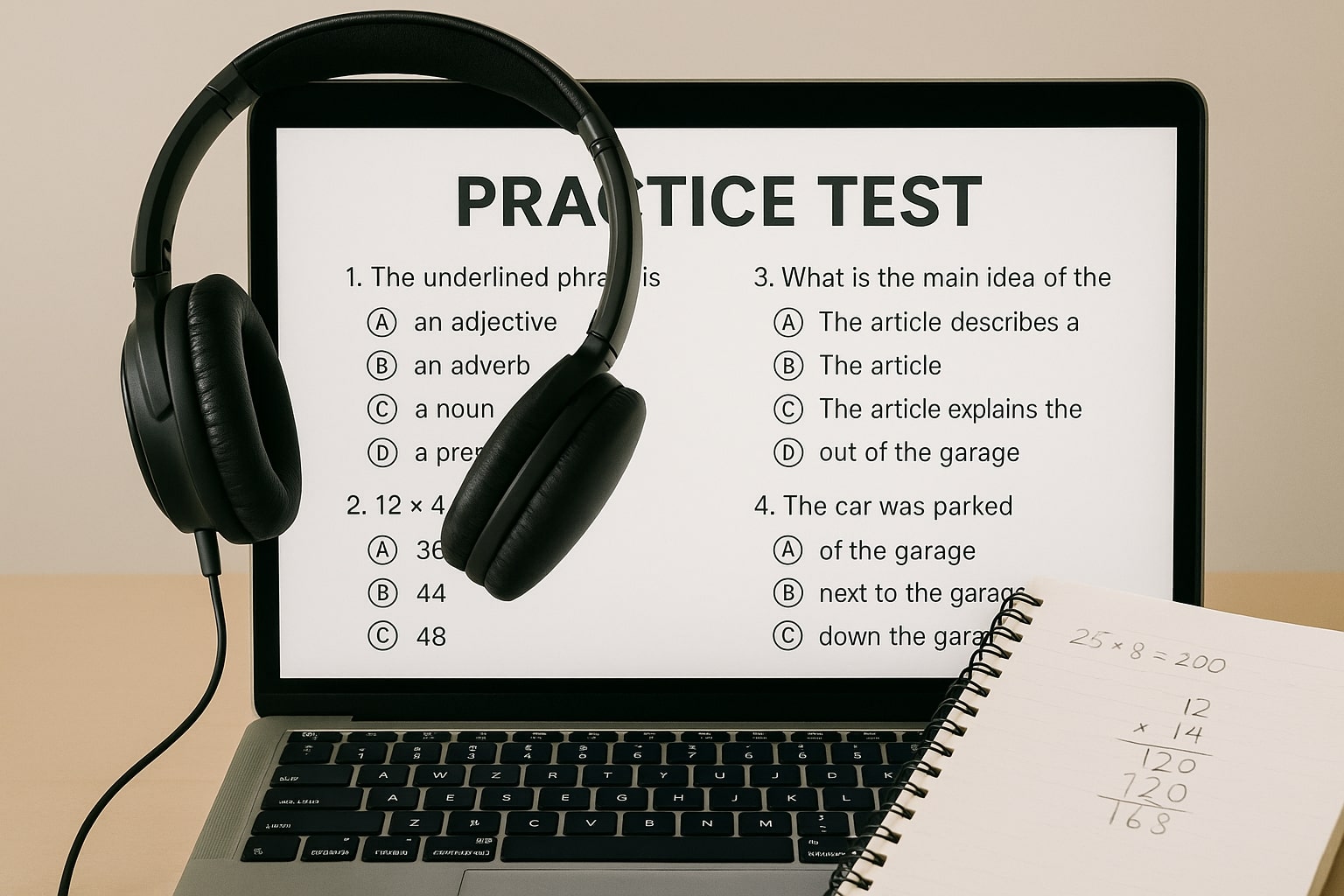
- Simulate test conditions for at least some practice: do a few full-length practice tests in silence on the same type of device you’ll use on test day.
- Use music for targeted practice sessions (e.g., math problem sets, grammar drills) where it helps—then validate gains in silent practice.
How tutoring and guided practice can multiply the benefit
Individual coaching helps you turn music from a mood-booster into a study accelerator. Personalized tutors can observe how you perform with different audio settings and integrate musical strategies into a tailored plan.
What personalized tutoring adds
- One-on-one guidance that identifies which sections benefit from music and which don’t.
- Tailored study plans that use music deliberately (warm-up, focused work, cooldown).
- Expert tutors who can model timed practice both with and without music to measure real gains.
- AI-driven insights (when available via tutoring platforms) that analyze your practice sessions and recommend optimal study environments, including audio settings.
Some students supplement self-study with services such as Sparkl’s personalized tutoring to get structured, measurable feedback. A tutor can help you test music settings, interpret practice-test data, and build a routine that matches your Digital SAT schedule.
Practical checklist: a pre-study ritual with music
Rituals prime your brain for work. Try this 8-step routine before a focused study block:
- Choose a single playlist type for the session (instrumental/math/ambient).
- Set a timer for your study block (e.g., 50 minutes) and 10-minute buffer for review after.
- Put phone on Do Not Disturb and close unrelated tabs.
- Start the music at low volume—adjust if it feels intrusive.
- Warm up with 5 minutes of routine (breathing, quick review of notes).
- Start work with a specific goal (e.g., 10 problem sets, one reading passage).
- At each break, swap to a different music mood—something lighter for rest.
- Record your performance and subjective focus score (1–10) at the end.
Real-world student example
Consider Maya, a junior who dreaded long math sections because the hum of the study hall made her jumpy. She tried a two-week experiment: math practice with low-volume instrumental tracks versus silence. Her timing improved by 10% on average and she felt less anxious. But during reading practice she reverted to silence and saw better comprehension scores. With a Sparkl tutor, she built a plan that used music for extended problem sets and silence for reading—helping her raise her practice test score without adding more hours.
FAQs students actually ask
Will music raise my SAT score?
Music alone won’t raise your score—consistent, smart practice will. But music can increase the efficiency of that practice for some students, allowing you to study longer with better focus and lower stress, which contributes to score improvement over time.
What if I only concentrate with pop songs and lyrics?
If lyrics help you focus during some tasks, use them selectively—perhaps during routine review or low-level practice. For language-heavy tasks, test both ways and prioritize whichever yields stronger comprehension and accuracy.
Should I use music on test day?
No. The Digital SAT will be taken in a controlled environment without music. Use music during preparation strategically, but do some full, silent practice tests to ensure you can perform without it.
Putting it all together: a sample 4-week plan that uses music intentionally
This plan alternates music-driven practice with silent simulation to balance the advantages of music with the reality of test conditions.
| Week | Focus | Music Strategy | Target Practice |
|---|---|---|---|
| Week 1 | Baseline & experiment | Instrumental for math, silence for reading | Short timed sections, track results |
| Week 2 | Refinement | Best playlist for math; ambient for short reading days | Longer practice blocks, Pomodoro intervals |
| Week 3 | Integration with tutoring | Tutor helps calibrate music/work split | Targeted weak-skill drills |
| Week 4 | Simulation | Silent full-length practice; music only for warmups/breaks | 3 full-length digital practice tests |
Final thoughts: use music as a smart, flexible tool
Music is a powerful mood and attention regulator—but it’s not a one-size-fits-all hack. The students who benefit most are those who experiment with different sounds, measure outcomes, and integrate what works into a structured study plan. That’s where tutoring and personalized feedback make a big difference: a skilled tutor or tailored program can help you discover your optimal audio environment, test it against real practice, and prevent bad habits like music-dependence on test day.
If you’re curious to try a guided approach, consider blending self-experimentation with targeted support: 1-on-1 guidance, tailored study plans, and tutors who can analyze practice data often speed up the discovery of what truly helps you focus. Services such as Sparkl’s personalized tutoring can offer that kind of tailored insight—measuring how music impacts your accuracy and stamina and helping you design a routine that supports your best performance.
Quick reference: do’s and don’ts
- Do test music against silence for each SAT section.
- Do favor instrumental and low-intensity tracks for analytical work.
- Don’t use music during full-length practice tests—simulate test conditions in silence.
- Do track subjective focus and objective scores to decide what helps.

At the end of the day, whether music becomes an ally depends on you: your brain, your habits, and the way you structure practice. Try it, measure it, and keep what helps. The Digital SAT rewards clarity, calm, and practice that mirrors test-day conditions—use music to get there faster, not to replace the work itself.
Note: I searched official College Board resources for the latest Digital SAT guidance to ensure this advice aligns with practice expectations and the structure of the test. The College Board pages confirmed that the Digital SAT is device-based and that silent, full-length practice tests are important for realistic simulation; however, guidelines about music and study environments are best developed through individualized experimentation and tutoring support, as described above.

























No Comments
Leave a comment Cancel