
Why social media is quietly stealing your SAT score
Picture this: it’s Saturday morning, you sit down with a practice math section, your favorite pen ready, a timer set for 45 minutes. Two questions in, your phone buzzes. You glance down. One notification turns into five minutes, then ten. When you finally return to the test, your focus has slipped, your mental rhythm is gone, and the remaining problems feel harder than they did before the buzz. That little interruption cost you more than time — it cost you the kind of deep concentration that helps you think clearly under pressure.
For many students, social media isn’t just a guilty pleasure; it’s the most persistent obstacle standing between steady studying and a stronger SAT score. It doesn’t have to be an all-out ban — social platforms can be useful for motivation or quick tips — but the way most people use them makes focused practice much harder. This post explains why that happens, what the research and real-world experience tell us, and practical, humane strategies to reclaim your attention without feeling deprived.
The attention economy: how platforms are designed to distract
Social media companies design feed experiences to maximize engagement. That means short bursts of highly stimulating content, frequent notifications, and an endless scroll that rewards quick dopamine hits. Your brain learns to expect novelty and immediate reward. When you’re trying to prepare for the SAT — particularly for tasks that require sustained reasoning, careful reading, or repetitive practice — this expectation becomes your worst enemy.
Attention works like a muscle and also like a limited resource. Each time you switch tasks — from a problem to a notification and back — you suffer what cognitive scientists call a “switch cost”: a measurable decline in accuracy and speed. On the SAT, where every minute and every point counts, those switch costs accumulate. It’s not just wasted minutes; it’s reduced quality of practice.
What exactly gets hurt?
- Deep focus: Solving multi-step math problems and analyzing complex reading passages requires extended attention. Short, frequent interruptions break the concentration needed to work through these tasks.
- Memory consolidation: Practice isn’t useful unless what you learn sticks. Distractions fragment encoding and reduce the likelihood that newly practiced concepts will be stored in long-term memory.
- Speed and accuracy: The SAT rewards both. Task-switching increases careless mistakes and slows you down because your brain needs time to re-orient.
- Metacognitive awareness: Good test-takers reflect on their mistakes and learn from them. Distracted studying makes reflection shallow or absent.
How distraction looks in the wild: a few common patterns
Every student has a slightly different relationship to social media, but some behaviors recur:
- Micro-escapes: Checking feeds “for a second” between problems and losing 10–20 minutes without noticing.
- Emotional derailment: Exposure to social posts leads to rumination — comparing scores, feeling discouraged, or anxious — which drains motivation.
- Shallow practice: Doing dozens of problems while distracted, rather than a focused session of 20 with careful review. The quantity feels good, but quality suffers.
- Procrastination loop: Using social media to avoid hard practice, then feeling guilty and rushing through work, which reduces learning.
A simple illustration: time, practice quality, and momentum
| Scenario | Focused study time (hours/week) | Distracted study time (hours/week) | Estimated practice quality |
|---|---|---|---|
| Student A — disciplined (phone on do not disturb) | 12 | 1 | High — deliberate practice, active review |
| Student B — typical (frequent phone checks) | 6 | 8 | Low — shallow practice, fragmented sessions |
| Student C — inconsistent (binges + procrastination) | 4 | 10 | Variable — starts strong, often derailed |
Note: the numbers are illustrative, not prescriptive. But they highlight a consistent idea: two students who think they studied the same amount can end up with very different results if one studies with sustained focus and the other studies amid frequent interruptions.
Deep work vs. shallow work — why it matters for the SAT
The distinction between deep work and shallow work is useful here. Deep work is concentrated, distraction-free study that pushes your cognitive limits — working through hard reading passages, figuring out a new math technique, or reviewing incorrect answers to understand the mistake. Shallow work is administrative or repetitive — skimming flashcards, checking answer keys without reflection, or passively scrolling through question explanations.
The SAT rewards deep work. Focused practice builds pattern recognition, improves problem-solving speed, and strengthens the ability to reason under pressure. Shallow work might make you feel busy, but it rarely moves the needle in a meaningful way.
Concrete strategies to reduce social media’s harm (without living in a cave)
You don’t have to delete every app or live a monastic life. The goal is to structure your environment so that productive focus is easier than distraction. Here are practical steps that students actually use successfully:
- Time-block your study sessions: Schedule 60–90 minute deep work blocks for intensive practice, and reserve short, timed breaks for social media if you want them.
- Use phone tools: Do Not Disturb, focus modes, and app timers can remove the temptation. Put distracting apps in a folder and out of sight during study blocks.
- Adopt the Pomodoro with a twist: Try 50 minutes on, 10 minutes off. During the 50-minute block, commit to zero phone interaction except for a pre-set emergency contact.
- Create physical boundaries: Study in a dedicated space, and leave your phone in another room or face down in a bag to reduce micro-checks.
- Plan your rewards: Allow yourself 15–20 minutes of social media after a well-executed study session. Using it as a reward turns it from distraction into motivation.
- Practice active study techniques: Do fewer problems but analyze each one fully. Teach a concept aloud, write out explanations, or create your own mini-tests.
- Reflect and track: Keep a short study journal. Note how many interrupted vs. uninterrupted sessions you had and how you felt after. Small daily data points reveal patterns you can change.
How tutors and tailored plans give you an edge
Accountability and structure make a big difference. That’s why many students pair self-directed study with personalized tutoring. A good tutor helps in three ways:
- Customized study plans: Tutors tailor your practice to your weaknesses, which reduces wasted time on irrelevant material and helps you focus deep work where it matters most.
- Real-time feedback: Immediate correction and explanation shorten the feedback loop, so mistakes become learning moments rather than repeated habits.
- Accountability and strategy: Meeting with a tutor provides scheduled, focused practice that’s hard to replicate alone. Tutors teach strategies — how to approach timed sections, skip smartly, and recover after mistakes — that reduce the temptation to seek distraction.
For students who want a modern blend of human and data-driven support, Sparkl’s personalized tutoring can help by providing 1-on-1 guidance, tailored study plans, expert tutors, and AI-driven insights that highlight weak spots. That combination not only targets the academic skills you need but also creates external structure to protect your focus. When a tutor tracks your progress and offers small, targeted adjustments, it becomes easier to resist social media in favor of high-quality practice.
Turning social media into a study asset (if you choose to keep it)
Not all social media use is harmful. With intention, you can make platforms serve your goals:
- Follow educational accounts that post concise grammar tips, vocabulary in context, or short problem explanations — but curate your feed so it doesn’t become a rabbit hole.
- Use short videos as micro-lessons — but set a strict time limit and watch with a purpose (e.g., “learn one new geometry trick”).
- Use social media for accountability: post weekly goals and check in with friends who are studying too. Public commitment can be motivating.
- Turn passive scrolling into active reading: when you see a well-written caption or thread, analyze the argument structure as a practice for reading comprehension.
Real student vignette: two paths to a higher score
Meet Maya, a junior who started with average scores and a very busy feed. She studied four hours a day but was interrupted constantly. After one practice test where she missed easy inference questions, she decided to change her approach. Maya tried three small habits: (1) turning her phone to Do Not Disturb during study blocks, (2) doing a 45-minute focused math session with a tutor twice a week, and (3) journaling five minutes after each session about one mistake and one insight.
Within six weeks, Maya noticed two things: her accuracy on multi-step problems improved, and she had a calmer mindset entering practice tests. Her improvements came from higher-quality practice and the external structure provided by her tutor — who also used AI-driven diagnostics to focus sessions on the most helpful problem types. Maya didn’t quit social media; she changed how and when she used it.
Quick checklist: a 7-day reset plan to regain focus
Try this one-week plan to test whether reducing social media during study helps your scores. Treat it as an experiment, not a punishment.
- Day 1: Audit. Record how many times you check your phone during a one-hour study session.
- Day 2: Set rules. Turn on a focus mode during study blocks and put timers on apps.
- Day 3: Deep work. Do two 50-minute focused sessions with one 10-minute intentional break each.
- Day 4: Reflection. After each session, write one thing you learned and one mistake to avoid.
- Day 5: Accountability. Schedule a short check-in with a tutor, teacher, or study friend.
- Day 6: Reward. Allow a longer, guilt-free social media session after a full study day.
- Day 7: Review & adjust. Compare practice accuracy and mood to Day 1 and plan the next week.
Common objections and honest answers
“But I need social media to stay connected!” — You can schedule social time. Being social is important; just make it intentional. Set a dedicated slot to check in with friends rather than letting notifications fragment study time.
“I study better with background noise and my phone nearby.” — There’s a difference between ambient sound and active interruption. If notifications pull your attention, try disconnecting notifications but keep ambient music or a background podcast if that helps concentration.
“If I can’t multitask, I won’t get everything done.” — Multitasking reduces efficiency. You may feel busier, but focused work tends to be more effective. Giving tasks your full attention usually saves time overall.
Practical tech tips to implement tonight
- Enable a focus mode that silences notifications and only allows essential contacts to reach you.
- Use app timers to limit social media to a set number of minutes per day.
- Create a “phone nest” — a specific spot where your phone lives during study sessions.
- Use website blockers for distracting sites on your computer during scheduled study time.
Final thoughts: small changes, big returns
The goal isn’t perfection. The point is to reduce the tiny, constant interruptions that quietly erode the value of your study time. When you replace a few scattered minutes of scrolling with a handful of uninterrupted practice sessions, the compound benefit shows up on practice tests: clearer thinking, fewer careless errors, and more reliable memory of the things you’ve learned.
If you want help turning intent into habit, consider combining personal discipline with structured support. Sparkl’s personalized tutoring pairs expert tutors and tailored study plans with AI-driven insights to make your practice smarter and more focused. That kind of support can help you protect your attention, target high-impact weaknesses, and build momentum — without banishing social media forever.

Study is a human endeavor: it needs kindness, routine, and a little insight into how your attention works. Tackle distractions not by waging a war on yourself, but by designing simple systems that make focus the easier choice. You’ll be surprised how much steadier and more confident your SAT performance becomes when the small pings stop pulling your brain in a dozen directions.
One last nudge
Try one change tonight: put your phone in another room for a 45-minute practice session. Do the work, reflect on one mistake, and then use social media as a reward. If it helps, repeat. Consistent, mindful practice — not frantic multitasking — is the surest path to higher scores.
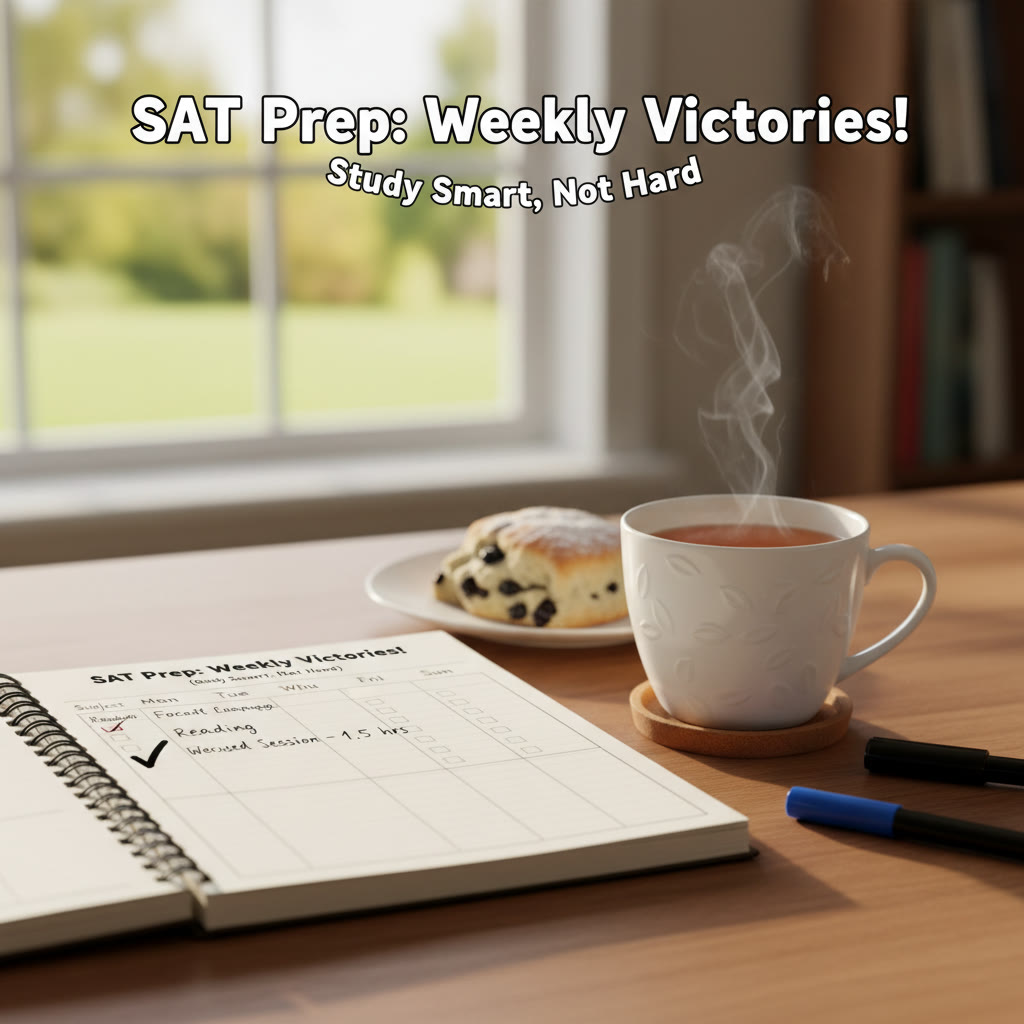
You’ve got the tools. Now make your environment and habits work for you. Your future self — calmer, clearer, and a few points higher on the SAT — will thank you.



















No Comments
Leave a comment Cancel