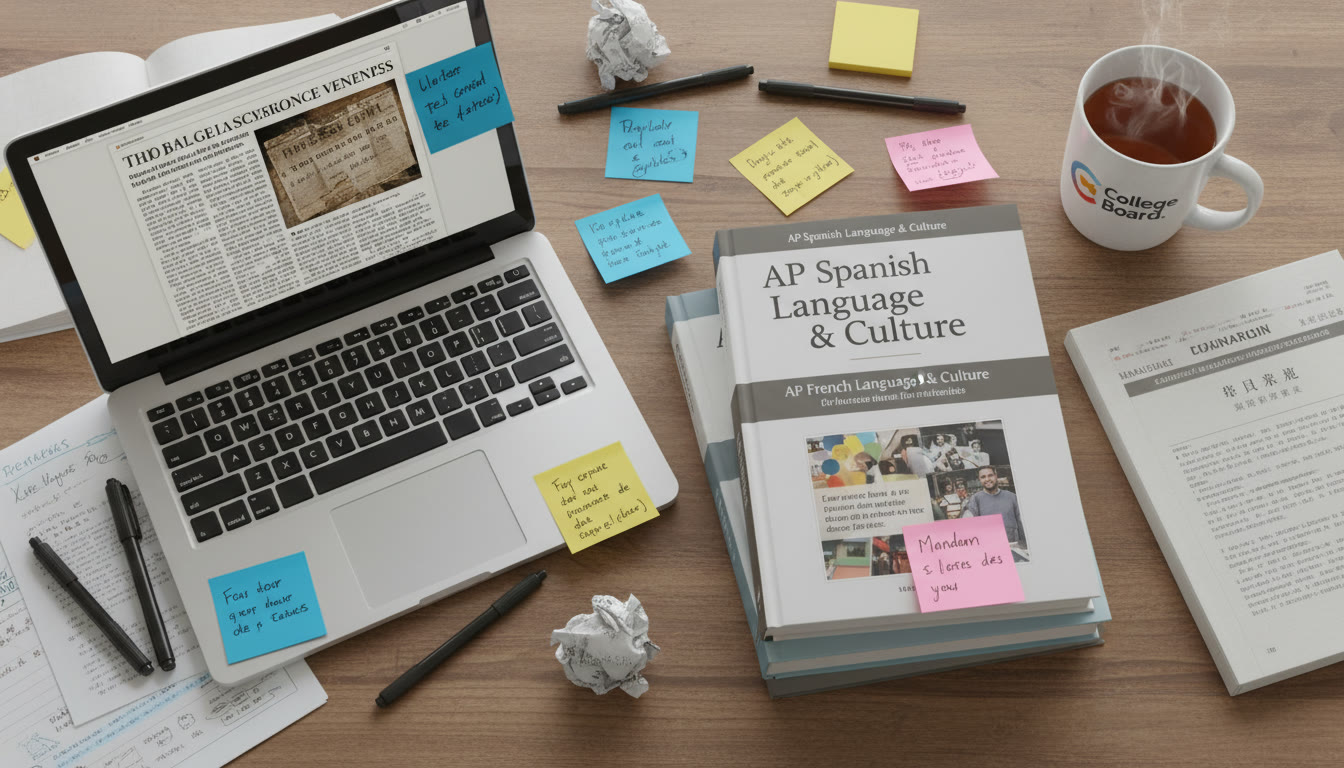

Why Cultural Sources Matter — and Why Language Changes Everything
When you’re writing an AP paper, crafting an AP Research project, or preparing a comparative essay for AP World History or AP Lang, the cultural sources you cite do more than fill a bibliography. They show that you understand context, voice, and perspective. A French newspaper editorial, a Mandarin oral history, or a Spanish film review — each brings its own cultural logic and evidentiary weight.
This guide helps you find, evaluate, and cite cultural sources broken down by language, with examples and practical tips for students aiming for top scores. Along the way we’ll show how to balance primary and secondary sources, translate responsibly, and weave multilingual evidence into a clear argumentative thread. If you want one-on-one guidance, Sparkl’s personalized tutoring can provide expert tutors, tailored study plans, and AI-driven insights to make your citation strategy exam-ready.
How to Think About Cultural Sources (A Quick Framework)
Before diving into language-specific advice, use this simple framework to evaluate any cultural source:
- Origin: Who produced it? (author, institution, community)
- Function: Why was it created? (inform, persuade, record, entertain)
- Perspective: What worldview or cultural stance is embedded?
- Audience: Who was it written for or performed to?
- Reliability: Is it primary evidence, an interpretive secondary source, or opinion?
Apply these five checks whether you’re citing a Brazilian documentary or a Japanese folk tale. They will keep your analysis rigorous and your citations meaningful.
Language-by-Language Guide: Where to Look and What to Cite
Below are practical starting points and example citations for several widely studied languages in AP classrooms. For each language we note typical cultural source types, how to evaluate them, and an example of how you might cite or use the source in an AP-style essay or research project.
English
Most AP students will work primarily in English, but that doesn’t mean all sources are the same. Consider community newspapers, oral histories, podcasts, and academic publications.
- Where to find them: local archives, university repositories, national libraries, community oral history projects.
- How to use them: Use local newspapers for grassroots perspectives, podcasts for contemporary discourse, and academic journals for scholarly analysis.
- Example: A 1960s community newsletter can be used as primary evidence of local reactions to national policy, illustrating how policy was received beyond headlines.
Spanish
Spanish-language sources are invaluable for projects on Latin America, Spain, and Spanish-speaking communities in the U.S. They include newspapers, telenovelas, literary essays, and social media discourse.
- Where to find them: national newspaper archives (print and digital), cultural magazines, university Hispanic studies departments, and regional radio broadcasts.
- How to use them: Pay attention to regional idioms and political context — a conservative editorial in one country may read very differently in another.
- Example: Use a Spanish film review to unpack public sentiment about social reforms and compare that sentiment with statistical data or policy documents.
French
French cultural sources often appear in the form of essays, film criticism, philosophical texts, and government reports. French academic culture prizes rigor and historical context — keep that in mind when interpreting tone and intent.
- Where to find them: national libraries, French-language journals, film and art criticism sites, and francophone public radio.
- How to use them: Translate key terms with care; sometimes a single word (e.g., liberté, laïcité) carries philosophical weight that shapes the entire piece.
- Example: Quoting a French intellectual’s essay on laïcité can anchor an AP Comparative Government analysis of secularism across systems.
Mandarin Chinese
Mandarin sources include government releases, literary works, oral histories, documentaries, and social media platforms. Be sensitive to differences between state media, independent scholarship, and grassroots accounts.
- Where to find them: academic translations, bilingual news services, cultural institutes, and digitized oral history projects.
- How to use them: Note the register — formal government texts signal official positions, while personal essays reflect lived experience.
- Example: A translated oral history can provide primary testimony about migration that complements census statistics.
Arabic
Arabic sources are rich in poetry, film, religious texts, and modern journalism. Dialect differences matter; classical Arabic has different connotations than a colloquial dialectal piece.
- Where to find them: university Middle East centers, translated anthologies, and cultural magazines.
- How to use them: Identify whether a text is Modern Standard Arabic or a dialect; the register affects interpretation and audience.
- Example: Use a contemporary Arabic poem to illustrate popular sentiment or cultural memory in a historical analysis.
Portuguese
Portuguese-language sources from Portugal and Brazil can illuminate postcolonial dynamics, popular music, and cultural policy. Brazilian journalism and music criticism are especially useful for cultural studies.
- Where to find them: literary journals, music archives, and national cultural institutes.
- How to use them: Compare metropolitan (Portugal) and Atlantic (Brazilian) perspectives where relevant — language is shared but contexts differ.
- Example: Citing a Brazilian music magazine’s review of samba revival can support a cultural continuity argument in AP World History.
Translating and Quoting: Best Practices
Using sources in another language means dealing with translation. You don’t need to be a professional translator, but you do need to be responsible.
- Always provide your own translation if a published translation is unavailable, and indicate that it is your translation.
- When quoting, include the original language in an appendix if your submission allows, otherwise quote the translation and explain key original terms in-text.
- Be transparent about nuances — a literal translation can miss idiomatic meaning, while a freer translation risks losing specificity.
Quick Tip: How to Note Your Translation in an AP Project
After a translated quote, add a parenthetical note: (author’s name, year; translation by author). This shows academic honesty and clarifies that interpretation choices were yours.
How to Integrate Multilingual Sources into an Argument
AP readers want clear, persuasive arguments. Multilingual sources should support claims, not distract from them. Here’s a step-by-step approach:
- Introduce the source briefly and explain why it’s relevant (context matters).
- Present the evidence (translated quote or summary) and note translation choices.
- Analyze — connect the source to your thesis and to other evidence in your essay.
- Reflect on cultural perspective — explain how cultural background shapes the source’s stance.
Table: Example Citations Across Languages (AP-Friendly Formats)
| Language | Example Source Type | How to Cite in Text | Why It Matters |
|---|---|---|---|
| English | Local oral history interview | Interviewee Name, Year (personal interview) | Provides primary testimony and local perspective |
| Spanish | Newspaper editorial | Author, Year (translated) | Reveals contemporary public discourse and editorial stance |
| French | Philosophical essay | Author, Year (translated; original term explained) | Anchors theoretical claims and cultural vocabulary |
| Mandarin | Oral history transcript | Interviewee, Year (translation by author) | Connects policy to lived experience |
| Arabic | Contemporary poem | Poet, Year (excerpt, translated) | Expresses emotional and cultural resonance |
| Portuguese | Music magazine review | Reviewer, Year (translated) | Shows cultural trends and public taste |
Evaluating Source Reliability: Red Flags and Green Lights
Not all cultural sources are equally useful. Here’s how to tell the difference quickly.
- Green Lights (Good): sources with clear authorship, contextual information, and traceable publication dates. Academic or institutional sources and verified interviews rate highly.
- Yellow Flags (Use Cautiously): anonymous blog posts, opinionated social media threads, or translated pieces without editorial oversight. Use them for voice but corroborate key facts.
- Red Flags (Avoid or Cross-Check): unverifiable social posts, heavily biased propaganda without context, and sources with no date or author information.
Examples: Short Case Studies for AP Essays
Case Study 1: AP World History — Migration Narratives
You might compare census data with personal oral histories from two migrant communities (one English-language, one Mandarin). Use tabled data to show trends and first-person accounts to illustrate lived experience. Discuss how governmental categories differ from personal identities and how that affects historical interpretation.
Case Study 2: AP Lang — Analyzing Persuasion Across Cultures
Compare a Spanish editorial and an English op-ed on the same policy. Analyze rhetorical strategies, audience assumptions, and cultural references. Translate short, pointed phrases and explain their rhetorical force — and note any limitations in translation.
Practical Tools and Habits for Finding Cultural Sources
- Use library databases and university digital collections — they often host multilingual archives and vetted translations.
- Contact cultural centers or professors in relevant departments; many scholars are happy to point students to primary sources.
- Keep a source log: track original language, translator (if any), date, publisher, and a two-sentence note on why the source matters.
- Record your translations and decisions so an AP reader can follow your reasoning if they ask for clarification.
How Sparkl’s Personalized Tutoring Can Help (Naturally)
Sometimes the biggest barrier is knowing where to look or how to weave multilingual evidence into a clear argument. Sparkl’s personalized tutoring offers 1-on-1 guidance, tailored study plans, and tutors who can help you choose sources, translate responsibly, and practice integrating quotes. Their AI-driven insights can highlight gaps in your source mix or suggest stronger primary evidence — all while keeping your voice front and center.
Common Mistakes Students Make — And How to Avoid Them
- Over-relying on translated summaries instead of primary texts. If you must use a translation, note its origin and limits.
- Quoting too many long passages without analysis. Always follow a quote with at least two sentences of careful interpretation.
- Forgetting cultural context. A phrase may mean one thing in one country and another elsewhere — explain those nuances.
- Failing to triangulate. Use at least two sources to support major factual claims, especially when relying on social media or opinion pieces.
Checklist Before You Submit an AP Paper with Multilingual Sources
- Do you identify and justify each translation used?
- Are primary versus secondary sources clearly labeled?
- Have you explained cultural context for any potentially unfamiliar references?
- Is your argument driven by evidence, not exoticism?
- Have you run your bibliography and in-text citations against the AP rubric or your teacher’s preferred style?

Wrapping Up: Make Cultural Sources Work for Your Argument
Cultural sources are a powerful way to make your AP writing stand out. They provide texture, voice, and context — but they also demand care. Evaluate each source with a critical eye, translate responsibly, and always connect the evidence back to your thesis.
Whether you’re assembling an AP Research bibliography or tightening an AP Lang argument, use the frameworks in this guide: check origin, function, perspective, audience, and reliability. Keep a clear record of translations, triangulate your claims, and don’t hesitate to ask for help — tailored tutoring, like the 1-on-1 guidance available through Sparkl, can speed your progress and make your evidence selection more strategic.
Above all, let cultural sources deepen your analysis rather than overwhelm it. Bring the voices, textures, and perspectives of other languages into your essay thoughtfully, and your writing will not only meet AP expectations — it will sing.
Final Advice
Start early. Researching multilingual cultural sources takes time: locating archives, requesting interviews, and translating passages all add steps. If you begin with a strong plan and a clear research log, you’ll avoid last-minute scrambles and submit work that’s persuasive, well-evidenced, and culturally informed.
Good luck — and remember, great writing is a conversation. Use cultural sources to join that conversation with clarity and care.





























No Comments
Leave a comment Cancel