
IB DP Activities Strategy: How to Package Sports Commitments in a Strong Academic Profile
If you play a sport while taking the Diploma Programme, you’ve got one of the richest storytelling tools available when it comes to university applications. Coaches, training schedules, leadership experiences and the small, everyday discipline of practice all create a texture of evidence that admissions tutors respond to—when you present those elements thoughtfully. This guide walks you through how to convert weekly training and seasonal competitions into a coherent narrative across the activities list, personal statements, interviews and the timeline that gets everything ready for an application cycle.
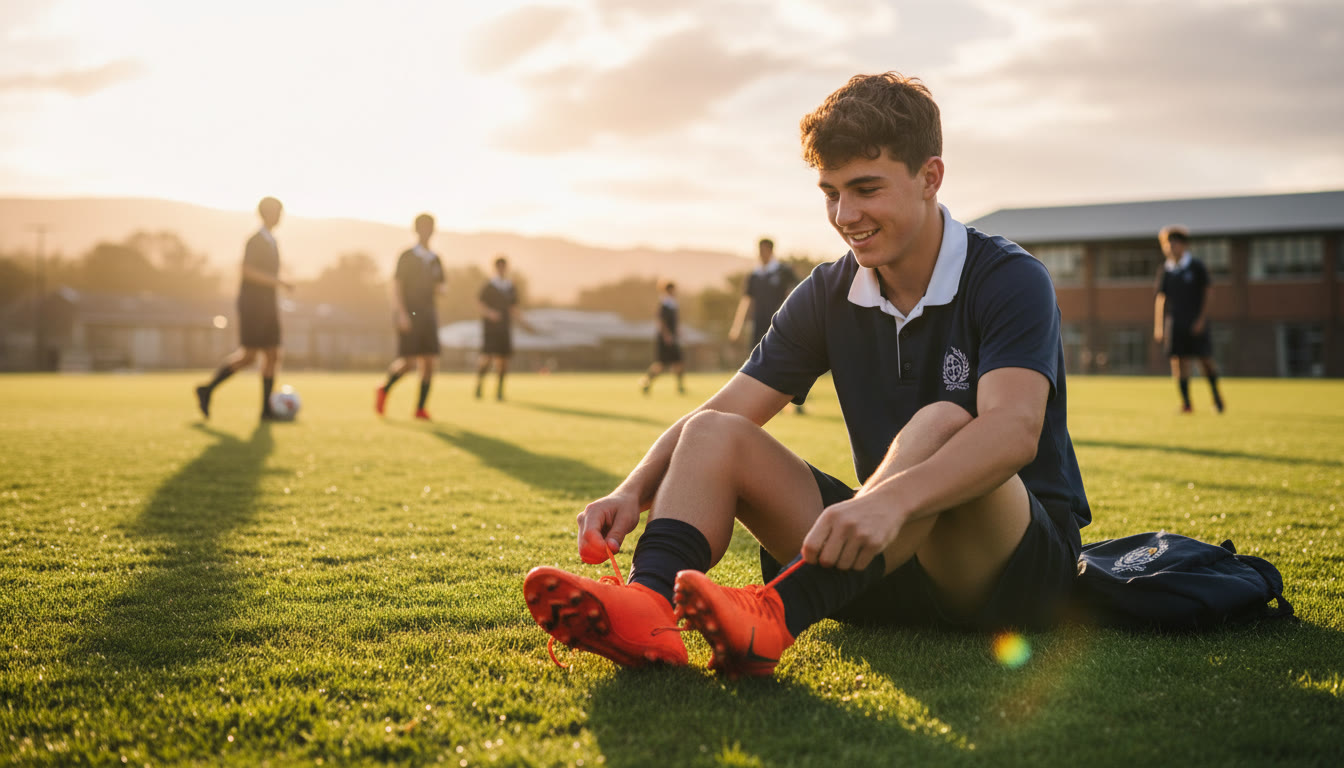
Why sports matter — beyond trophies and stats
Sports don’t just show you can win games. They are a proxy for transferable skills: teamwork under pressure, leadership that’s earned rather than declared, time management when juggling training and coursework, resilience after setbacks, and an ability to measure progress. Admissions officers notice patterns: a candidate who steadily builds responsibility (from participant to captain or organizer) and reflects on what they learned generally reads as someone who will engage deeply with university life.
Think of sports as evidence, not the argument. The evidence is the training logs, captaincy duties, match plans you created, or the initiative to run a fundraising event. The argument is the short, reflective sentence that ties those details to attributes like curiosity, ethical reasoning, or persistence—traits that matter for academics as much as athletics.
CAS and activities: how to align
In the Diploma Programme, the activities component—commonly fulfilled through CAS—asks for ongoing, meaningful engagement across creativity, activity and service. Rather than treating sports as a separate silo, use it deliberately: link a team leadership role to a learning outcome (e.g., planning training as a project management exercise), or combine sport with service (coaching younger students). That kind of integration creates richer narratives for essays and interviews.
Turning a season into a story for essays
A strong personal statement or essay doesn’t catalog your schedule; it follows a growth arc. Start by identifying a pivot moment from your sports experience—an injury you recovered from, a time you reorganized a struggling team, or a match where your tactical change altered the outcome. Build a short beginning (the challenge), a middle (what you did), and an end (what you learned, and how that learning connects to your academic intentions or personal goals).
Example structure for a paragraph in an essay:
- Situation: Set the scene succinctly (one line).
- Action: Describe a specific, concrete action you took—coaching a player, changing a training plan.
- Reflection: Explain what that taught you and how it links to your academic interests or community aims.
This is the same muscle you use for CAS reflections; practicing concise, honest reflection will help across every application component.
From activity list to interview talking points
Your activities list is often read quickly. Use compact phrases that convey role, scope and impact—then be ready to expand those phrases verbally. A two-line activity entry can become a two-minute interview story if you prep the arc and a clear takeaway.
| Activity | Activity-list phrasing | Interview/essay expansion |
|---|---|---|
| School Rugby | Varsity rugby — captain; led preseason conditioning and mentoring | Describe a specific mentoring conversation and a measurable improvement (skill, morale or attendance) that followed. |
| Community Coaching | Volunteer coach — organized weekend clinics for local youth | Explain planning challenges, how you adjusted sessions, and what coaching taught you about pedagogy or leadership. |
| Individual Sport | Competitive swimmer — regional competitions, performance tracking | Focus on a training modification you introduced and the analytical approach you took to measure results. |
How to phrase sports commitments on the activities list
A short, smart description looks like this: role, scope, and impact. Avoid vague lines like “played basketball.” Instead, say “Captain, girls’ basketball — led weekly skill sessions, coordinated travel logistics, initiated peer-mentoring program.” That shows initiative and leadership in concrete terms.
- Start with a verb of agency: Organized, led, coached, founded, initiated.
- Clarify scope: number of players, duration per season, level of competition—but use general language (e.g., “regional” or “school-wide”) if numbers feel risky.
- Finish with impact: what changed because of your role? Better attendance, a player promoted, a fundraiser launched?
Sample “before → after” lines
Before: “Basketball team — member.”
After: “Co-captain, basketball — led pre-season conditioning, introduced skill clinics for underclassmen and improved team retention.”
Interviews: practical ways to answer sports questions
In interviews, interviewers often ask open-ended questions like “Tell me about a time you led a team” or “How do you balance school and sport?” Use the STAR approach (Situation, Task, Action, Result) but make sure the “Result” ties back to what it means academically or personally: did you learn a strategy for managing deadlines that helped your approach to extended essays? Did coaching younger players change your communication style in group projects?
- Be concise—answer in 60–90 seconds for a single story.
- Offer one clear reflection: connect the story to a value or academic skill.
- Prepare two or three anecdotes you can adapt to different questions.
Common interview prompts and quick frameworks
- “Describe a leadership challenge.” → Briefly set the problem, explain your specific action, and state the learning outcome.
- “How do you handle failure?” → Name a concrete setback, show the adaptation, and point to a measurable recovery or lesson.
- “What do you do outside class?” → Use one strong example and always end with why it matters for your studies.

Practical timeline: planning and evidence collection
Good packaging is planned. Don’t wait until application season to assemble letters, video highlights or match reports. Treat your sports involvement as a long-term project: keep logs, request mid-season feedback from coaches, and collect artifacts that show progression. Below is a sample phase-based timeline you can adapt to your own schedule.
| Phase | Focus | Student actions | Evidence to collect |
|---|---|---|---|
| Exploration | Try roles, find interest | Experiment with positions, assist in coaching sessions | Training notes, short reflections |
| Deepening | Build skills and responsibility | Take a leadership role, run a small project (e.g., fundraiser) | Project plan, testimonials, match reports |
| Showcasing | Prepare application materials | Draft activity entries, request letters, rehearse interview stories | Drafts of essays, coach recommendation, highlight clips |
What counts as good evidence?
Admissions teams like artifacts that are hard to fake: coach comments that describe your growth, data showing improved performance, a clear role in organizing or improving something, and reflections that show insight into the process. Keep a simple digital folder with dated documents and short reflections so you can extract examples quickly when writing an activity description or an essay paragraph.
Letters, reels and verification — how to secure meaningful endorsements
When you ask a coach or mentor for a reference, brief them. Provide a one-page summary of your responsibilities, a reminder of key moments, and the skills you want them to emphasize (work ethic, leadership, tactical thinking). That helps them write a targeted letter rather than a generic endorsement. If you have highlight footage, keep it short and purposeful—one to two minutes that showcase variety (decision-making, teamwork, technical skill) rather than a long montage.
Supportive evidence is strongest when it links directly to academic traits: problem-solving mindset, sustained curiosity, or analytical approaches to training. Ask referees to include an example that shows how you applied critical thinking or planning in a sporting context.
When to use external help
If you want tailored practice for essays or interviews—especially for translating sports accomplishments into academic terms—consider targeted tutoring. Sparkl offers 1-on-1 guidance, tailored study plans, expert tutors and AI-driven insights that can help you refine activity descriptions and practice interview answers. Use such support to sharpen your storytelling, not to write your story for you.
Balancing sports training and academic rigor
Time management is not a natural gift for most; it’s a cultivated skill. Map your week into training blocks, academic blocks, and recovery. Prioritise sleep and quality study over last-minute cramming. Use small rituals—pre-study warm-ups, short review sessions after training—to turn fragmented time into deliberate practice.
- Use a weekly planner to create visual balance and avoid burnout.
- Schedule mock-interviews and essay draft deadlines well before application windows.
- Communicate with teachers early if competition schedules clash with assessments—transparency helps secure reasonable adjustments where necessary.
Dos and don’ts for packaging sports on university applications
Dos:
- Do show progression: emphasize how your role grew or how you deepened responsibility.
- Do quantify impact qualitatively if numbers aren’t available (e.g., “increased attendance,” “raised funds for equipment”).
- Do link sports learning to academic or career interests where relevant (teamwork → collaborative research; analysis of performance → interest in data science).
Don’ts:
- Don’t inflate achievements—admissions teams can often verify claims.
- Don’t treat sport as an add-on; make it part of the fabric of your story.
- Don’t use sports jargon without explanation—admissions readers come from varied backgrounds.
Examples of strong phrasing
Weak: “Played cricket for the school team.”
Strong: “Vice-captain, school cricket — designed data-driven practice drills, increasing middle-order consistency and mentoring three new players into starting roles.”
Measuring outcomes and reflecting for CAS
Reflections are the bridge between activity and learning. For CAS and for essays, make each reflection a one-paragraph note: what you did, why you did it, what you learned, and what you’ll do next. Over time these short reflections build into a portfolio that shows deliberate growth and intellectual curiosity borne from your sporting life.
Final checklist before submitting applications
- Consolidate your activity list with concise, impact-focused phrasing.
- Gather coach statements and ensure they speak to transferable skills.
- Store dated evidence: match reports, training logs and short reflections.
- Draft and refine two sports-related anecdotes for interviews and essays.
- Practice delivering those anecdotes in under two minutes with a clear learning point.
Closing thought
Sports are a powerful amplifier of the qualities universities prize, but the power is unlocked only when you translate participation into evidence and reflection. Construct clear activity lines, collect verifiable artifacts, practice concise stories for interviews, and connect your athletic growth to academic aims—this is how sports shift from an extracurricular to a persuasive element of your academic profile.
This guidance focuses on the craft of representation: narrative arcs, evidence, and reflection that make sporting commitments speak to intellectual and personal growth. The end.




















No Comments
Leave a comment Cancel