
IB DP Strategy for RWTH Aachen — Engineering Admissions Pathways
Walking through the red-brick gates of a tech campus in Germany feels different from reading a brochure. If you’re an IB Diploma (DP) student daydreaming about tensile tests, fluid dynamics labs, or computer-aided design studios at RWTH Aachen, this article is written with you in mind. Think of it as a friendly map: what to focus on in the DP, how to shape your application so it reads like an engineering story, and how to manage parallel options in other countries without losing momentum.
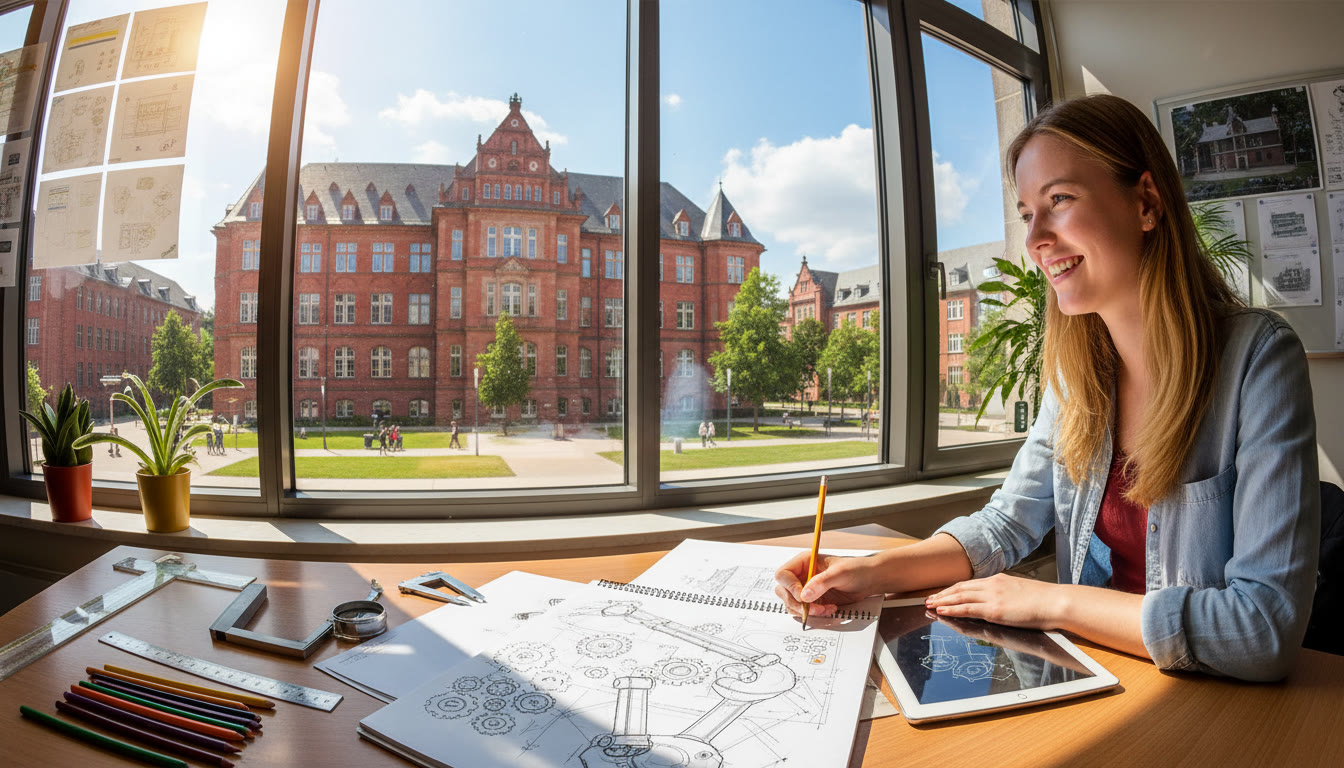
Why RWTH Aachen as an IB applicant?
RWTH Aachen is a performance-driven environment where problem-solving and technical depth matter. For an IB student, the appeal is obvious: strong lab facilities, industry links, and project-focused study that rewards the kind of independent research and extended work the DP encourages. But reputation alone won’t get you in. Admissions teams look for demonstrated preparedness — the right mix of subjects, evidence of analytical thinking, and reliable academic momentum coming out of the IB.
Big-picture admissions architecture in Germany
Germany’s higher-education landscape is pragmatic. Most technical universities evaluate international IB applicants on two fronts: (1) recognition of the DP as a higher-education entrance qualification and (2) program-level selection criteria. The DP is widely accepted as a qualifying credential, but each program or state can have its own practical requirements — language proof, subject prerequisites, or an admissions rank if demand is high. For highly competitive programs, admissions are effectively a ranking process; raw IB points help, but context, subject strengths, and sometimes extra assessments carry weight.
Key practical points to hold in mind:
- Language: many bachelor engineering programs at German technical universities are taught in German, so be ready with recognized German test scores unless you choose an explicitly English-language program.
- Subject fit: admissions officers will check that your HL subjects line up with the technical demands of the program (we unpack this below).
- Timing and documentation: international application timelines vary by university. Some programs use centralized platforms, others accept direct applications — but all ask for certified transcripts, predicted grades, and sometimes subject-specific proof.
Which IB subjects move the needle for RWTH engineering?
Engineering admissions are practical-minded: they look for mathematical fluency, physical intuition, and structured problem-solving. Strong Higher Level (HL) choices help you show that depth. A straightforward, effective combination for most engineering streams is:
- HL Mathematics (preferably the strand that best supports engineering math in your preparation system) — this is non-negotiable for most technical programs.
- HL Physics — excellent for mechanical, electrical, and aerospace pathways.
- A third HL that fits the discipline: HL Chemistry for chemical engineering, HL Computer Science for CS-adjacent programs, or another quantitative HL.
Standard Level (SL) subjects should round out your profile — consider language or global perspectives to show academic breadth. Admissions teams appreciate an IB narrative: a consistent focus on technical subjects paired with the broader thinking the DP cultivates.
How to use your Extended Essay, TOK and CAS strategically
The DP’s core isn’t just a formality — used well, it becomes a source of evidence in your application story. Examples:
- Extended Essay (EE): choose a technical EE topic that showcases investigation skills — a small experimental study, a modelling project, or a comparative analysis in engineering practice demonstrates maturity and curiosity.
- Theory of Knowledge (TOK): use TOK reflections to articulate how you think about models, evidence, and design trade-offs — useful wording for motivation statements or interviews.
- CAS: document engineering-relevant activities — robotics club leadership, internships, or community projects where you applied technical solutions.
Admissions readers are human. If your EE demonstrates you could manage a research-style assignment and your CAS shows real-world engagement, those are concrete assets beyond the point total.
Application roadmap — from predicted grades to final enrollment
Starting early is the single best advantage you can give yourself. Here’s a student-centred roadmap you can adapt to your school calendar.
- Junior year (or equivalent): choose HL subjects aligned to your engineering interest; join or lead a technical club; begin thinking about EE topics.
- Late junior / early senior year: secure references from teachers who can speak to your technical aptitude and work ethic; draft your motivation text and application answers.
- Predicted grades: work with your DP coordinator to ensure predictions reflect your trajectory; update documentation promptly if there’s a change.
- Language proof: if programs are taught in German, start language certification preparations early — many applicants underestimate how long test preparation and scheduling can take.
- Application windows: watch program-specific deadlines and special admissions formats. Prepare scanned, certified copies of transcripts, and translate documents if required.
Checklist table — what to have ready and when
| Item | Why it matters | Target timing |
|---|---|---|
| HL Math & Physics | Shows readiness for technical coursework | Choose before the start of DP |
| Extended Essay (technical topic) | Evidence of research and focus | Begin topic selection early in DP |
| Language certificates (TestDaF/Goethe/other) | Required for German-taught programs | Prepare in advance; exam slots fill fast |
| Teacher references | Contextualize your performance | Confirm writers months ahead |
| Predicted grades & final DP results | Primary academic evidence | Coordinate with school during application |
Application writing: what German admissions want to hear
Unlike large personal-statement essays used in some systems, many German applications want clarity and evidence of fit. Use short paragraphs that answer these implicit questions: Why engineering? Why this program at RWTH? Which experiences (EE, CAS, internships) prove you can handle heavy lab/problem work? Where you show leadership or sustained commitment, name specific outcomes (a working prototype, a competition ranking, documented internship tasks).
If you are also applying to the UK through UCAS, pay attention to the current UCAS format: the 3 Structured Questions in the upcoming entry cycle — Motivation, Preparedness, Other Experiences — replace the older long personal statement style. These three prompts help you craft concise, targeted responses which can be repurposed or adapted into the statements German applications request.
Language realities: German vs English programs
Most RWTH bachelor programmes are taught in German; English-taught bachelors are comparatively rare at technical universities. Plan conservatively: if you want a German-taught degree, achieve the required German proficiency and demonstrate it with the relevant certificate. If you aim for an English-instructed path, have strong English evidence and the right subject profile. Accepting that many international applicants need to invest time in German will save you from late surprises.
Country-specific admissions notes you should not miss
United Kingdom (UCAS) — the 3 Structured Questions
If you’re playing a multi-country strategy — say RWTH plus selective UK offers — remember UCAS has moved the admissions focus to three structured questions for the upcoming entry cycle: Motivation, Preparedness, and Other Experiences. Treat each response as a focused micro-essay: Motivation (why the subject and why that university), Preparedness (evidence from HL subjects, EE, projects), and Other Experiences (extracurriculars, leadership and contextual detail). These formats often make it easier to repurpose content for German applications that ask for short, evidence-based motivation statements.
Switzerland (EPFL) — capped intake and competitive ranking
Switzerland has become more deliberate about international bachelor intake at top technical schools. EPFL has publicly discussed capacity management and recently announced a cap on international bachelor admissions — a figure frequently referenced is a 3,000-student cap for international entrants — and the practical effect is that selection has shifted toward competitive ranking rather than automatic admission based purely on scores. That means if you’re weighing EPFL against RWTH, treat EPFL as a high-competition option: sharpen subject-specific grades and extracurricular evidence.
Netherlands — watch the January 15 Numerus Fixus deadline
If you apply to Numerus Fixus engineering programs at Dutch universities (for example, certain programs at TU Delft), note that the selection deadline is earlier than many general application windows: the January 15th cutoff is decisive for many constrained engineering tracks. That earlier date exists to allow Dutch institutions to manage demand; missing it can close a whole pathway, so mark it clearly if you’re applying there as part of a multi-country plan.
Canada — scholarships and award language
Canadian universities have two common scholarship types relevant to IB students. Be careful with terminology: don’t call them “lanes.” Instead use the accepted distinctions:
- Automatic Entrance Scholarships — these are grade-based awards granted according to the final or predicted academic averages and often require no separate application.
- Major Application Awards — these are university-specific and often require additional essays, nominations, or evidence of leadership and project work in the applicant’s chosen major or discipline.
If Canada is in your plan, get clarity on which scholarships are automatic and which require supplementary materials, and prepare those materials early.
Singapore — timing risk for IB students
Universities in Singapore frequently evaluate IB applicants on a later timeline than many US or UK offers. Offers to IB students can arrive late in the admissions cycle — often mid-year — which creates an acceptance-gap risk if you’re trying to hold multiple offers. Plan your deposit and waitlist decisions with that timing in mind, and consider financial or logistics contingencies if you must wait for an offer that could arrive later than peers’ choices.
Common application pitfalls and how to avoid them
- Overloading your subject list: quality beats quantity. A clear HL focus with deep achievement is better than a scattershot HL combination.
- Underusing the EE: a technical EE can become a standout piece in your story; don’t treat it as an afterthought.
- Ignoring language logistics: test dates and certificate processing take time — start early.
- Missing program-specific deadlines: some places use early deadlines or different portals; double-check every program’s calendar.
- Assuming equivalence across systems: an IB score that’s competitive in one country may be average in another — contextualize each target.
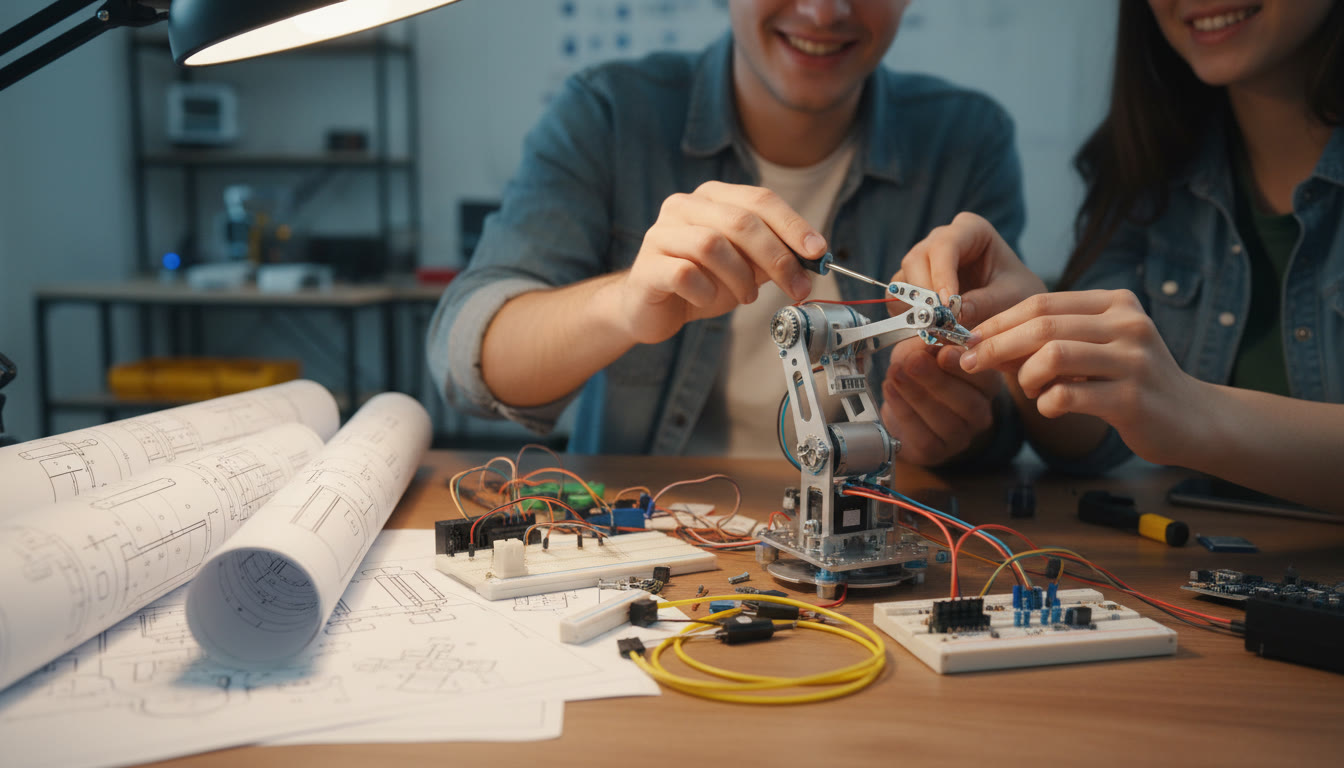
Alternative pathways: Studienkolleg and foundation options
If your secondary qualifier isn’t directly recognized or if you need time to polish language skills, the Studienkolleg (preparatory college) path or a university foundation program can be realistic routes into technical degrees. These options give you structured transition time and often include language training and subject bridging modules. They’re pragmatic, not a failure — many students arrive at their degree better prepared and more confident.
How targeted support can help — the role of personalized tutoring
Admissions is both an academic and a narrative exercise. Personalized tutoring and targeted admissions coaching can make a measurable difference: tutors who understand the IB and the technical demands of engineering can tailor study plans, help craft focused EE topics, and rehearse application questions. For IB students who want one-on-one guidance, tailored study plans, and a balance between subject depth and application storytelling, Sparkl can be a resource to consider — its one-on-one tutoring model emphasizes subject specialists and planning around the DP calendar.
Putting it all together: a sample timeline (conservative)
Here’s a conservative, realistic timeline that keeps you covered for multiple countries while prioritizing RWTH Aachen:
- Start HL subject alignment and EE ideation early in the DP.
- By mid-DP: secure teacher references and document CAS achievements in detail.
- Early senior year: finalize EE draft, sit language exams if needed, and gather certified transcripts.
- When application windows open: submit on-time, double-check program-specific requirements (German language, portfolio, or aptitude tests), and track responses.
- After offers: weigh program language, lab opportunities, industry links, and practical considerations like tuition or living costs before making an enrollment decision.
Sample application paragraph: show, don’t tell
Admissions officers read hundreds of statements. A focused paragraph that ties your DP work to the program is effective. Example framework: “In HL Physics I explored fluid flow through a scaled-channel experiment for my Extended Essay, where I designed and ran tests, analyzed velocity profiles, and iterated on instrumentation. That hands-on investigation shaped my interest in mechanical systems and taught me to treat design as an iterative, data-driven process — a mindset I plan to bring to RWTH’s project-based labs.” Short, specific, and evidence-based beats broad statements.
Final checklist before you click submit
- Confirm that your HL subjects align with program prerequisites and that any missing knowledge is compensated by coursework or preparatory plans.
- Verify language requirements and book test dates well before deadlines.
- Polish your EE and ensure it demonstrates research habits relevant to engineering.
- Prepare concise, evidence-based motivation statements and be ready to adapt them to the UCAS 3 Structured Questions format if applying to the UK as well.
- Keep a backup plan: consider parallel applications in systems with different rhythms (Netherlands, Canada, Singapore) and be mindful of country-specific deadlines like the Numerus Fixus cutoff.
Admission to a top technical university is a mix of planning, subject mastery, and clear storytelling. For IB students, the DP already builds many of the tools you need — now it’s about translating your curiosity and lab-honed habits into an application that admissions teams can quickly understand and value.
This article has focused on practical, actionable preparation for RWTH Aachen and comparable engineering pathways in Europe and beyond. Use the DP’s core projects — EE, TOK, CAS — as authentic material for your application narrative, align HL subjects with program demands, and keep timelines and language logistics at the front of your planning. Good preparation gives you options, and thoughtful choices turn technical interest into a strong candidacy.






















No Comments
Leave a comment Cancel