
The Paragraph Audit: A Small Habit That Yields Big EE Gains
If you are elbow-deep in a draft of your Extended Essay, Internal Assessment, or a TOK essay, you know the feeling: paragraphs that once felt clear now wobble under close reading. The Paragraph Audit is a focused, repeatable habit — ten minutes, a printed page or a highlighted screen — that helps you find friction in argument, tighten analysis, and make every paragraph pull its weight toward your research question. It’s practical, low-tech, and immediately useful during the revision stages of the EE and in the final polishing of IAs and TOK essays.

Why paragraphs are the unit that matters
Examiners read essays as a sequence of moves: claim, support, explanation, and link. Each paragraph is one or more of those moves made visible. A paragraph that lacks a clear claim or fails to tie evidence back to the research question weakens the whole essay no matter how many brilliant sentences appear elsewhere. The Paragraph Audit treats a paragraph as a small argument that must be checked for completeness and clarity. That micro-level focus turns messy drafts into tightly reasoned essays without asking you to rewrite your argument from scratch.
When to insert a Paragraph Audit into your workflow
- After a first full draft: run a fast audit on every paragraph to identify structural weak spots.
- Before submitting a near-final draft: use the audit to catch slipping clarity and misplaced evidence.
- While preparing for viva voce or teacher reflection: extract key paragraphs that explain your core reasoning.
The Paragraph Audit: A step-by-step checklist
The beauty of the audit is its simplicity. For each paragraph, ask six focused questions. Answering them takes between two and five minutes per paragraph once you get the hang of it.
- 1. Purpose: What is this paragraph doing? (claim, evidence, analysis, counterargument, link)
- 2. Topic sentence: Is there a clear topic sentence that states the paragraph’s idea?
- 3. Evidence: Is the evidence present, explained, and appropriate to the claim?
- 4. Analysis: Do you explain how the evidence supports the claim? Is the reasoning explicit?
- 5. Link back: Does the paragraph connect to the research question or the previous paragraph?
- 6. Economy: Could this be split, shortened, or merged without losing meaning?
Audit in practice: a concise table to guide quick decisions
| Audit Question | What to look for | Quick fix |
|---|---|---|
| Purpose | Does the paragraph serve a single, identifiable function? | Label it; rewrite to focus on one function. |
| Topic sentence | Is the main idea explicit at the start? | Draft a clear opening sentence that states the claim. |
| Evidence | Is the evidence appropriate, cited, and not merely descriptive? | Trim irrelevant detail and add the missing citation/explanation. |
| Analysis | Is there reasoning that links evidence to the claim? | Add a sentence: “This shows… because…” |
| Link back | Does the paragraph refer to the research question or thread? | Insert a short linking sentence or clause. |
| Economy | Is the paragraph too long, repetitive, or containing multiple ideas? | Split or move material; create sub-paragraphs. |
Before-and-after examples (short and practical)
Seeing the audit at work helps make it habitual. Below are miniature before/after paragraphs that show common issues and quick fixes.
Example A — vague claim and summary-heavy
Before: “Many studies suggest that X is important. For instance, Author A found data in Y, and Author B suggested Z. These findings are discussed in the literature and are significant to my topic.”
After: “Author A’s dataset shows a strong correlation between X and outcome Y; this suggests that X contributes directly to the mechanism I investigate because the timing of changes in X precedes shifts in outcome Y. Therefore, Author A’s evidence supports my claim that X is a causal factor rather than a coincidental association.”
Why the change works
The after version: (a) starts with a clear claim about Author A, (b) specifies why the evidence matters, and (c) ties back to the essay’s analytical goal. The audit would have flagged the original for “purpose” and “analysis.”
How to adapt the Paragraph Audit for different IB tasks
Not all paragraphs are built the same. Essays in the humanities, experimental reports in the sciences, and theory-heavy TOK pieces require slightly different audit emphases.
For the Extended Essay (humanities and social sciences)
- Prioritize argument flow: each paragraph should make one step toward answering the research question.
- Watch for unconnected summary of sources — every piece of evidence must be explained in terms of your argument.
For the Extended Essay (sciences)
- Evidence often includes data — audit whether you interpret the data rather than just present it.
- Ensure methodology paragraphs explain why the chosen method supports valid conclusions.
For Internal Assessments
- Lab write-ups need concise paragraphs for aim, method, result, and interpretation — audit each for clarity and reproducibility.
- In math or language IAs, look for precise definitions and clear logical steps.
For Theory of Knowledge
- Audit whether each paragraph presents a claim, a counterclaim, and explicit weighing of knowledge questions.
- Make the link to ways of knowing and areas of knowledge explicit in the analysis sentence.
Practical habits to make Paragraph Audits fast and reliable
Turn the audit into a habit by pairing it with a simple routine. Here are reliable, low-friction practices that work for most students.
- Print one chapter or work with a single PDF page: it’s easier to physically mark and compare sentences.
- Set a timer for ten minutes: force brevity — you’ll be surprised how much you can diagnose in a short burst.
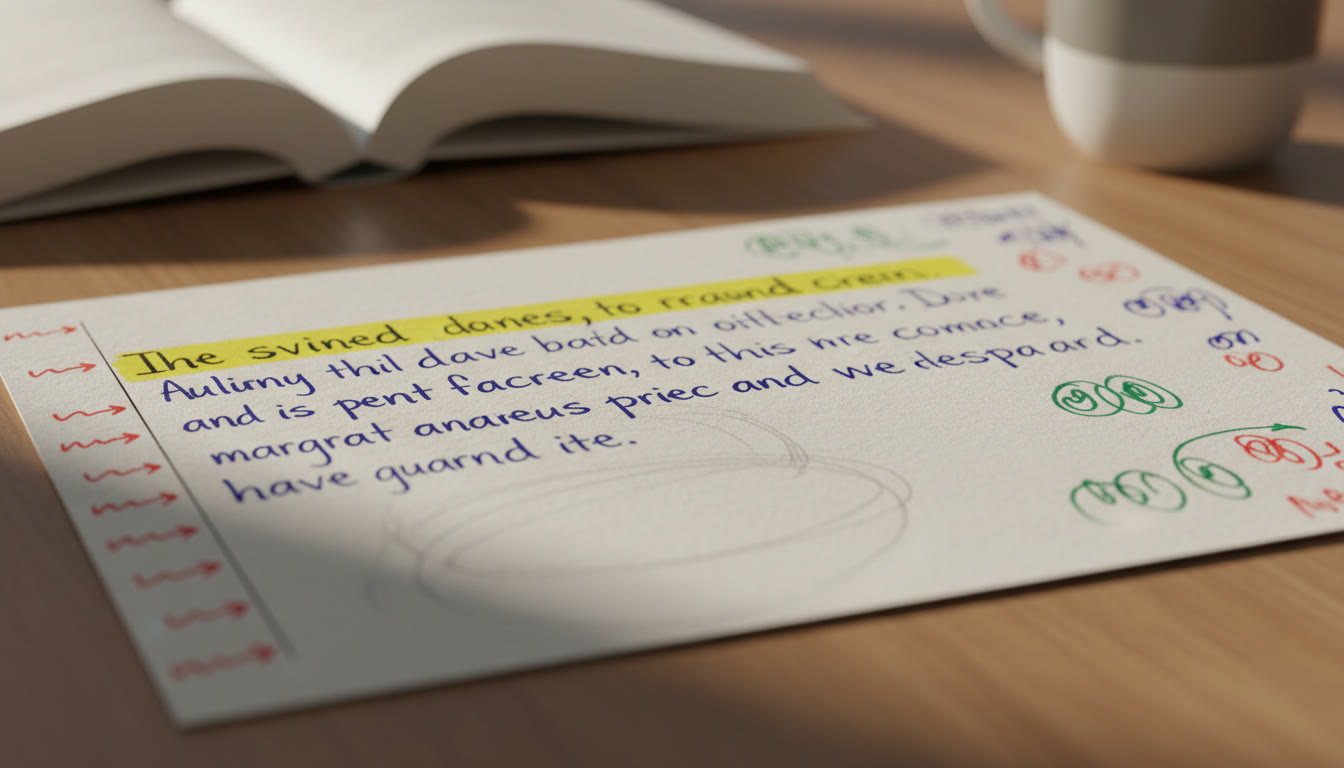
- Color-code problems: green for strong topic sentences, yellow for weak analysis, red for missing links or evidence.
- Keep a running mistakes list: track recurring issues and address them globally (e.g., “I tend to summarize rather than analyze”).
- Do one full audit pass close to submission: once content is stable, the paragraph audit can be the final polish that raises clarity and marks.
How external feedback fits in
Individual feedback from supervisors or tutors can accelerate the audit process. Troubleshooting a stubborn paragraph with a second reader often reveals hidden assumptions and ambiguous phrasing. If you use targeted tutoring, look for short, paragraph-focused sessions: a 30-minute meeting that addresses three paragraphs in depth can be more productive than a general hour-long discussion of the whole draft. For students who seek structured guidance, Sparkl‘s personalized tutoring can offer one-on-one guidance, tailored study plans, and feedback focused on paragraph-level clarity and argument structure.
Common paragraph problems and audit-friendly fixes
Below are typical weaknesses the Paragraph Audit catches, with compact strategies to fix them.
- The paragraph that does too many things: Split it. If you can’t state the paragraph’s single purpose in one sentence, it probably has two ideas.
- Evidence without interpretation: Add a sentence that explicitly connects the data or quote to the claim: “This implies… because…”
- Analysis that drifts into opinion: Check for support — if analysis is asserted without evidence, it should be backed up or rephrased as a limitation.
- Linking failure: Add a closing clause that ties the paragraph back to the research question or to the next paragraph’s claim.
- Overuse of quotation or paraphrase: Reduce quoted text and increase your interpretation; the examiner wants your voice.
- Ambiguous topic sentences: Start with active, specific language (“X demonstrates…”, “Y challenges the assumption that…”).
A quick editorial language checklist
- Prefer active verbs for clarity.
- Trim filler phrases like “it is important to note” unless they serve a function.
- Replace vague nouns (“this”, “these”) with specific referents when ambiguity arises.
Measuring improvement: make the audit measurable
To know if the Paragraph Audit is effective for you, track simple metrics during revision cycles.
- Count paragraphs that pass all six audit questions on the first pass versus after edits.
- Log time spent per paragraph and aim to reduce it as you gain clarity.
- Note the frequency of the same fix (e.g., “missing link”) — if it decreases, your global writing has improved.
Sample tracking table you can copy
| Page/Paragraph | Passes on first audit | Problems fixed | Time spent (min) |
|---|---|---|---|
| Chapter 1 / P2 | No | Weak analysis, missing link | 12 |
| Chapter 2 / P5 | Yes | — | 4 |
How this helps with assessment criteria
While you should not write to the mark scheme sentence-by-sentence, aligning paragraphs with clear claims, evidence, and analysis maps directly onto core assessment criteria: clarity of argument, critical thinking, and use of evidence. An essay that reads as a chain of well-audited paragraphs will be easier for an examiner to follow and will demonstrate disciplined critical thinking — exactly the traits IB examiners reward.
Using technology thoughtfully
Digital tools can speed the audit but don’t replace judgment. Use them to highlight, count words, or search for repeated phrases. If you work with tutors or use structured feedback platforms, ask them to perform paragraph-level checks rather than only macro comments. A focused comment like “topic sentence unclear” is more actionable than a general comment like “clarify this section.” When you want targeted help, pairing human expertise with structured tools — for example, one-on-one sessions that zero in on paragraphs — can be extremely efficient; Sparkl‘s tutors often guide students through paragraph audits, offering tailored study plans and AI-driven insights that sharpen weak points quickly.
Quick templates for common paragraph types
Here are three short templates you can apply during your audits to reframe weak paragraphs quickly.
- Analytical paragraph (humanities): Topic sentence (claim) + evidence (quote/data) + explanation (why it matters) + link to RQ.
- Data paragraph (sciences): Observation/result + interpretation + methodological caveat + link to hypothesis.
- TOK paragraph: Claim + counterclaim + comparison of knowledge frameworks + conclusion that weighs the implications.
Putting it all together: an audit session plan (30–60 minutes)
Use this session when you have a stable draft and need to upgrade paragraph quality across a section.
- 5 minutes: skim the section and mark paragraphs that feel weak.
- 20–40 minutes: run the six-question audit on each marked paragraph, making quick edits.
- 5–10 minutes: read aloud the revised section to test flow and transitions.
When to stop editing
Perfectionism can trap you. Finish the audit round when paragraphs read as connected micro-arguments: if each paragraph has a clear claim, the right evidence, an explicit analysis, and a link to the research question, you’re usually ready to move on to global editing (transitions and structure) rather than continuing microscopic tweaks.
Final academic thought
The Paragraph Audit converts the intimidating process of revision into a disciplined, repeatable habit: treat each paragraph as an argument fragment that must state its purpose, show evidence, explain significance, and connect to your research question. By making that inspection routine, you strengthen logic, reduce vagueness, and make your Extended Essay, Internal Assessment, or TOK submission demonstrably sharper and more persuasive.

























No Comments
Leave a comment Cancel