
IB Physics: A Practical Roadmap to the Resources That Actually Help
Physics in the IB Diploma Program is one of those subjects that rewards understanding more than memorization. If you want the upper bands, it’s not enough to read every chapter or watch a dozen videos — you need the right combination of official guides, targeted practice, concept-deepening activities, and focused feedback. This article strips away the noise and gives you a clear, humane guide to the resources that make a real difference, and how to use them so your learning grows faster and sticks longer.

Why resource selection matters (and what most students get wrong)
Two students can read the same textbook and get very different results. The difference is not intelligence — it’s strategy. Good resources give you accurate content; great resources give you structure for practice, feedback, and self-correction. A common mistake is mistaking volume for progress: reading more chapters doesn’t equal deeper understanding unless you stop to apply, test, and reflect.
Think of your learning like tuning an instrument. Official IB documents tune you to the exam’s expectations. Conceptual texts teach you technique. Practice papers sharpen timing and method. Simulations and labs give intuition. Tutoring or one-on-one coaching helps you identify the tiniest tweaks that produce clearer answers on exam day.
How I recommend you measure a resource’s value
- Alignment: Does it map explicitly to the IB subject guide and command terms?
- Actionability: Does it include worked examples, model answers, or practice prompts?
- Feedback loop: Can you check your answers against markschemes or tutor comments?
- Transferability: Does it help you apply principles in unfamiliar contexts (a must for IB)?
- Efficiency: Will it help you improve in constrained study time?
Core official materials: start here and build outwards
Official IB materials are non-negotiable. They set the vocabulary, the assessment objectives, and the command-term expectations that examiners use. Start by reading the subject guide closely — it’s not long, but it’s the syllabus map you should follow constantly. Pair that with the physics data booklet and any official specimen papers the IB publishes; these show you how content is assessed and what a high-quality answer looks like.
Official resources do three things: they define what counts, provide benchmarks for performance, and supply authentic practice material. Use them early and often. When you finish a topic, answer relevant questions from the official papers before you look at other practice sources. That trains your brain to think in the IB examiner’s language.
Where to focus within the official suite
- Subject guide: learn the command terms and assessment objectives.
- Specimen and past papers: practice real-style questions under timed conditions.
- Markschemes and examiner reports: read exemplar answers and common mistakes.
Textbooks and study guides: pick quality over quantity
Textbooks are useful when they’re IB-focused and structured around the syllabus. A good physics textbook will not only explain concepts clearly but will also include worked examples that mirror exam-style questions. Use textbooks to build your conceptual scaffolding, but don’t treat them as your only source of practice. When you encounter a worked example, rework it from scratch without looking at the steps — that’s how understanding becomes your own.
Study guides designed specifically for IB often scaffold revision effectively: concise summaries, command-term-focused tips, and exemplar answers. Use these to condense a topic after you’ve studied it in depth; they’re ideal for late-stage review and quick concept checks.
Active learning tools: videos, simulations, and targeted notes
Short, focused videos help with tricky intuition — think an 8–12 minute walkthrough of electromotive force or an animation of wave superposition. But the best use of videos is as supplement, not substitute. Watch a short clip to clear the fog, then immediately practice with a problem that requires you to use that idea.
Simulations (virtual labs, circuit builders, fields visualizers) are particularly powerful for visual learners because they let you manipulate variables and see outcomes in real time. Use simulations to build intuition before you formalize reasoning with equations.
| Resource type | Strength | Best used for | Effort required | Impact on grade |
|---|---|---|---|---|
| Official IB papers & markschemes | Exam alignment, authentic practice | Exam technique, timing | High (timed practice) | Very high |
| IB-focused textbooks | Structured explanations, worked examples | Learning concepts, worked methods | Moderate | High |
| Short videos & micro-lectures | Quick intuition, clarification | Clearing misconceptions | Low | Moderate |
| Simulations & virtual labs | Visual intuition, experimentation | Conceptual mastery, IA ideas | Moderate | Moderate |
| One-on-one tutoring | Personalised feedback, focussed weak-point fixing | Targeted improvement, IA refinement | Variable | High (when well used) |
Practice papers: the single most efficient lever
Past papers and specimen questions are the closest you get to the real thing, and nothing beats deliberate practice on those. But there’s a method to how you should use them:
- Start untimed to focus on method and clear reasoning.
- Check your answers with a markscheme, not a tutor’s summary — the language of the markscheme shows what examiners reward.
- Rework the question under timed conditions after you’ve studied the markscheme — this builds fluency.
- Keep a running error log of question types you miss and revisit those topics with targeted practice.
Timing practice is crucial because many students can do individual questions well but lose marks to poor time management. When you do timed papers, simulate exam conditions: no phone, no notes, and strict timing for each section.
How to extract maximum value from markschemes and examiner reports
Markschemes show the granularity of credit: what phrases earn marks, where units or methods matter, and where partial credit is common. Examiner reports explain common pitfalls — read them to recognise repeated weak spots, like missing assumptions in mechanics questions or imprecise use of significant figures. Use examiner language to refine your answer style.
Internal Assessment and practical work: resources that build intuition
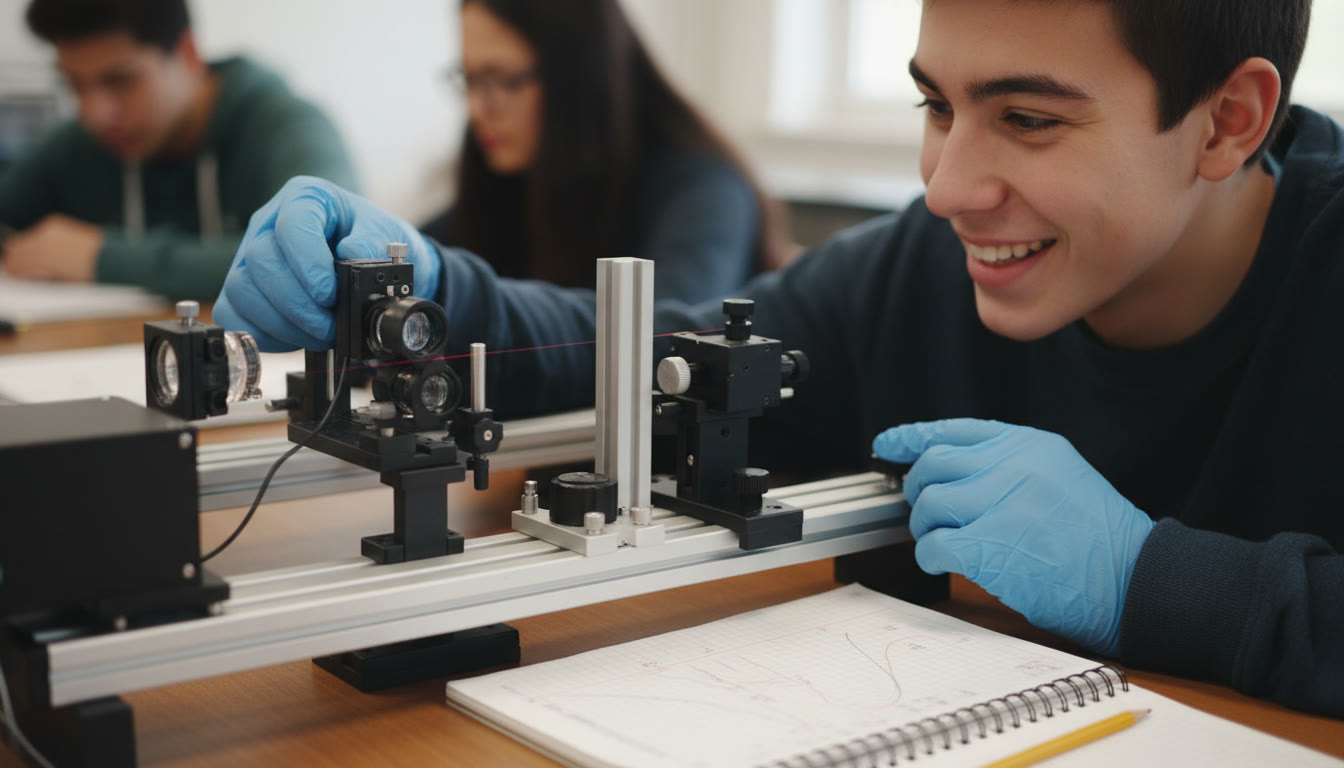
The IA is as much about thoughtful planning and clear analysis as it is about good measurements. Resources that help you design an IA include lab manuals with procedural clarity, simulation tools for hypothesis testing, and examples of annotated data analysis. Understandable data-handling guides (uncertainty propagation, curve-fitting, residual analysis) make your analysis stand out because many students rush this part.
- Choose IA topics that make you curious — curiosity sustains better experiments.
- Use simulations early to sharpen the experimental design before you go to the lab.
- Keep clean, well-labeled raw data and show every step of your analysis; the clarity of presentation often wins marks even when data isn’t perfect.
How targeted tutoring and personalised study plans speed progress
One-on-one guidance is most effective when it targets a narrow set of weaknesses and teaches strategies you can reuse. A good tutor helps you unpack exam questions, coaches you on the examiner’s language, and gives feedback on writing concise physics answers. Personalised plans that set measurable short-term goals (week-to-week) produce faster gains than generalized study lists. If you try personalised help, look for tutors who show how a small change in approach leads to clearer answers.
For students using structured tutoring, the common pattern of success is: diagnostic assessment, focused weakness-targeted lessons, regular timed practice, and iterative feedback. Some platforms pair human tutors with AI-driven diagnostics to surface weak topic clusters faster; when used sensibly, that combination can save time and sharpen revision.
For example: a student weak on circular motion might benefit from a focused two-week block that mixes a concise concept guide, 3–4 targeted past-paper questions, a simulation exploration, and a short tutoring check-in to correct persistent errors. That sequence beats scattered practice across ten topics.
Building an exam-ready study schedule (practical templates)
A practical schedule respects two realities: limited time and cognitive fatigue. Use focused blocks (50–90 minutes) with a single objective — say, ‘master Doppler effect problem variants’ or ‘tighten IA data presentation’. Combine learning blocks with practice blocks and reflection blocks.
- Weekly rhythm: 2 concept-building sessions, 1 simulation/lab session, 1 timed past-paper segment, 1 review of errors and markscheme reading.
- Monthly rhythm: a full timed paper under exam conditions, followed by an in-depth marking session and error log consolidation.
- Short cycles: every two weeks, check one or two persistent weaknesses with a focused mini-plan.
When you need a faster boost, a short sequence of personalised tutoring sessions that target three specific mistakes can produce outsized improvements. For many students, pairing targeted tutoring with deliberate past-paper practice is the best investment of limited study time.
Example weekly plan (concise)
- Monday: Concept review (50–70 minutes) + 20 minutes of practice questions.
- Wednesday: Simulation or lab exercise (60 minutes) + analysis write-up.
- Friday: Timed question set (40–60 minutes) + markscheme comparison.
- Weekend: Longer study block (90 minutes) on a weak topic + tutor check-in or peer review.
Common pitfalls and the specific resources that fix them
Here are some frequent student mistakes and the tools that correct them:
- Over-reliance on memorized problem steps → fix with conceptual textbooks and simulation work to see how variables interact.
- Poor exam phrasing and missing command terms → fix with regular markscheme study and practice under timed conditions.
- Weak data analysis in IA → fix with focused data-handling guides and annotated exemplar write-ups.
- Slow problem-solving under time pressure → fix with structured past-paper practice and shorter timed drills.
Putting it together: a realistic plan to move toward top grades
Start with a diagnostic: one past paper in exam conditions and a careful review against the markscheme. From that baseline, create a 6–8 week rolling plan that focuses each week on a single topic cluster (mechanics, energy, fields, waves, modern physics), with practice questions and short tutor check-ins where needed. Rotate in simulations and IA work so that conceptual and practical skills both improve. Keep an error log and revisit it every week; the students who climb to the top bands are the ones who systematically eliminate repeating errors.
When you layer resources, follow this order: official materials to define expectations → a focused textbook for clear exposition → short videos or simulations for intuition → past papers and markschemes for application → targeted tutoring for precision feedback. That order keeps learning grounded and steadily moves your answers toward the style examiners reward.
Final notes on efficient resource use
Quality beats quantity. A small set of well-chosen resources, used deliberately, outperforms a scattershot approach. Keep an error log, practice deliberately with past papers, and seek feedback that corrects your reasoning, not just your final answers. Personalised support can accelerate this loop by turning vague weaknesses into concrete next steps: a short, targeted tutoring plan can show you how to rephrase answers to capture marks consistently.
Remember that mastery in IB Physics is built on clarity: clear conceptual models, clear working, and clear presentation. If you bring those three together — with official IB guidance, rigorous past-paper practice, natural intuition-building tools like simulations, and occasional personalised feedback — you’ll be shaping answers that examiners find convincing and complete.
Conclusion
Mastery of IB Physics happens when you pair the right materials with deliberate practice and focused feedback. Use the official IB guides as your syllabus compass, practice repeatedly with past papers and markschemes, deepen intuition with simulations and targeted explanations, and bring in personalised tutoring to seal the gaps. This integrated approach transforms effort into higher-quality answers and, ultimately, stronger results.




















No Comments
Leave a comment Cancel