
Why your CAS record is more than a checklist
Think of CAS as the material for your story, not just a set of boxes to tick. Those weekend projects, the leadership role you reluctantly accepted, the community workshop that stretched your comfort zone — each one can become a piece of persuasive, authentic essay content later on. The key is to treat CAS as both experience and evidence: events that teach you something and artifacts that prove it.

When you collect experiences intentionally, reflect honestly, and assemble evidence clearly, your CAS portfolio becomes an engine for better Extended Essays, TOK connections, and university personal statements. This article walks through a practical, human-centered approach: how to plan CAS with future essays in mind, document your journey so it’s easy to retell, and craft reflections that show growth rather than just activity.
Understand the building blocks: CAS purpose and the learner profile
CAS exists to develop initiative, resilience, collaboration and ethical thinking — qualities universities and assessors care about. Aligning your activities to these core goals (and to the IB learner profile attributes you demonstrate) creates a coherent narrative later on. Rather than treating CAS as separate from academics, think of it as a laboratory where you test ideas, try leadership, and practice problem-solving in real contexts.
CAS outcomes as reflection anchors
Use the official learning aims and outcomes as reflection anchors. When you write later, linking an activity to one or two learning outcomes helps structure the narrative: what you did, why it mattered, what you learned. A few targeted outcomes can guide both short reflections and longer essay paragraphs.
Start with strategy: choose activities that scale into stories
Not every activity needs to be grand. The best CAS projects for future essays have one or more of these qualities: progression, challenge, community impact, problem-solving, leadership, or a twist that reveals personal values. Before committing time, ask yourself: will this produce a learning moment I can describe? Will I be able to show change from start to finish?
Questions to ask before you begin
- Is there a clear beginning, middle and end to this project?
- What measurable or observable change could it produce (attendance, skills, physical improvements, community reach)?
- What obstacles might force me to adapt — and what would that adaptation demonstrate about my skills?
- Can I collect evidence easily (photos, logs, testimonials, reflections)?
Map activities to essay angles: turning actions into themes
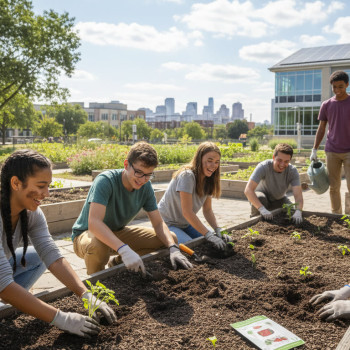
When you plan CAS with essays in mind, you’re really mapping activities to themes. A community garden can become an essay about systems thinking and sustainability; coaching a youth team can become a reflection on mentorship and pedagogy; a research-oriented creativity project can seed an Extended Essay idea. The following table helps you see how everyday projects map to compelling essay angles and the kind of evidence that makes those angles believable.
| Activity | Potential Essay Angle | Evidence to Collect | Reflection Prompts |
|---|---|---|---|
| Community tutoring program | Access to education, teaching methods, measuring learning progress | Pre/post assessments, student testimonials, lesson plans | What strategies worked? How did student understanding change? |
| Running a sustainability initiative | Systems change, stakeholder engagement, measurable environmental impact | Before/after metrics, photos, partner letters | How did you persuade others? What obstacles showed structural issues? |
| Creative performance project | Process of artistic development, collaboration, cultural dialogue | Drafts, rehearsal notes, audience feedback | How did the piece evolve? What did you learn about collaboration? |
| Sports leadership (team captain) | Leadership under pressure, resilience, motivation methods | Training plans, match records, peer reflections | How did you handle setbacks? What leadership style did you adopt? |
| Service project addressing a local issue | Ethics, community engagement, sustainable solutions | Needs analysis, project timeline, impact measures | Whose voices were central? How did the community shape the outcome? |
| Independent creativity research | Inquiry-based learning, methodological reflection | Lab notes, prototypes, literature review | What methods were effective? How did your understanding deepen? |
Document as you go — make evidence your friend
Many students wait until the end to gather evidence and find that memories are fuzzy. Keep a simple, consistent system from the start: short logs after each session, 2–3 quick reflections per project, and a folder for artifacts. The easier the system, the more likely you are to maintain it. When you later extract material for essays, you’ll be grateful for accurate timestamps, clear metrics, and contemporaneous reflections.
Practical documentation methods
- Daily or weekly short logs (1–3 sentences) tagged by project name
- Photo and short video captures with date-stamped filenames
- Collect feedback: mentor emails, partner letters, participant surveys
- Store everything in a single backed-up folder structure with clear names
Write reflections that show learning, not just activity
Reflections are where the magic happens. A strong reflection explains what you learned, how you changed, and why that matters. Use concrete details and link your experience to broader learning outcomes. Resist the temptation to list tasks — describe decisions, trade-offs, and turning points.
From shallow to rich reflection: an example
Shallow: “I helped at a food drive and it was rewarding.”
Rich: “Organizing the food drive taught me how to negotiate with local vendors; when donations fell short, I redesigned the collection strategy to target community centers, which increased contributions by 40% and showed me the importance of stakeholder mapping.”
Frameworks for turning reflections into essay paragraphs
Use an evidence + insight frame so readers can follow both what happened and why it matters. A simple scaffold to convert a reflection into an essay-ready paragraph is:
- Context — What was the project and your role?
- Action — Specific steps you took (be precise)
- Outcome — Measurable or observable result
- Learning — What this taught you and how it changed future action
Write as if you are convincing a reader that your learning was genuine: show process, evidence, and insight.
Concrete examples: three mini case studies and their essay use
Below are compact examples that show the translation from activity to essay material. These are stylized but realistic paths students take.
Case study A — Service project that becomes an ethics essay
Project: You helped design a local recycling education program and discovered that economic constraints limited participation.
Essay angle: Use the project to discuss ethical responsibilities of community interventions — balancing ideals with socioeconomic realities. Evidence: attendance data, interview quotes, photo evidence. Reflection focus: the ethical trade-offs you encountered and your shift from a top-down to a co-created approach.
Case study B — Creativity project that informs an Extended Essay
Project: You created a multimedia exhibit exploring local migration stories and experimented with narrative structure.
Essay angle: The exhibit’s research methods and interpretation could connect to an Extended Essay in literature, history, or visual arts. Evidence: drafts, feedback, a reflective journal on methodology. Reflection focus: how you chose sources, the limits of representation, and how feedback reshaped your narrative choices.
Case study C — Activity that becomes a leadership narrative
Project: You took over a school club after a volunteer shortage and restructured its meeting format to boost participation.
Essay angle: A leadership essay that charts problem identification, experimentation with solutions, and outcomes. Evidence: revised meeting plans, attendance charts, member testimonials. Reflection focus: what leadership style you adopted, why you iterated, and the lessons you’ll apply in future group work.
Organising your portfolio for easy retrieval
When you sit down to write an essay, you don’t want to be hunting for a testimonial from last year. Structure your portfolio for searchability. Use tags, short summaries, and a consistent naming convention so you can pull a quote or a metric in minutes, not hours.
Suggested folder structure
- Root: CAS Portfolio
- Project folders: “ProjectName_ProjectType” (e.g., “CommunityGarden_Service”)
- Inside each project: Evidence (photos, PDFs), Logs (dated entries), Reflections (chronological), Feedback (emails/testimonials)
- Index file: A one-page index listing each project, key outcomes, and suggested essay angles
Quick checklist: What to keep and why
| Item | Why it matters | How to use it in an essay |
|---|---|---|
| Photos and short videos | Visual proof and mood/context | Use to illustrate process or atmosphere |
| Attendance or impact metrics | Shows measurable change | Support claims of impact with numbers |
| Mentor or participant testimonials | Third-party validation | Quote to show external perspective |
| Drafts and iterative notes | Demonstrates learning process | Use to show progression and adaptation |
| Short reflections | Direct insight into thinking | Source of authentic lines for essays |
Language and tone: write like a reflective storyteller
Avoid vague superlatives and dramatic claims without backup. Replace “it was amazing” with a brief concrete scene, metric, or quotation. Use active verbs and specific details. Essays that pair a vivid moment with analytical depth are memorable — a single concrete anecdote followed by a line that extracts the learning beats both narrative and reflection.
How targeted support can accelerate the process
Sometimes you need structure to make reflection deep and evidence useful. Targeted 1-on-1 guidance can help you frame your story so that your reflections aren’t just honest but also analytically sharp. For example, Sparkl offers tailored study plans and expert tutors who can help translate a messy project folder into crisp essay paragraphs. If you work with a coach, ask them to focus on refining your learning claims, tightening evidence chains, and practicing interview-style articulation of your CAS story.
What effective tutoring can provide
- 1-on-1 guidance to identify strongest essay angles
- Help turning raw evidence into clear, quoted support
- Tailored study plans to fit CAS documentation into busy schedules
- AI-driven insights that highlight patterns in your reflections and suggest language adjustments
These supports are most useful when they preserve your voice: coaches should sharpen, not rewrite, your story.
Common pitfalls and how to avoid them
There are three recurring traps students fall into:
- Collecting evidence but never reflecting. Evidence needs interpretation — reflections are the glue.
- Writing reflections that tell rather than analyze. Ask “why did this matter?” and “what specifically changed?”
- Waiting until the last minute. Memory fades and details get lost; small, regular reflections win.
Address these with routines: 10-minute weekly synthesis sessions, a simple naming convention for files, and an index document linking projects to potential essay angles.
Pulling it all together: a week-by-week plan for finalising your portfolio
If you have a short block of time to prepare, a focused plan helps. Here’s a compact schedule you can adapt to your pace.
- Week 1: Inventory — list every project, gather basic evidence, create folders
- Week 2: Prioritise — pick top 4–6 projects with the strongest essay potential
- Week 3: Deep reflections — write two rich reflections for each priority project
- Week 4: Evidence polish — collect missing artifacts, request testimonials
- Week 5: Drafting — convert reflections into essay-ready paragraphs and link to evidence
- Week 6: Review and refine — have a mentor or tutor give feedback, then finalize
Ethics, authenticity and the IB ethos
Be scrupulously honest. Exaggerated claims or fabricated evidence not only risk disciplinary consequences but weaken your own learning story. Authenticity is the currency of meaningful essays: small, honest accounts of challenge and response are more powerful than inflated achievements. Link your reflections to values and ethics — show you thought about consequences.
Final practices that make a portfolio academic-strength
- Use precise, measurable language: dates, numbers, roles, outcomes.
- Quote a participant or mentor verbatim to add third-party voice.
- Cross-reference: link a CAS reflection to a TOK idea or an Extended Essay question where relevant.
- Keep a one-page index summarising projects and their best essay uses.
Closing thought
Turning CAS into strong essay content is a practice of intentionality: choose projects that allow learning to happen, document those moments carefully, and train yourself to reflect in ways that reveal growth. When you treat your portfolio as both record and argument, you create a credible, authentic narrative that connects lived experience to academic insight.

















No Comments
Leave a comment Cancel