
Build an Arts Initiative That Lasts: A Student’s Guide to CAS and Portfolio Excellence
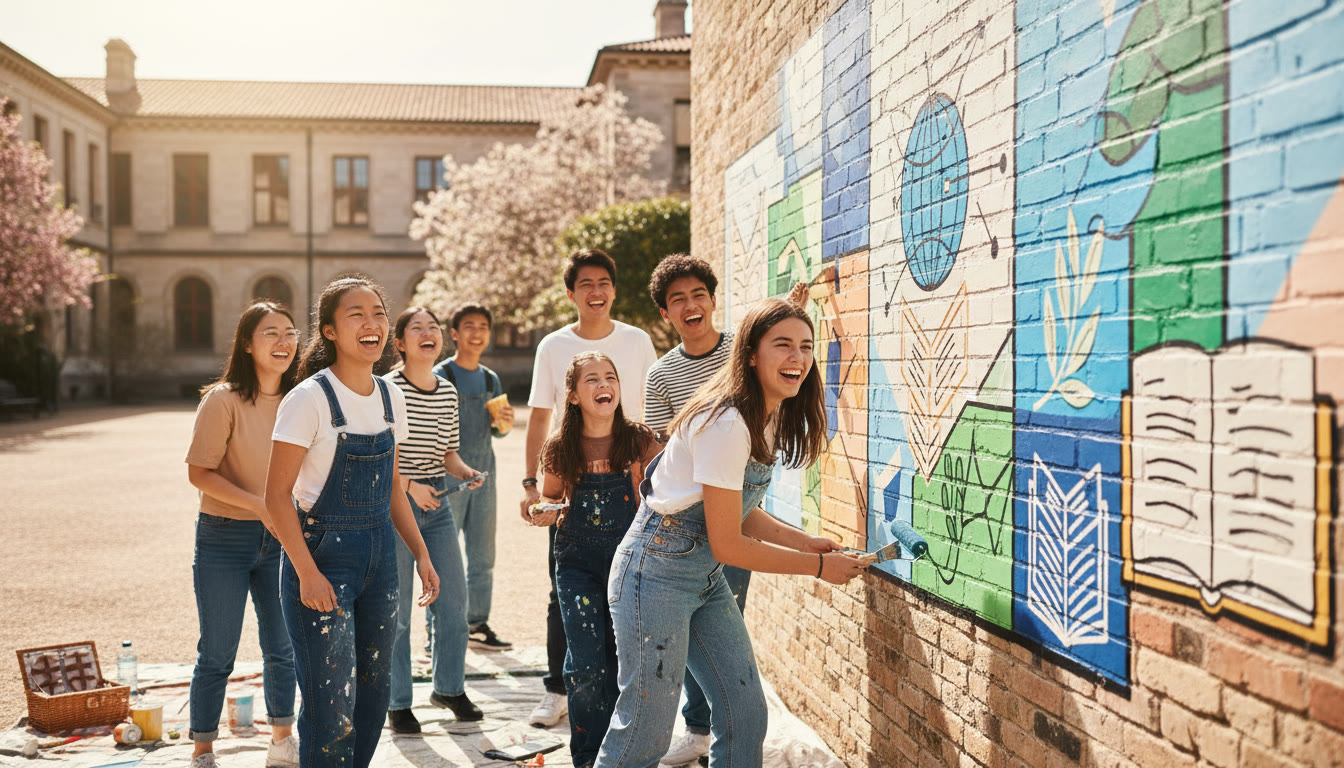
There’s something electric about seeing an idea become a living, breathing part of your school community: a mural that brightens a corridor, a series of workshops that invites local children to make music, or a pop-up gallery that gives a voice to students who rarely get to exhibit. For IB DP students, the arts are an ideal vehicle for CAS—the Creative, Activity, Service strand—to show authentic learning, leadership, and community engagement. This guide walks you through designing a sustainable arts initiative that not only satisfies CAS expectations but also becomes the backbone of a standout student portfolio.
Why an arts initiative is a powerful CAS project
Art is both process and product. It gives you visible outcomes—exhibitions, performances, installations—and invisible outcomes that matter for IB assessment: reflection, collaboration, initiative, and ethical engagement. A well-designed arts project allows you to evidence multiple CAS learning outcomes while demonstrating growth over time. Importantly, sustainability turns a short-term activity into an ongoing program that increases your project’s impact and strengthens your personal profile.
What does “sustainable” mean for a CAS arts project?
In this context, sustainable means more than green materials (though that helps). It means planning in a way that the project can continue, evolve, and be owned by others after your role changes. Sustainability can be structural—handing leadership to new students; financial—building a low-cost model or securing micro-funding; or relational—forming partnerships with local organizations, alumni, or teachers who will champion the work.
Start with purpose: vision, community need, and learning goals
Before sketches or schedules, spend time on two questions: Why does this initiative matter to the community, and what will you learn? The clearest projects come from connecting an artistic idea to a genuine community need. Maybe your school’s common spaces lack visual warmth, or local seniors lack creative outlets, or younger students need arts mentorship. When you pair purpose with explicit learning goals, your evidence and reflections become sharper—and your CAS supervisors will notice.
- Define the community you will serve (school, neighborhood, specific groups).
- Set three core learning objectives (e.g., leadership through collaboration, cultural awareness through art, project management skills).
- Decide the primary artistic medium and why it fits the need (visual art, music, theatre, multimedia).
Map the CAS learning outcomes early—use them as a planning tool
CAS learning outcomes are not just checkboxes; they’re a framework that helps you design activities that demonstrate growth. Use the outcomes to plan phases of your project so each phase intentionally targets certain outcomes. Below is a practical mapping you can copy into your project plan.
| CAS Outcome | Sample Activity | Evidence to Collect |
|---|---|---|
| Identify personal strengths & areas for growth | Lead a workshop and reflect on facilitation skills | Facilitator notes, video clip, reflective journal entries |
| Demonstrate new skills | Learn mural techniques and apply them to a public piece | Before/after photos, skill checklist, peer feedback |
| Show commitment to CAS | Run weekend sessions for three consecutive months | Attendance records, session plans, testimonials |
| Plan & initiate activities | Draft timeline, secure permissions, mobilize materials | Project plan, emails, budget spreadsheet |
| Work collaboratively | Co-design a performance with local artists | Collaboration agreements, rehearsal logs, photographs |
| Show engagement with issues of global significance | Use art to explore a social theme (e.g., mental health) | Audience feedback, reflective essays, press clippings |
Plan for longevity: structure, resources, and partnerships
Once your purpose and outcomes are clear, build the scaffolding that keeps the initiative running. Think of the project like a small organization: who makes decisions, who handles funds, how volunteers are trained, and how new students take over. A durable project reduces single-person dependence and becomes a living part of school culture.
- Leadership model: Use co-leads and a steering group with staggered terms so knowledge is retained year to year.
- Material plan: Favor durable or donated materials and create a maintenance list for installations and instruments.
- Funding strategy: Combine low-cost approaches (recycled materials, community donations) with small grants or school support.
- Partnerships: Link with local arts organizations, galleries, or community centers that can offer mentorship or venue space.
Design a documentation system that feeds your student portfolio
Documentation is where good projects become great portfolios. Start a central, well-organized repository from day one that holds photos, schedules, budgets, permission forms, reflective entries, and feedback. Use chronological folders and short, focused reflections tied to specific learning outcomes—this makes assessment simpler and stories more compelling.
- Collect multi-modal evidence: images, short videos, participant testimonials, and public responses.
- Keep a weekly leader log that notes choices, problems, and solutions—these are gold for reflection.
- Create a concise reflective statement after every major milestone tying actions to CAS outcomes.
When you want targeted help turning evidence into a polished narrative, consider how Sparkl’s personalized tutoring can support your reflections and structure. Their 1-on-1 guidance and tailored study plans help you turn raw material into a compelling portfolio entry, while AI-driven insights can reveal patterns in your learning you might otherwise miss.
Practical timeline: phases and checkpoints
Good projects are cyclical: imagine a launch, a development period, a public-facing moment, and an evaluation/hand-over phase. Below is a simple table-style timeline you can adapt to a school calendar.
| Phase | Key Tasks | Milestone Evidence |
|---|---|---|
| Initiation | Needs assessment, vision, permissions, team formation | Project brief, permission letters, team list |
| Development | Workshops, training, prototyping, community outreach | Workshop plans, prototype images, participant sign-up |
| Implementation | Public exhibition/installation/performance, evaluation | Photos, audience feedback, press notes |
| Handover | Succession planning, resource transfer, debrief | Handover document, training checklist |
Examples of sustainable arts initiatives that work for CAS
Concrete examples help you imagine what’s possible. Below are varied projects that have proven sustainable in many school settings. Each example shows how to keep momentum and create replicable formats.
- Mural mentorship program: Senior art students design murals with primary students; maintenance rotated annually; partnership with a local hardware store for donated paint.
- Community music co-op: Students teach instrument basics to neighborhood children, record performances, and hand over teaching roles to the next cohort.
- Pop-up community gallery: A mobile exhibition that rotates student work in public spaces; volunteer curators manage logistics and digital archives.
- Intergenerational arts workshops: Students co-create textile projects with seniors; outcomes include an exhibition and a toolkit so future students can replicate sessions.
Measure impact—qualitative and quantitative
Numbers are useful, but stories matter more. Balance both. Track participation numbers, sessions run, and materials reused, while also collecting personal stories, reflective essays, and testimonials. When possible, compare baseline and follow-up measures: did participants report increased confidence? Did the public space see more positive engagement?
- Quantitative metrics: participant counts, session frequency, funds raised.
- Qualitative metrics: participant reflections, audience comments, visual before-and-after comparisons.
- Triangulate: use at least two evidence types for each reported outcome.
Reflection: the heart of CAS and your portfolio
Reflection is where growth is demonstrated. Move beyond “what I did” to “what I learned” and “what I would do differently.” Anchor reflections to the CAS outcomes and keep them concise, honest, and specific. Use guided prompts: What challenge taught you the most? Which decision had unexpected effects? How did collaboration change the result?
- Write short reflections after each session and longer reflective essays after major milestones.
- Include evidence alongside each reflection so assessors can see the connection.
- For public-facing pieces, collect audience feedback to enrich evaluation sections of your portfolio.
How to present this work in your IB profile and student portfolio
Your portfolio should tell a clear story: initial problem, planned response, learning in action, outcomes, and plans for sustainability. Use headings that map to CAS outcomes and include a balance of artifacts and short reflections. Admissions officers and evaluators respond to clarity—show the arc of development, not just isolated moments.
- Start with a concise project summary (purpose, scale, your role).
- Organize evidence by phase with one reflective paragraph per phase.
- Conclude each project entry with impact metrics and a short handover note describing how it will continue.
Risk management, ethics, and accessibility
Art projects often involve public spaces, vulnerable groups, or tools that require supervision. Build a simple risk assessment and safeguarding plan early. Make accessibility a design priority—consider alternate formats, clear signage, and inclusive facilitation methods so your work reaches diverse audiences.
- Create a one-page risk register that lists hazards, likelihood, mitigation, and responsible person.
- Secure permissions in writing for public work and archival use of images or recordings.
- Design inclusive sessions—consider language, mobility, sensory needs, and cultural sensitivity.
Passing the torch: succession and institutional memory
Sustainability hinges on knowledge transfer. Write a handover document that includes contacts, budgets, suppliers, materials lists, tips learned, and access to archives. Run a short training or ‘shadowing’ period so new student leaders can learn in action. This preserves momentum and ensures your initiative becomes part of school tradition rather than a one-off event.
- Keep a single shared folder for all project documents and make clear who has edit rights.
- Schedule an annual handover meeting with the CAS coordinator and the incoming team.
- Record short tutorial videos for practical skills or troubleshooting common problems.
Putting it all together: an action checklist for the first three months
Here’s a compact checklist to move from idea to initial implementation quickly but thoughtfully. Treat each step as a mini-project with clear owners and deadlines.
- Complete a needs assessment and draft a one-page project brief.
- Identify three CAS outcomes your project will target and draft evidence types.
- Build a small steering group and assign roles (lead, treasurer, communications).
- Create a basic budget and material list with sustainability-minded choices.
- Plan three pilot sessions and document each with photos and short reflections.
- Collect participant feedback and adjust the plan before full implementation.

Final notes on storytelling and lasting value
Your CAS arts initiative can do more than satisfy a requirement—it can become a defining part of your IB profile. The key is intentional design: link artistic aims to community needs, plan for continuity, and document with purpose. When you present this work, let the evidence and reflections do the talking: clear milestones, honest learning, and thoughtful handover make your story credible and compelling.
Use mentorship and tools wisely. Targeted support—whether from teachers, community partners, or tailored 1-on-1 tutoring—can sharpen your reflections and presentation. Thoughtful guidance helps you turn the raw energy of a creative project into a rigorous demonstration of learning and leadership.
Closing thought
Designing a sustainable arts initiative means planning for people as much as for art: training the next cohort, documenting the journey, and ensuring the community continues to benefit. When your project blends artistic excellence with clear evidence of learning and continuity, it becomes a lasting contribution to both your CAS profile and the culture around you.






















No Comments
Leave a comment Cancel