

Finding Your Creative Path: Why the IB DP is a Launchpad for Visual Arts & Design Students
If you love visual arts or design, the Diploma Programme gives you more than studio time: it trains you to research, reflect, present, and solve complex problems visually. That combination—creative practice plus rigorous reflection—makes IB DP students attractive to a wide range of programmes, from fine art and graphic design to architecture, UX, and creative technology. This article maps those possibilities, shows how to use your DP work as evidence of readiness, and gives counsellors practical ways to guide students toward major and career choices that genuinely fit.

What’s special about the IB for creatives?
The IB DP encourages you to develop concept-driven work, to justify choices through research (the Comparative Study or design brief), and to present an exhibition or portfolio that blends process with finished outcomes. Because assessment rewards thinking as much as making, IB creative students learn to communicate intent—an essential skill whether you want to be an illustrator, product designer, curator, or UX researcher.
Quick Self-Audit: What Do You Enjoy, and What Do You Do Well?
Before you map majors and careers, answer these short questions honestly. Keep notes—you’ll use them in personal statements and interviews.
- Do you prefer rapid sketching and ideation, or long, studio-based refinement?
- Are you drawn to making physical objects, digital experiences, or visual storytelling?
- Do you enjoy research and writing about your work (Comparative Study, EE), or do you prefer hands-on problem solving?
- Do you like working alone on detailed craft, or collaborating on multidisciplinary teams?
- How comfortable are you with software (Adobe suite, CAD, prototyping tools) vs. traditional media?
Transferable Skills From Visual Arts & Design (and Where They Help)
Core skill clusters
- Visual communication: making ideas clear with imagery—essential in advertising, illustration, interface design.
- Concept development: turning research and a brief into an original idea—valued in product design, film, and fine art.
- Project management: planning long-term studio work or multi-part briefs—useful in architecture, exhibitions, and studio management.
- Critical reflection: writing about intent and influences—helps with curating, art history, and academic pathways like graduate study.
- Technical fluency: digital tools, model-making or print processes—applies across design, animation, and fabrication roles.
Options Map: Which Majors and Careers Match IB Visual Arts & Design Focus
The table below links common visual/design focuses in the DP to plausible university majors and real-world career outcomes, plus quick counselling tips you can use in advising conversations.
| DP Focus | University Majors (Examples) | Career Examples | Counselling & Portfolio Tips |
|---|---|---|---|
| Fine Art / Studio Practice | Fine Arts (BFA), Contemporary Art Practice, Visual Arts | Artist, studio assistant, gallery artist, art educator | Show thematic depth in your portfolio; include exhibitions, process images, and reflective writing from the DP exhibition and Comparative Study. |
| Graphic Design / Visual Communication | Graphic Design, Visual Communication, Branding | Brand designer, typographer, editorial designer, packaging designer | Include mock client briefs, branding projects, and show software skills (vector, typography). Demonstrate problem-solution thinking. |
| Illustration & Sequential Art | Illustration, Animation, Communication Arts | Children’s book illustrator, concept artist, storyboard artist | Show range across styles, strong life drawing, and narrative sequences; include commissions or published work if available. |
| Animation & Motion | Animation, Film, Motion Design | Animator, motion designer, VFX artist | Present short reels, process frames, and any collaborative film projects from CAS; note software and pipeline understanding. |
| UX/UI & Interaction Design | Human-Computer Interaction, Interaction Design, UX Design | UX designer, interaction designer, product designer | Translate DP projects into case studies: research, wireframes, user testing results, and iteration cycles. |
| Product / Industrial Design | Product Design, Industrial Design | Product designer, prototyping specialist, furniture designer | Show model-making, technical drawings, and functional prototypes; include material studies and user-centred design tests. |
| Architecture & Spatial Design | Architecture (professional degrees often require a foundation), Interior Architecture | Architect (with further study), spatial designer, exhibition designer | Highlight drawing, model-making, spatial studies, and mathematics/sciences where required; discuss site studies and design briefs. |
| Photography & Lens-based Media | Photography, Visual Media, Photojournalism | Photographer, visual content creator, editorial photographer | Curate a coherent series, show technical control (lighting, composition), and include published or exhibited works where possible. |
| Curatorial, Art History & Museum Studies | Art History, Curatorial Studies, Museum Studies | Curator, collections manager, arts administrator | Use the Comparative Study and EE to show research skills; highlight exhibitions and community projects from CAS. |
| Textiles, Fashion & Surface Design | Fashion Design, Textile Design | Fashion designer, textile designer, pattern maker | Include process samples, pattern work, mood boards, and any runs or samples you produced in the DP studio. |
How to Choose: A Practical Decision Framework
Choosing a major or career doesn’t have to be a single, life-defining leap. Treat it like design research: iterate, prototype, and test. Use these steps as a framework.
Step 1 — Map preferences to tasks
Identify the daily tasks you enjoy. If you love long, solitary studio sessions, fine art or textiles might fit. If you enjoy rapid problem solving and team projects, UX or product design may be better. Convert likes/dislikes into task lists and compare those to job descriptions or course outlines.
Step 2 — Prototype the experience
Try short, real-world tests: a week-long internship, a summer workshop, freelancing, or a collaborative CAS project. Treat each test as a mini-portfolio piece and a subject for reflection in your DP documentation.
Step 3 — Align DP subjects and assessment
Use your HL/SL choices and the Extended Essay to build evidence of interest. For example, a design-related EE or a Theory of Knowledge connection can add weight to an application for a design degree. Counsellors should encourage students to present DP assessments as evidence, not just grades.
Building a Portfolio That Works (and How Counsellors Help)
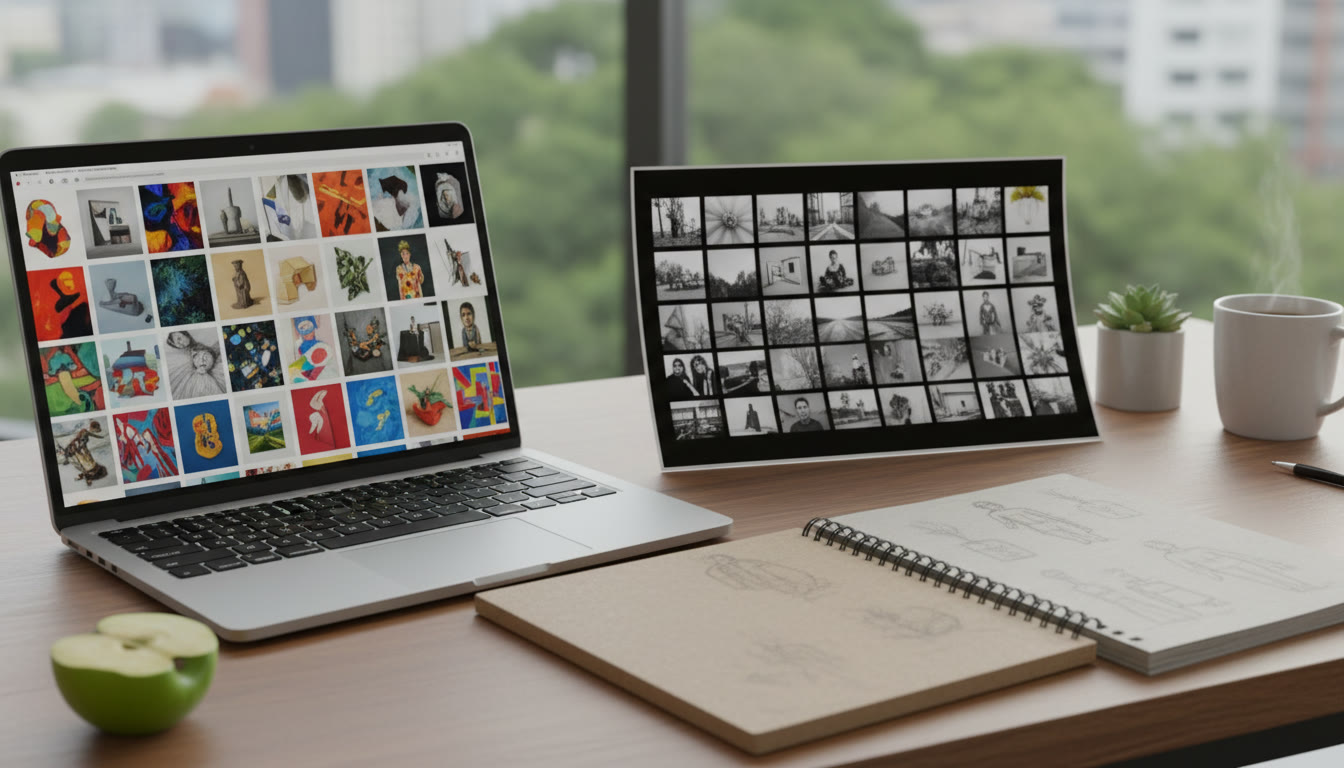
Portfolios are the single most important thing for art and design pathways. Admissions teams look for clarity of thought, depth of enquiry, and demonstrated craft. Here are concrete guidelines you can act on right away.
- Quality over quantity: 8–15 strong pieces that tell a consistent story are better than dozens of unfocused works.
- Show process: include sketches, iterations, prototypes, and a short note on intent for each piece.
- Contextualise academically: use DP Comparative Study excerpts, exhibition reflections, or EE abstracts to support academic curiosity.
- Digital-first: present a clean online portfolio with downloadable PDFs and optimized image files for reviewers.
- Customise: tailor your portfolio slightly for different programmes—emphasise UX case studies for interaction design, then highlight physical prototyping for product design.
Some students benefit from structured, personalised tutoring as they craft their portfolio and refine application materials. Sparkl‘s approach—1-on-1 guidance, tailored study plans, expert tutors, and AI-driven insights—can be useful for students who want regular feedback and a clear timeline for portfolio submission.
Portfolio Timeline (Suggested Milestones)
| Phase | Action | Why it matters |
|---|---|---|
| Exploration | Generate quick experiments, research, and small prototypes | Feeds idea generation and prevents last-minute panic |
| Development | Refine 10–15 works, document process, and create case studies | Shows depth and how you handle critique and iteration |
| Polish | Prepare digital layout, edit images, write concise captions | First impressions count—clarity matters for reviewers |
| Submission | Tailor the portfolio for each programme and check technical specs | Admission teams look for fit; small changes can increase relevance |
Counselling Strategies Specific to the IB Context
Support subject choice with evidence
When students are unsure between majors, counsellors can encourage them to create a small DP-linked project that functions as both CAS and portfolio material. For instance, a CAS community mural, an Extended Essay examining a design movement, or a collaborative Design Cycle brief can all become strong evidence of commitment.
Use DP assessments strategically
Help students extract academic value from studio work: the Comparative Study demonstrates research skills, the exhibition shows curatorial thinking, and the EE offers sustained academic enquiry. Admissions teams value this combination because it mirrors the expectations of many creative degrees.
Practical interview prep
- Run mock critiques: practice explaining intent and decisions under time limits.
- Teach storytelling: students should link early sketches to final outcomes and reflect on feedback cycles.
- Prepare short case-study presentations: 2–3 minutes per project is typical in interviews.
Mini-Profiles: How Different Students Use the DP to Move Toward a Career
Maya — The Illustrator Who Built a Freelance Portfolio
Maya used the DP Visual Arts course to produce sequential illustration pieces and storyboards. For CAS she ran a small community zine project; her Comparative Study focused on illustration traditions from multiple cultures. Her portfolio showed narrative range and a few commissioned pieces; she emphasised client briefs and process in interviews. Counselling tip: encourage commissioned work and a consistent online hub.
Liam — From Design Brief to UX Internship
Liam took Design Technology and self-taught a prototyping tool. He converted a DP design brief into a UX case study: research, wireframes, user testing, and iteration. His mock client work and a short internship at a local studio became the centrepieces of his application. Counselling tip: push students to document research and testing—these are golden evidence for UX degrees.
Ayesha — Blending Art History with Curatorial Work
Ayesha combined Visual Arts with a strong humanities HL and wrote an EE about museum display strategies. Her Comparative Study and a CAS exhibition at school demonstrated curation skills. Counselling tip: advise students aiming at museums to show both practical curatorial experience and rigorous written research.
Common Pitfalls and How to Avoid Them
- Relying on too many unfinished ideas—commit to completing fewer works with stronger resolution.
- Ignoring context—always explain why a piece exists, not just how it was made.
- Under-documenting process—photograph stages, note feedback, and save drafts.
- One-size-fits-all portfolios—tweak the emphasis depending on whether the course is practice-led, technical, or research-oriented.
Practical Next Steps: A Compact Checklist
- Create a two-page skill summary: media, software, exhibitions, commissions, and research topics.
- Pick 10–15 portfolio pieces and write a one-paragraph intent for each.
- Turn one DP project into an Extended Essay or EE outline to show sustained enquiry.
- Arrange at least one mock interview or critique with a teacher, mentor, or external professional.
- Document CAS projects with images and reflective notes that can be included in applications.
Final Note: Putting It All Together
The IB DP gives students a rare combination of creative freedom and academic rigour. When counselling and curriculum choices are aligned, portfolio work and DP assessments become coherent evidence of readiness for creative degrees and careers. Treat decision-making like design work: observe, prototype, reflect, and iterate. Over time, a clear pattern of projects, reflective writing, and real-world experience will point to the majors and career paths that fit your strengths and aspirations.























No Comments
Leave a comment Cancel