
ICSE vs NEET/JEE: A Practical Strategy Guide to Close the Board–Competitive Exam Gap
If you study under the ICSE board and you’re aiming for medical or engineering entrance exams, you’re not alone — many students juggle board expectations and the pressure of highly competitive MCQ-based tests. The good news: the ICSE syllabus gives you a strong conceptual base, and with a focused plan you can translate that strength into consistent NEET/JEE performance. This guide breaks down what to keep, what to adapt, and how to practice so your board work and competitive prep complement each other instead of competing for the same hours.
What’s actually different — and what’s the same?
At first glance boards and competitive tests look like two different beasts. Boards reward thorough written understanding across chapters; NEET/JEE reward fast, accurate application under timed conditions. But beneath that divide are stable overlaps: core concepts in Physics, Chemistry, and Biology are shared. The trick is to translate your ICSE strengths (clear concepts, detailed answers, lab awareness) into competitive exam skills (rapid application, error-free OMR marking, and MCQ strategy).
Key exam realities to keep front of mind
- Competitive exams are MCQ-based — answers are single-choice and there is no partial credit for partially correct reasoning.
- Practice full-length, timed tests that mirror the exam’s duration (three-hour simulated papers) so you build stamina and pacing.
- Negative marking exists — accuracy matters as much as speed. A systematic attempt strategy beats random guessing.
- OMR discipline matters: marking bubbles correctly, avoiding stray marks, and transferring rough work reliably are practical skills you must rehearse.
- Syllabus alignment centers on Physics, Chemistry, Biology. While board formats emphasize long-form answers and projects, competitive exams expect concise conceptual recall and problem-solving.
How to map ICSE topics to NEET/JEE targets
Start with a systematic mapping rather than guesswork. Create a checklist for every chapter: list the ICSE subtopics you cover, mark whether that subtopic appears in competitive syllabi, and note the practice you need (MCQs, numerical drills, or memory work). Below is a compact mapping table you can adapt for your own planner — use it to make a weekly gap-analysis.
| Subject | ICSE Strengths | Competitive Focus | Action Steps |
|---|---|---|---|
| Physics | Concept explanations, practicals, clear diagrams | Problem-solving speed, application of formulas, numericals | Practice 30–40 MCQs/week per major chapter; time-bound numericals; formula sheet revision |
| Chemistry | Detailed theory, structured reactions, lab notes | Physical chemistry numericals, organic reaction application, inorganic facts | Split into Physical/Organic/Inorganic; daily quick-recall for reactions and constants; practice objective questions |
| Biology | Strong descriptive coverage, diagrams, definitions | High-volume factual recall, image-based MCQs, concept integration | Use active recall and spaced repetition for definitions; convert long answers into crisp MCQ-ready notes |
Designing a weekly schedule that respects both boards and competitive prep
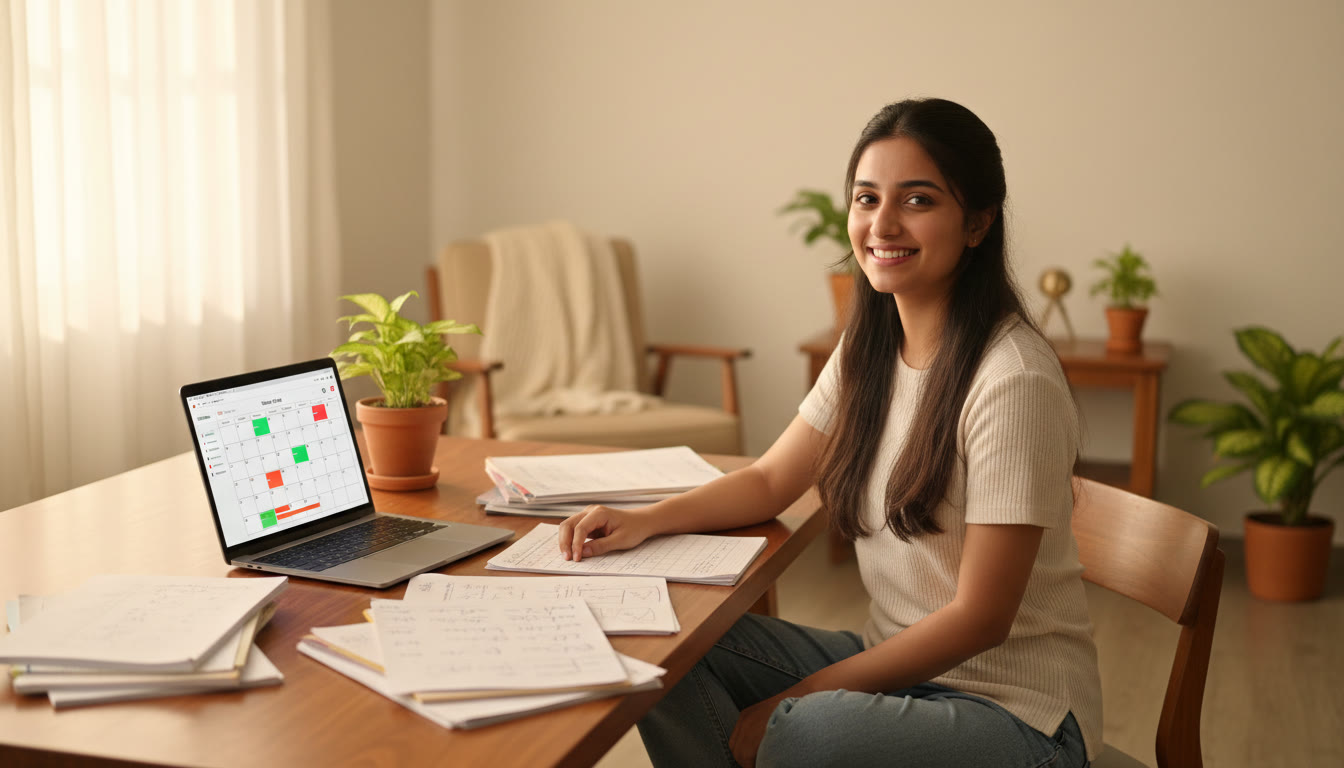
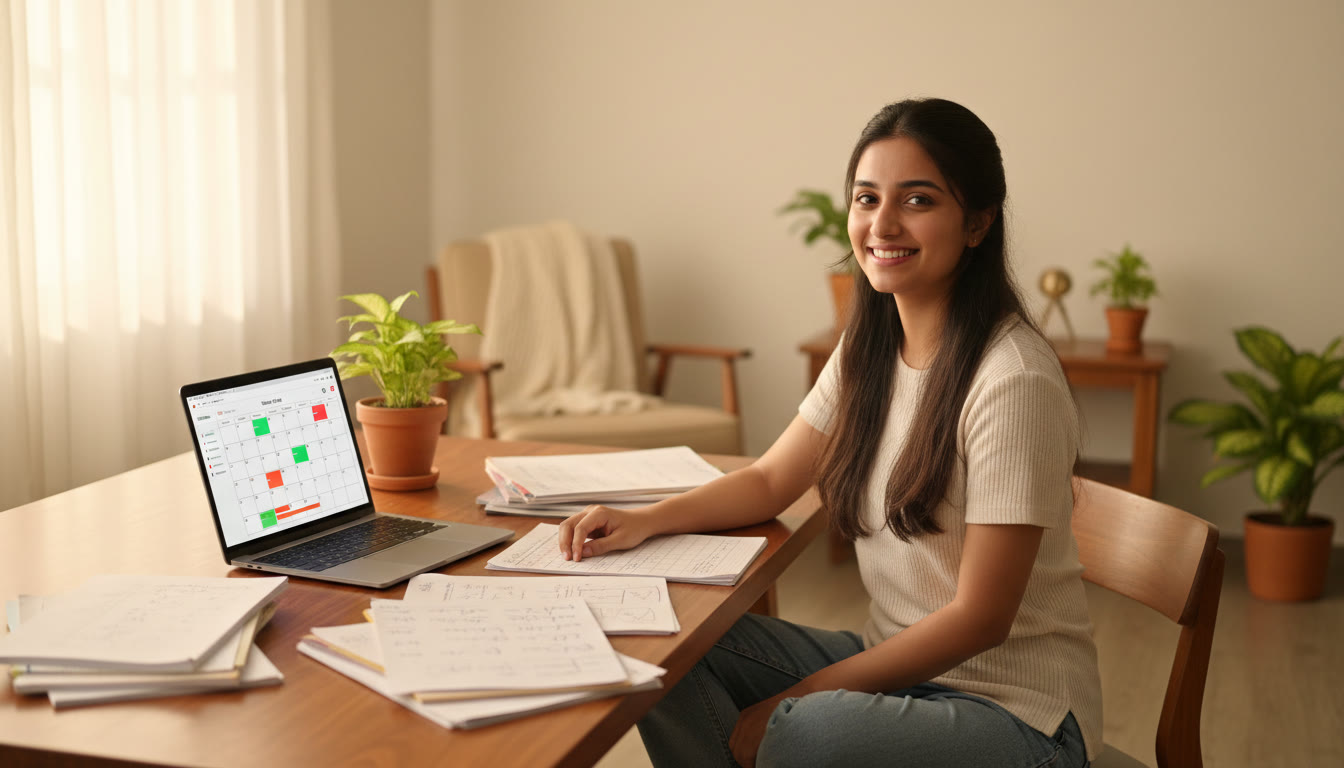
Balance is the aim: keep up with board homework and exam readiness while slowly ramping competitive intensity. Here’s a sample structure you can adapt according to your school timetable and energy peaks.
| Time Block | Primary Task | Purpose |
|---|---|---|
| Early Morning (1–2 hours) | Concept revision / Light numericals / Flashcards | High-focus memory consolidation |
| Afternoon (2–3 hours) | Schoolwork / Boards practice | Keep board deadlines on track |
| Evening (2–3 hours) | Competitive practice: MCQs, timed sets | Build speed and accuracy |
| Night (30–60 min) | Light recap / Errors log | Consolidate learning with sleep-friendly review |
Tips to make the schedule sticky
- Block similar tasks together (e.g., all numericals on two days) — switching costs waste time.
- Reserve one full three-hour slot weekly for a timed mock — this builds pacing and endurance.
- Use short active recall bursts (10–20 minutes) after heavier study to increase retention.
Subject-specific bridges: practical tactics
Physics — turn descriptive clarity into quick application
ICSE often gives you clean explanations and lab intuition — use that to your advantage. But competitive questions reward quick translation from concept to calculation. Train with timed numerical sets, maintain a one-page formula sheet per chapter, and practice units and dimensional checks until they become automatic.
- Practice solving a problem in multiple ways; if your ICSE explanation gives a derivation, write a one-line application you can recall under pressure.
- Make a ‘common traps’ list from past papers (sign errors, wrong unit conversions, incorrect approximations).
Chemistry — organize memory, then accelerate recall
Chemistry’s three pillars require different handling: Physical chemistry is procedural (practice numericals), Organic chemistry is pattern-based (recognize mechanisms and reagents), and Inorganic chemistry is fact-based (memorize selectively). Convert long answers into MCQ-ready notes: one-liners for reagents, flow diagrams for mechanisms, and short tables for periodic trends.
- Daily 15-minute reaction-recall for organics.
- Quick mental checks for physical chemistry steps before you write — practice this under timed conditions.

Biology — convert descriptive mastery into exam economy
Biology is typically ICSE’s strongest alignment with NEET: many concepts are shared verbatim. The main shift is presentation: ICSE long answers become concise points for MCQs. Use diagrams as study anchors — draw them quickly and label as a revision tool. Remember: diagrams and lengthy descriptions help you learn but are not required as answers in MCQ exams; they’re learning tools, not exam formats.
- Make 50–100 high-yield flashcards (organ systems, genetics, ecology) and review them with spaced repetition.
- Practice image-based MCQs by converting textbook diagrams into bite-size facts.
Mock tests, analysis, and the art of correction
Mocks are the single most powerful lever you have. They do two things: (1) reveal gaps you didn’t know existed, and (2) train the muscle memory of exam-taking. Here’s a realistic mock-test rhythm:
- Early stage: one timed mock every two weeks, focusing on concept gaps.
- Mid stage: one full-length three-hour mock each week plus sectional timed practice.
- Final stage before the exam window: two full-length mocks per week if energy and schedule permit, with strict OMR simulation.
After each test, spend at least 50% of the time on analysis, not re-taking: log errors by type (careless / conceptual / time-pressure), write the corrected approach in your error notebook, and design a 7-day corrective practice plan for repeated weak areas.
OMR and attempt discipline
OMR discipline is rarely a test of knowledge but of rehearsal. Practice filling bubbles under time pressure, train with the exact pen/black ballpoint you’ll use, and rehearse the process of marking and rechecking. Always budget time to transfer answers calmly; rushed marking is a major source of avoidable loss.
Active learning methods that actually work
Move away from passive reading. Use active techniques so your ICSE study converts into MCQ success:
- Feynman technique: explain a concept out loud in simple words, then convert that explanation into a two-line MCQ-ready summary.
- Spaced repetition: revisit flashcards at increasing intervals to lock in biological facts and reagent names.
- Problem clusters: after solving one kind of numerical, immediately solve three variations to generalize the method.
If you want specialized support, Sparkl‘s personalized tutoring can offer one-on-one guidance and tailored study plans that match your ICSE timing and weaknesses. For students who prefer targeted interventions, Sparkl‘s AI-driven insights help highlight high-impact gaps and suggest efficient practice sequences.
Balancing board exams with competitive rhythm
Board exams and competitive prep often collide. The mindset that helps is prioritization by returns: when school assessments are imminent, complete required board material to avoid last-minute distractions, but keep micro-sessions (daily 30–45 minute MCQ drills) running in the background so competitive momentum does not fade.
- Use a rolling revision list: if you revise a chapter for boards, immediately extract two MCQs from that chapter for your competitive practice deck.
- Convert board long answers into single-line flashcards the same day — this creates quick recall notes for later MCQ practice.
Common pitfalls and how to avoid them
- Rote-only revision: ICSE students sometimes rely on memorized long answers. Translate those to concise recall units for MCQs.
- Skipping mocks because of board pressure: this destroys pacing. Even a single three-hour mock every ten days keeps timing intact.
- Ignoring negative marking: practice educated elimination and leave wild guessing out of your approach.
- Not tracking mistakes: if you don’t log why you erred, you’ll repeat the same avoidable mistakes.
Sample milestone roadmap (conceptual timeline)
Rather than dates, plan progress in blocks of months or cycles:
- Block 1 — Foundation consolidation: convert ICSE notes into MCQ-ready summaries and fix conceptual holes.
- Block 2 — Speed and accuracy: increase timed practice, begin weekly full-length three-hour mocks, and create an errors notebook.
- Block 3 — Polishing and strategy: focus on weak chapters, refine OMR discipline, and simulate exam day repeatedly.
Tools and resources — what to carry on your desk
- One-page formula sheets per topic (Physics, Chemistry numericals).
- Errors notebook: note question, mistake type, corrected method, and a short tip to avoid it next time.
- Flashcards for high-yield Biology facts, inorganic chemistry facts, and reaction reagents.
- Timed mock tests and sectional practice sets — ensure at least one three-hour test weekly in the mid-to-late cycles.
Exam-day rehearsal: more than just a checklist
Run a full rehearsal one week before any major exam: wake up at the same time, dress as you would on exam day, take a full three-hour mock with exact stationery, and practice transferring answers to a mock OMR. The rehearsal uncovers small but costly mistakes (bad pens, unreadable handwriting on rough work, or slow bubble filling) and gives you the confidence to focus purely on questions on the real day.
Final words on mindset and sustainable effort
ICSE students who succeed at NEET/JEE don’t fundamentally change who they are; they change how they study. They keep the ICSE virtues — clarity, careful lab work, and disciplined note-taking — and add competitive habits — rapid MCQ practice, error analysis, and rigorous mock schedules. Small daily changes compound: ten accurate, timed MCQs each day plus a weekly three-hour mock will transform your exam temperament within weeks.
Make your plans adaptable. If a chapter takes longer, reshuffle the schedule without guilt. If concept clarity is quick, convert the saved time into more mock practice. If you seek one-on-one adjustment or AI-driven insights that tailor practice to your error profile, consider integrating targeted tutoring like Sparkl‘s approach into your plan.
Above all, remember that diagrams, derivations, and detailed notes are tools to help you internalize concepts — they strengthen intuition that competitive MCQs test. Translate your ICSE rigor into trimmed, high-yield notes and disciplined practice. That translation is the bridge from being a great board student to becoming a competitive exam performer.
Conclusion
Bridging the ICSE–NEET/JEE gap is about methodical conversion: keep the clarity and depth you gain from the board, and layer on timed MCQ practice, strict OMR habits, weekly three-hour mocks, and an error-driven revision cycle. With deliberate mapping, subject-specific tactics, and the right practice rhythm, the syllabus gap becomes a structured pathway rather than an obstacle.























No Comments
Leave a comment Cancel