
Why NEET Students Panic Before Exam
There is nothing unusual about your hands feeling clammy or your thoughts looping when the NEET is approaching. Panic is a common, human reaction to a high-stakes situation — especially when the format is MCQ-based, the practice includes full 3-hour mock practice runs, negative marking turns every guess into a decision, and OMR discipline means every mark is literal and final. Add the wide syllabus that spans Physics, Chemistry and Biology, and the tendency to believe there will be “partial credit” for written steps, and it’s easy to see why nerves spike. Remember: the exam rewards exact, single-best answers — there are no descriptive questions or partial credits for procedural steps.
Panic doesn’t mean you’re unfit for the test; it’s a performance issue that can be trained. Think of it like stage fright for athletes — once you understand the triggers and have a toolbox, your reactions change. In the sections that follow I’ll unpack the main causes of pre-exam panic, explain how panic affects problem solving, and give concrete, NEET-specific strategies you can practise so exam day feels like a well-rehearsed routine rather than a roulette wheel.

Common triggers that cause NEET candidates to panic
Understanding what flips the switch from “nervous” to “panic” gives you targets to train against. Some triggers are situational, others are cognitive habits you can change.
- High-stakes pressure: The thought that a single paper can redirect your future is a heavy load. When stakes feel gigantic, small mistakes feel catastrophic.
- Format stress: MCQ-based testing and the OMR routine require mental precision: no partial credit, no descriptive work. Negative marking amplifies the cost of random guessing, which creates fear of attempting difficult questions.
- Surprise questions in mocks: Seeing an unfamiliar phrasing or an integrative question in a mock can create a sudden crisis of confidence that carries into the real exam.
- Time anxiety: Three hours sounds long, but when faced with a long list of items it becomes a contest between time and confidence; that discrepancy breeds worry.
- Social comparison: Listening to others’ success stories or scrolling through peers’ high scores can create imposter feelings that feed panic.
The OMR fumble — a small event, big emotion
One common story: you change an answer on a practice OMR and the bubble smudges or the transfer is messy. Suddenly your mind goes from “I can do this” to “I can’t manage the sheet.” That physical event becomes a trigger. The fix is practical: simulate OMR routines until the mechanics are automatic so the body’s reaction (smear panic) no longer occurs.
The science of panic — why your brain misfires under pressure
Short-term gain, short-term loss
When you feel threatened your brain releases stress hormones to prepare you to act. In small doses this sharpens focus; in larger doses it narrows attention and steals working memory capacity. For NEET-style problem-solving — especially multi-step physics derivations or multi-concept biology reasoning — that reduced workspace is exactly what undermines performance.
Cognitive distortions that fuel panic
Panic tends to amplify distorted thinking. Catastrophizing (“If I miss this I’ll never make it”), mind-reading (“They all understood this”), and overgeneralization (“I failed this section, so I’m failing the whole paper”) are mental habits you can notice and challenge. Once you label the distortion you can apply a quick reframing technique and move on.
Fast, practical techniques to halt a panic spiral
In the exam hall you need micro-tools: fast, repeatable practices that interrupt the cascade and return you to solving. Practise these so they become reflexive.
- Box breathing — a 60-second reset: Inhale for 4 counts, hold for 4, exhale for 4, hold for 4. Repeat twice. The rhythm calms the nervous system and restores clearer thought patterns.
- Grounding with senses (5–4–3–2–1): Name 5 things you see, 4 things you can touch, 3 you hear, 2 you smell, 1 you taste or imagine. Sensory naming moves attention into the present.
- Micro-goals: Rather than saying “finish this paper,” commit to “answer the next five questions.” Small, achievable steps give you quick wins and rebuild competence.
- Timeout strategy: If one question towers over you, mark it, skip it, and move on. Revisit it in a later pass with fresh mental energy.
- Anchor phrase: Keep a short calming mantra — for example, “Steady breath, steady brain.” Repeat silently for 10–15 seconds when anxiety rises.
- Controlled note-scratch: Use your rough sheet to jot minimal scaffolding: key formulas, a tiny sketch, or a single unit check. This offloads working memory without devolving into excessive notes.
NEET-specific exam tactics to reduce anxiety and errors
When your strategy matches the exam structure — MCQ format, OMR procedure, negative marking — you remove uncertainty. Below are practical habits that directly reduce panic.
1. Simulate full 3-hour practice sessions
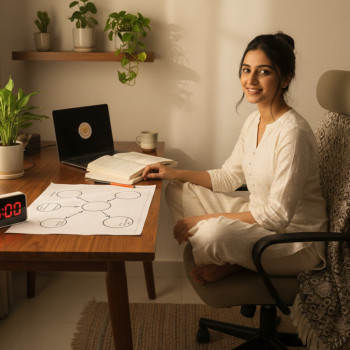
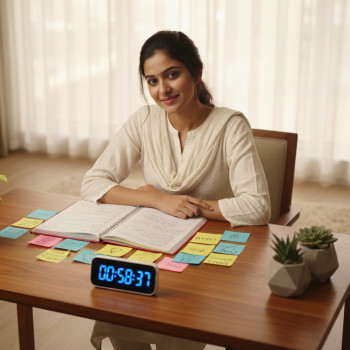
Short tests are useful for focused practice, but full-length mocks teach endurance and familiarity. Regularly doing timed 3-hour simulations with OMR practice conditions your body and mind to the sustained focus the real exam demands. Treat these like rehearsals, not judges: the goal is adaptation, not perfect scores. Schedule periodic full mocks under conditions that mimic exam day: same desk setup, clock, and minimal interruptions.
2. Build OMR muscle memory
Simple physical confidence is powerful. Practise filling circles, erasing cleanly (if allowed), and transferring answers exactly as you’ll do on test day. Try deliberately changing answers during a mock to see the mechanics and your reaction; what seems fragile in theory becomes routine when repeated. A confident hand and a practiced rhythm lower the chance of a small mechanical error causing a large emotional reaction.
3. Make negative marking a tactical consideration
Negative marking changes risk calculus. Instead of guessing randomly, practise elimination. If you can confidently remove one or two options, the expected value of attempting increases. Make “educated attempt” a habit — otherwise, leave it for a controlled second or third pass. Over time, build a personal rule-of-thumb for when to attempt: it’s the combination of elimination power and remaining time.
4. Master the triage method for MCQs
Divide the paper mentally into three passes. First, clear the straightforward items you know quickly. Second, tackle those that need computation or longer thought. Third, return to the hardest questions with remaining time. This reduces time-sink traps and prevents fixation on a single item.
| Mock Metric | Purpose | Action |
|---|---|---|
| Section accuracy | Find conceptual weakness | Schedule focused revision on flagged topics |
| Time per question | Identify pacing issues | Practise timed sets and speed drills |
| Error type | Careless vs conceptual mistakes | Change study approach: repetition vs concept deepening |
| Attempt pattern | Reveals risk habits | Adopt an elimination-first policy for risky items |
Study and lifestyle habits that reduce baseline anxiety
Panic is easier to manage when the body and the schedule support cognitive resilience. These are low-drama, high-impact habits that protect your mental bandwidth.
- Prioritize sleep: Consolidation of memory happens during sleep. Late-night cramming usually costs more than it gains.
- Eat steady meals: Balanced food keeps blood sugar stable and concentration steady during long study sessions and mocks.
- Move daily: Short aerobic bursts or stretching reduce physiological stress and sharpen attention afterward.
- Practice active recall and spaced repetition: Rather than passive rereading, use self-testing and spaced review to make knowledge retrieval automatic.
- Limit doom-scrolling: Social media cycles amplify comparison; schedule specific, limited times for it if you must, and avoid score threads right before mocks.
- Use notes as tools, not obsessions: Sketching diagrams, derivations, and formula sheets is valuable practice — but remember these are study tools, not required exam answers. Internalize steps so you can reproduce reasoning quickly without relying on lengthy written procedures.
How to use mock tests intentionally — the before, during, and after
Mock tests are the laboratory where you practise not only content but also composure. The way you analyse mocks turns raw anxiety into calibrated training.
Before the mock
- Set the environment: a quiet desk, a clock, and a challenge window equal to test time.
- Prepare your rough sheet and OMR routine; practise the transfer process before you begin.
- Decide on the early-pass strategy and your micro-goal for the mock.
During the mock
- Follow the triage system: first pass easy questions, second pass medium, third pass hard.
- Use your anchor phrase/box breathing for any block longer than about 90 seconds.
- Record question numbers of tricky items to revisit — don’t stew.
After the mock — analysis that reduces panic
Don’t treat score as verdict; treat it as diagnosis. Use a simple template: classify each wrong answer, note the time you spent on it, and tag the underlying reason (careless, conceptual, or time). Then build 15–30 minute micro-drills that target the exact pattern you found.
| Post-mock Step | Example Action |
|---|---|
| Classify mistakes | Tag wrong questions: careless / conceptual / time |
| Focus drill | 10 problems on the weakest concept in next 48 hours |
| Re-test mini-set | 20-minute retest on those topics to check progress |

Subject-specific tactics that calm the mind
Physics — slow to go fast
Develop a four-step habit: (1) read the whole stem, (2) sketch a quick diagram, (3) list knowns and target, (4) check units after calculation. Practise this method until it is automatic; that way, even under pressure you won’t skip the scaffolding that prevents silly numeric errors.
Chemistry — pattern recognition and elimination
For organic and inorganic items, cultivate a quick checklist: reagent clues, mechanism patterns, stoichiometric sanity-check. For numerical chemistry, check units and significant figures. Many errors come from missing a simple check — build those checks into your reflexes.
Biology — precise reading beats confident guessing
Biology options often contain plausible distractors. Train to spot qualifiers like “except,” “not,” “most likely” and focus on them first. Use elimination where two options are similar and only one aligns with core principles.
Communication scripts to lower external pressure
Sometimes panic isn’t just internal; it’s fuelled by external voices. A short script you can tell family or friends helps manage expectations and interruptions: “I’m following a study plan and doing focused mocks. Right now I need calm and predictable routines; I’ll update you after my mock.” Saying this once reduces repeated check-ins that fragment focus.
An emergency test-day contingency plan
- Keep a folded copy of essentials (admit card, ID) in two places — your bag and a travel wallet to avoid last-minute scrambles.
- If you face a logistical hiccup on the way, use the extra time as a breathing rehearsal; avoid panicky problem-solving in transit.
- If an unexpected distraction occurs in the hall, pause, breathe, and return to micro-goals: next five questions, then re-evaluate.
Daily mental maintenance
Keep a one-line mood and practice log for the test season. Each night write: “Today I practised X, felt Y, and will try Z tomorrow.” That single-line habit creates a feedback loop that reduces vague anxiety by turning feelings into planable actions. Gradually you’ll see patterns — certain topics that always cause a dip, or certain times of day when concentration is best — and you can schedule accordingly.
Where structured guidance helps most
Targeted coaching is not a magic shortcut — it’s a way to accelerate error diagnosis and build routines that stick. One-to-one guidance lets a coach watch your process, find where panic interrupts strategy, and build drills tailored to those exact moments. Look for support that emphasizes clear feedback loops, short focused practice, and consistent simulation of exam conditions.
If you are exploring personalised options that blend human coaching with data-driven feedback, Sparkl‘s personalised tutoring offers 1-on-1 guidance, tailored study plans, expert tutors, and AI-driven insights that make patterns visible and practice surgical. Working with such support can convert vague anxiety into a step-by-step corrective plan and shorten the path from panic to performance.
Signs you should reach out for professional help
Most students reduce panic with practice and routine, but if anxiety becomes persistent and starts harming sleep, appetite, concentration in daily life, or causes frequent panic attacks, contact a qualified counselor or mental health professional. These professionals can teach skills like cognitive restructuring, exposure practice, and breathing techniques that integrate with your academic work. Seeking help is an academically sound decision — it protects learning capacity and allows you to practise with a clearer mind.
Practical, copyable checklists
Paste these into your notebook and use them the week of the exam.
| When | Checklist |
|---|---|
| Two days before | Update your formula sheet, do one light mock, pack essentials, confirm travel plan, prioritize sleep |
| Night before | Review a one-page summary only, switch devices off early, do a short relaxation routine |
| Exam morning | Balanced breakfast, hydrate, brief warm-up of easy problems, breathe, arrive early |
Debunking common myths
- “I must cover every single topic in the last week.” It’s better to consolidate core strengths and shore up a few critical weaknesses than to scatter attention across everything.
- “If a topic isn’t perfect, it’s worthless.” Perfect recall isn’t necessary; accurate, timely application is.
- “Changing answers always hurts.” Thoughtful changes after re-evaluation can help; frantic second-guessing usually hurts.
Final academic takeaway
Panic before NEET is not a character flaw but a solvable performance issue. Treat it like a skill you can train: identify your personal triggers, practise full 3-hour mock sessions under OMR conditions, build OMR and negative-marking routines, use short in-exam calming tools, and analyse each mock with surgical focus. Support your practice with steady sleep, proper nutrition, regular movement, and targeted micro-drills. Over time, repeated simulation and focused correction convert the unpredictable shock of exam day into a predictable performance pattern.



















No Comments
Leave a comment Cancel