

What Toppers Do Differently in JEE Preparation — A Practical 2‑Year Plan
Think of two students who sit in the same classroom, study the same number of hours, and even attend similar lectures — yet one becomes a topper and the other doesn’t. The difference rarely comes down to luck. It’s in the habits, the rhythm of study, the way tests are used as feedback, and the tiny daily choices that compound over two years. This guide walks you through a natural, practical two‑year blueprint: what top performers actually do, why it works, and how to make it yours.

Why a two‑year plan works
A two‑year window gives time to build deep concepts, train exam‑speed thinking, and repeatedly fix weak areas. Instead of cramming, toppers distribute learning, revisit topics at increasing intervals, and layer difficulty: foundations first, then application, then high‑pressure rehearsal. This spacing diminishes panic and creates durable understanding.
Core differences in mindset
- Ownership over the process: Toppers treat every mock like a coaching signal, not a scoreboard. They learn from the gap between expected and actual performance.
- Curiosity over copying: They ask “why” and “how” before memorizing procedures, which makes problem adaptation easier under unseen twists.
- Small consistent wins: Prioritize finishing micro‑goals (a chapter, a set of problems) with full attention rather than logging long unfocused hours.
- Exam‑first practice: They practice under test conditions early and often — timed, uninterrupted, and disciplined — so exam behavior becomes automatic.
Year 1: Build foundations and pattern recognition
The first year is about reliable foundations. Toppers use this time to establish a conceptual base and form a study rhythm that can be intensified later.
Phase 1 — Concept clarity (first phase)
Focus on understanding the fundamentals of theory and the reasoning behind every important equation or reaction. For each chapter, toppers do a three‑step cycle: learn → solve a varied set of problems → summarize. Early on, summary notes are short — definitions, key formulas, and 3 example problems that capture typical twists.
How they schedule subject work
- Interleaving: Instead of doing eight hours of a single subject, toppers mix subjects in daily blocks (e.g., Physics morning, Math afternoon, Chemistry evening) to boost long‑term retention.
- Micro‑sessions: 40–90 minute focused sessions with no phone, followed by 10–20 minute active breaks.
- Weekly anchors: A weekly problem set for each subject and a short diagnostic on Sunday to track weak topics.
Phase 2 — Application and question variety (mid phase)
After core learning, toppers widen their exposure to tougher problem types: multi‑concept questions, numeric type, and linked reasoning problems. The objective is to teach your brain to spot the right approach quickly — a crucial skill under a timed MCQ exam.
Sample two‑year timeline
| Phase | Focus | Key actions | Outcome goal |
|---|---|---|---|
| Months 1–8 (Foundation) | Concept mastery | Systematic chapter‑wise study, short note creation, weekly problem sets | Clear fundamentals and steady accuracy on standard questions |
| Months 9–14 (Application) | Problem solving & speed | Mixed problem sets, timed sectional practice, start monthly full‑length mocks | Faster identification of methods and improved accuracy |
| Months 15–20 (Consolidation) | Deep revision & test rhythm | Regular full‑length 3‑hour mocks, error notebook, targeted revision cycles | Exam temperament and consistent scoring under time pressure |
| Final months (Polish) | Polish, weak topics, exam simulation | High‑frequency mocks, rapid revision of formula sheets, last‑mile strategies | Stable performance and reduced day‑of anxiety |
Year 2: Intensify testing and turn knowledge into performance
This is where learning converts to marks. Toppers increase mock frequency, tighten revision loops, and focus on exam craft: time allocation, negative‑marking strategies, and choice management in MCQs.
Simulate the real exam — the 3‑hour rehearsal
Top performers treat every full‑length mock like a dress rehearsal: identical duration (3 hours), same sequence of sections, full silence, and strict movement rules. Simulation trains two things simultaneously — speed and psychological calm. After the test, immediate error analysis is mandatory.
MCQ tactics and negative marking
Because JEE style tests penalize wrong answers, toppers adopt a calibrated guessing plan:
- Attempt questions where the correct option can be identified by elimination or a short calculation.
- When >60% of options can be ruled out, consider a calculated guess if the expected value is positive.
- Use a two‑pass approach: clear confident questions in the first pass; reserve ambiguous or lengthy ones for the second pass.
Practice helps convert guesswork into “educated probability” rather than blind shots. Also, although the main exam is computer‑based, practicing OMR‑discipline in offline mocks helps avoid careless marking errors during high‑pressure sessions.
The topper test loop: test → analyze → correct
- Immediate triage: Within 24 hours, categorize errors: conceptual, careless, time‑management, or strategy.
- Correction plan: For each error, write the short reason and one corrective action (e.g., revisit concept, slow down for algebraic steps, make a chalkboard derivation).
- Re‑test: Solve 3–5 problems of the same type within 7 days to verify the correction stuck.
Subject‑wise micro‑strategies
Physics
Toppers view physics as applied reasoning. They build a small personal catalogue of core ideas (conservation laws, kinematics motifs, field‑style arguments) and then practice problems that force method switching. Sketching quick diagrams and writing physical assumptions on scratch paper is a non‑negotiable habit.
Chemistry
Chemistry separates into three lenses:
- Physical: Practice numerical fluency and units. Derive formulas rather than memorizing them to understand when approximations apply.
- Organic: Focus on reaction mechanisms and be able to rationalize product formation rather than memorizing isolated reactions.
- Inorganic: Use structured note cards and periodic revision — toppers convert facts into small stories or mnemonic hooks.
Mathematics
Mathematics is pattern recognition plus rigorous practice. Toppers attempt to solve problems without looking at the solution until they’ve invested real time. When stuck, they break the question into smaller lemmas and try related simpler problems rather than jumping to the solution pdf.
Daily routine, week plan and focused blocks
Consistency beats bingeing. Here’s a typical high‑impact week pattern toppers often follow (adapt this around your school schedule):
| Time | Activity | Purpose |
|---|---|---|
| Early morning (1–1.5 hrs) | Revision of 1–2 formula cards / light practice | High cognitive energy for recall |
| Daytime (school/classes) | Active listening and short summary notes | Convert passive input to active notes |
| Afternoon (2–3 hrs) | Core study block — concepts and problem practice | Deep learning when alert |
| Evening (2–3 hrs) | Mixed problem sets + small test (30–60 min) | Apply theory under mild time pressure |
| Night (30–60 min) | Light revision or flashcards | Consolidation before sleep |
Weekly anchors
- One full‑length mock every 2–3 weeks initially, increasing to weekly in the final phase.
- One dedicated day for error analysis and rework.
- Small reunions with mentors or peers to clarify persistent doubts.
Note systems, memory and spaced revision
Toppers reduce dependency on long re‑reads by using active systems: flashcards, two‑page chapter summaries, and a running error notebook. They follow a rough spaced schedule: immediate review (24–48 hrs), short revision (7–10 days), and deeper revisit (30+ days). The goal is to convert fragile new learning into automatic recall.
How personalized guidance accelerates progress
When targeted support is timed right, it removes months of inefficient trial and error. Many top students combine disciplined self‑study with occasional 1‑on‑1 guidance that helps prioritize weak areas, design tailored study plans, and sharpen problem choices during mocks. For students who opt for guided help, Sparkl’s personalized tutoring can offer one‑on‑one guidance, tailored study plans, expert tutors, and AI‑driven insights to highlight where to focus practice most effectively.
Mistakes toppers avoid
- Chasing every new resource — toppers master a few and iterate deeply.
- Blindly increasing study hours without improving study quality.
- Ignoring test analysis — every mock must change something in the plan.
- Letting a single bad test derail motivation — toppers normalize variance and focus on trends, not one score.
Sample checklist toppers follow before and during a full‑length mock
- Create an exam‑like environment: no phone, table clear, timer visible.
- Start with a calm 3‑minute breathing routine to stabilize focus.
- Follow a two‑pass strategy: first pass solve confident items quickly; second pass attack time‑consuming problems.
- Mark suspicious answers for review instead of changing them impulsively.
- After the test, log every error type immediately — don’t let it blur with later activities.
Tools and habits for sustainable energy and focus
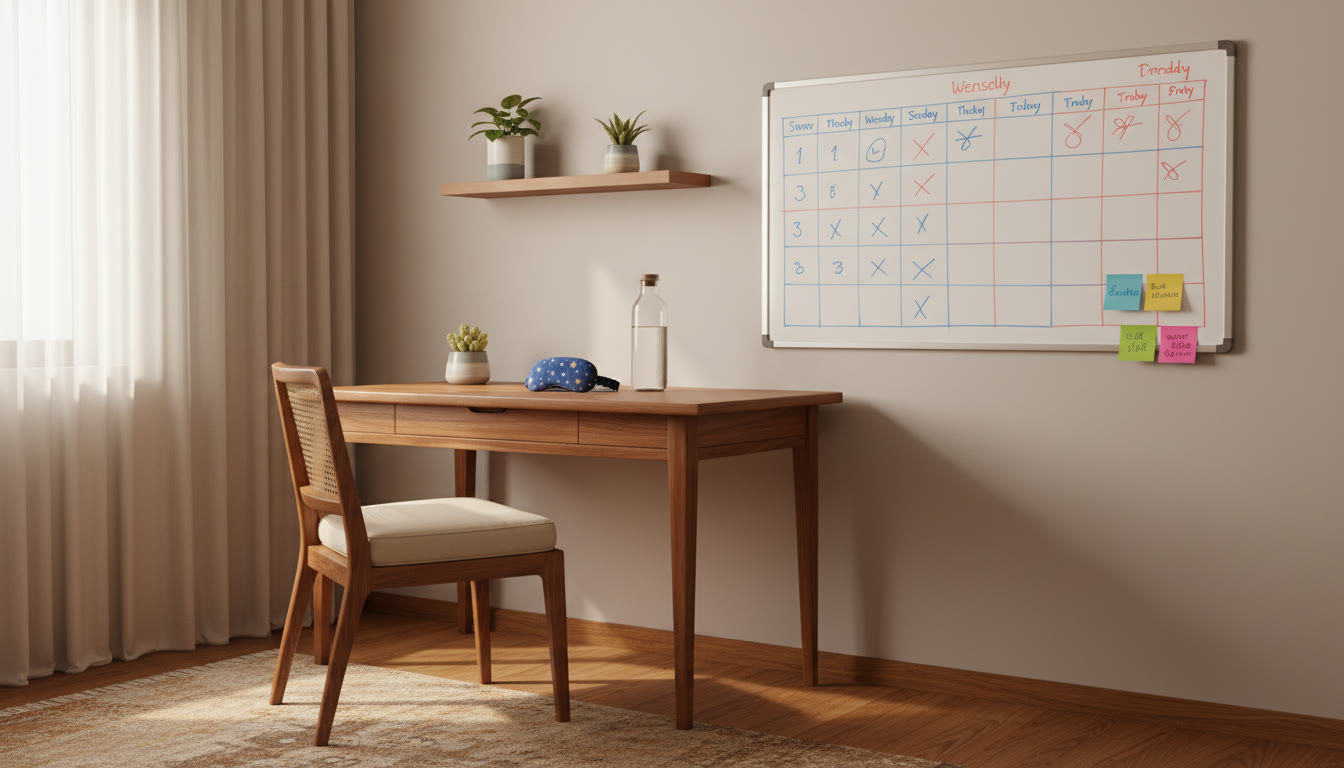
Sleep, short exercise, hydration, and clear break routines are non‑negotiable. Toppers treat study like athletic training: intensity needs recovery. Regular light exercise and short walks improve concentration and make long study blocks more effective.
When to seek extra help, and how to use it
Ask for targeted help when you have repeated errors in a topic despite deliberate practice. Effective help is specific (one concept fixed at a time), timed (given after you’ve tried), and small (a 30–60 minute session that leaves you with practice tasks). Tailored tutoring and AI‑assisted insights can point you to high‑impact practice problems and reveal hidden weaknesses in your test patterns.
For students who choose guided support, a blend of self study, periodic expert review, and algorithmic insights is often the most time‑efficient route. That combination helps you spend more of your time practicing the right problems instead of searching for them.
Final polish: the last revision cycle
In the last phase, toppers stop learning large new topics and focus on consolidation, formula recall, and exam temperament. They run through compact notebooks, re‑solve problem types that have caused errors in the past, and maintain a steady pace of full‑length mocks to keep timing intact. Mental calm, clear sleep routines, and a tested exam‑day checklist replace frantic last‑minute additions.
Short actionable summary — daily habits to copy
- Study in focused blocks with deliberate breaks and active recall sessions.
- Mix subjects daily to strengthen retention and reduce monotony.
- Use frequent, strictly timed full‑length mocks to calibrate speed and strategy.
- Keep a compact error notebook and re‑test corrected weaknesses within a week.
- Design a weekly plan and adjust it based on mock trends, not day‑to‑day mood.
Two years is enough time to build deep, test‑ready competence if you spend it with direction: learn deliberately, test relentlessly, and correct systematically. The habits described here are what toppers choose every day — not because they’re perfect, but because they compound into reliable performance.
This guide has walked through the academic routines, test strategies, subject tactics, and revision systems that convert steady study into top scores. Stay disciplined, test with purpose, and let revisions and analysis guide every decision.





















No Comments
Leave a comment Cancel