
Make weekly mock tests your performance engine
If you’ve ever finished a mock test and felt a mix of relief, regret, and resolve, you’re in good company. Mock tests are more than score generators — they’re the roadmaps that reveal exactly what to fix, how fast you must move, and where your exam temperament needs tightening. A weekly mock-test routine is the simplest structure that turns sporadic practice into measurable improvement without burning you out.

What this guide gives you
This article lays out a realistic weekly cycle you can follow every study week: how to schedule a 3-hour full-length mock, how to analyze it efficiently, what focused practice to do between mocks, and how to track meaningful metrics. It also includes templates you can copy (error-log table, weekly schedule) and practical notes about exam-style realities — MCQ emphasis, full-length timing, negative marking considerations, and the value of disciplined marking practice. Where personal help fits naturally, I mention Sparkl‘s tailored support to convert test insights into targeted study plans.
Core principles behind an effective weekly routine
1. Simulate the real thing
One full-length, uninterrupted 3-hour mock each week is non-negotiable. The real exam is three hours long; sitting that distance builds concentration and pacing habits. Simulating conditions — fixed time, no phone, a single seating, and a timer visible only to you — trains stamina and focus in a way spot practice cannot.
2. Learn faster by analyzing slower
The hour after a test is when raw impressions are fresh; analysis done carefully (not hurried) is where the largest gains come from. Track not only which answers were wrong, but why they were wrong: concept gap, careless algebra slip, misread question, or time pressure. That classification turns each wrong answer into a repeatable fix.
3. Quality over quantity
It’s tempting to chase more mocks. Better: one disciplined weekly full-length mock plus focused practice sessions that address the errors you find. This structure gives you both a performance checkpoint and the corrective drills that make the next checkpoint better.
Know the exam context you must simulate
Format realities to respect
- Question types: The modern engineering entrance is predominantly objective—MCQs and numerical-answer items—so practice precision, not long-form descriptive answers.
- Duration: A full-Length session is three hours; breaking that time into practice blocks (e.g., 60–90–90 minutes for sectional focus) helps during sectional drills but reserve one undisturbed 3-hour block weekly.
- Negative marking: Wrong MCQ choices are penalized, so reckless guessing hurts. Develop calibrated guessing rules based on your confidence and elimination skills.
- Computer-based environment: While official tests are delivered on computer, the discipline of marking answers carefully (what some call “OMR discipline”) — i.e., avoid marking multiple responses or leaving unintended marks — is still vital during practice. Treat the answer interface with the same seriousness as the real exam.
- Syllabus focus: The core syllabus you must cover is Physics, Chemistry, and Mathematics. Treat diagrams, derivations, and clear notation as learning tools that clarify concepts; they are not a substitute for precise answers in objective-format questions.
A practical weekly schedule: the test-and-learn cycle
Below is a templated weekly plan that balances a full-length mock with focused repair work. Adapt durations to your daily study load, but keep the pattern intact: test → immediate review → targeted practice → consolidation.
| Day | Main Activity | Duration | Focus |
|---|---|---|---|
| Monday | Quick topic test + light revision | 1.5–2 hours | Identify weak micro-topics |
| Tuesday | Concept-building and problem drills | 2–3 hours | Eliminate conceptual gaps |
| Wednesday | Sectional timed practice | 2–3 hours | Speed and accuracy per section |
| Thursday | Full-length mock (3 hours) — exam simulation | 3 hours | Stamina, question selection, pacing |
| Friday | Detailed analysis + error log update | 2–3 hours | Root-cause fixes |
| Saturday | Targeted remedial practice | 2–4 hours | Re-practice corrected types |
| Sunday | Light review or rest | Variable | Memory consolidation and recovery |
How to use the schedule — detailed notes
Thursday’s full-length mock is the heartbeat of the week. Treat it as sacred: no interruptions, the same start time each week if possible, and a short warm-up routine beforehand (10–15 minutes of light revision of formulas or a calm breathing exercise). The midday or evening slot should match when you plan to sit similar major tests; consistency builds alignment between your body clock and exam time.
Before, during, and after a mock: a checklist
Pre-mock checklist (30–60 minutes before)
- Desk setup: charger, rough sheets, pens, water, clock/phone on do-not-disturb.
- Mental prep: 5 deep breaths, a clear goal (e.g., focus on accuracy in the first 60 minutes), and a short note of one thing to avoid (e.g., “don’t get stuck on one question”).
- Materials: formula sheet for last-minute glance (not for copying during test), watch the time, keep a simple scratch pad index (e.g., mark unsolved question numbers).
During the mock: practical tactics
- First pass: answer only the questions you can solve in under 2–3 minutes with confidence. This builds momentum and secures marks early.
- Second pass: attempt medium-difficulty questions, using elimination techniques for MCQs to reduce risk of negative marking.
- Last pass: tiebreaker questions and numerical items; watch the clock and leave a buffer to review flagged questions.
- Guessing policy: avoid blind guessing. If you can eliminate one or more options confidently, controlled guessing may be warranted; if not, skip.
- Time checkpoints: plan rough time allotments per section and per question batch, and adjust when you see patterns of delay.
Post-mock analysis: the 5-step ritual
Immediate, structured analysis converts a test into learning. Follow this five-step ritual within 24–48 hours of the mock.
- Log raw results: mark your score, section-wise marks, number of attempted questions, number of wrong answers, and obvious time drains.
- Categorize each wrong answer: conceptual gap, careless error, calculation slip, misread question, or strategy error (e.g., wrong order of attempt).
- Update your error log: record the question, the exact mistake, and the corrective action you will take.
- Plan targeted drills: schedule micro-sessions (30–90 minutes) during the week to attack the categories you found most frequent.
- Re-test similar problems: after two or three focused practice sessions, re-attempt similar questions to ensure the fix stuck.
| Mistake ID | Topic | Type of Error | Root Cause | Planned Fix | Date Fixed |
|---|---|---|---|---|---|
| Err-001 | Kinematics — relative motion | Conceptual | Misapplied reference frame | Redo concept notes, solve 10 mixed examples | — |
| Err-002 | Chemistry — equilibrium | Calculation slip | Stoichiometry conversion error | Practice 8 calculation drills; write step checks | — |
Metrics that actually matter (and how to track them)
Stop worshipping only the percentile
Your weekly toolkit should track actionable items: accuracy per topic, time per question, frequency of careless errors, strength of elimination ability in MCQs, and rate of conceptual mistakes. Raw score or percentile is just an outcome variable; the behaviors that produce it are what you fix.
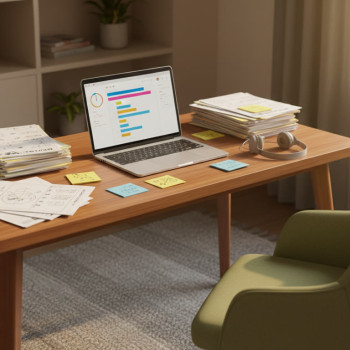
Weekly dashboard — simple KPIs
- Accuracy: correct answers ÷ total attempted (track per subject).
- Average time per attempted question: total time spent ÷ number attempted.
- Careless error rate: wrong answers classified as careless ÷ total wrong.
- Repetition rate: how many previously logged errors reappeared in the week.
Adjusting intensity across your preparation phases
Your weekly pattern should adapt as you progress.
- Early phase: focus on one full-length per fortnight, more conceptual study, and slower error correction. Build a wide base.
- Mid-cycle: shift to one full-length per week, add sectional timed sessions, and increase error-log discipline.
- Polishing phase: maintain a weekly or twice-weekly full-length schedule if you can absorb the analysis; emphasize speed, elimination strategy, and error-free arithmetic.
Practical sample adaptations
If you’re juggling school and mocks, keep the full-length on a fixed weekend slot and use two shorter 60–90 minute sessions during the week for sectional sharpening. If you’re in an intensive revision block, alternate full-length mocks with rapid re-tests of corrected topics so you can confirm fixes quickly.
Common pitfalls and how to fix them
Pitfall: Obsessing over raw scores
Fix: Focus on four corrective behaviors — fewer careless mistakes, faster elimination, better time allocation, and mastery of weak micro-topics.
Pitfall: Analysing without action
Fix: Every logged error must have a one-line action and a follow-up deadline. If you note a conceptual gap, schedule a 60–90 minute drill and then a 15-question re-test of that concept within 3–5 days.
Pitfall: Ignoring endurance
Fix: Treat the mock as a fitness test for focus. Use incremental endurance-building: start with two-hour focused sessions and expand to a full three-hour simulation. Include short breathing breaks and controlled hydration, so your body doesn’t become a limiting factor on test day.
Where personalized help fits naturally
Some weak spots demand targeted coaching: recurring conceptual mistakes, inconsistent elimination strategies, or analysis backlog. If you find that your error-log repeats items week after week despite practice, individualized guidance can help turn patterns into concrete micro-tasks. Sparkl‘s personalized tutoring offers one-on-one guidance, tailored study plans, expert tutors, and AI-driven insights to translate mock data into an actionable roadmap. Use such support to shorten the time from identifying a gap to mastering it.
Sample week: a narrative
Imagine a student, Anaya, who sits a full-length mock on Thursday morning. She finishes with a realistic score and notes fatigue in the last 30 minutes. Friday she spends two focused hours analyzing mistakes and finds several algebra slips in Mathematics and one recurring equilibrium misinterpretation in Chemistry. She enters both into her error-log (specific fixes: 8 algebra drills, re-derive equilibrium examples). Saturday is a deep remedial day: she practices algebra drills and does five applied equilibrium problems. By the next Wednesday she notices algebra slips reduced during sectional practice. Her weekly KPI shows improved accuracy and reduced careless-error percentage. This is how weekly testing and disciplined follow-up compound into steady gains.
Small rituals that add up
- Keep a single physical notebook for the error log — the act of writing reinforces the fix plan.
- End each mock with a one-line lesson learned; review these weekly.
- Schedule one recovery day every two weeks: light review only, no new topics.
Final checklist before you adopt this routine
- Commit to one full-length simulated test per week in real exam conditions.
- Allocate one dedicated analysis block within 24–48 hours after each mock.
- Maintain an error log with clear fixes and deadlines.
- Track simple KPIs weekly and adapt the number of full-length mocks by study phase.
- Use focused remediation drills rather than unfocused question chasing.
Conclusion
The most reliable path to steady score improvement is a short cycle: simulate, analyze, fix, and re-test. A disciplined weekly mock-test routine builds stamina, reveals the precise gaps to fix, and makes your study time dramatically more efficient. Keep the process simple, keep the analysis honest, and focus on cleaning up repeatable mistakes — that’s the academic practice that produces consistent progress.




















No Comments
Leave a comment Cancel