
Decoding JEE Main PYQ Pattern: Turn Past Papers into Practice Power
If you want mock tests to stop feeling like random workouts and start acting like a precise training plan, PYQ (previous-year question) pattern analysis is your map. This guide walks you through reading those maps — what PYQs reveal about the exam’s style, how to structure authentic 3-hour mock practices, and how to convert weak areas into predictable strengths. Read this like a conversation with a friendly coach: practical, no-nonsense, and focused on actions you can take today.

Why PYQ analysis matters more than raw problem-count
Past papers do two jobs at once. First, they reveal the exam-maker’s preference for certain topics and question styles. Second, they expose your real-time response pattern: where you waste time, where small slips cost marks, and where conceptual gaps hide behind confident answers. Look at PYQs not as static trophies to memorize, but as a dataset you can interrogate. When you learn to read that dataset you’ll improve your mock-test accuracy and speed in a measurable way.
- Spot recurring topics and question templates to prioritize practice.
- Recognize the split between straightforward recall, application, and multi-concept problems.
- Create a personal error taxonomy: careless, conceptual, technique, and time-management errors.
What PYQs reliably tell you about the test format
Several structural truths keep appearing across authentic pattern analyses. Use them as baseline rules when you design mock sessions.
- MCQ-based testing: Questions are structured as single-best-answer multiple choice. Practicing with the exact MCQ format trains you to eliminate distractors and avoid trap options.
- 3-hour full-length mock practice: Simulate the full time window under conditions similar to the exam — start to finish. That endurance matters as much as raw skill.
- Negative marking discipline: Wrong answers reduce net score. That turns guessing from a neutral habit into a calculated decision.
- OMR/CBT discipline: Whether your mock uses OMR sheets or a computer interface, practice strict marking and time checkpoints. Mistakes in marking answers or switching screens can cost as many marks as a wrong concept.
- Syllabus alignment across core sciences: Focus your PYQ analysis on the core subject areas — Physics, Chemistry and Mathematics — and remember the mock routines transfer to allied subjects such as Biology when relevant.
- No descriptive partial-marking assumptions: MCQs don’t give partial credit for long written reasoning. Work for precise answers; use derivations and diagrams as learning tools rather than as a source of partial credit during the exam.
How to read a PYQ at three levels: question, topic and pattern
Think of PYQ analysis as a three-layer scan:
- Question level — what technique solved the item? Did it require algebra, a diagram, or a principle-based shortcut?
- Topic level — which chapter or unit produced the question? Track frequency and difficulty across topics.
- Pattern level — how does the exam balance conceptual vs computational work, and how do clusters of topics combine into multi-concept items?
Work through each past paper quickly once (timed), then mark and tag every question by the three-level labels above. After three to five papers you’ll see recurring stems and question families; that’s where focused practice pays off.
Subject-wise pattern snapshot (practical table)
| Subject | High-frequency topics | Typical question style | Practice focus |
|---|---|---|---|
| Physics | Mechanics, Electricity & Magnetism, Optics, Thermodynamics | Numerical problem solving, conceptual set-ups, diagrams | Build formulas, practice diagram-based reasoning, timed numericals |
| Chemistry | Physical basics, Organic reactions, Inorganic concepts | Reaction-based logic, calculation-heavy numericals, conceptual MCQs | Memorize core concepts, practice reaction mechanisms as quick templates |
| Mathematics | Calculus, Coordinate Geometry, Algebra, Trigonometry | Stepwise calculations, multi-step reasoning, shortcuts for common forms | Sharpen procedural fluency and pattern recognition for standard problem-types |
| Biology (where relevant) | Core physiology, genetics basics, applied biology concepts | Conceptual MCQs, definition-based and application items | Focus on high-yield facts and cause-effect reasoning |
Interpreting difficulty and question mix
Past-paper reading will show a blend of easy, medium and hard items. The trick is to translate that blend into a time-management plan. Easy questions are your score bank; medium questions build margins; hard questions are strategic investments if you have surplus time. A balanced mock session trains you to harvest easy marks quickly, systematically attempt medium ones, and selectively approach hard ones.
Designing an exam-realistic 3-hour mock: timings and slots
Use a full three-hour block and enforce exam-like rules. This trains stamina, timing, and mental focus. The following sample allocation assumes equal subject weight in a mock of 90 questions (adapt if your mock differs):
| Subject | Example Questions | Suggested Time | Strategy |
|---|---|---|---|
| Physics | 30 | 60 minutes | Start with quick concept-checks, then do numericals in blocks of 2–3 |
| Chemistry | 30 | 60 minutes | Attempt inorganic and theory items first, then calculation-heavy physical chemistry |
| Mathematics | 30 | 60 minutes | Begin with short algebra/trig items, reserve longer calculus problems for focused blocks |
| Total | 90 | 180 minutes | Keep 10–15 minutes at the end for review and careful OMR/answer-entry checks |
Before the mock: a concise simulation checklist
- Set up a 3-hour uninterrupted environment and remove all distractions.
- Use the exact MCQ format your mock mimics (computer screen or OMR sheet). If practicing on paper, also practise OMR filling to build marking discipline.
- Keep tools ready: pencils, erasers, a non-programmable calculator if allowed in practice, rough sheets, a watch with visible seconds.
- Keep a blank error-log sheet beside you: record question number and initial thought (e.g., ‘assumed X’, ‘calculation slip’) — don’t spend more than 15 seconds writing this during the test.
During the mock: practical, exam-like tactics
- First pass: scan and solve all easy questions; mark medium for second pass and skip hard ones initially.
- Use a two-color mental flag: green for solved, amber for revisits, red for discard unless time remains.
- Respect negative marking: if you can reduce options to two, a calculated attempt may help; blind guessing is usually a net loss.
- Keep strict time checkpoints: after each 30 minutes check whether you’re on schedule. That prevents end-of-exam panic.
- Simulate OMR discipline: if your mock uses an answer sheet, practice accurate marking and avoid overwriting bubbles hastily.
After the mock: the analysis routine that actually improves scores
Post-test reflection is where marks grow. The following routine turns one mock into multiple weeks of efficiency gains:
- Score and classify every answer: correct, guessed-correct, wrong (careless), wrong (conceptual), skipped.
- Time audit: note questions that took longer than the planned average. Convert that into micro-practice tasks (e.g., ‘factorization speed drills’).
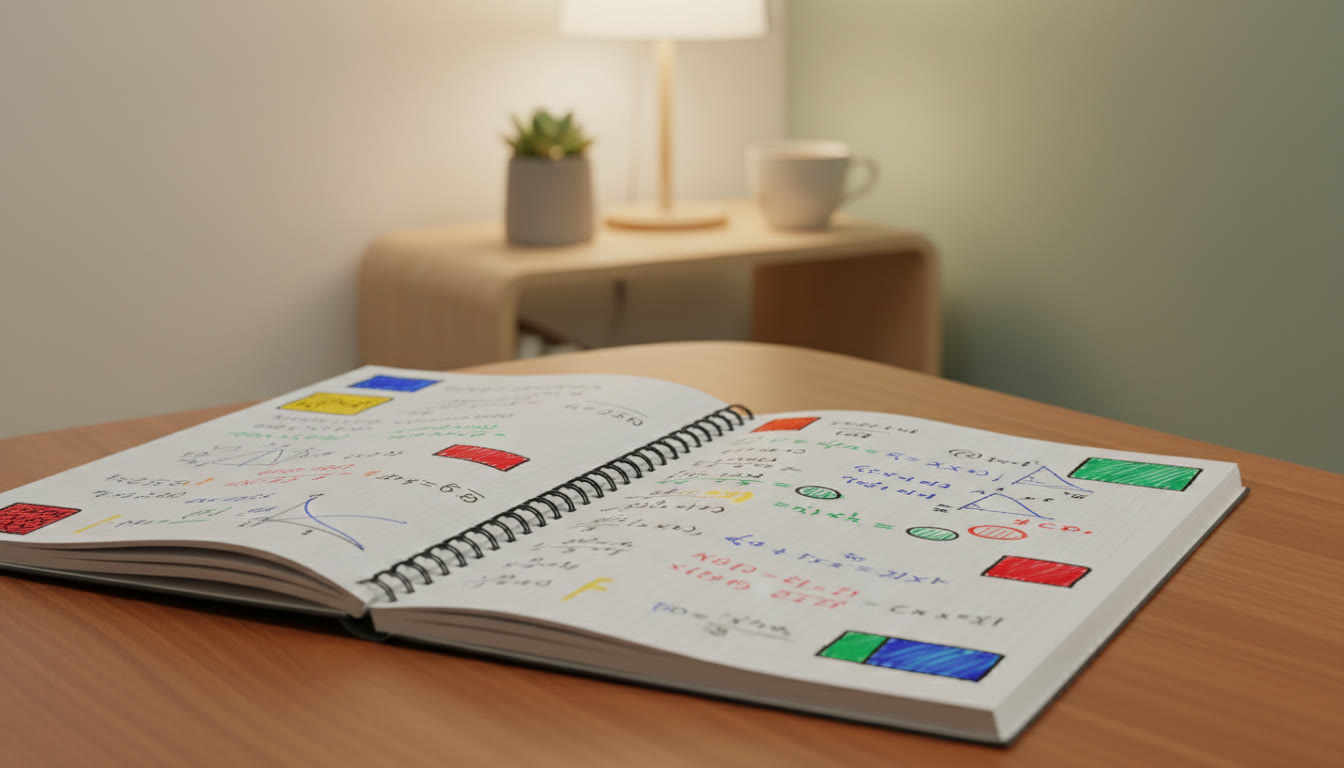
- Create an error-log database and tag each entry by topic, sub-topic and mistake type.
- Design next-week practice from that database: 60% focused-weak-topic practice, 30% mixed timed quizzes, 10% full-length mock.
How to prioritize when PYQs point to many weak spots
PYQ analysis often reveals more gaps than you can fix in a week. Use this triage:
- Priority A: High-frequency topics with high difficulty — urgent mastery (practice + conceptual revision).
- Priority B: Medium-frequency topics with recurring small errors — targeted drills and short revision notes.
- Priority C: Low-frequency or one-off problems — keep as occasional practice after A and B are stable.
Translating pattern insights into a weekly plan (example)
Here’s a realistic weekly layout that uses PYQ signals directly:
- Monday — focus-block on Priority A topic (4 hours), evening 60-min timed mixed set.
- Tuesday — Priority A practice (2 hours), 90-minute sectional mock, post-mock analysis.
- Wednesday — Priority B concept review and drills (3 hours), short revision notes creation.
- Thursday — Full-length practice simulation (3 hours) following exam rules, early review of the error-log.
- Friday — Targeted weak-topic drills (2–3 hours), concept flashcards and one timed mini-test.
- Weekend — Lighter: consolidate notes, practice formula recall, and a 2-hour mixed full-speed session.
Common mistakes students make when using PYQs
- Chasing outliers — over-practicing rare hard problems at the expense of high-frequency basics.
- Ignoring marking discipline — a clean paper with careless OMR errors is an avoidable loss.
- Overemphasizing rote memorization — many PYQs reward understanding and application over recall.
- Failing to triangulate: practice, timed simulation, and analysis must form a feedback loop.
Making modern analytics and tutoring work for you
Automated analytics (if you use one) can show time-per-question distributions, topic-wise accuracy, and pacing charts. The human part is interpretation. A tutor or coach helps convert raw numbers into a study plan: which micro-skills to train, how to distribute practice time, and how to balance speed with accuracy. For students seeking structured 1-on-1 support, Sparkl‘s personalized tutoring offers tailored study plans, expert tutors, and AI-driven insights that map directly onto PYQ signals and mock-test analytics. Use analytics to find the problem; use guided instruction to fix it efficiently.
Sample mock-to-revision micro-cycle (30-day turnaround)
Turn a single mock into a month of improvement by repeating a four-stage micro-cycle:
- Take the mock under strict conditions (Day 1).
- Deep analysis and error taxonomy creation (Days 2–3).
- Week-long focused practice blocks on top two weak topics (Days 4–10).
- Mini-retest and recalibration, then repeat the cycle for new weak topics (Days 11–30).
If you repeat this micro-cycle three to four times, you’ll reliably replace random mistakes with stable technique.
Using diagrams and derivations wisely
Diagrams and stepwise derivations are study tools, not exam-answer crutches. During practice, make tidy diagrams to cement intuition; in the mock, use quick sketches to check reasoning for multi-concept problems. Keep derivations short and modular—if you need long algebra in the exam, practise compressing it into 2–3 clean steps so you don’t waste time or introduce errors.
Quick tactics for negative-marking environments
- Avoid blind guessing; only guess when elimination reduces options meaningfully.
- Use time wisely: sometimes skipping a hard question to secure medium-easy questions yields a higher expected score.
- Develop a comfort with two-option guesses: when you can justify eliminating two options, guessing is often statistically positive.
Measuring progress beyond raw score
Raw score is important, but it’s a lagging indicator. Measure these leading indicators too:
- Average time per question and its variance (lower variance is progress).
- Proportion of careless vs conceptual errors (trend downward for careless errors).
- Percentage of high-frequency topics in your correct set (aim for consistent gains here).
Real-world example: turning a recurring error into gains
Suppose you consistently miss optics items in Physics because you skip diagram setup. Immediate fixes: a) practice 20 optical ray-diagram setups under 5 minutes each, b) create a two-line template of steps you follow before calculating, and c) mark these problems as ‘diagram’ in your error log. In the next mock your accuracy improves because the pattern of error was procedural, not conceptual; solve the procedure and you improve marks quickly.
A final exam-day mock checklist
- Practice filling an answer sheet/using the mock platform once a week to avoid logistic mistakes.
- Create a one-page formula/shortcut sheet and review it only in the last 30–60 minutes before the mock (no new learning).
- Allow time for a calm review of flagged questions; never rewrite OMR answers in a hurry at the end.
- Maintain steady pacing and keep mental notes of time at regular intervals.
Conclusion
Consistent PYQ pattern analysis, honest mock-test simulation, and disciplined post-mock revision form a reliable academic cycle. Treat past papers as data, mock tests as experiments, and error-logs as lab reports: record, analyze, refine, repeat. Over time, familiarity with recurring question families and disciplined time-and-marking habits produce steady and measurable improvement in mock-test performance.













No Comments
Leave a comment Cancel