
Sharpen Your Accuracy: The Mock-Test Mindset
Mock tests can feel like a battleground: the clock is ticking, the scoreboard is imaginary but the stakes feel real. If you want a simple truth up front — accuracy compounds. One or two careless negative marks per mock add up faster than you think. This article walks you through a human, test-day-oriented playbook: how to prepare, how to attempt a 3-hour full-length mock under objective-style conditions, how to analyze mistakes, and how to convert practice into reliable exam accuracy.

Why Accuracy Beats Raw Speed
Speed gets attention because it looks flashy: solving many problems quickly. Accuracy is quieter but more reliable. With negative marking and objective-style questions, a wrong attempt often subtracts more than you gain from guessing hastily. A steady, accurate 60–70% correct attempt often outperforms a high-volume, low-accuracy approach.
Think of a mock test as an experiment: you want to gather clear data about your strengths and error modes. If your attempts are fast but noisy, your data is noisy too. The goal is not to chase a single high score in every mock — it’s to reduce error types, build stable routines, and raise your baseline accuracy across topics.
Before the Mock: Practical Preparation Checklist
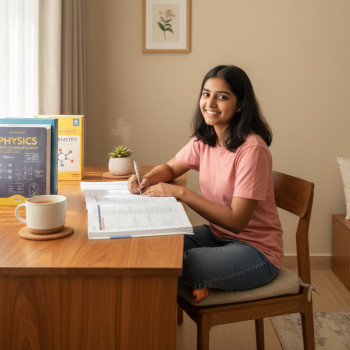
- Simulate the environment: sit for a 3-hour full-length mock with the same breaks and rules you will follow on exam day.
- Know the pattern for the current cycle: objective-style questions, negative marking rules, and allowed materials. Don’t assume partial credit unless the mock explicitly states it.
- Pack your essentials: clean rough sheets, pencils, pens, a reliable watch, water, and a comfortable chair. If your center uses OMR or you practice on paper, rehearse OMR discipline — neat shading, one-to-one answer tracking, no double-shading.
- Warm up: review a one-page formula sheet or 2–3 quick concept flashes 20–30 minutes before starting. Don’t cram new topics right before the mock.
- Mind calibration: set a clear measurable goal for the mock (e.g., reduce calculation errors by 50% or finish the first pass in 90 minutes). Goals should be process-focused, not only score-focused.
During the Mock: Adopt a Two-Pass Strategy
A two-pass attempt protects accuracy without sacrificing score potential. The method is simple but powerful: the first pass collects high-confidence marks; the second pass tackles tougher items with focused time and reduced panic.
First Pass — Harvest Certainties (about 50–60% of time)
- Scan the entire paper quickly (7–10 minutes): mark very easy questions, medium questions, and definitely hard questions.
- Answer all the very easy and clear medium questions immediately. These are the ones you can do with one clear step or a short calculation.
- If a question looks like it needs a long derivation, mark it for the second pass rather than starting it and then running out of time.
Second Pass — Targeted, Deep, and Accurate
- Return to medium-to-hard marked questions. Break each into micro-steps: what’s asked, known data, applicable concept, plan of attack.
- If a question has options, use elimination and substitution strategically — plug options into the simplest relation when algebra will be long.
- Be ruthless about abandoning a path after one clear dead end. Mark for review and move on.
Time Allocation — A Practical Template for a 3-Hour Mock
| Phase | Minutes | Focus | What to Watch For |
|---|---|---|---|
| Initial scan + first pass | 60–75 | Answer all high-confidence items | Avoid getting stuck on long derivations |
| Second pass | 85–95 | Tackle medium-hard items with calm | Use options-substitution, dimensional checks |
| Final review & answer verification | 10–15 | Re-check sign errors, OMR shading, unit consistency | Don’t start new long solutions now |
Accuracy Techniques That Practically Work
1. Read the Question Twice — Smart Reading
First read is for context: what is given and what’s asked. Second read is for constraints and traps: units, boundary conditions, extraneous variables, or options that look similar. Train yourself to translate words into a one-line mathematical statement before you start calculations.
2. Organize Scratch Work Clearly
Use the left side of the sheet for rough work and the right for a clean final answer. Box final numeric answers and write the option letter clearly. When calculations are long, underline intermediate results so you can find where an error might have occurred.
3. Use Quick Sanity Checks
- Dimension/units check: does the unit of your answer make sense?
- Limit check: test extreme values or simple cases.
- Sign check: many errors are sign flips; a quick mental check helps.
Subject-Specific Micro-Skills for Accuracy
Physics: Identify the Minimal Model
Physics problems often reward the ability to simplify. Ask: what’s the minimal model that preserves the physics? Replace complex expressions with effective quantities (center-of-mass, effective resistance, small-angle approximations) when allowed. Explicitly list the assumptions you use — in your mock notes — so that if you get a numerical mismatch you can quickly check which assumption might be at fault.
Chemistry: Separate Concept from Calculation
In physical chemistry, clearly separate conceptual steps (which law applies?) from arithmetic steps (how to plug numbers). For organic and inorganic chemistry, accuracy often comes from memorized patterns: functional group behavior, common reaction energetics, oxidation states. Keep common values (like pKa ranges, standard potentials, gas constants) on your formula sheet for quick recall.
Mathematics: Pattern Recognition + Structure
Math problems reward pattern recognition (substitution that linearizes, smart rearrangement, symmetry). Before diving into algebra, ask if a substitution, factoring trick, or inequality approach simplifies the path. Avoid long blind algebra unless it’s clearly the shortest path.

How to Create and Use an Error Log
Accuracy improves when mistakes are classified. An error log is your microscope: it reveals recurring weak points. Keep a simple table with columns: Question ID, Error Type, Root Cause, Fix Tried, Date Fixed. Update it immediately after each mock while recall is fresh.
| Error Type | Typical Root Causes | Immediate Fix |
|---|---|---|
| Conceptual | Missing theorem, weak fundamentals | Re-study core concept, do 5 targeted problems |
| Calculation | Sign errors, algebra slips | Slow down arithmetic; rewrite steps; use estimation |
| Careless | Misreading question, copying errors | Underline key data; box final answer; verify units |
| Time-Pressure | Poor time allocation | Practice timed mini-mocks; follow two-pass template |
Interpreting Mock Analytics — What Really Matters
Raw score alone lies. Use these metrics instead:
- Accuracy rate (correct attempts / total attempts) — goal: steady improvement.
- Average time per attempted question — track reduction without loss of accuracy.
- Error frequency by type — aim to eliminate one error type every few mocks.
- Topic-wise accuracy — helps prioritize revision.
After each mock, tag 10 questions: five you answered correctly and felt confident about, three you answered correctly but felt shaky about, and two you missed. This gives a focused micro-deck for revision.
Smart Revision After a Mock — The 72-Hour Cycle
Memory research suggests the first 72 hours after learning are critical. Use a three-step revision cycle:
- Day 0 (immediately after the mock): note down raw impressions and error types; resist re-solving everything in one go.
- Day 1: solve missed questions calmly, identify root causes, and create a 10–15 minute micro-session of targeted practice.
- Day 3: do a spaced follow-up test with only the topics you struggled with to test retention and accuracy.
Guessing, Negative Marking, and Risk Management
Negative marking punishes random guessing. Develop a rule-based approach:
- If you can eliminate one or more options and your chance of being correct rises to a threshold that your practice shows is profitable, make a calculated guess.
- If elimination is weak and your confidence is low, leave it and use the saved time to secure a certain mark elsewhere.
- Keep a running tally during the mock: how many questions did you guess? Compare guessed-right vs guessed-wrong counts after each mock and tune your threshold.
Rehearse OMR and Answer-Tracking Discipline
Even though many official exams run on computer-based platforms, centers and practice halls often use paper-OMR formats for mocks. A single mis-shaded bubble or misaligned answer index can cost several marks. Practice these small routines until they are automatic:
- One-to-one tracking: write the Q. number next to the answer before shading.
- Dark, clean shading; erase completely if you change an answer.
- Final review: use the last 10–15 minutes to verify OMR alignment and correct any double-marking.
Practical Example — A Two-Step Way to Tackle a Tricky Question
Imagine a multi-part physics MCQ with an integral-based final expression. Instead of starting messy algebra, do this:
- Step A: Check if options simplify the integral — sometimes an option is a constant or zero; plug a simple test value to narrow choices.
- Step B: If options remain, identify symmetry or substitution that collapses the integral; do a short sanity check on units and limits before final computation.
This saves time and reduces arithmetic mistakes — and doubles as an instant reason-check if your calculation later gives a different sign or magnitude.
How to Build Topic-Mastery with Focused Micro-Practice
Replace unfocused long-hour practice with concentrated micro-sessions: 25–40 minute focused drills on one topic (e.g., rotational dynamics, chemical equilibrium, definite integrals). After each session, do 3 quick self-checks: one easy, one medium, one tricky. Maintain an accuracy target for the medium and tricky problems, and log whether you met it.
The Role of Personalized Guidance and Analytics
Individualized feedback accelerates the loop from mistake to fix. If you use a platform for personalized tutoring, look for these features: one-on-one guidance, tailored study plans that pick the next micro-topic based on your error log, expert tutors who explain root causes (not just solutions), and AI-driven insights that highlight recurring patterns across mocks.
One way to combine human coaching with smart analytics is to periodically review your error log with a tutor who helps convert repeated mistakes into drillable habits. For many students, tools that pair focused human feedback with automated weakness-tracking shorten the path to consistent accuracy; for example, working with Sparkl’s tutors can provide that pattern-based feedback alongside structured study plans and AI-driven practice recommendations.
Mindset, Breaks, and the Little Things That Prevent Careless Errors
Mental fatigue is an accuracy killer. Schedule short 3–5 minute screen breaks after 60–75 minutes of focused work. Keep hydration and small healthy snacks handy during long practice blocks. Sleep matters: accuracy gains from a rested brain far outstrip last-minute cramming.
On test day, cultivate calm micro-routines: three deep breaths before each section, a short stretch at the half-way mark, and the habit of writing the key givens at the top-left of your answer sheet so you aren’t hunting for data mid-solution.
Tracking Progress — A Simple Weekly Dashboard
Create a compact weekly dashboard to track:
- Mocks taken and accuracy rate trend.
- Error types eliminated vs. recurring.
- Average time per question across subjects.
- Topics scheduled for micro-practice next week.
Small, visible progress beats large, invisible intentions. If your dashboard shows improvement in accuracy but stagnation in speed, keep the focus on accuracy until the new accuracy baseline stabilizes.
Final Academic Takeaway
Accuracy is a discipline you build systematically: simulate real exam conditions, adopt a two-pass strategy, keep clear scratch work, classify and attack error types, and use timed micro-practice to consolidate topic mastery. Combine disciplined solo practice with targeted feedback and analytics to convert mistakes into durable skills. The result is not a one-off high score but a reliable, repeatable performance that you can reproduce under pressure.


















No Comments
Leave a comment Cancel